When to replace an AC unit in Carmel, IN

Your new air conditioner project goes to an installer who works in Hamilton County.

Get an air conditioner pro

How do I know when it's time to replace my AC unit?

Your air conditioner is getting older, and you're not sure if it's worth fixing the next time it breaks down or if you should just replace it. With Carmel summers getting sticky and the unit running hard for months at a time, you want to know what actually signals it's time, not just a guess.

Replace it once repairs get frequent or the unit is past 12 to 15 years old

Most central air conditioners last 12 to 15 years. Past that point, the compressor and other parts have been through more summers than they were built for, and breakdowns start costing more than a new system would over time. A unit that needs a repair every year, or one that can't keep the house cool through a Hamilton County summer anymore, is telling you something. Low refrigerant, warm air coming from the vents, or a utility bill that keeps climbing while the thermostat setting stays the same are all signs the system is working harder to do less. If your AC is still under 10 years old and has needed one repair, fixing it usually makes sense. Once it's older and the repairs stack up, replacing it is the better use of your money.

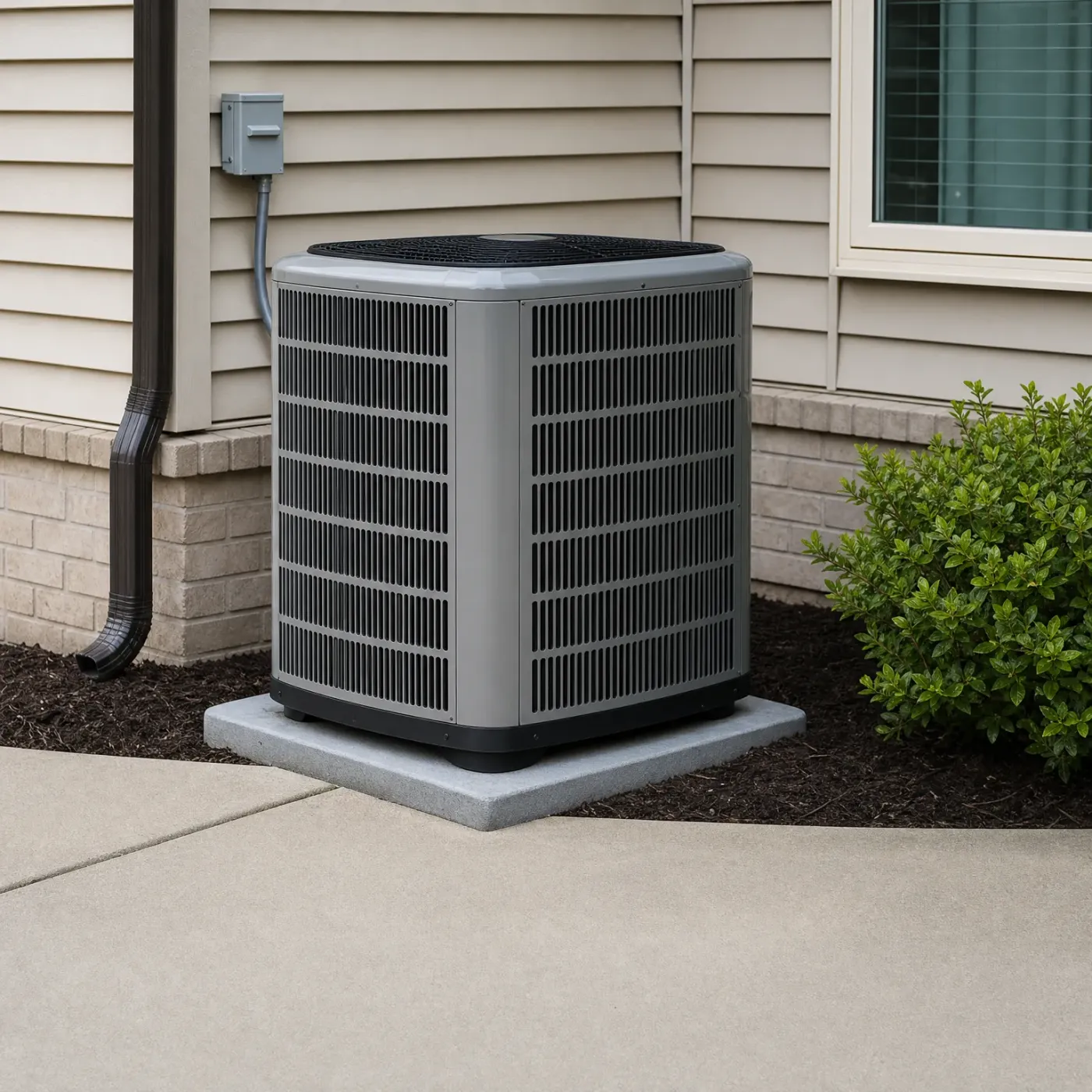
A gray outdoor air conditioning condenser unit on a concrete pad beside a house with horizontal vinyl siding, a brick foundation, downspout, electrical disconnect box, mulch bed and a green shrub.

Still holding up

The outside unit sits clean and clear, with room to breathe on every side. It cools the house evenly and shuts off when the thermostat is satisfied. If yours still does that without running longer than it used to, repair likely makes more sense than replacing it.
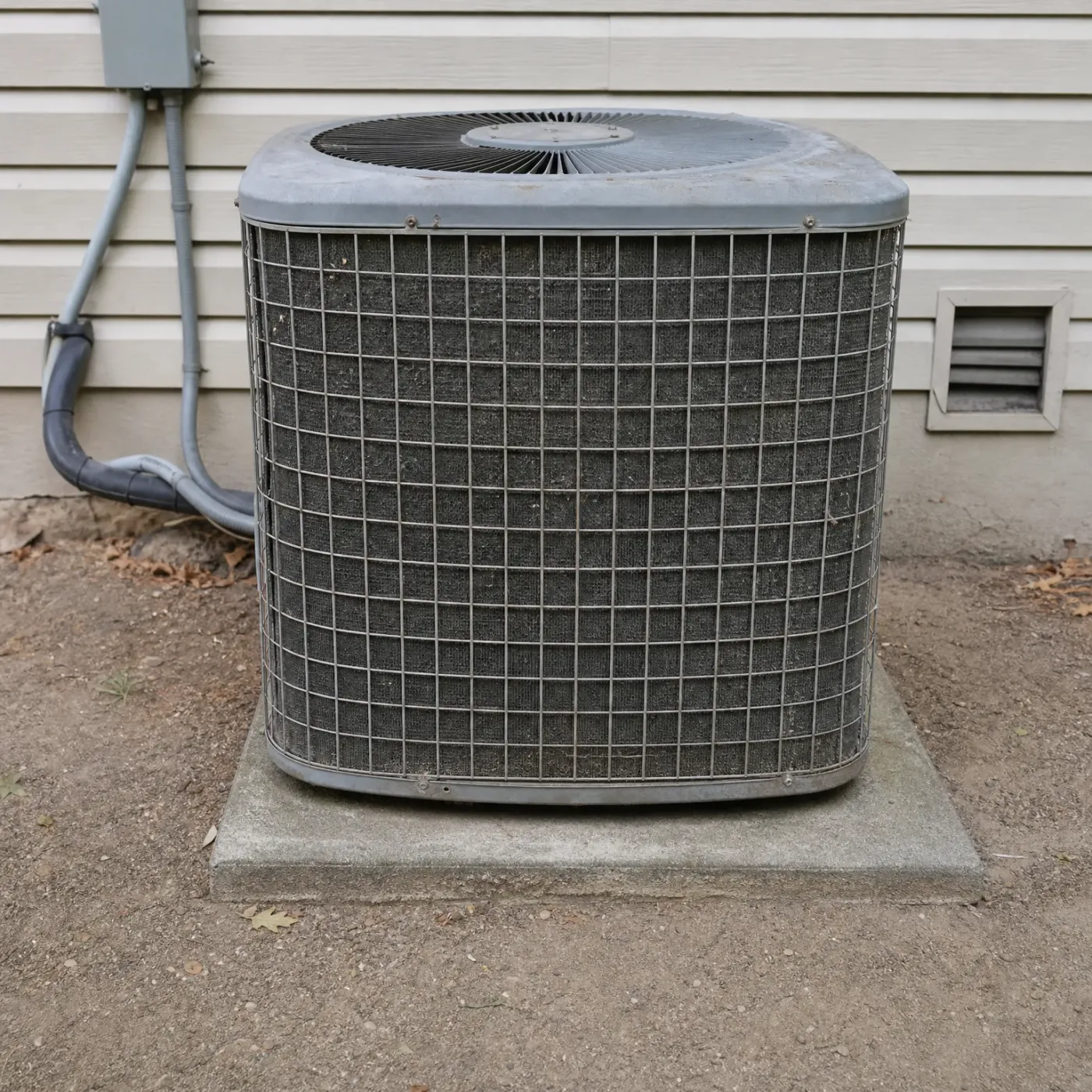

An outdoor air conditioning condenser unit with a dirty mesh coil guard sits on a concrete pad beside a house with horizontal lap siding, a wall vent, and conduit running to an electrical disconnect box.

Showing its age

Dirt and grime cake the grille and the fins, and the unit struggles to push air through them. You've noticed it running longer to reach the same temperature, or cycling on and off more than it should. That extra strain is often what pushes a repair bill past what replacement would cost.

A woman stands in the open black front door of a white-sided house with a dark shingled roof while a man in a navy jacket approaches along the walkway, with lantern wall lights, a potted shrub, and flowering garden beds nearby.

What an aging AC costs you in a Carmel summer

A unit on its way out doesn't fail all at once. It runs longer to hit the same temperature, so your bill climbs before anything actually breaks. You might notice a room upstairs that never quite cools, or the system cycling on again ten minutes after it shuts off. On a humid July day in Carmel, that's the kind of strain that turns a weak compressor into a dead one by August.

There's also the risk of bad timing. A unit that limps through June often quits outright during the stretch when you need it most, and whole-home replacement isn't something you want to shop for under pressure. If your system is old enough that you're already watching it, it's worth having someone local look at it now, on your schedule. A contractor who services AC units around Hamilton County all summer can tell you fast whether yours has a season left in it or not, and you'd be working with just that one person, not fielding calls from a handful of companies.

Interior corner of a room with a dark upholstered sofa and textured cushion, a potted plant, sheer curtains at a multi-pane window showing blurred green and yellow trees, and a dark table holding a wooden tray with stacked coasters and a small ceramic vase.
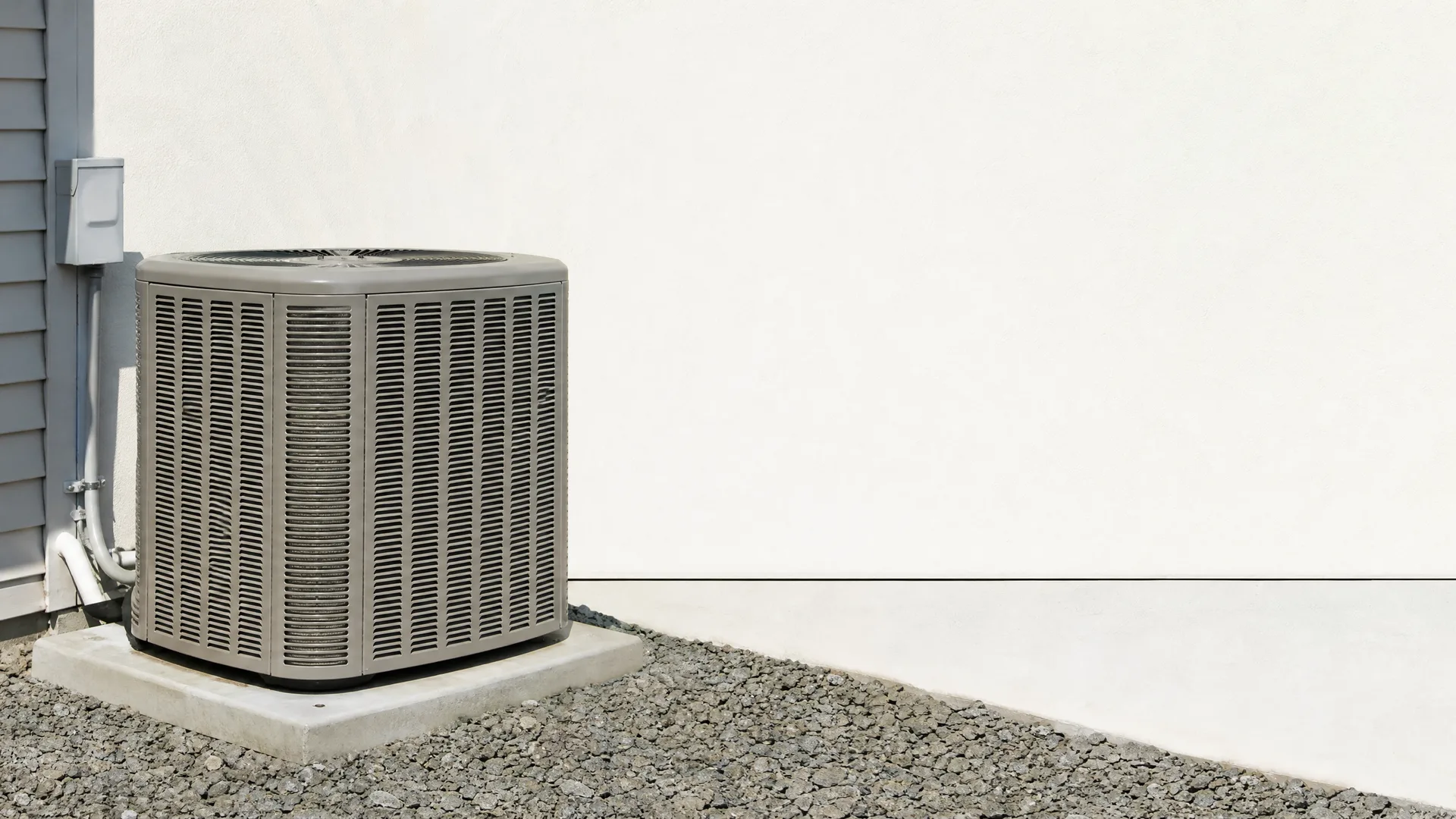
An outdoor air conditioning condenser unit sits on a concrete pad beside a plain light-colored wall, surrounded by gravel, with vinyl siding and an electrical box at the left edge.

Why your compressor matters most

The compressor is the most expensive part in your outside unit, and it's the one that decides whether a repair makes sense. When it fails on a unit already past 10 years old, most contractors will tell you a new system costs less over time than replacing just that part. A failing compressor often shows itself first as warm air blowing from the vents even though the unit is running.

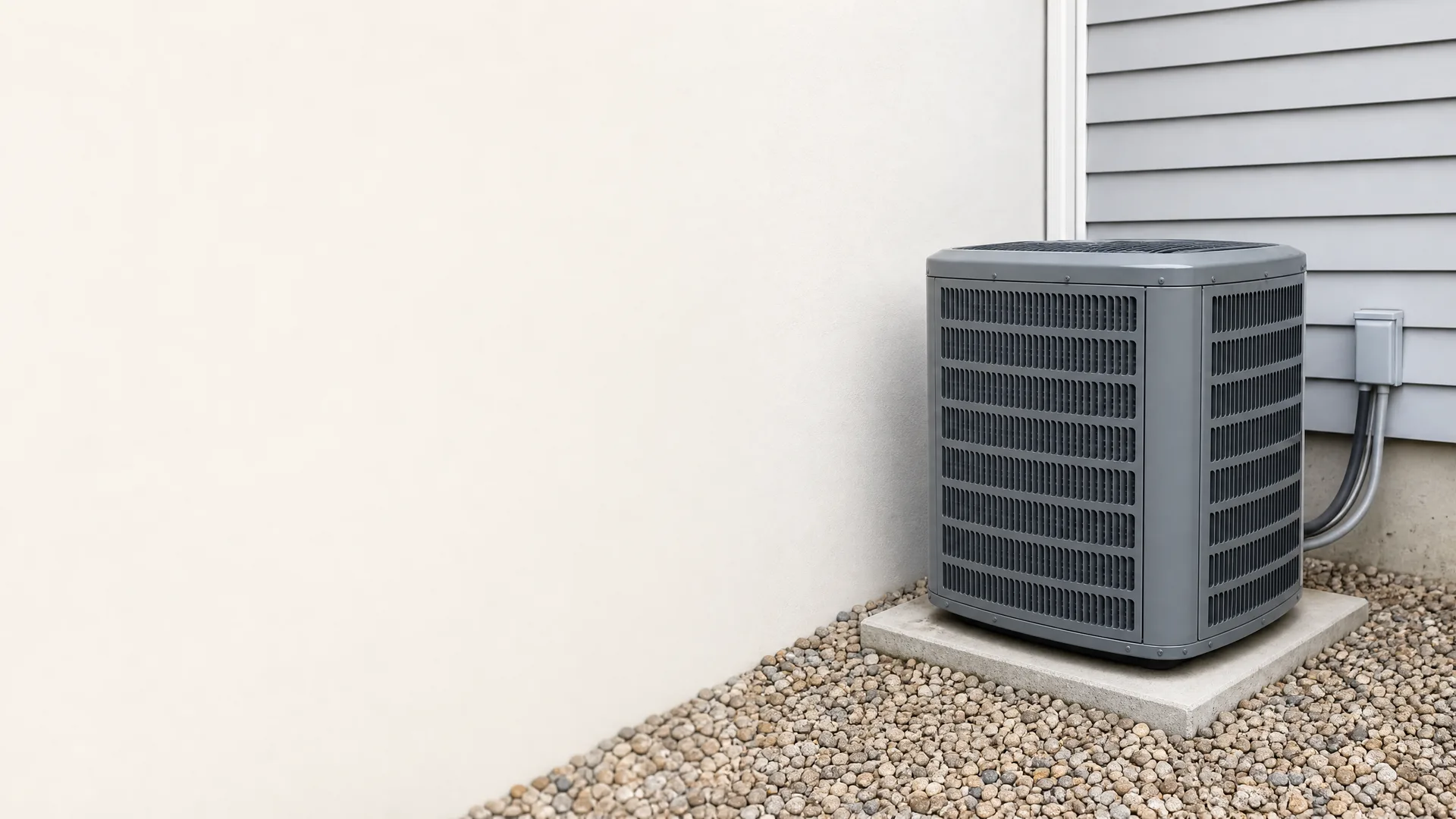
A gray outdoor air conditioning condenser unit sits on a concrete pad surrounded by gravel, beside a stucco wall and vinyl siding with an electrical disconnect box and conduit.

What R-22 means for your options

If your AC was installed before 2010, it may run on R-22 refrigerant, which is no longer produced in the United States. A leak in a system like this is a different problem than it used to be, since there is no new supply to recharge it with. Reclaimed R-22 still exists, but it costs far more than it did a few years back, and less of it turns up every summer.

Is your house telling you it's time?

You notice it on the worst days. The thermostat says 72 but the air coming out feels weak, barely moving at the vent. The unit outside runs almost nonstop through the afternoon and still can't catch up. Inside, one room stays warmer than the rest no matter what you set the thermostat to. You might hear a new sound, a rattle or a hum that wasn't there last summer. Humidity hangs in the house even with the AC on, leaving floors and countertops feeling damp. None of this happens overnight. It builds over a season or two, and by the time you notice all of it at once, the unit is working harder than it should to keep the house livable through a Carmel summer.

A gray-haired bearded man in a dark snow-dusted coat and scarf stands inside a dimly lit home entryway, with a hallway, framed picture, lit table lamp and staircase behind him.
An older man with gray hair and a beard, wearing a dark snow-dusted coat, stands in a warmly lit home entryway with a hallway, console table with lamp, patterned rug, and living room visible behind him.
An older man with gray hair and a beard, wearing a dark coat dusted with snow and a blue plaid scarf, stands smiling in a dimly lit entryway with a window, framed picture, table lamp and staircase behind him.
A gray-haired man in a dark coat dusted with snow stands in a warmly lit home entryway, with a lamp, sofa, window and white staircase banister behind him.
An outdoor air conditioning condenser unit on a concrete pad beside a house with horizontal lap siding, with a gray electrical disconnect box and conduit on the wall, mulch bed and shrub to the right, and mown grass in the foreground.
A clean coil and open space on every side let the unit breathe, which is why it still cools without straining.
An outdoor air conditioning condenser unit on a concrete pad beside a house with light blue horizontal siding, with a shrub to the left and a conduit and disconnect box on the wall to the right.
Coil guards packed with dust make the unit work harder to move the same air, and that strain adds up.
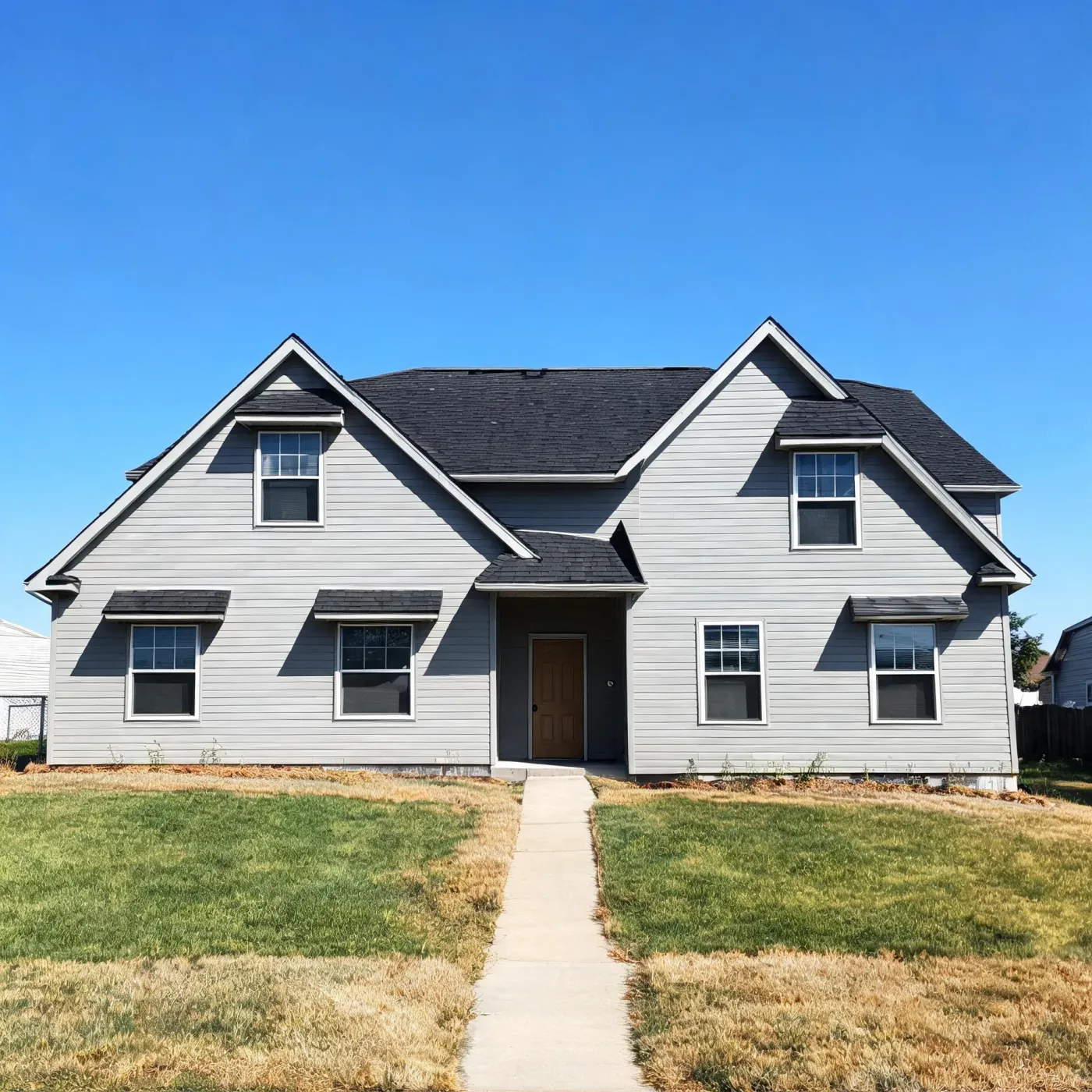
A two-story gray horizontal-siding house with dark shingled gable roofs, a brown front door, and a concrete walkway crossing a patchy green and dry lawn under a clear blue sky.

Hamilton County air carries a dew point around 64°F through June, July and August, based on NOAA climate records. That is thick, heavy air, the kind where the AC isn't just cooling, it's pulling a lot of moisture out too. An aging unit feels that load more than a newer one does. It runs longer to wring the water out of the air before the house actually feels cool, and a compressor already working past its years doesn't recover between cycles the way it used to. If your afternoons are stretching into long runs with little to show for it, a contractor who works on systems in this kind of humidity all summer can tell you quickly whether that's normal strain or a sign the unit is done. One contractor, looking at your actual equipment, can save you the guesswork.

NASA POWER T2MDEW

Get matched with an air conditioner pro in Hamilton County

A licensed installer who works in Hamilton County gets your project.

No fee to send it, and nothing to sign.

A unit under 10 years old, with a repair under a few hundred dollars, is almost always worth fixing. You already have a working system and years of life left in the compressor.

A unit past 10 years old, needing a major repair, is a different math. You'd be putting real money into a system that's already closer to the end than the start.

A woman wrapped in a thick gray blanket sits in an armchair with an open book on her lap, beside a lit lamp and a frost-covered window.
A woman in a cream knit sweater sits in an armchair with her eyes closed beside a window showing orange autumn foliage, with a lamp behind her and a cup of tea and white flowers on a side table.

Your air conditioner isn't making cold air. It's moving heat out of the house, and refrigerant is what carries it. The compressor squeezes that refrigerant into a hot, pressurized gas, then sends it out to the coil in the outdoor unit. A fan pulls air across that coil so the heat can leave the refrigerant and go outside, which is why dust on the coil or something blocking the airflow around it makes the whole system work harder. Once the refrigerant gives up its heat, it comes back inside as a cool gas, and the blower pushes your house air across the indoor coil and out through the ducts. That loop runs over and over all summer. The compressor does the hardest part of that work, so it's usually the first thing to lose capacity as a unit gets old. And if a contractor ever says your system is low on refrigerant, that's not normal wear. Refrigerant doesn't burn off on its own. Low refrigerant means it's leaking out somewhere in that loop.

How your AC actually cools

  • Refrigerant moves through the compressor, the outdoor coil, the indoor coil and the expansion valve in a closed loop, over and over.
  • The compressor squeezes the refrigerant into a hot, high pressure gas before it ever reaches the outdoor coil.
  • The outdoor fan pulls air across that coil to carry the heat off, which is why clearance and a clean coil matter.
  • Inside, the refrigerant turns back to a cool gas in the indoor coil, and the blower pushes air across it and into your ducts.
  • A unit nearing the end of its life often loses capacity at the compressor first, since it works the hardest and runs the hottest.
  • Low refrigerant doesn't get used up like fuel, so if a unit needs a recharge, it's leaking somewhere in that loop.
An outdoor air conditioner condenser unit on a concrete pad beside a house with light gray horizontal siding, with mulch and green shrubs on either side and a concrete walkway in the foreground.
Before you get your air conditioner installation
A gray outdoor air conditioning condenser unit on a concrete pad beside a house with horizontal siding and a stone veneer base, with refrigerant line and electrical disconnect box on the wall and flowering shrubs to the left.
After you get your air conditioner installation

Cooling runs June through August

Three months of real cooling doesn't sound like much, but it's three months where your AC can't take a day off. An aging unit that struggles in June usually isn't getting better by August.

NOAA nClimDiv 1991-2020

A gray outdoor air conditioner condenser unit on a concrete pad beside a house with horizontal vinyl siding, surrounded by mulch, flowering shrubs, and lawn.

Still working the way it should

The unit outside sits on its pad with clear space around it, mulch and grass well clear of the cabinet. Air moves through the coil fins without resistance. It cycles off when the house reaches temperature instead of running straight through the afternoon.

A weathered outdoor air conditioning condenser unit on a concrete pad beside a house with light horizontal siding, an electrical disconnect box and conduit on the wall, and mulched soil on either side.

Choking on its own coil

Dirt and grime cake the fins and the cage around them, cutting off the airflow the unit depends on to shed heat. The compressor inside works harder to do the same job. Left like this through a Carmel summer, that strain is what pushes a unit toward failure.

The age of your unit and the size of the repair are the two things that decide this, and you've got the facts in front of you now. A compressor failing past 10 years old is a new system. A clean coil still cycling off like it should is a repair, and a cheap one. What doesn't change is the summer itself: the dew point sits near 64°F for three straight months here, and your AC has to work through all of it with no break. If you decide replacement is the right call, you'll want someone who knows Hamilton County systems well, the units that handle this humidity and the ones that struggle with it, not a crew unfamiliar with what this climate does to a compressor. You'll be matched with one licensed local contractor, not a handful competing for your number, someone who works on units like yours all season and can tell you straight whether your system is worth saving or past it.

A gray outdoor air conditioner condenser unit sits on a concrete pad beside a house with horizontal lap siding, with shrubs and bare soil to the left.

Get the right pro for your air conditioner

New system or replacementCentral ACHamilton County, IN
Step 1 of 2

What ZIP code is the job in?