

How long a central air conditioner lasts in Indiana

A local installer who puts in air conditioners gets your project.

Find an air conditioner pro

How long does a central air conditioner last in Indiana?

Your AC has been running hard through another sticky Indiana summer, and you're wondering if it's getting close to the end, or if that noise it's making is something to worry about yet. Knowing roughly how long these units hold up helps you plan ahead instead of getting caught without cooling in July.

About 12 to 15 years

Most central air conditioners run 12 to 15 years before they need to be replaced. In Indiana, the unit works hard from roughly May through September, and that steady summer stretch of heat and humidity wears on the compressor and coils faster than it would in a milder climate. A unit that sits unused most of the year wears slower, but Indiana summers don't give it that break. Since most homes here heat with gas, the air conditioner isn't carrying any heating load in winter, so its hours of real work come almost entirely from those warm months. How well it was maintained and whether it's been sized right for the house both affect where in that range yours ends up.

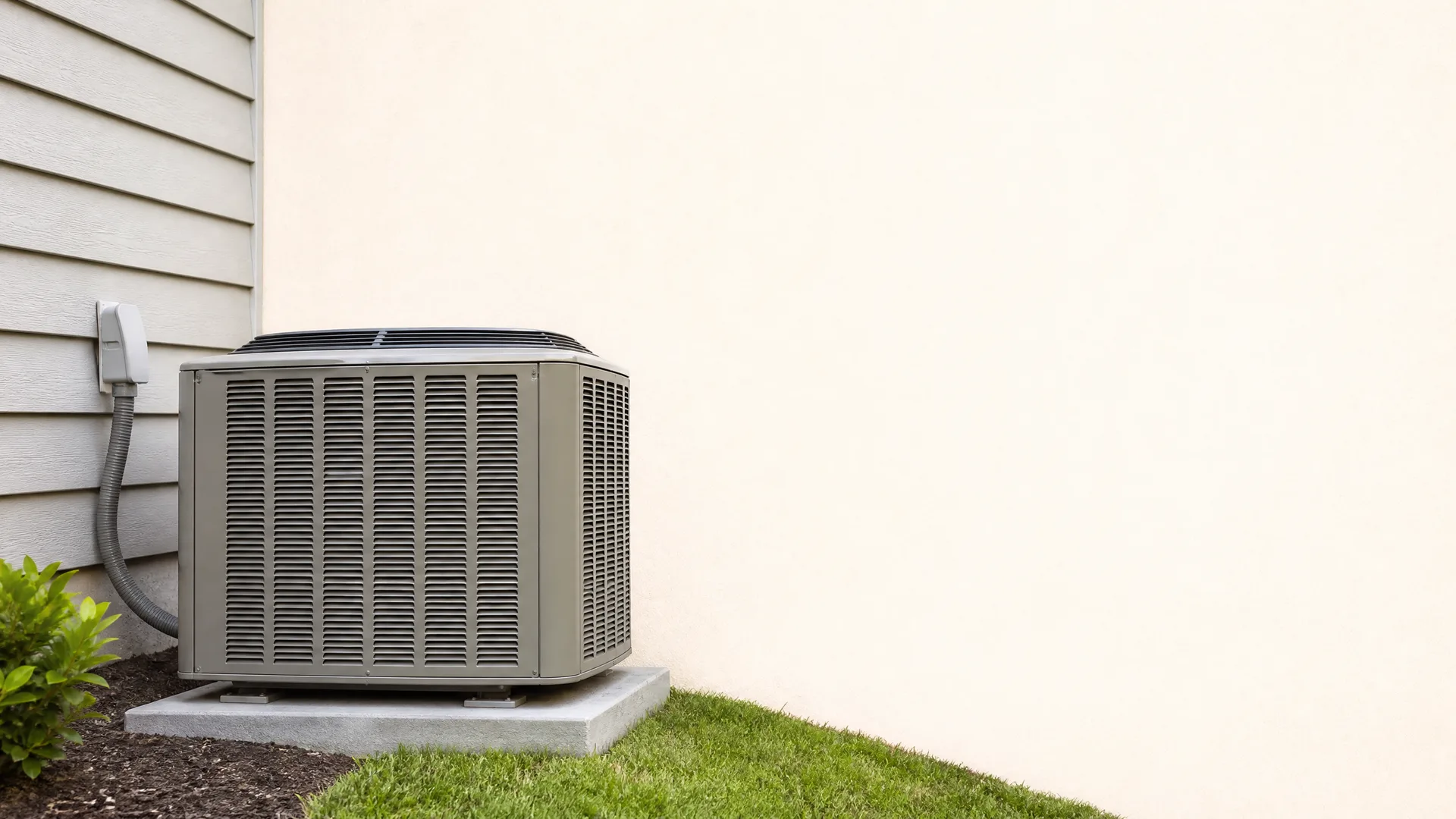
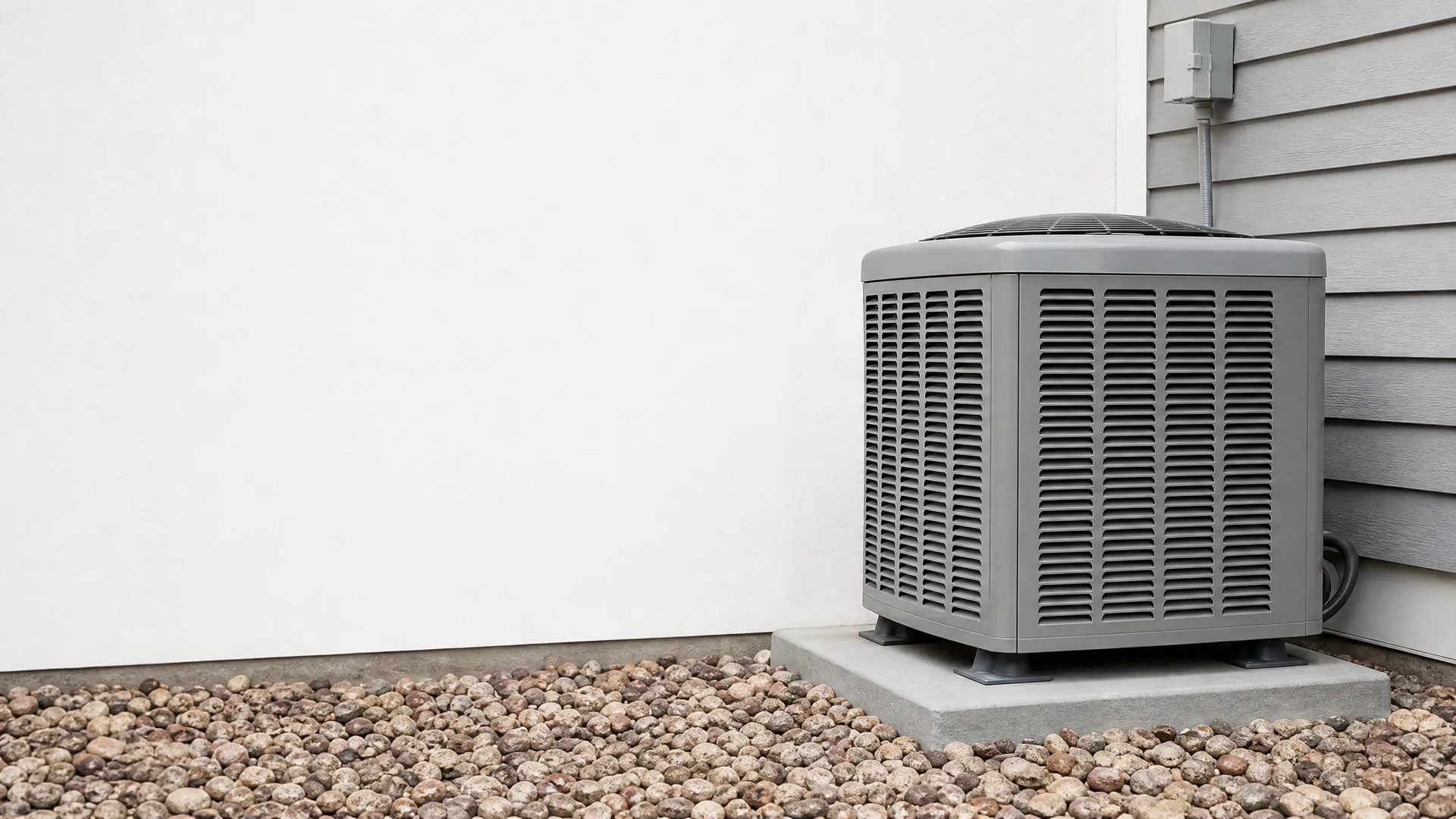
An outdoor air conditioning condenser unit on a concrete pad at the corner of a house, next to vinyl siding and a plain light-colored wall, with grass and a mulch bed in the foreground.

What actually wears the unit out

The outdoor condenser sits outside in the heat and the humidity, running for hours at a stretch on the worst days of July and August. That strain adds up faster here than in a dry climate. The compressor is the part most likely to fail first, since it carries the heaviest load every time the system cycles on. A unit that runs constantly through a sticky Indiana summer logs more hours in a season than one in a milder state would in two.

A gray outdoor air conditioning condenser unit sits on a concrete pad beside a white stucco wall and gray horizontal siding, surrounded by rounded landscaping gravel, with an electrical disconnect box mounted on the siding above.

Why the gas furnace matters here

Most homes in Indiana heat with a gas furnace, and the AC's outdoor unit usually pairs with that same furnace's blower and indoor coil to move air through the house. If the coil or the blower motor is original to the house and starting to go, replacing just the condenser outside won't fix what's failing inside. A mismatch between an aging indoor coil and a new outdoor unit can also shorten the life of whatever you install next.

Repair It or Replace It

Keep repairing

  • A single repair, a capacitor or a contactor, usually costs far less than a new system up front.
  • If the unit is still under ten years old, another season of use is a reasonable bet.
  • Repairs let you spread the cost out instead of paying for a full install at once.
  • If the compressor itself is sound and only a smaller part failed, fixing it keeps a working unit working.
  • You avoid the disruption of an install, the days of coordinating with a contractor and having the old unit pulled out.

Replace now

  • A unit past 15 years is working against the odds, and the next failure could be the compressor itself.
  • Newer systems handle Indiana's humidity with less strain, since they're not already worn from years of summer heat.
  • Once a unit needs a second or third repair in a few years, the money spent on patches starts to rival the cost of installing new.
  • A failing compressor on an old unit often costs close to what a new system would, so repairing it is money you won't recover.
  • Installing now means you choose the timing, instead of replacing in a panic when the unit quits in the middle of a 90 degree week.
  • A new unit comes with a manufacturer's warranty, where an aging unit's coverage has likely already run out.
A gray outdoor air conditioner condenser unit on a concrete pad beside a house with horizontal siding and a stucco foundation, with a disconnect box and conduit on the wall, decorative gravel, mulch, and a shrub nearby.

Running clean

This is what a condenser should look like all summer. The grilles are clear, air moves through the coil the way it's supposed to, and the unit isn't fighting to pull heat out of your house. A unit that stays this clean usually earns its full years of service.


An outdoor air conditioning condenser unit on a concrete pad beside a house with horizontal lap siding, with an electrical disconnect box and conduit on the wall, mulch and a green shrub to the right, and a concrete walkway in the foreground.

Choked with debris

Dirt and cut grass packed into the coil grilles make the compressor work harder to move the same amount of heat. Run a unit like this through enough Indiana summers and the strain catches up with it years before it should've needed replacing.

A gray-haired man in a dark coat dusted with snow stands in a warmly lit home entryway, with a lamp, sofa, window and white staircase banister behind him.
An older man with gray hair and a beard, wearing a dark coat dusted with snow and a blue plaid scarf, stands smiling in a dimly lit entryway with a window, framed picture, table lamp and staircase behind him.
A gray-haired, bearded man in a dark winter coat with snow on the shoulders stands in a doorway of a home interior with a lit lamp, framed pictures, a potted plant and a staircase behind him, and an evergreen wreath at the left edge.
A gray-haired man in a dark coat with snow on the shoulders and collar stands smiling in a dimly lit entryway with a paneled front door, lamps, and a framed picture in an adjoining room.
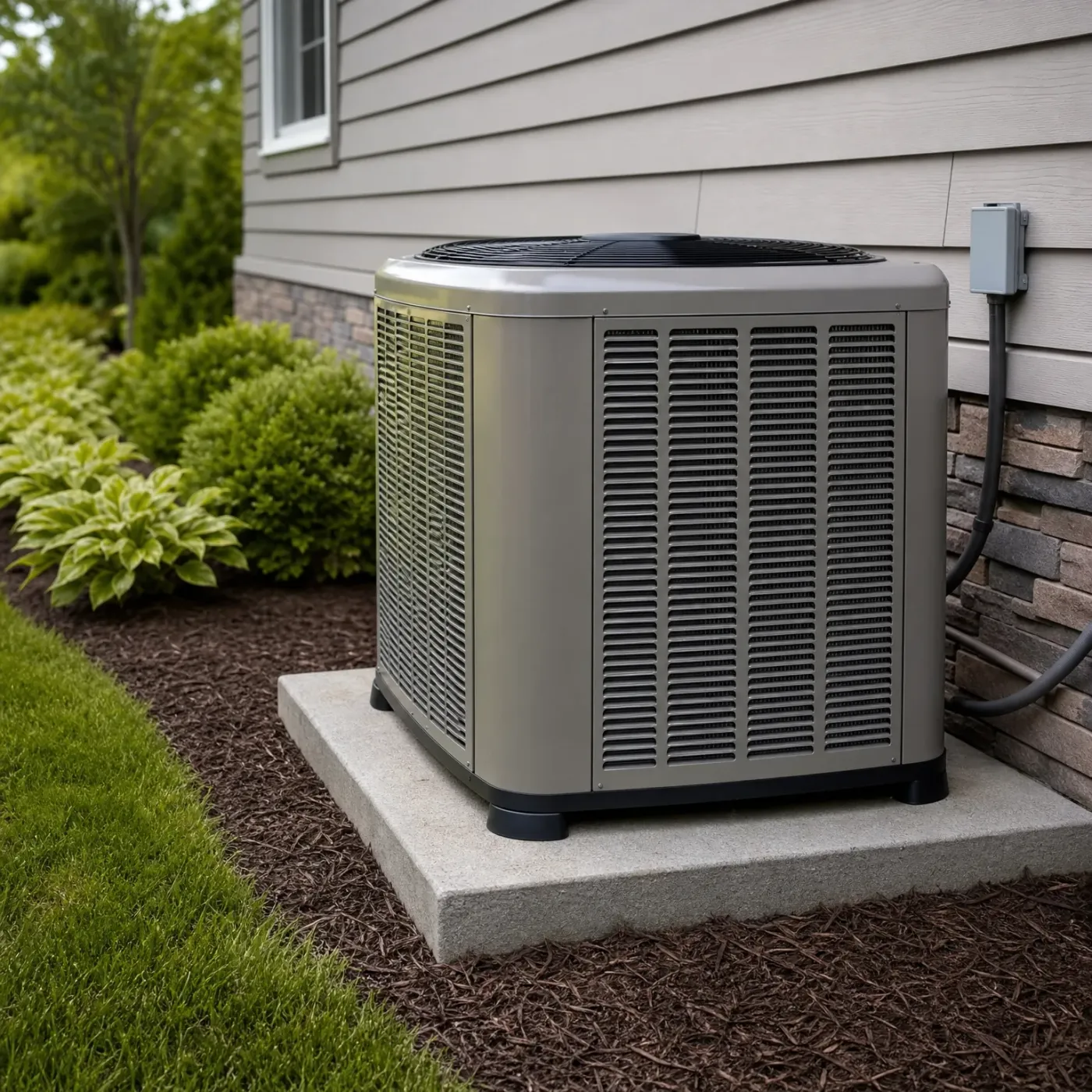
An outdoor air conditioning condenser unit on a concrete pad beside a house with horizontal siding and stone veneer, with a gray electrical disconnect box and conduit on the wall and shrubs and mulch nearby.

Matched to your air conditioner job

One installer gets your project, so there's no bidding war over it.

Get in touch with a local installer about a new air conditioner.

Reach a local pro

No fee to send it, and nothing to sign.

A gray outdoor air conditioner condenser unit on a concrete pad beside a house with horizontal lap siding, with a flowering shrub at left and a disconnect box with conduit on the wall at right.
A unit like this is still pulling its weight, cycling on and off the way it should on a July afternoon.
An outdoor air conditioner condenser unit on a concrete pad beside a house with light horizontal vinyl siding, surrounded by bare dirt, gravel and dry leaves, with refrigerant lines and conduit running along the wall.
Leaves packed against the base and lines left bare like this usually mean the unit has been struggling for a while.

How the parts fail

  • The compressor pulls refrigerant through the system, and once it starts failing, the whole unit usually follows within a year or two.
  • A capacitor gives the compressor and fan motor the jolt they need to start, and when it weakens, those motors strain every time the unit cycles on.
  • Low refrigerant almost always means a leak somewhere in the coil or line set, not normal use, since the system is sealed and doesn't burn it off.
  • The outdoor coil has to release heat into the air outside, and dirt or bent fins make it work harder to do that same job.
  • A dirty air filter restricts airflow across the indoor coil, which can ice it over and send liquid refrigerant back toward the compressor.
  • The contactor is a small switch that sends power to the compressor and fan, and pitted contacts there are a common reason a unit won't start on a hot afternoon.

Most of what shortens a central air conditioner's life traces back to a handful of parts, and they tend to fail in a order. The capacitor usually goes first. It stores the charge that kicks the compressor and fan motor into motion, and a weak one makes both motors strain every time the thermostat calls for cooling. That strain shortens the life of whatever it's starting. The contactor works alongside it, a small switch that closes to send power to the compressor and fan. Pitted or burnt contacts there are why a unit sometimes just hums instead of starting on a hot afternoon. Refrigerant is a different kind of problem. The system is sealed, so it doesn't get used up the way oil or gas does. If the level is low, there's a leak somewhere in the coil or the line set, and running the unit low on refrigerant makes the compressor work harder than it was built to. The outdoor coil has a simple job, releasing the heat pulled from inside the house into the air outside, and dirt or bent fins make it fight to do that. Inside, a dirty filter restricts airflow across the indoor coil, which can ice over and send liquid refrigerant back where only gas should go, toward the compressor. The compressor itself is the part that ties all of this together, and once it starts to go, the rest of the unit usually isn't far behind.

An outdoor air conditioner condenser unit sits on a concrete pad beside a stucco wall, with refrigerant lines and conduit running to the wall and a shrub to the left.
Before you get your air conditioner installation
A gray outdoor air conditioner condenser unit on a concrete pad beside a house with dark horizontal siding and a stone base, surrounded by gravel, with a flowering shrub at left and a concrete walkway in front.
After you get your air conditioner installation
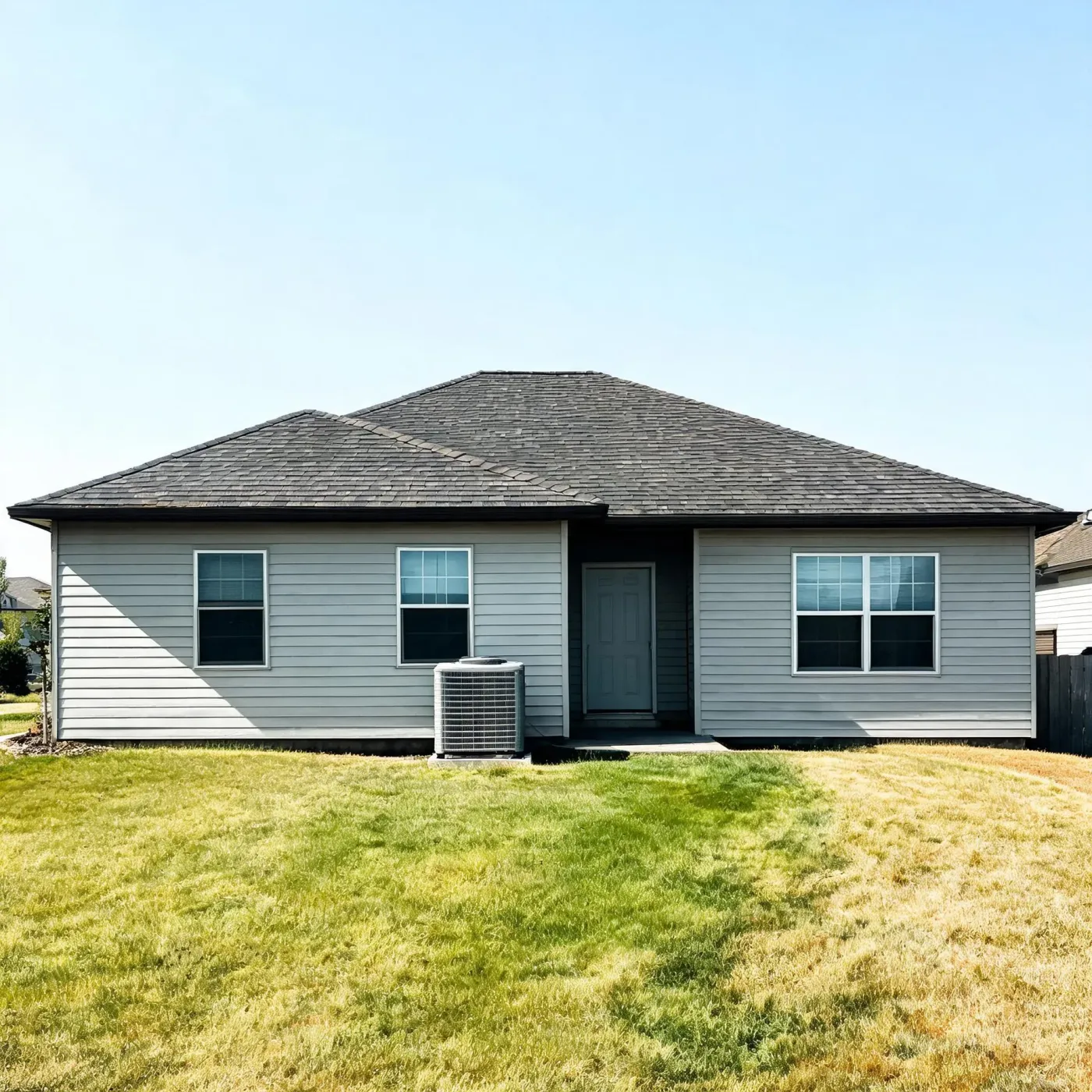
Rear view of a single-story gray vinyl-sided house with a dark shingled hip roof, three windows, a center door, an outdoor air conditioning unit, and a patchy green and brown lawn under a clear sky.

A dew point averaging 64°F across June, July and August, per NOAA climate data, means the air here holds a lot of moisture even when the temperature itself isn't extreme. Your air conditioner has to pull that moisture out before the house feels comfortable, not just cool the air. That's more work than a dry 90 degree day asks of it. The compressor runs longer to get the same result, and it keeps running after the thermostat would normally let it rest. Over a summer, that adds hours the unit wouldn't log in a drier state, and those extra hours are part of what wears a compressor down before its time.

NASA POWER T2MDEW county cells weighted by homes

A woman with dark shoulder-length hair sits wrapped in a gray fleece blanket on a sofa with an open book on her lap, beside a lit lamp and a dark window.
A smiling older woman with gray shoulder-length hair in a cream cable-knit turtleneck sweater stands behind a wooden board holding a round loaf of bread, in a warmly lit kitchen with a dark window and shelves behind her.
A man with a duffel bag walks up a concrete path toward a white board-and-batten house where a woman stands in the open wooden front door, flanked by potted plants and black lanterns.

Most Indiana units make it 12 to 15 years

That's the range for a unit that gets a clean filter, clear grilles, and a yearly look from someone who knows what to check. Where yours falls in that range depends on how it's been used and kept up, not just its age. A unit coming up on year twelve that's been running clean all summer is in a different spot than one that's been short-cycling and caked with debris at year eight.

If you're past that range, or the repairs keep adding up, the next step is finding someone who can look at your specific unit and tell you where it stands. A contractor local to your part of Indiana who installs and services this equipment every summer has seen what usually fails first in units that run this hard through a humid season. You'd be matched with one contractor, not several, and that's who reaches out to go over what your house needs.

A shallow dark wooden bowl and a stack of books rest on a wooden table in front of a beige sofa with linen and green cushions, with a tall ceramic vase of thin branches beside a window in the background.
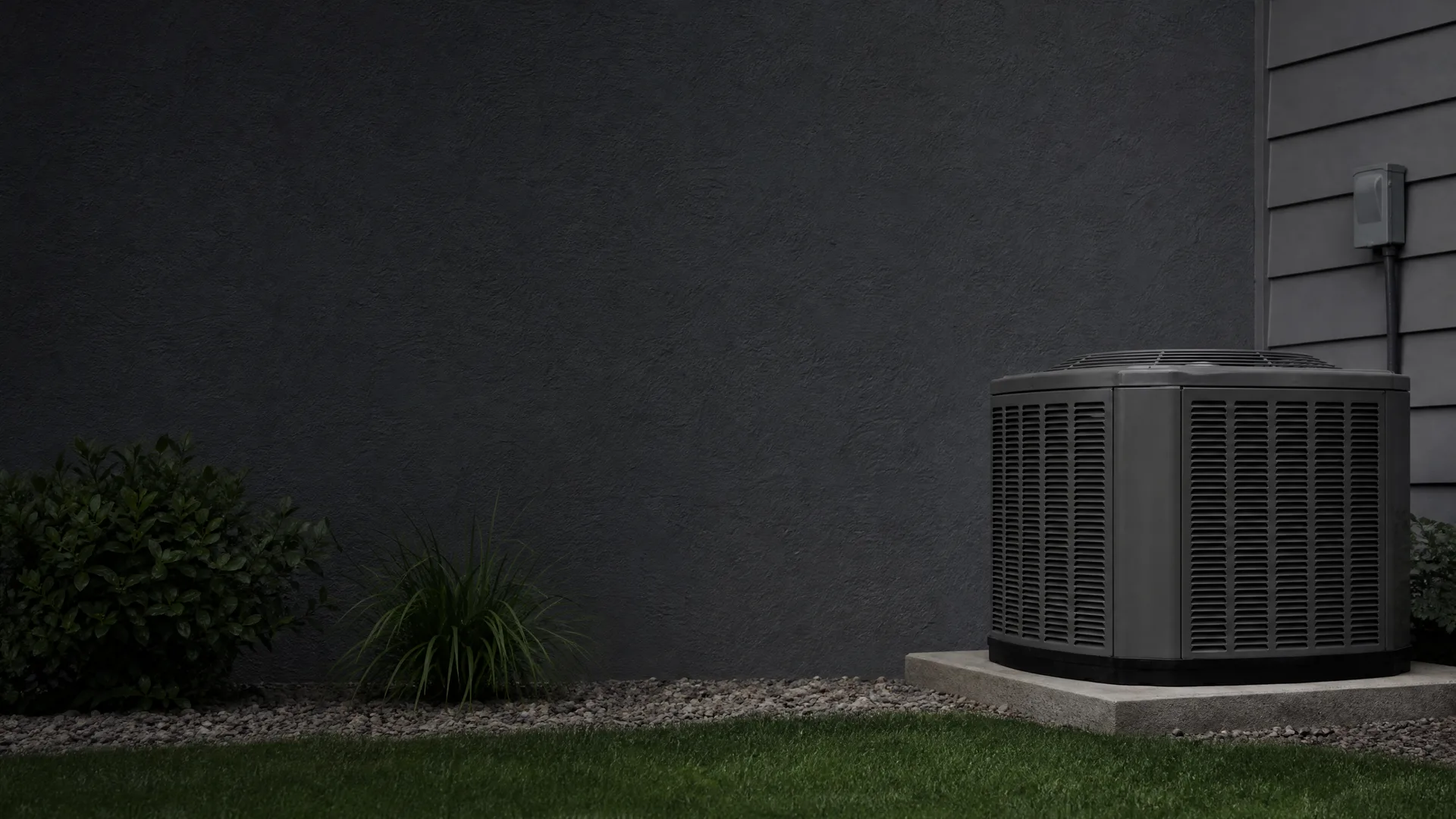
An outdoor air conditioning condenser unit on a concrete pad beside a dark stucco wall, with gravel bedding, shrubs, an ornamental grass clump, and a lawn in the foreground.

An air conditioner pro near you

Your request goes to one pro, not a list of companies.

New system or replacementCentral ACIndiana
Step 1 of 2

What ZIP code is the job in?