





How long an AC unit lasts in Carmel, IN

New system or replacementCentral ACHamilton County, IN
Step 1 of 2

What ZIP code is the job in?

How long does an AC unit last in Carmel, IN?

You've had the same air conditioner running for a while now, and with another muggy Carmel summer behind it, you're wondering if it's getting close to the end. Maybe it's running longer than it used to, or you just want to know what to expect before it quits on a hot July afternoon and leaves you scrambling.

Most AC units last 12 to 15 years

A central air conditioner in Hamilton County typically runs 12 to 15 years before it needs replacing. Summers here get sticky enough that the system works hard from roughly May through September, and that steady demand wears on the compressor and coils faster than it would in a milder climate. A unit that's 15 years or older and starting to run longer cycles or struggle to keep the house cool is likely nearing the end of its useful life, even if it hasn't failed outright. If your system came with the house, it's worth finding out its age rather than guessing. Once a unit passes that mark, repairs tend to get more frequent and less worth the cost compared to putting in a new one.

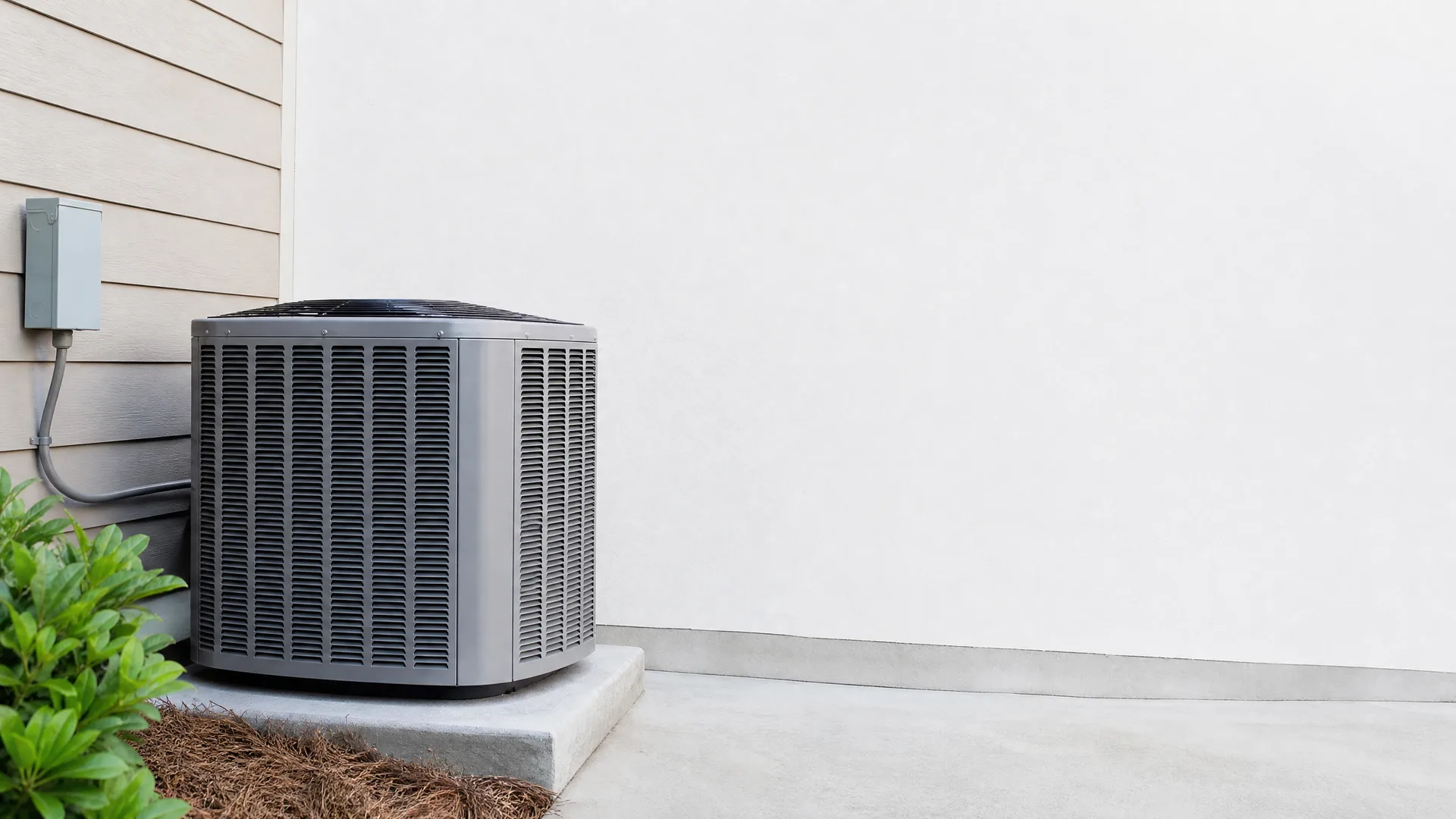
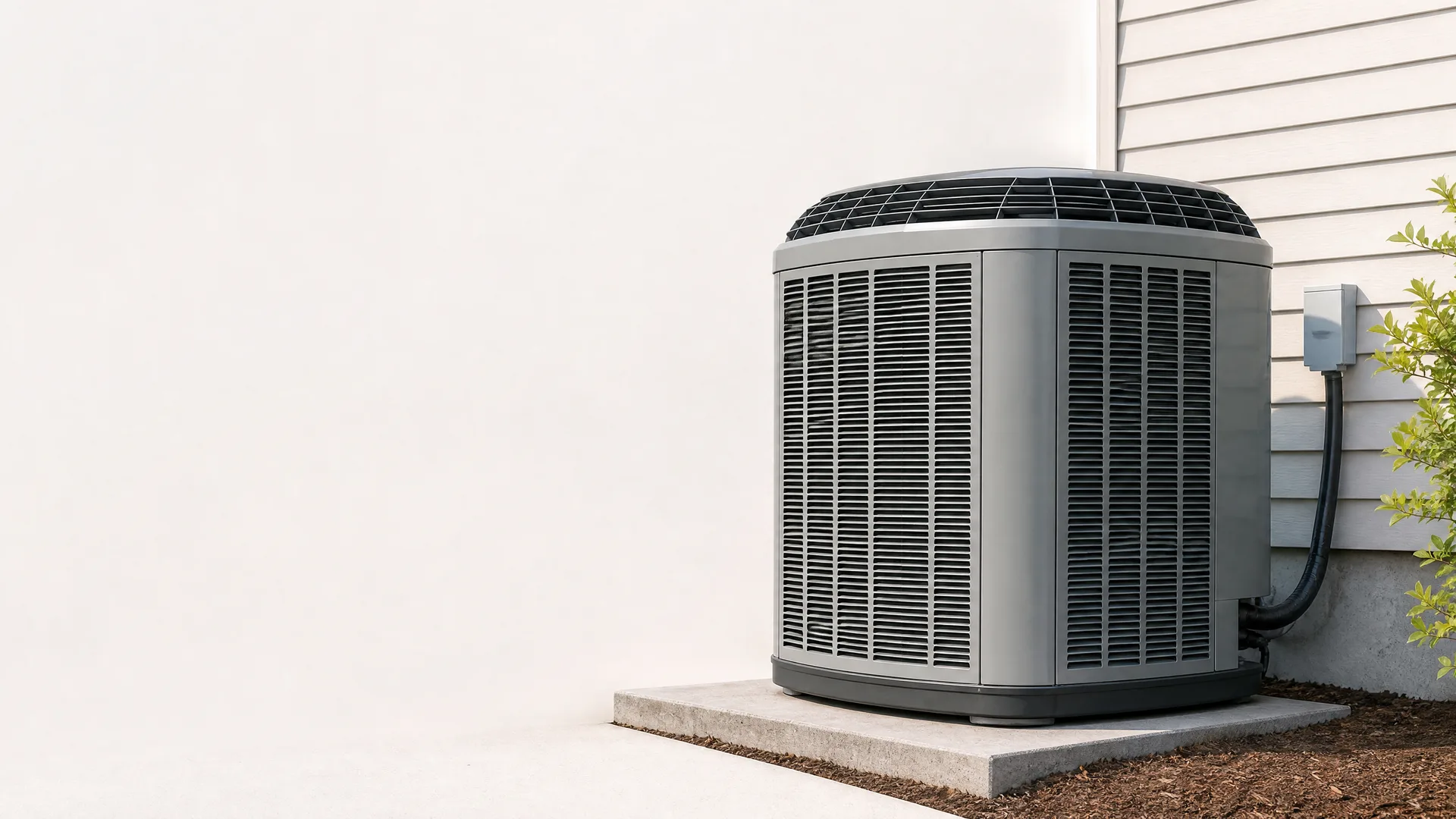
A gray outdoor air conditioner condenser unit sits on a concrete pad beside a house, with a gray electrical disconnect box and conduit on the lap-siding wall above it and a green shrub and pine straw at the lower left.

What actually wears the unit down

The compressor runs hardest on the hottest days, and Hamilton County gives it plenty of those. Every summer the outdoor unit cycles on and off for months, and the motor and coil take the heat straight from the air around them. A system that sits outside through cold winters too goes through constant swings in temperature. None of that stops; it just adds up year after year until something gives out.

A gray outdoor air conditioner condenser unit on a concrete pad beside a light-colored stucco wall and horizontal lap siding, with an electrical disconnect box, conduit, mulch, and a shrub at right.

Why age alone isn't the answer

Two units installed the same year can wear very differently depending on how well they were sized for the house and how consistently they were serviced. A unit that's been maintained on schedule can outlast one left alone, even if both have seen the same Carmel summers. If yours came with the house, you likely don't know which story it's had, and that matters more than the number of years on the calendar.

Cooling runs June through August

Three months of real work a year isn't much, but Carmel packs the heat into those months. Your unit sits idle most of the time, then runs hard through June, July and August. That pattern of long rest and heavy use is normal, and it's what the lifespan estimates below are built on.

NOAA nClimDiv 1991-2020

Replace it now or wait

If your AC is past 12 years and still running, you can keep it going until it quits, or you can replace it before that happens. Waiting costs you nothing as long as it keeps working, but when a compressor fails in July, you're choosing a new system under pressure, in the heat, with the old one already dead. Replacing ahead of that means you pick the timing. You're not stuck comparing contractors while your house sits at 85 degrees, and you're not the family trying to get someone out the same week every other AC in Hamilton County picked to fail too.

Repair or replace the old one

A repair makes sense when the unit is younger and the fix is small, a capacitor or a run of refrigerant. It stops making sense once the repairs keep coming and the unit is already old for the job it's doing. Carmel summers don't give an aging system a break to recover between breakdowns. Each repair buys you some months, not certainty, and the next failure can land on the hottest week of August. Replacing means you stop paying for patches on a system that's already told you it's done, and you're not left calling around for a repair tech on short notice every time it slips again.

A bearded man in a dark sweater leans back in a black leather armchair with his eyes closed, with a bookshelf, potted plant, window and a sofa holding a folded newspaper behind him.
A man in a blue sweater sits in an armchair with his eyes closed, beside a window and a side table holding a mug and a folded newspaper, with a dark bookshelf behind him.
A man in a gray knit sweater leans back on a brown leather sofa with his eyes closed, in a room with bookshelves, a lamp, plants, and a side table holding a folded newspaper and a dark mug.
A man in a dark gray sweater reclines in a brown leather armchair with his eyes closed, beside a wooden table holding a striped mug and folded newspapers, in a living room with a sofa, bookshelf, lamp, and window blinds.

Done looking for an air conditioner pro

Skip collecting and comparing quotes for the new air conditioner.

You only hire the pro if you want to.

A gray outdoor air conditioning condenser unit on a concrete pad beside a house with horizontal lap siding, with a wall-mounted electrical disconnect box and refrigerant lines, shrubs, mulch and lawn around it.

Working the way it should

A unit like this is doing its job. The pad is clear, the coil fins are clean, and the disconnect box is easy to reach if a contractor needs it. Nothing here is forcing the compressor to work harder than the heat already does.


An outdoor air conditioner condenser unit on a concrete pad beside a house wall with stucco lower section, horizontal siding above, and a white downspout to the right.

Running on borrowed time

Grime like this on the fins makes the coil trade heat poorly, so the compressor runs longer to do the same job. Weathered cabinets and refrigerant lines like these often mean a unit that's been through enough Carmel summers to be near the end.

Repair It or Replace It

Old unit, new problems

  • A compressor that's worked 15 Carmel summers doesn't get stronger, and a repair now doesn't undo that wear.
  • R-22 systems cost more to service every year since the refrigerant itself is harder to find and buy.
  • One repair this August doesn't mean the next part won't fail next July when the heat comes back.
  • Older units pull more power to do the same cooling, so the bill reflects the extra effort even before anything breaks.
  • A contractor fixing a 14-year-old unit is patching one weak point while the rest of it keeps aging at the same rate.

New unit, known output

  • A new system comes with a manufacturer's warranty, so the first years carry none of the guesswork an aging unit does.
  • Current units are built to cool the same house for less power, which shows up on the bill through next summer's heat.
  • Sizing a replacement correctly means it runs the way it's supposed to from the first hot week, not just when it's new.
  • You pick the installer and the timing instead of making the call in the middle of a July breakdown.
  • A new compressor starts its 12 to 15 years now, instead of you wondering how many are left on the one you have.
  1. The thermostat calls, and the compressor starts pumping refrigerant

  2. Refrigerant absorbs heat from the air passing over the indoor coil

  3. The compressor pushes that heat outside through the condenser coil

  4. The blower sends the cooled air back through your ducts

A gray outdoor air conditioning condenser unit on a composite pad beside a house with horizontal lap siding, with a wall-mounted disconnect box, refrigerant lines, and a wooden fence and shrubs to the left.
Nothing here forces the compressor to work past what the heat already asks of it.
An outdoor air conditioning condenser unit on a concrete pad beside a house with light vinyl siding, with electrical conduit running to a wall-mounted disconnect box and a shrub in mulch to the right.
Wiring run loose at the wall and a unit crowded against the siding block the airflow a contractor needs to check it.

An old AC in Carmel doesn't fail on a mild day. It fails in late July, at two in the afternoon, when the compressor has been running almost nonstop and the house has been sitting at 80 degrees since noon. That's when you notice the air coming out isn't cold anymore, or the outdoor unit has gone quiet while the blower keeps running. By then you're not choosing a good time to replace it, you're waiting on whoever can get to you fastest while the house keeps heating up. A unit past 12 years that's already losing ground in the spring, running longer to hit the same setpoint, is telling you which way this goes. Replacing it on your own schedule means picking the week, the unit, and the contractor. Waiting for it to fail means none of that is yours to pick anymore.

An outdoor air conditioning condenser unit sits on a concrete pad beside a house with horizontal vinyl siding, with a gray electrical disconnect box and insulated refrigerant line on the wall above, surrounded by bare mulched ground.
Before you get your air conditioner installation
A gray outdoor air conditioning condenser unit sits on a concrete pad beside a house with horizontal siding, connected by insulated lines to a wall-mounted disconnect box, with a shrub and gravel bed to the right.
After you get your air conditioner installation
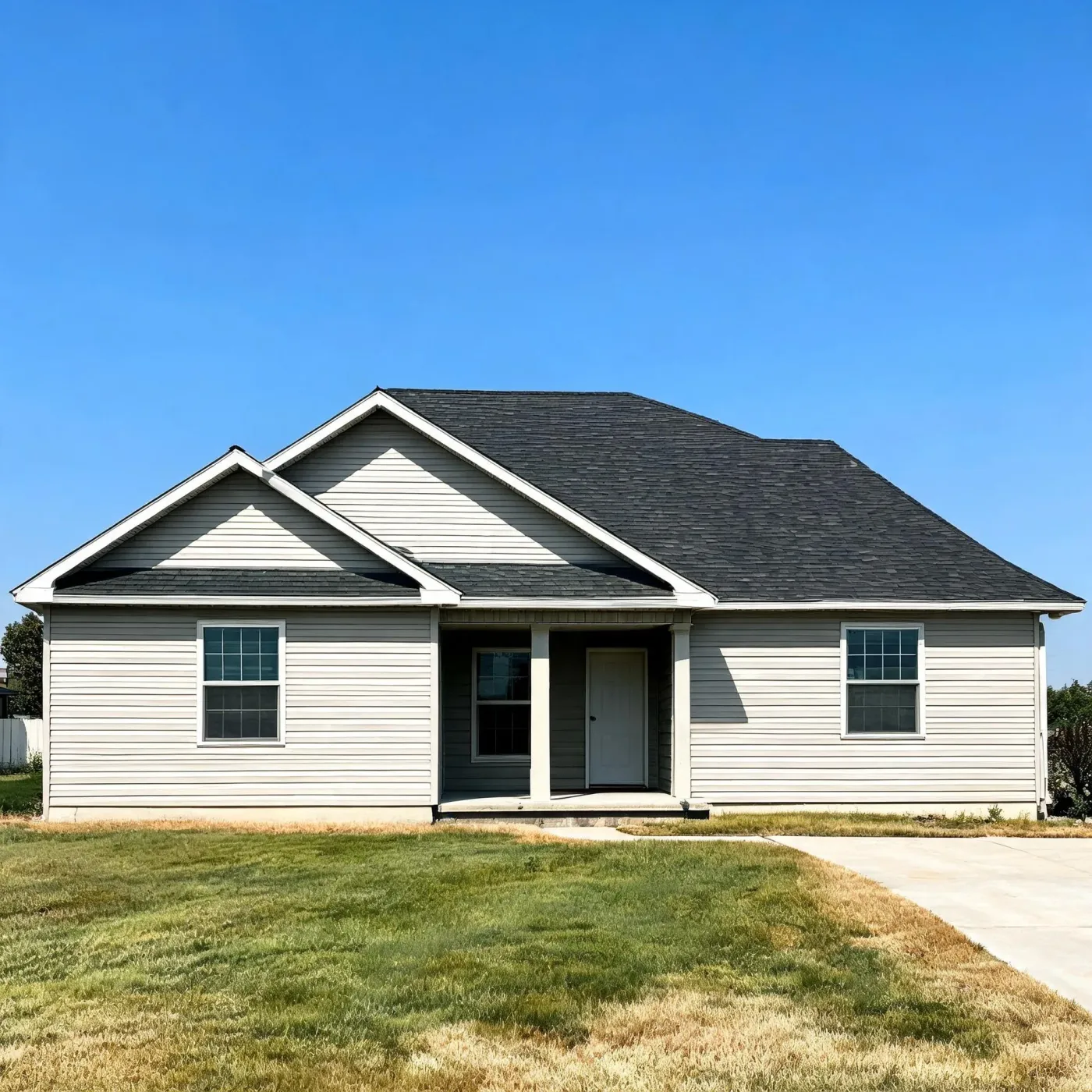
A single-story house with light beige vinyl siding, dark gray gabled shingle roof, a small covered front entry, and two windows, fronted by a patchy green and brown lawn with a concrete driveway at right under a clear blue sky.

Hamilton County's summer dew point averages 64°F across June, July and August, according to NOAA climate data. That's heavy, damp air, and your air conditioner has to pull real moisture out of it before the house feels dry and comfortable, not just cool. An older unit with a weakening compressor struggles more with that moisture load than it does with temperature alone. You'll notice it as a clammy feeling indoors even when the thermostat says you've hit your set point, and it's often the first sign that a unit is losing capacity before it fails outright.

NASA POWER T2MDEW

An older man with gray hair and a beard, wearing a dark blue fleece zip jacket, leans back in an upholstered chair with his eyes closed in sunlight near large windows, with a potted green plant and bare trees behind him.
A woman in a cream knit sweater sits with closed eyes in an armchair beside a window showing orange autumn foliage, with a mug and plate of cookies on a small side table.

Where your AC stands now

  • Most AC units in Carmel last 12 to 15 years given the summer load described above.
  • Past that point, a unit is running on borrowed time even if it's still cooling the house right now.
  • Waiting for a failure means deciding on a replacement in the middle of a July heat wave instead of on your own schedule.
  • An AC that's past 12 years and still working gives you a choice; one that's already failed does not.
  • Sending one form replaces calling several contractors, explaining the same problem each time, and sorting through quotes yourself.
  • Where your unit falls on that 12 to 15 year range is something a contractor can tell you from the unit itself, not just its age.

A Carmel summer asks a lot of an air conditioner, and most give back 12 to 15 years before the wear catches up. That range isn't a guess. It comes from how hard the compressor works through June, July and August, and how little it has to do the rest of the year. If your unit falls inside that window, it's not a question of if it needs attention, just when. Still cooling the house today doesn't mean it will the next time a heat wave sits over Hamilton County for a week straight.

A unit that's already failed doesn't give you that choice. You're calling around in the middle of a hot afternoon, explaining the same problem to whoever picks up, trying to figure out who can actually come out that day and what a fair price looks like. A unit that's still running, even past 12 years, gives you room to get ahead of that. You can have a contractor look at what's actually happening inside it, the compressor, the coil, the refrigerant charge, and get a straight answer about where it stands instead of waiting to find out the hard way.

Sending one form does what calling around would otherwise take you an afternoon to do. No repeating yourself to three different companies, no stacking up quotes to compare on your own. One step, and the rest of the search is off your plate.

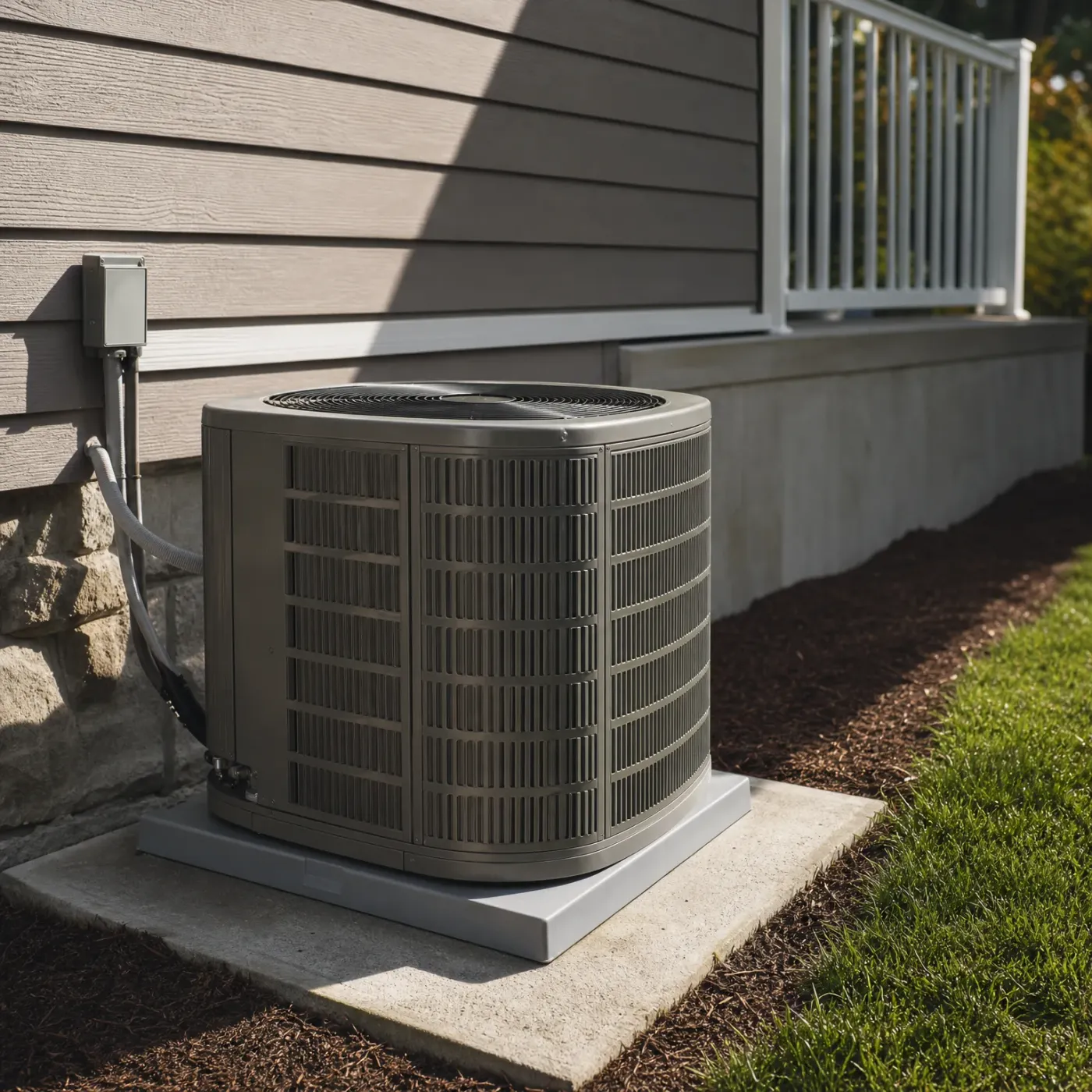
An outdoor air conditioner condenser unit on a concrete pad beside a house with horizontal lap siding, a stone foundation, an electrical disconnect box on the wall, mulch bed and lawn to the right, and a white railing above a concrete retaining wall in the background.

It's off your list after this

Hand off the search

Skip the round of in-home estimates for a new air conditioner.

Asking costs nothing, and the choice to hire stays yours.