
When to replace a heat pump in Carmel, IN

Your new heat pump project goes to an installer who works in Hamilton County.

Find a pro near me

When should I replace my heat pump in Carmel, IN?

A heat pump in Hamilton County works hard both ways, pulling double duty against muggy summers and cold winters. So wear shows up on both the heating and cooling side, and a system nearing the end of its life tends to struggle in whichever season pushes it hardest. You're trying to figure out if a repair bill is worth paying or if the unit is telling you something bigger.

Replace it around 10 to 15 years old, especially if repairs keep adding up

Most heat pumps last 10 to 15 years before the compressor or reversing valve starts to fail. Once a unit hits that age, a breakdown in January with no backup heat is a real risk, and so is a compressor that quits in July. If your system is in that range and needs a repair that costs a large share of a new unit's price, replacing it is usually the better call. A heat pump that's losing efficiency also runs longer to hit the same temperature, which shows up on the power bill even at typical rates. Some units run past 15 years without trouble. But once repairs get frequent, the math stops favoring the old system.

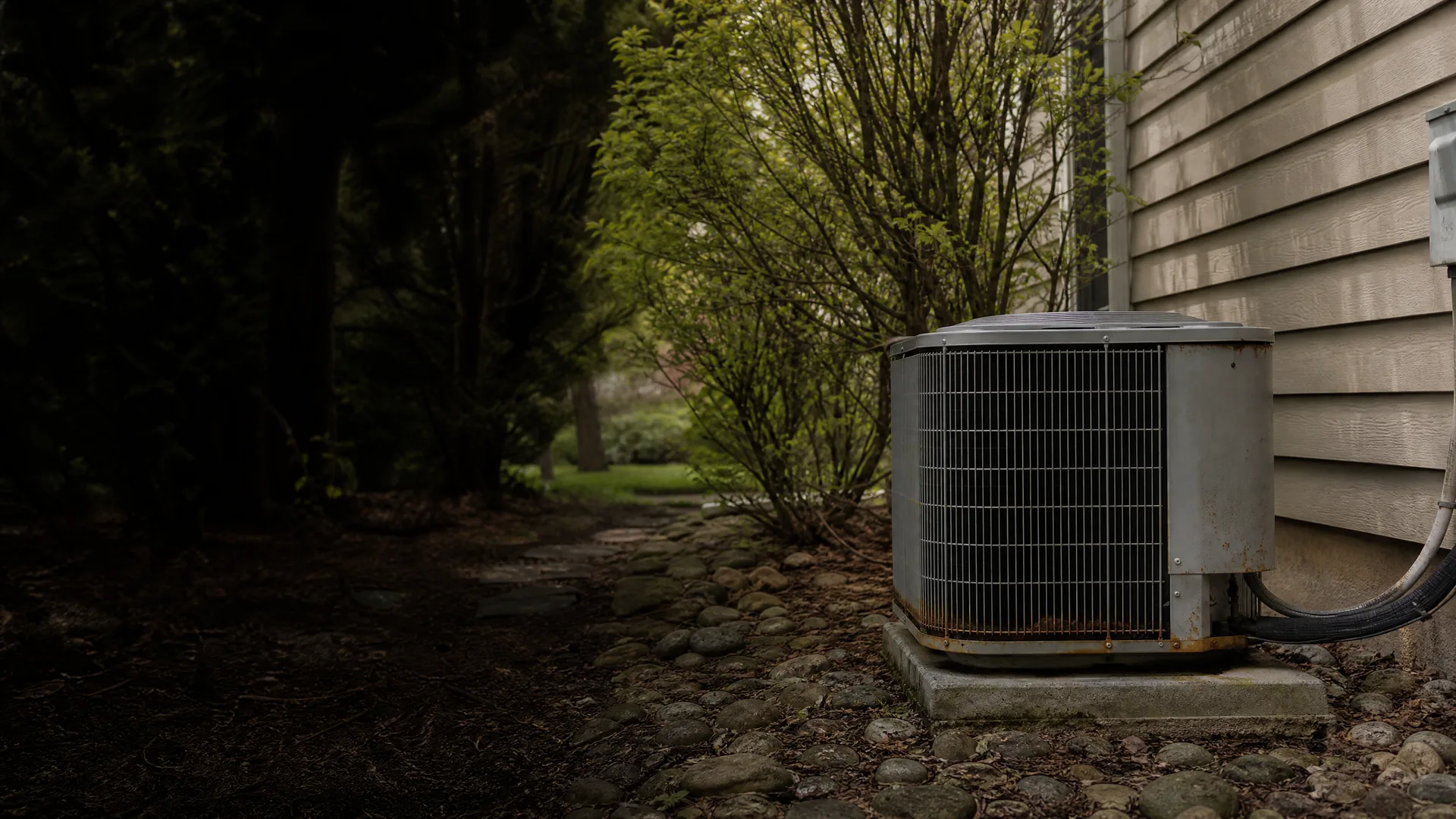
An outdoor air conditioning condenser unit on a concrete pad beside a house with horizontal lap siding, surrounded by rocks, shrubs and trees.

You walk out to check the unit on a mild March afternoon, the kind that makes you think about opening windows instead of running the furnace. The side yard is still soft from melted frost. Rust has crept along the base of the cabinet, flaking where the metal meets the concrete pad. You crouch down and press a thumb against it, and a piece gives way. The fan looks fine. The coil looks fine. But that rust line wasn't there last spring, and you find yourself doing the math on how many winters this one has already gotten through, and how many it has left before a day like today isn't so mild after all.

How hard does your heat pump actually work in Carmel?

  • Winter nights average 22°F

    At 22°F the unit leans on its backup heat strips more, and that wears a system faster than mild days ever would.

  • Heat runs October through May

    Eight months of heating means your heat pump runs more months than it rests, so parts age out faster than in most of the country.

  • Cooling runs June through August

    Three months of cooling adds more hours on the same compressor and coil, on top of what the long heating season already put on them.

NOAA nClimDiv 1991-2020

Repair makes sense now

If your heat pump is still within its first eight or ten years and the problem is a single part, a repair is the reasonable call. A failed capacitor, a stuck reversing valve, or a low refrigerant charge from a slow leak are fixable without touching the rest of the system. If the unit has kept up on both the coldest January nights and the muggiest July afternoons without struggling, one repair now doesn't mean another is coming next month. A contractor who services heat pumps around Hamilton County every season can tell you quickly whether what failed is an isolated part or a sign the system is wearing out everywhere at once.


Replacement makes more sense

Once a heat pump is older and starts needing attention most years, each repair is patching a system that's already working harder than it should. A unit that leans on backup heat strips more than it used to, or struggles to keep the house even through an 8-degree night, is losing ground it won't get back. Rust at the cabinet base, a compressor under strain, or refrigerant that keeps low no matter how often it's topped off all point the same direction. At that stage a new system stops the cycle of repairs and handles both Carmel's winters and summers the way this one used to.

An older man with gray hair and a beard, wearing a dark snow-dusted jacket and scarf, stands smiling in a warmly lit interior hallway with a lit table lamp, a vase of dried branches, and a framed picture in the background.
An older man in a dark snow-flecked overcoat and scarf stands smiling in a warmly lit home entryway, with a glass-paned door showing darkness outside and a lamp-lit room visible through a doorway behind him.
An older man with grey hair and a beard, wearing a dark coat dusted with snow, stands in a dimly lit entryway with a ceiling lamp, a side table with two shaded lamps, and a lit fireplace visible in a room beyond.
An older man with gray hair and a beard, wearing a dark coat dusted with snow, stands smiling in a doorway of a warmly lit home with a sofa, lamp and window visible behind him.

Get matched with a heat pump pro in Hamilton County

A heat pump that's been through enough Hamilton County winters to need backup strips on every cold snap is a system that's spending more than it should to keep you comfortable. You've likely seen the signs already: a room that doesn't quite hit temperature, a unit that runs longer than it used to, a utility bill that's crept up without an obvious reason. None of that tells you on its own whether to repair or replace, and guessing wrong means paying for a fix that doesn't hold or replacing a system that had years left. A contractor who works on heat pumps in this area all year, through the humid stretch and the freezing one, has seen what usually goes wrong at each stage of a system's life and can tell you where yours stands. Getting that answer from someone who actually looks at your unit beats guessing from a list online. If your system is getting up there in years or the repairs keep adding up, it's worth having someone local take a look before you decide either way.

How a Heat Pump Actually Works

  • The reversing valve switches a heat pump between heating and cooling by redirecting refrigerant flow, and it only has to fail stuck once to leave you without heat.
  • Defrost cycles melt ice off the outdoor coil in winter by briefly running in cooling mode, and a system that short-cycles into defrost too often is usually low on charge.
  • The outdoor unit pulls heat from outside air even in cold weather, which is why Hamilton County winters push it into backup heat strips more than you'd expect.
  • Backup heat strips draw a lot more power than the compressor does, so a heat pump leaning on them often is costing you more to run than its age alone suggests.
  • A failing compressor shows up as weak heating and weak cooling both, since the same part drives the system in either direction.
  • Refrigerant lines running warm to the touch in heating mode and cool in cooling mode is normal; the reverse usually points to a reversing valve stuck in the wrong position.

A heat pump does the job of a furnace and an air conditioner with one set of parts, and that's what makes failures harder to read. The reversing valve is the part that makes it possible. It changes the direction refrigerant flows through the system, which is the only difference between heating your house and cooling it. When that valve sticks, you can lose heat in January or cooling in July, depending on which position it froze in. In winter, the outdoor coil collects frost the same way your car windshield does, and the system has to pause and run backward for a few minutes to melt it off before going back to heating. That's a defrost cycle, and it should happen on its own schedule, not every twenty minutes. If it's running defrost constantly, the system is usually short on refrigerant. Cold outside air still holds some heat, and the outdoor unit is built to pull it out even on a hard freeze, but the colder it gets, the more the system leans on backup strips to make up the difference, and those strips use far more electricity than the compressor does. Since the compressor handles both heating and cooling, a compressor on its way out tends to weaken both sides at once rather than just one. One quick check: the refrigerant lines should run warm in heating mode and cool in cooling mode. If that's backward, look at the reversing valve first.

A gray outdoor heat pump unit with a large fan grille sits on a concrete pad beside a house with horizontal lap siding, next to a green shrub, mulch bed, and lawn.
A clean unit with clear grilles can still pull air through, so it holds its heating and cooling capacity through another Hamilton County summer.
An outdoor air conditioner condenser unit on a concrete pad beside a house with horizontal lap siding, with a gray electrical disconnect box and conduit on the wall and bare dirt and mulch in the foreground.
Caked-on grime across the grilles chokes airflow, and a heat pump that has to strain this hard is closer to its last season than its first.
  1. A contractor checks the compressor, coils and refrigerant charge first

  2. The reversing valve and defrost control get tested under load

  3. Age, repair cost and efficiency loss get weighed together

  4. You get a straight recommendation to repair or replace

A man in a navy polo and khaki pants walks up a curved concrete path toward a stone-faced house where a woman stands in the open front doorway, with shrubs, flowers and potted plants flanking the entry steps under a cloudy sky.

The age and the repair bill tell you what to do

A heat pump ten years old or more, needing a repair that costs real money, is a system worth replacing rather than patching again. One that's younger, with a single part gone bad, is usually worth fixing. That's the whole decision. Everything else, the rust, the backup strips kicking on too often, the room that won't hold temperature, is just how that decision shows up before you've looked at the unit directly.

What you don't have to do is figure out which case you're in by yourself. A local contractor who works on heat pumps through every Hamilton County winter and summer has seen the reversing valve fail, seen the coil give out at year twelve, seen the compressor still running fine at year nine. Getting matched with one means someone who knows this equipment looks at your unit specifically, not a general rule, and tells you straight whether it's a repair or a replacement. You'll hear from that one contractor directly, not a handful of them competing for your call.

A wooden table holding a stone vase with a bare branch, two stacked books and a small dark bowl, beside a window with green foliage outside and a sofa in the dim background.
A woman with hair in a bun sits wrapped in a thick cream blanket in an armchair, an open book in front of her, beside a lit lamp and a frosted window.
A woman in a cream knit sweater sits in an armchair with her eyes closed and head tilted back, beside an open window showing orange and yellow foliage, with a mug on a small round table and a bookshelf behind her.

Heat Pump Installation

Find a heat pump installation pro in Hamilton County

The pro who gets in touch is licensed in Indiana and works in Hamilton County.

A smartphone with a blank green screen stands upright against a plain light gray background.
New system or replacementHeat PumpHamilton County, IN
Step 1 of 2

What ZIP code is the job in?