

Running clean
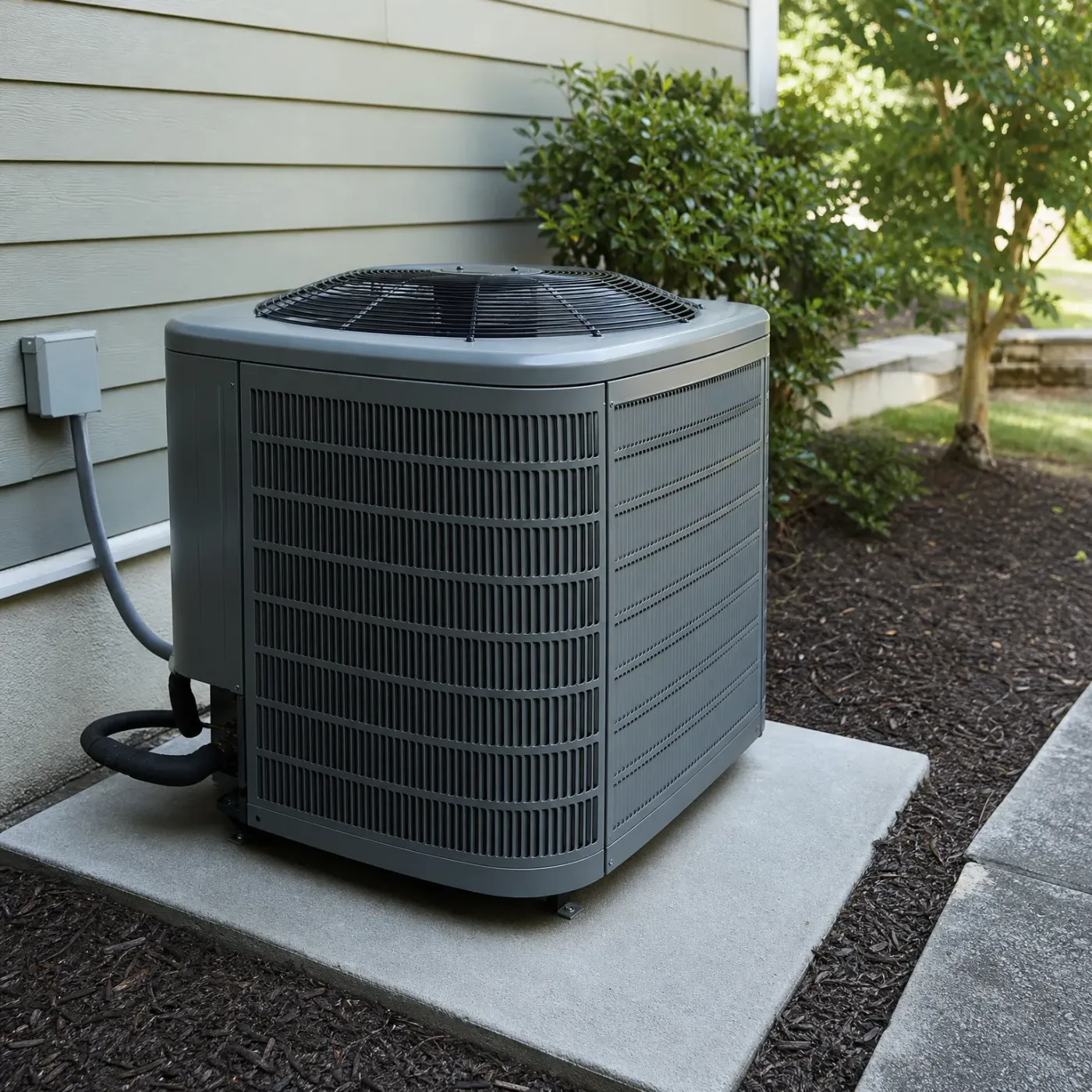
This is what a healthy unit looks like. The panels are clear, the disconnect box is intact, and nothing around it is blocking airflow. A unit kept like this usually means whatever comes up next is a single part, not the whole system.

An aging air conditioner is usually worth repairing if the problem is a single part, like a capacitor or a fan motor, and the unit has been reliable otherwise. Replacement starts to make more sense once the compressor is failing or the refrigerant is the old R-22 type, since that refrigerant is being phased out and recharging it costs more every year it's still available at all. In Indiana, summers get sticky enough that your AC runs hard for months straight, and a unit that's already struggling in May usually won't make it through August without another breakdown. If yours is giving you trouble more than once a season, or a technician has mentioned the compressor or the refrigerant type, that's the point where pricing out a new system makes more sense than paying for another repair.


Most of what sends an aging AC toward replacement starts small and gets written off as a hot day. A unit that hesitates before starting, then runs fine, is usually telling you a capacitor is on its way out, not that the afternoon is just too hot for it. A compressor on its last legs often announces itself the same way, outdoor fan not turning, breaker tripping when it tries to start. Low refrigerant is never just something to top off. The system is sealed, so if it's low, something is leaking, and if that unit still runs on R-22, the refrigerant itself is now the expensive part. Ice on the evaporator coil is a symptom, not the problem, and it will keep coming back until whatever is starving it of airflow or charge gets fixed. None of this moves at the same pace all summer either. Indiana's humidity means the compressor is pulling moisture out of the air on top of cooling it, so it logs more hard hours than the thermostat number alone suggests.


An Indiana summer does not give an aging AC much room for error. Once the humid stretch from June through August sets in, a unit running on a bad compressor or a slow leak tends to fail on the day you need it most, not on a mild afternoon when it's easy to live without. If you already suspect the problem is bigger than a part, getting a second set of eyes on it before the next heat wave saves you from making that call at the worst possible time. A local contractor who installs these systems every summer here knows which brands and models tend to struggle in this climate and can tell you honestly whether yours is still worth fixing. Since your request goes to one contractor rather than several, the answer you get is specific to your house, not a generic sales pitch. Given what your summers demand of this equipment, it's worth finding out now rather than in July.
A contractor checks refrigerant charge and inspects the coil and line set for leaks.
The compressor and capacitor get tested under load to confirm what's failing.
You get a straight answer on repair versus replacement before any work starts.
If you move forward, the new unit is sized and matched to your home.






At 15.96 cents per kilowatt-hour, a compressor working overtime to push through a dirty coil or a slow leak shows up fast on your bill. An efficient replacement keeps that rate from costing you more than it has to.
EIA-861 2025 statewide residential average
This is what a healthy unit looks like. The panels are clear, the disconnect box is intact, and nothing around it is blocking airflow. A unit kept like this usually means whatever comes up next is a single part, not the whole system.

Years of grime on the louvers and fan grille make the compressor pull harder to do the same job. Check the lines at the back for oil residue, a sign of a slow leak. A unit left like this long enough stops being a repair question.

That's the whole decision. A capacitor or fan motor on a unit that's otherwise run fine is a repair, and a straightforward one. A compressor on its way out, or a slow leak that keeps draining refrigerant, is the system telling you it's done. No part swap changes that math.
If you're not sure which one you're looking at, a local contractor can tell you in one visit, and it's worth getting that answer before August decides for you. Submitting your information gets you matched with one licensed contractor in Indiana who works on this equipment all season and sees these same failures every year. They'll reach out directly, so you're dealing with one person who knows the trade, not a string of calls to sort through.

Your request stays with one local pro.
Asking costs nothing, and the choice to hire stays yours.