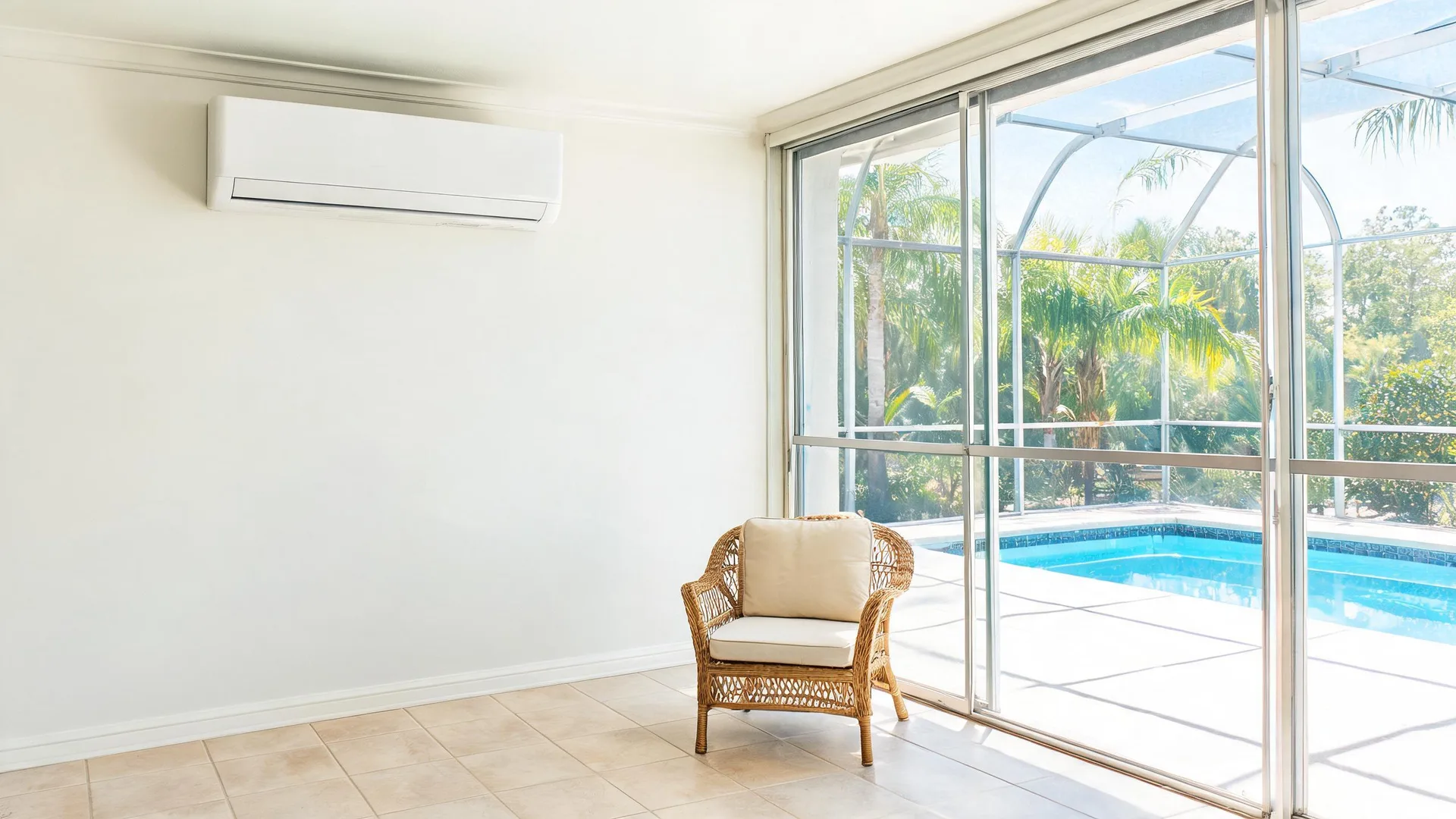
Most homes here run on gas
Utility gas heats 54 percent of homes in Tippecanoe County, more than any other fuel. Electricity is next at 37.1 percent, with the rest on bottled or LP gas.
Takes about a minute. No obligation.
Utility gas heats 54 percent of homes in Tippecanoe County, more than any other fuel. Electricity is next at 37.1 percent, with the rest on bottled or LP gas.
If your home heats with gas, a mini split usually goes in as a second system for a room or addition, not a replacement for the furnace. For a home already on electric heat, it can take on more of the job.
NOAA nClimDiv, 1991–2020 normals
Cooling here runs June through August.
May is the month to get a mini split installed, before the first hot week asks it to work.



A mini split sized to the room is the right call here, nothing bought special for the climate. Indiana electricity ran 14.77 cents per kilowatthour in 2024, and sizing it correctly is what keeps that bill reasonable, not a bigger or pricier unit. An oversized unit cycles on and off more than it should, and that wears on it while leaving rooms feeling clammy even as they cool. A contractor would make the same call almost anywhere. Size it to the space, not to a worry about the weather.
Tippecanoe County falls under zone 5A, a cool, humid climate where heating carries the bigger load. A ductless mini-split counts as a split-system heat pump under the federal standard, so a unit manufactured from 2023 on has to hit at least 14.3 SEER2 for cooling and 7.5 HSPF2 for heating. That's the floor a contractor is working from before anything gets sized to your room.
Find a contractor
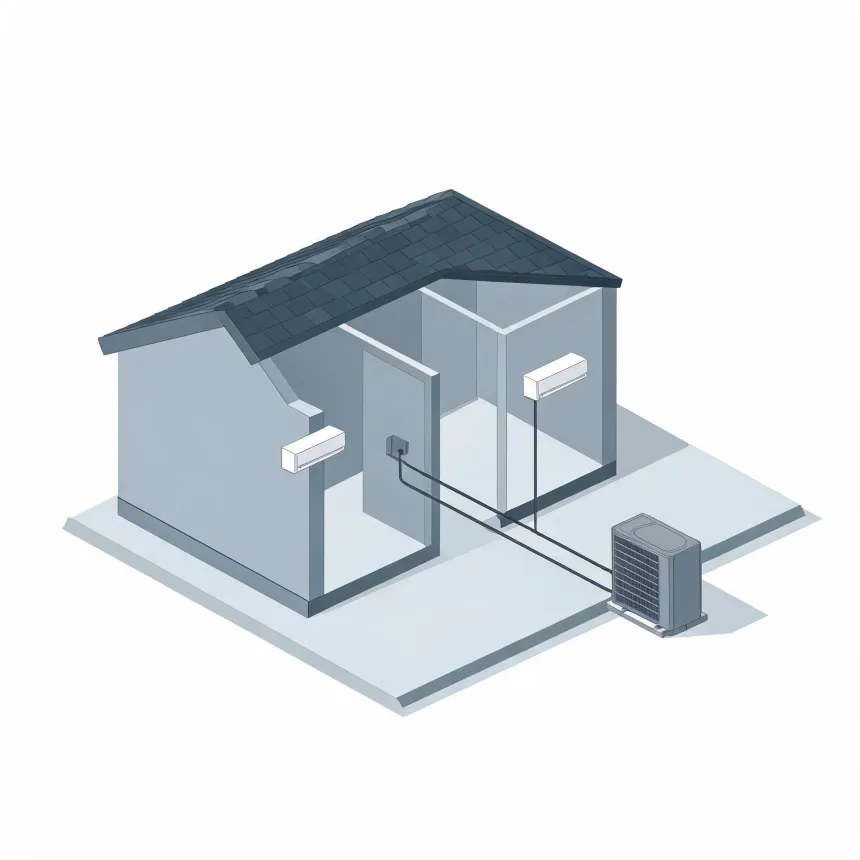
The equipment is only part of what you're paying for. What drives the number is the work it takes to get refrigerant line from the outdoor unit to the indoor head, through a wall and up or across to wherever that unit sits. A short, straight run costs less than one that has to go up a floor, around a corner, or through finished space where the wall has to be opened and patched. The electrical hookup matters too. A dedicated circuit run from the panel is more work than tying into one that's already there. Multi-zone systems, where one outdoor unit feeds several indoor heads, cost more to install than a single zone because each head needs its own line set and its own careful charge of refrigerant. Where the outdoor unit sits counts as well. A mounting pad or bracket, clearance from the wall, and a drain line that actually slopes away from the house all take time to get right. None of this is optional work a contractor can skip. A line set that's too long or poorly insulated, or a unit short on refrigerant because the charge wasn't checked after installation, will run worse and shorter than one put in correctly the first time.
A contractor should be able to tell you the room's heat loss and heat gain numbers, not just hand you a unit size they usually install. That calculation accounts for window area, wall exposure and ceiling height. If nobody ran one, the size they're proposing is a guess.
A single-zone system ties one outdoor unit to one indoor head. A multi-zone system splits one outdoor unit across several rooms, and each room gets less capacity to work with than a dedicated single-zone setup would give it. Know which one you're actually being quoted.
Whatever is being replaced still has value if it still runs. A working window unit or an older ductless system can move to a garage, workshop, or get sold rather than go straight to the curb. If nothing is being replaced and the mini split is new, there's no old equipment to deal with at all, just the usual construction debris from the wall penetration and mounting work. When a furnace or central air stays in place because the mini split is only taking on part of the load, that system doesn't go anywhere. It keeps running the rest of the house the same as before. Refrigerant in an old system has to be recovered by someone licensed to handle it, not vented, so factor that into removal if a unit is coming out.
Installation starts with the outdoor unit going in on its pad or bracket, then the line set run from there to the indoor head, so most of the day is spent on that path rather than on either unit itself. A hole gets drilled through the wall for the line set, the wiring, and the drain line, all bundled and sealed where they pass through. Once the indoor head is mounted and connected, the line gets pressure tested for leaks before any refrigerant moves through it. After that, the system gets evacuated to pull out moisture and air, because either one left in the line will keep it from running right. Only then does the refrigerant charge get set, checked against what the line length actually calls for rather than just the factory charge in the outdoor unit. The last step is running the system through both heating and cooling to confirm it responds and holds temperature before anyone calls it done.