

Running normally
Air moves out of the vents cold and steady. The wall unit cycles on, cools the room, and shuts off without any noise you'd notice. No ice anywhere on the coil or the line set running through the wall.
A mini split that ices over the coil or the line set still runs, but it stops cooling the way it should, and that worries anyone trying to keep a home comfortable through a Lafayette summer. The unit might blow weak air, or no air at all, and the ice itself can be alarming to see on a system that's supposed to be making things cold, not frosting over.
When air moves across the indoor coil too slowly, the coil gets colder than it should, and the moisture in that air freezes onto it instead of draining away. A dirty filter or a blocked blower causes this most often. A low refrigerant charge does the same thing from the other direction, dropping the pressure in the coil so low that it frosts even with good airflow. Either way, running the system longer makes the ice thicker, not better. In Tippecanoe County's humid summers, a mini split already works harder to pull moisture out of the air, so a restriction that would be minor in a dry climate shows up fast as a frozen coil here.
Air moves out of the vents cold and steady. The wall unit cycles on, cools the room, and shuts off without any noise you'd notice. No ice anywhere on the coil or the line set running through the wall.

Ice builds up across the coil and spreads onto the copper line set. The unit may keep running, but the airflow turns weak or stops, and dust caked on the vents and top panel points to a filter or coil that hasn't been cleaned in a long time.
Cooling runs June through August
Cooling runs from June through August here, so a frozen coil in July leaves you without relief during the stretch you need it most.
Heat runs October through May
Heat runs October through May in Tippecanoe County, meaning most mini splits here handle the cold months too, not just summer cooling.
Power here costs 15.37 cents per kilowatt-hour
At 15.37 cents per kilowatt-hour, a mini split icing up and running without cooling the air wastes power on a unit that isn't doing its job.
NOAA nClimDiv 1991-2020 · EIA-861 2025

The indoor unit sits clean against the wall, no streaking below it or around the vents. Air comes out cold when it's running and the wall stays dry. Nothing on the housing suggests moisture is escaping where it shouldn't.

Dust and grime cake the housing, and the wall above shows dark staining. That staining often means water has been running down from the unit instead of draining where it should, which points to ice melting somewhere it isn't supposed to.
You walk by the indoor unit and feel barely any air, or the air coming out is warm instead of cold. There might be water pooling on the floor below it, or a drip stain already dried on the wall. Sometimes you can see the ice yourself, coating the coil behind the louvers or wrapped around the line set outside. The room that unit serves is staying warmer than it should on a sticky Lafayette afternoon, and running it longer doesn't seem to help. Left alone, the water finds its way into the wall or the floor underneath, and that's a repair of its own on top of the mini split.









One request and the search for a pro is handled.
Get matched with a pro who fixes mini splits in Tippecanoe County.
You're not committing to anything by asking.

The ice forms because refrigerant inside the coil has dropped too cold, usually because not enough warm air is passing over it. Once that coil drops below freezing, any moisture in the air hitting it turns straight to frost instead of draining away as condensate. The frost builds on itself, layer over layer, until it chokes off the little airflow that was left. That's the cycle: less airflow makes more ice, more ice makes less airflow.
A dirty filter or a blocked outdoor unit can start that chain, but so can a refrigerant charge that's too low, and that one isn't something to chase down yourself. Running the unit on fan only for a few hours melts the ice and tells you whether airflow was the whole problem. If it freezes again once you switch back to cooling, the cause is inside the system, and a contractor matched to your situation can check the charge and the coil without you having to guess which part is at fault.

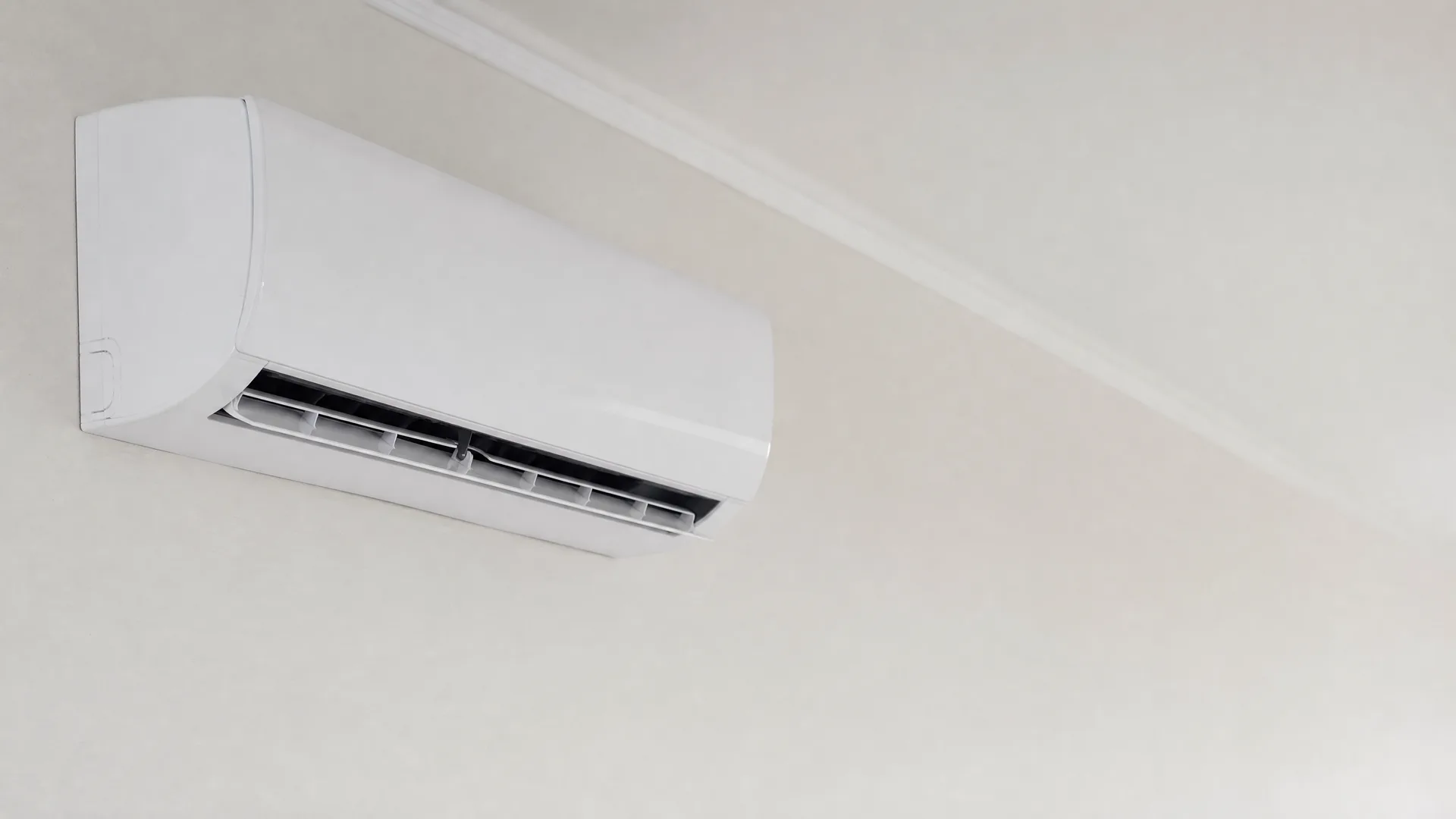
Keeping a frozen mini split on strains the compressor, since ice on the coil blocks the heat exchange the system depends on to move warm air out of the room. The compressor keeps pulling in refrigerant that never picks up heat the way it should. That's a harder job than the one it was built for, and it's why a unit left running iced up can end up needing more than a thaw and a cleaning.
Clearing the ice means shutting the unit off and letting the coil warm back up to room temperature before anything else gets checked, which can take a few hours on its own. Running the fan only, without the compressor, speeds that along without adding more moisture to the mix. Once the coil is dry, a contractor can see what's underneath, whether it's a dirty filter restricting airflow, a low refrigerant charge, or something else keeping warm air from reaching that coil.
A frozen mini split comes down to warm air not reaching the coil, whether that's a dirty filter, a low charge, or a blower that isn't pulling its weight. Thawing it off helps for a day, but the ice comes back until whatever caused it gets fixed. In a Lafayette summer, a unit stuck in that cycle means rooms that don't cool right when you need them to. You don't have to figure out which of those it is before you get help. Send the form and the job of tracking down a contractor who works on mini splits in Tippecanoe County is off your plate. You go back to the rest of your day, and someone with the right tools takes it from there.
Send it once and finding someone is no longer on you.
It costs nothing to send, and you don't have to hire anyone.