Ignore it a few more days
Water keeps backing up into the pan and starts dripping onto your floor, your wall, or whatever furniture sits under the unit.
Water leaking from a mini split usually means the condensate drain line is clogged or the drain pan has cracked. As the unit cools your air, it pulls moisture out, and that water is supposed to run out through a small drain line. Algae and dust build up inside that line over time and block it, so the water backs up and drips out of the unit instead. It can also mean the line was never sloped right, or the filter is so dirty that ice is forming on the coil and then melting faster than the pan can drain it. Here in Lafayette, summers get humid enough that the unit is pulling a lot of water out of the air for months at a stretch, which gives a clogged line more chances to show itself. Left alone, that water can stain your ceiling or wall and warp the trim around the indoor unit. It is a plumbing and refrigerant job together, not something to open up and guess at yourself.


Cooling runs June through August
Three months of sticky cooling means the drain line and pan stay wet and busy all summer, which is exactly when clogs and leaks tend to show up.
Heat runs October through May
Eight months of heat means the unit runs most of the year, but it's the summer condensate load that does the damage leaks come from.
Power here costs 15.37 cents per kilowatt-hour
At 15.37 cents per kilowatt-hour, a mini split working harder because of a clog or blocked coil shows up on the bill before you ever see water.
NOAA nClimDiv 1991-2020 · EIA-861 2025
The drain line only needs a small blockage to stop draining. A clog the size of a pencil eraser, built up from algae and dust, can back water up into the pan and send it dripping out of the unit instead.
That is why a leak often starts slowly, a few drops after the unit has run for hours, before it turns into a steady drip. The clog does not have to be total to cause the mess you are seeing.




Water keeps backing up into the pan and starts dripping onto your floor, your wall, or whatever furniture sits under the unit.
A contractor who works on these units all summer can clear the clog and check the pan before it stains your ceiling or warps your floor.
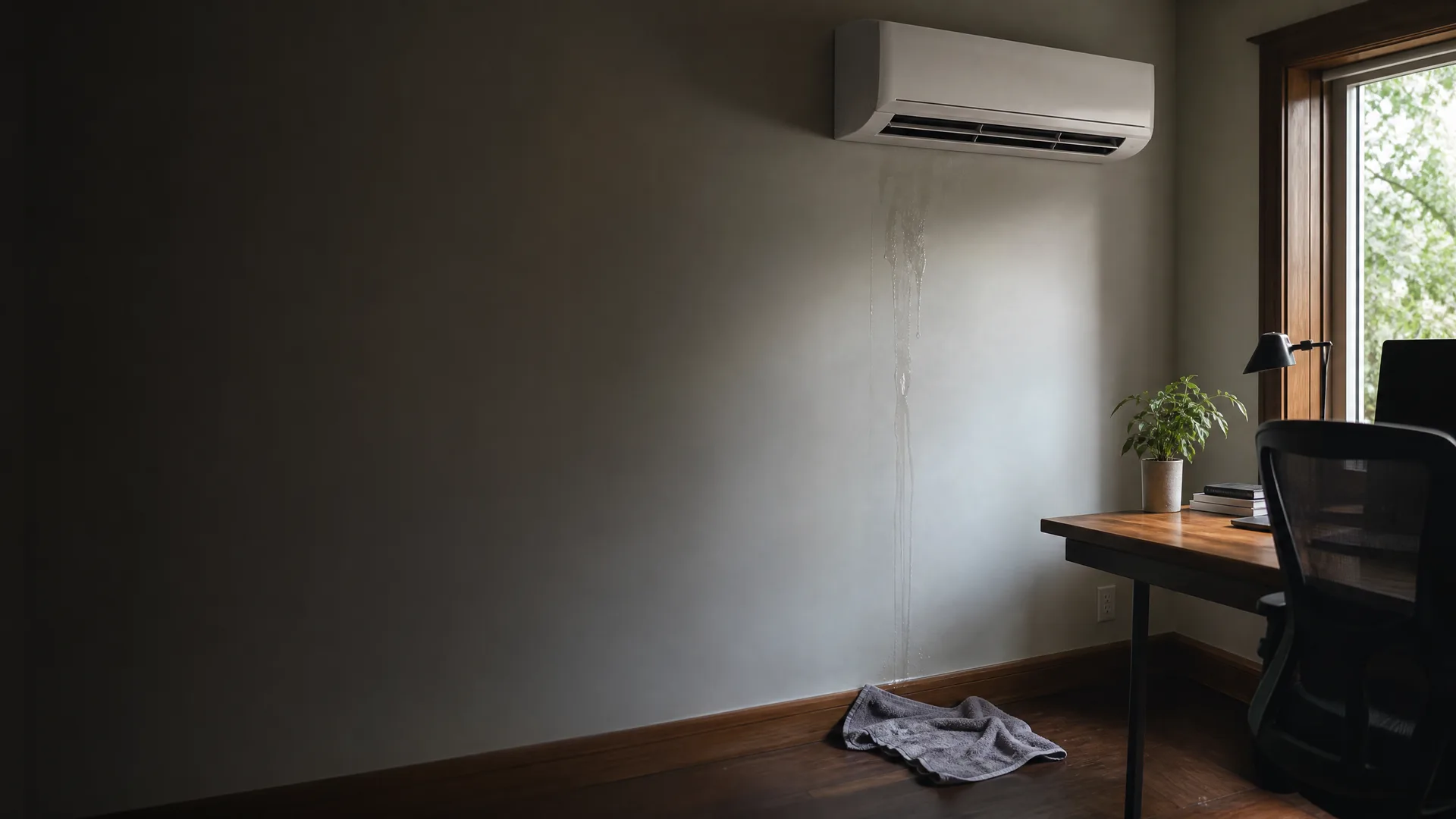
It's late July, mid-afternoon, and the office is quiet except for the mini split humming on the wall. You look up from the desk and see it: a dark streak running down the drywall under the indoor unit, already a foot long. By the time you grab a towel and get it on the floor, another drop lands on the baseboard. The unit keeps blowing cold air like nothing is wrong. Outside, Tippecanoe County is doing what it does every July, hot and humid, and the unit has been running non-stop for weeks. You press the towel flat against the wall and watch to see if the next drop lands on the same spot.
You might notice a damp spot on the carpet or a puddle on the windowsill below the indoor unit. Sometimes it shows up as a stain spreading across the ceiling or drywall underneath, or a musty smell in the room even when the unit looks dry. A few drops might fall only when the unit first kicks on, or it might drip steadily while it runs. Left alone, that water soaks into drywall and wood trim and can warp flooring or stain a ceiling below. It also gives mold something to grow on, inside the wall or under the unit, long after the drain line gets cleared.

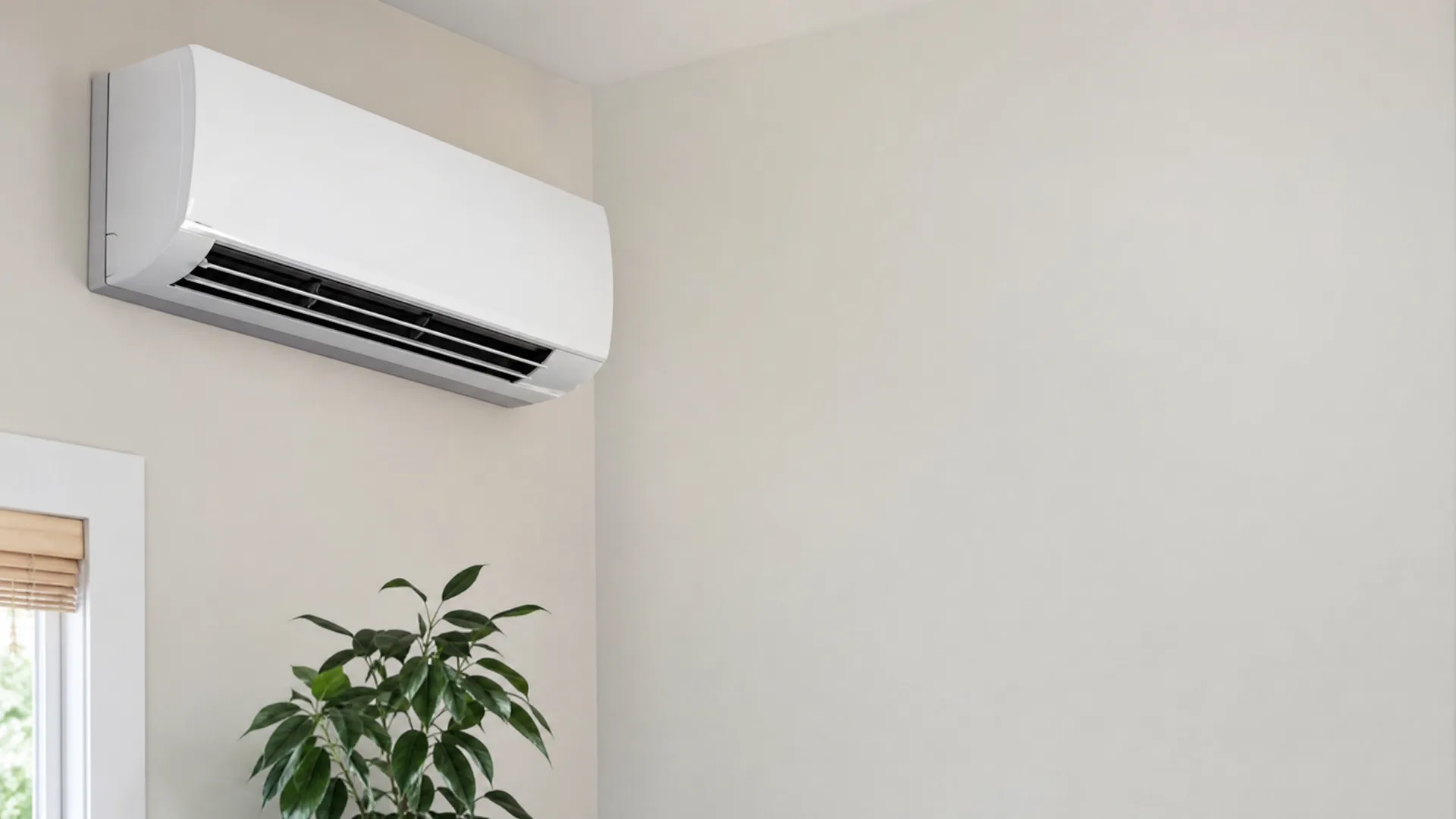
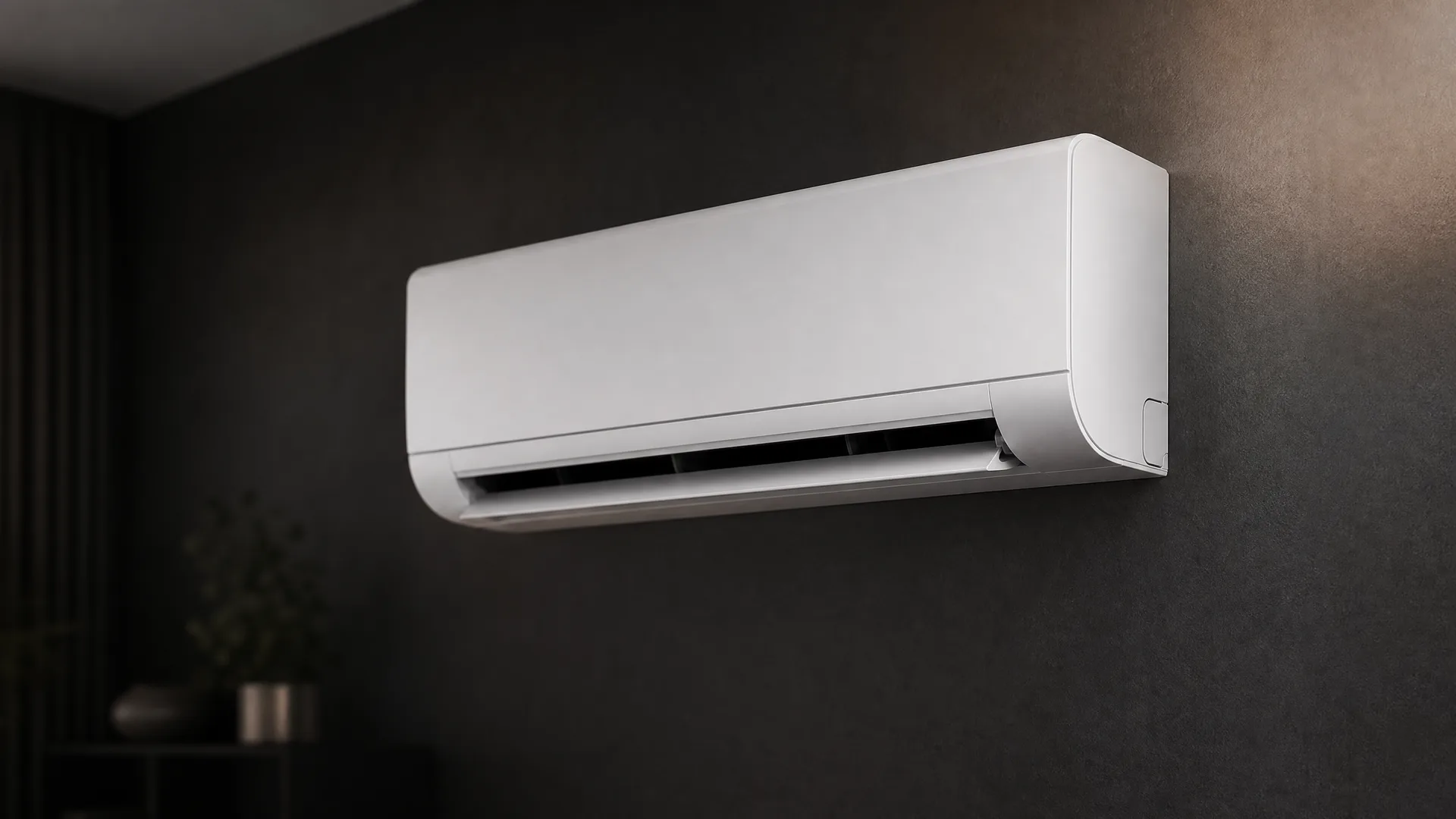
This is what a mini split looks like when the drain line is clear. The unit sits quiet on the wall, no streaks below it, no damp spot on the sofa or the coffee table under it. Condensate leaves as fast as the coil collects it, so the room stays dry.

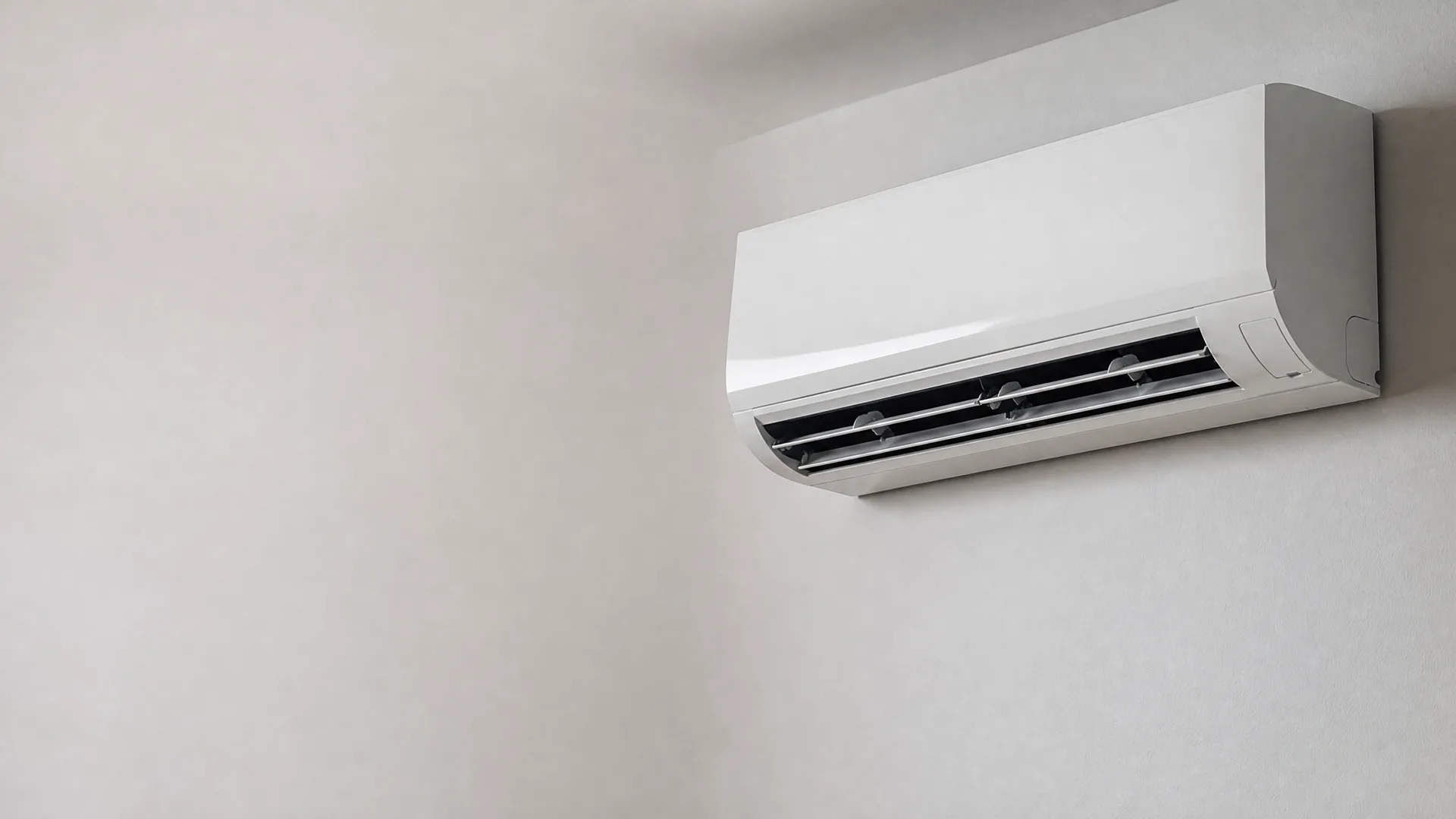
Yellowing and dust on the casing usually mean grime has built up inside too, not just on the vents you can see. That same buildup is what packs into the drain line and backs water up into the pan. Left alone, the unit keeps running while it leaks.


A licensed pro who works in Tippecanoe County gets your request.
Asking costs nothing, and the choice to hire stays yours.
The unit keeps cooling, so it is easy to tell yourself the leak is minor. But the drain line does not clear itself, and the clog that is causing the drip now will only pack in tighter. The pan keeps filling, the water keeps finding a way out around it, and whatever is under the indoor unit, drywall, a windowsill, a cabinet, stays wet. Mold can start in that kind of damp spot within a day or two.
A contractor who services mini splits around Lafayette all summer can flush the drain line, check the pan for cracks, and confirm the condensate is moving out the way it should. Most of these calls are a clog, not a broken unit, and clearing it stops the dripping the same visit. The coil and filter get checked too, since dust and grime on either one is usually what started the clog in the first place.
You keep a towel under the unit, but the water is not dripping from the bottom where a drain problem usually shows up. It is coming off the front panel or out of the vents, almost like the unit is sweating. That is a different problem than a clogged line, and it is worth knowing which one you have before anyone opens the unit up.
When the coil inside the indoor unit gets too cold, moisture in the air freezes onto it instead of draining away normally. That happens when airflow across the coil is blocked, usually by a filter packed with dust, or when the unit is low on refrigerant and running colder than it should. Once the system cycles off or airflow improves, that ice melts all at once, faster than the drain line and pan were built to handle. Water runs down the front panel, drips from the vents, or pools on the floor below, even though the drain line itself is perfectly clear. In Lafayette summers, with the unit running for weeks on end, a clogged filter can bring this on in a matter of days.



The panel stays shut and the grille along the bottom is all you see. Nothing is streaked below it, nothing is damp on the wall. Condensate is leaving through the drain line as fast as the coil pulls it from the air.

The casing has gone from white to gray, caked with dust that has had years to settle. That grime around the vents and coil is often what starts a clogged drain in the first place, and a unit this worn is past due for a look.
Three months of steady cooling, June through August, is when your mini split pulls the most moisture out of the air and asks the most of that drain line. A clog that might sit unnoticed in a mild month will back up fast once the unit is running every day.
NOAA nClimDiv 1991-2020
Water on the floor or wall under your mini split almost always traces back to the same place: the drain line or the pan it feeds into. Once that path is blocked, the unit keeps cooling and the water keeps looking for somewhere to go. It does not fix itself, and waiting through another stretch of hot days just gives the clog more time to pack in and the water more time to find drywall or subfloor.
Someone who services these units all season in Tippecanoe County has usually already seen whatever is causing yours to back up. Algae in the line, a cracked pan, a vent clogged with dust pulled off the coil. Knowing which one it is before opening the unit up means less guesswork and less risk of damaging the coil while getting to the drain.
Sending a request here means one contractor calls you back, licensed and local, not a handful of companies competing for the job. That contractor can get into the line, clear what is blocking it, and check the pan for cracks before more water reaches your floor or the wall behind the unit. The sooner that happens, the less there is to repair beyond the drain itself.
One request and it's handed off
