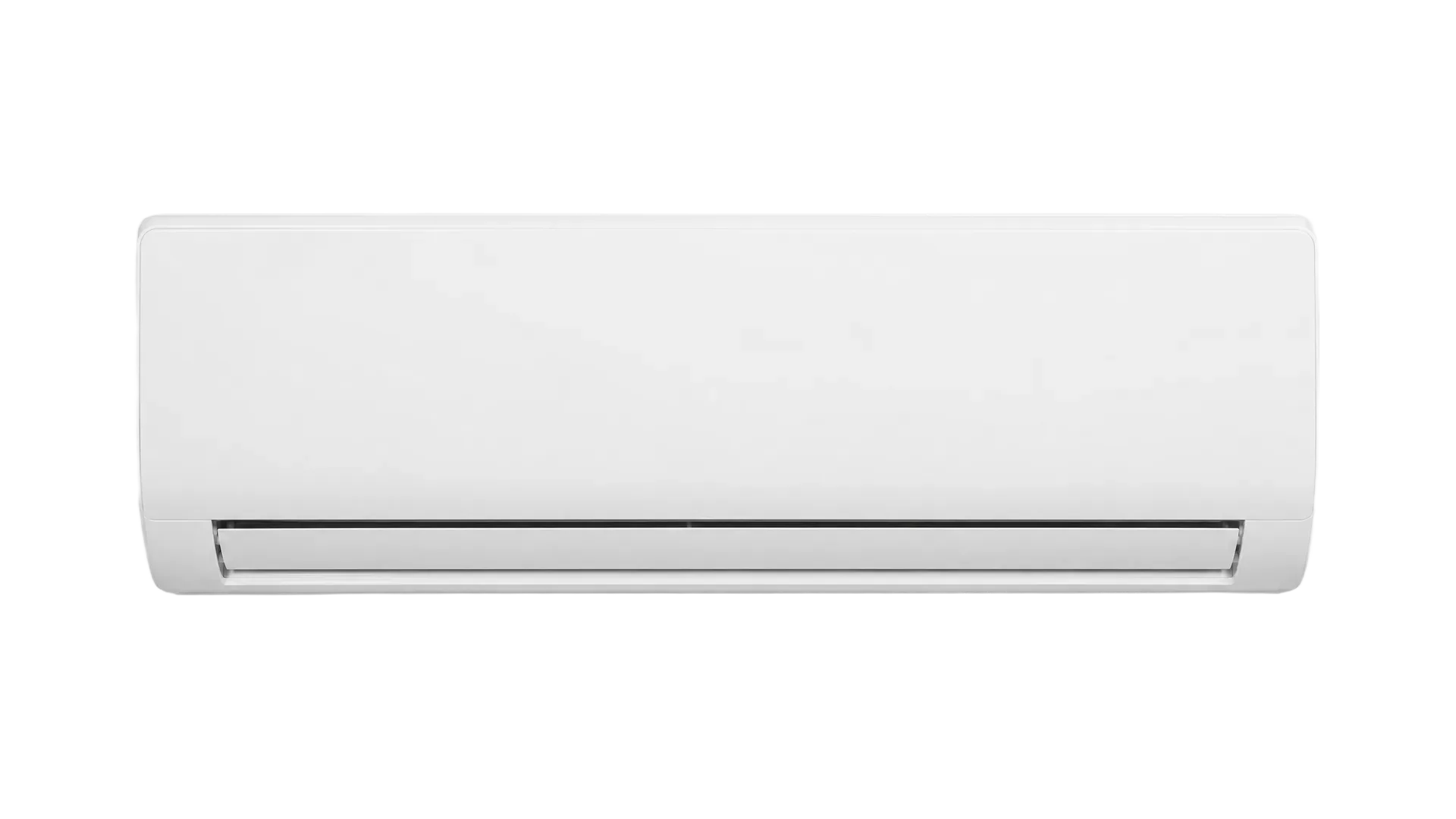
How a Mini Split Gets Mounted
- The indoor head mounts a bracket on the wall, then hangs on it so the line set can run straight down to a wall sleeve.
- That sleeve holds the refrigerant lines, a condensate drain line, and the power cable, all sloped slightly so water drains out and not back inside.
- The outdoor condenser needs to sit on a pad or wall bracket raised above where snow piles up in an Indiana winter.
- A short line set between indoor and outdoor units keeps the system working closer to its rated efficiency than a long run does.
- The condensate line has to pitch downward the whole way out, since any low spot lets water sit and freeze when it's cold.
- Placing the indoor head away from a south or west window keeps direct sun off the sensor that reads room temperature.
Installation starts with the bracket. It goes on the wall first, level, and the indoor head hangs on it so service later doesn't mean pulling the unit off the studs. From there, everything runs to a single wall sleeve: the two refrigerant lines, the condensate drain, and the power cable all pass through that one penetration. The sleeve gets a slight downward tilt to the outside, so any water in the lines drains out instead of working its way back into the wall.
Outside, the condenser sits on a pad or a wall bracket. In Indiana, where snow piles up against a foundation, that unit needs to sit high enough that it isn't buried or sitting in meltwater come February. A wall-mounted bracket solves that in yards where snow drifts deep.
Distance between the two halves of the system matters more than most homeowners expect. The line set carries refrigerant between indoor and outdoor units, and a shorter run keeps the system working closer to the efficiency it's rated for. A longer run isn't a dealbreaker, but it's a tradeoff, not a convenience.
The condensate line needs a steady pitch downward for its entire length. Any dip becomes a spot where water collects, and once temperatures drop, that water freezes and blocks the line behind it. Keeping the indoor head out of direct sun from a south or west-facing window also matters, since the unit reads room temperature off a sensor, and direct sun throws that reading off.