Sized and placed right
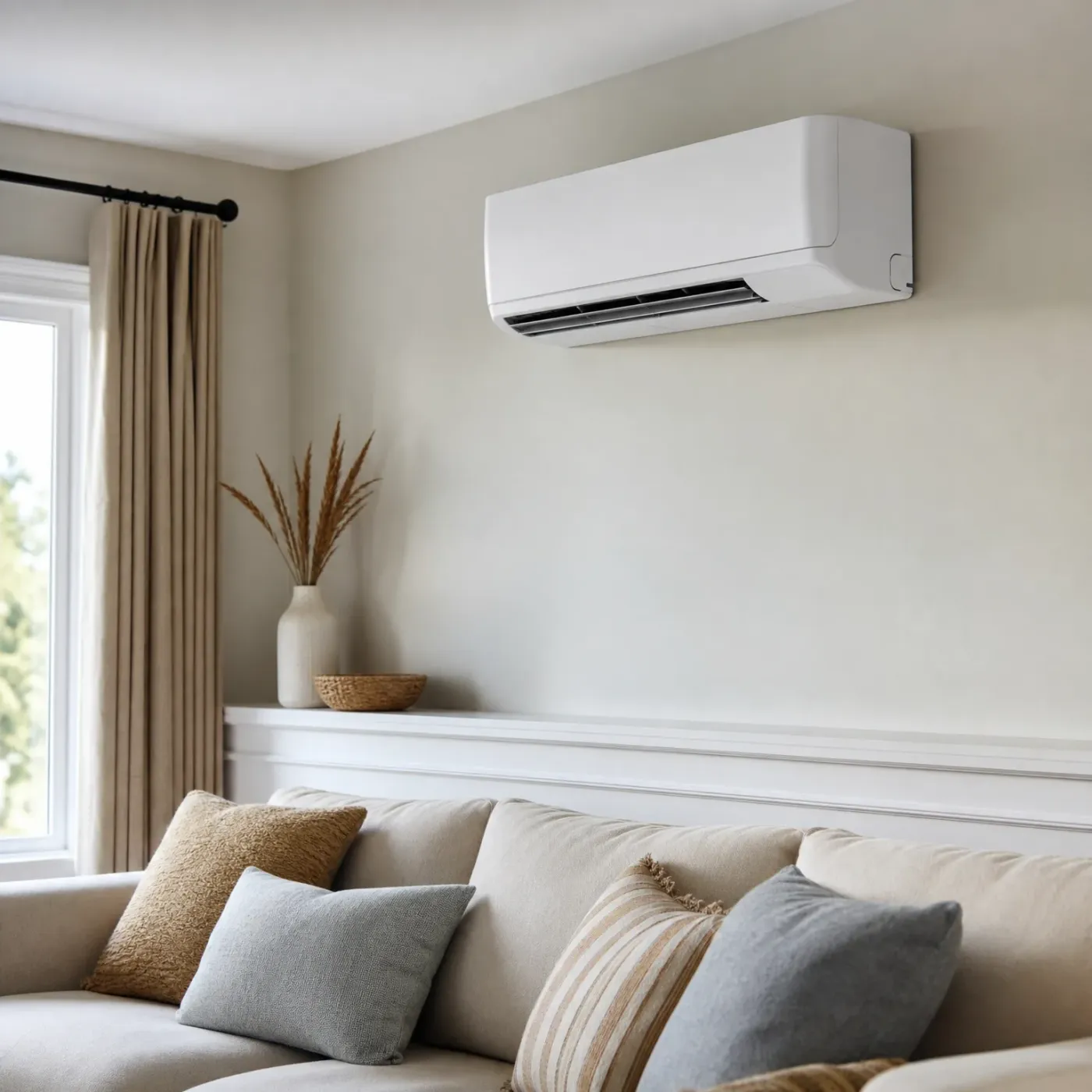
This is what it looks like working the way it should. One head, centered in an open layout, cycling on and off as the room asks for it. The rest of the house stays even because the air has a clear path to reach it.

Done looking for a mini split pro
A single mini split can cool a whole house, but only if it's sized and placed right for Indiana's sticky summers, and that depends on your layout, insulation, and how many zones you're running. This page gets into what makes that work or fall short. Skip the search for a contractor who knows mini splits and send the form below.
Let a pro reach outA single mini split can cool a whole Indiana home, but usually only a small one, open in layout, with one zone centered where the heat builds up. Most houses need more than one indoor unit to reach every room, because a mini split moves air outward from where it hangs, and a closed door or a hallway stops that air before it gets there. Indiana summers get muggy enough that a single undersized unit ends up running constantly and still leaving the back bedrooms warm. A multi-zone system, with an indoor head in each room or wing, covers the whole house the way one unit alone usually can't. What this means for you: if you already have a mini split and it's not keeping up, the fix is often adding zones or placing a unit differently, not replacing what you have.


A mini split system works room by room. Each indoor head reads the temperature where it hangs and calls for cooling on its own, so a bedroom that's already cool won't get more air just because the living room is still warm. All of those calls go back to one outdoor compressor, and that compressor is variable speed. It doesn't just switch on and off. It scales its output up or down depending on how many zones are asking for cooling at once. That's also why adding a zone isn't as simple as mounting another head on the wall. Each one needs its own refrigerant line run from the outdoor unit, and the outdoor unit's total capacity gets split across everything it's feeding. Most can handle two to eight heads, but every head added takes a share of what's available. None of this pushes air beyond the room a head is mounted in either, since there's no ductwork carrying it further, which is part of why placement ends up mattering as much as the equipment itself.




Think about your own floor plan before you count on one indoor unit to cover it. A mini split cools by moving air out from wherever the head is mounted, so distance and closed doors work against it. A bedroom down the hall with the door shut most of the day will sit several degrees above the room holding the unit, and nothing short of leaving that door open fixes it. A finished basement is its own problem. It stays cooler than the rest of the house by nature, but without a head of its own it also holds onto humidity, so it can feel damp and close even while the main floor is comfortable. If the unit is undersized for the square footage it is covering, July and August push it past what it can keep up with. It runs most of the day and the house still warms through the afternoon. Homes that already have ducted zones split room by room run into a version of the same issue. A mini split added to cool one zone leaves the others on whatever system was cooling them before, or on nothing at all. Upstairs rooms are their own case too. Heat collects under the roof through the day, so a room on the second floor can run warm even when the thermostat downstairs reads fine. A contractor sizing the installation should walk through each of these before settling on how many heads your house needs and where they go.
At 15.96 cents per kilowatt-hour, a mini split sized right for your house is cheap to run since it only cools the zones you're using. Size it wrong, and an oversized or struggling unit running nonstop through a sticky summer will show up on that bill.
EIA-861 2025 statewide residential average

This is what it looks like working the way it should. One head, centered in an open layout, cycling on and off as the room asks for it. The rest of the house stays even because the air has a clear path to reach it.

That discoloring and dust is a unit that has been running hard for years, often because it is carrying more house than it was sized for. A struggling mini split looks like this before it starts losing the fight against July.


Explain the job once and skip repeating it on every call.
Send the form and the search for an installer is over.
Sending the form costs nothing.
If your mini split is in the living room, that's the room that feels right by evening. Walk down the hall and the air changes. Bedroom doors held shut all day trap heat with nowhere to go. A basement with no head of its own holds onto the damp even when the floor above feels fine. You might notice the indoor unit running almost nonstop on the hot, humid days, cycling less in the room it's in and barely touching the rest. None of that means the unit is broken. It means one zone is doing a job that your layout is asking more than one zone to do, and the parts of the house farthest from it are the ones that show it first.
The indoor head reads the room's air temperature.
The thermostat sensor calls the outdoor compressor for cooling.
The compressor ramps up speed to match total demand.
Refrigerant travels through the lines to that indoor head.
Why does my mini split take so long to cool the house down?
A mini split head cools the air in front of it, then waits for warmer air to drift back in before it reads a rise and calls for more. That's fast in the room holding the unit. It's slow everywhere else, because there's no duct pulling air from the back bedroom or the basement toward that head. On a sticky July evening in Indiana, that gap shows up as a living room that feels right at 6pm and a hallway that still feels like the air hasn't moved. The compressor isn't struggling. It's just only being asked to cool the room with the sensor in it, and nothing is moving the rest of the house's heat toward that sensor.


A dew point tells you how heavy the air feels, not just how hot it is, and across an Indiana summer it averages 64°F. That's sticky enough that a mini split is doing real work pulling moisture out of the air, not just cooling it. A unit sized right handles that fine, cycling on when a room picks up humidity even if the temperature hasn't climbed much. A unit sized wrong, or asked to cover rooms it was never placed for, falls behind on the moisture first. You'll feel it as air that's cool enough but still damp, in a room farther from the head.
NASA POWER T2MDEW county cells weighted by homes

Sometimes. A small, open house with one zone centered where the heat collects can stay even all summer on a single head. A bigger house, or one with bedrooms down a hall and doors that stay shut, needs more than one indoor unit to reach every room. The layout decides it, not the brand or the size of the outdoor compressor.
Figuring out which one your house is takes someone standing in it, looking at where the heat builds up and where the air has no path to follow. That's the part that's hard to do from a search bar. Once you send the form, you're not the one calling around Indiana for quotes, explaining your layout to five different contractors, and trying to sort out who actually knows what they're doing. That work is off your plate.

Stop chasing a mini split pro