

A standard unit holding steady
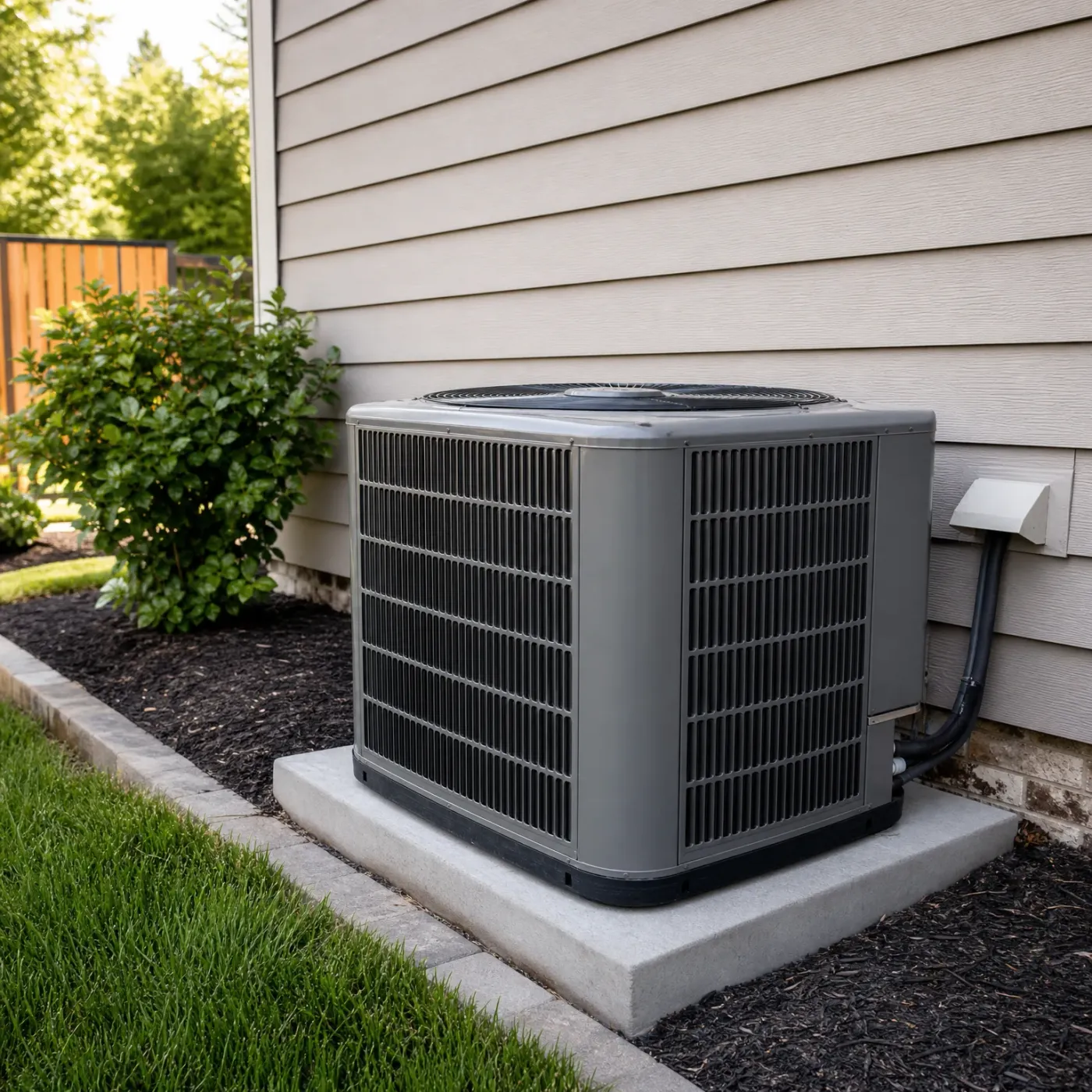
This condenser is clean and running the way it should. On a sticky July afternoon it cycles on, does its job, and shuts off. Nothing wrong here, just a standard-efficiency system working as built.
You're looking at a new air conditioner and keep seeing higher SEER2 ratings priced well above the standard models. With summers here getting sticky for months at a stretch, you want to know if paying more for a high-efficiency unit actually pays off, or if it's money spent on a number that doesn't change much in your house.
A high-efficiency air conditioner uses less electricity to produce the same cooling, and in Indiana that unit runs for months at a time once the heat and humidity settle in. Power here is priced about average for the country, so the savings come from how many hours the compressor runs, not from an unusually high rate. A higher SEER2 rating also tends to mean better humidity control, which matters in a climate this sticky. Since most homes here heat with gas, the air conditioner is doing one job, cooling, so its efficiency is the whole story rather than half of a two-season system. If you plan to stay in the house long enough to run it through several summers, the higher upfront cost has time to work in your favor.

This condenser is clean and running the way it should. On a sticky July afternoon it cycles on, does its job, and shuts off. Nothing wrong here, just a standard-efficiency system working as built.

Grime on the grilles blocks airflow and makes the unit work harder to move the same heat out of your house. A unit this worn is also the one most likely to be running at a lower SEER2 than what's sold today.

Your current AC runs hard from June through September, maybe longer. That's the stretch where the difference between a standard unit and a high-efficiency one shows up on your power bill, month after month, for as long as you own the house. A standard-price electric rate in Indiana means that difference is real money, not a rounding error, but only you can weigh it against what the upgrade costs going in.
It's not only the bill. A higher-efficiency condenser tends to run longer, gentler cycles instead of short hard blasts, which can mean steadier temperatures and less noise outside your window on a sticky afternoon. Whether that trade makes sense for your house depends on things specific to your system and how long you plan to stay put. A contractor who looks at your actual setup can tell you what you'd gain and what you wouldn't, so you're deciding with real numbers instead of a guess.


This condenser sits on its pad, wired to the disconnect box, a shrub growing in next to it without anyone minding. It runs when the house calls for it and keeps up on the muggy days. Nothing about it needs attention right now.

Dirt has built up across the wire mesh cabinet here, the kind that blocks airflow a condenser needs to shed heat. A unit working against that grime runs longer to do the same job. Left alone, that's wear a new high-efficiency system wouldn't start out carrying.




SEER2 is a ratio, the cooling a unit produces against the power it uses over a season. A unit rated 17 against one rated 14 is not 17 percent stronger. It does the same job on less electricity. That matters in Indiana because your AC isn't running a month or two and stopping. It's cycling on through sticky stretches from June into September, and every one of those cycles draws power at whatever rate that unit was built to use.
A higher SEER2 unit usually costs more to install than a standard one, before any rebate or incentive is applied. That gap is real and it's paid up front, not spread across the summer. What you get for it is a compressor and coil built to hold up under long, steady run time, since Indiana summers ask for exactly that. Whether the difference pencils out depends on how many hours your AC actually runs each year and what you're paying per kilowatt-hour now.


A standard-efficiency condenser costs less to buy and install. It will cool your house through an Indiana summer, it just uses more power doing it than a higher-rated unit would.
A higher-rated unit costs more at install, then uses less electricity each June through September. Power here is typical in price, so the savings come from using less of it, year after year.


Send the form and stop researching installers for the new air conditioner.
Say what's going on with your air conditioner, and a pro who works on them reaches out.
No fee to send it, and nothing to sign.
You notice it on the muggy afternoons. The condenser outside kicks on and doesn't shut off for a long stretch, and the thermostat still takes a while to catch up to where you set it. Inside, some rooms stay warmer than others even with the system running most of the day. Your power bill in July and August is the real tell, higher than the months on either side of summer, and climbing a little more each year even though you haven't changed how you use the house. None of that means the unit is failing. An older standard-efficiency system can run exactly as built and still cost you more every summer than a newer one would for the same cooling.

A summer dew point averaging 64°F across Indiana, measured over June, July and August, is the number that decides how your AC spends its afternoon. Past the low 60s, air starts to feel wet rather than just warm, and at 64 it stays there most of the summer. That means your condenser isn't just dropping the temperature, it's pulling moisture out of the air before the house feels comfortable at all, which asks more of it on top of the heat. You'll notice it as longer run times and a thermostat that takes its time catching up, even once the number on the wall looks right. Source: NOAA climate normals.
NASA POWER T2MDEW county cells weighted by homes
A contractor sizes the unit to your house, not just the old one
The old condenser and coil come out
The new condenser, coil and lines go in and get charged
The system gets tested against your actual ductwork
At that rate, every kilowatt-hour your condenser doesn't pull is money you keep, and a less efficient unit pulls a lot of them across a long Indiana summer. Run the same muggy afternoon on a higher SEER2 system and the bill reflects fewer hours charged at 15.96 cents.
EIA-861 2025 statewide residential average
A higher SEER2 unit costs more to install and uses less power to cool the same house, every muggy afternoon from June through September. A standard unit will still get your house through an Indiana summer, just on more kilowatt-hours. Whether the difference pays you back depends on what you're running now and how long you plan to stay in the house, and that's worth laying out with someone who can look at your actual system and your actual bill. Once you send the form, you're done chasing quotes or sorting out which contractor to call. A contractor who installs in your area gets your information and reaches out to you, so the search for the right fit isn't something you have to carry anymore. You already know what your summers cost you. The next step is finding out what they'd cost on a system built to use less to do the same job.

Sending the form costs nothing.
You've read the numbers. Getting a contractor out to look at your specific house, your ductwork, your current unit, is the only way to know what a higher SEER2 system would actually do for your bill. Send the request and that part stops being something you have to figure out on your own.