




AC making a loud noise in Muncie, IN

RepairCentral ACDelaware County, IN
Step 1 of 2

What ZIP code is the job in?

Why is my AC making a loud noise?

A loud noise from the outdoor unit or the vents is easy to notice and hard to ignore once you've heard it. It usually starts suddenly, right when you need the system running through a muggy Muncie afternoon, and it gets louder or more frequent the longer it runs. The noise itself is a clue, and different sounds point to different problems.

It's almost always a loose or failing part moving where it shouldn't

A grinding or squealing sound usually means a motor bearing is wearing out. A rattle often means a panel or bracket has worked loose, or a stick or piece of debris is caught in the outdoor fan. A banging or clanking from inside the outdoor unit can mean a part has broken off the compressor and is hitting the housing as it spins. A hissing sound points to refrigerant escaping from the line, not the air moving through your ducts. None of these settle down on their own, and running the system while the noise continues can turn a worn part into a broken one. The sound tells you something is already failing, not that it's about to.

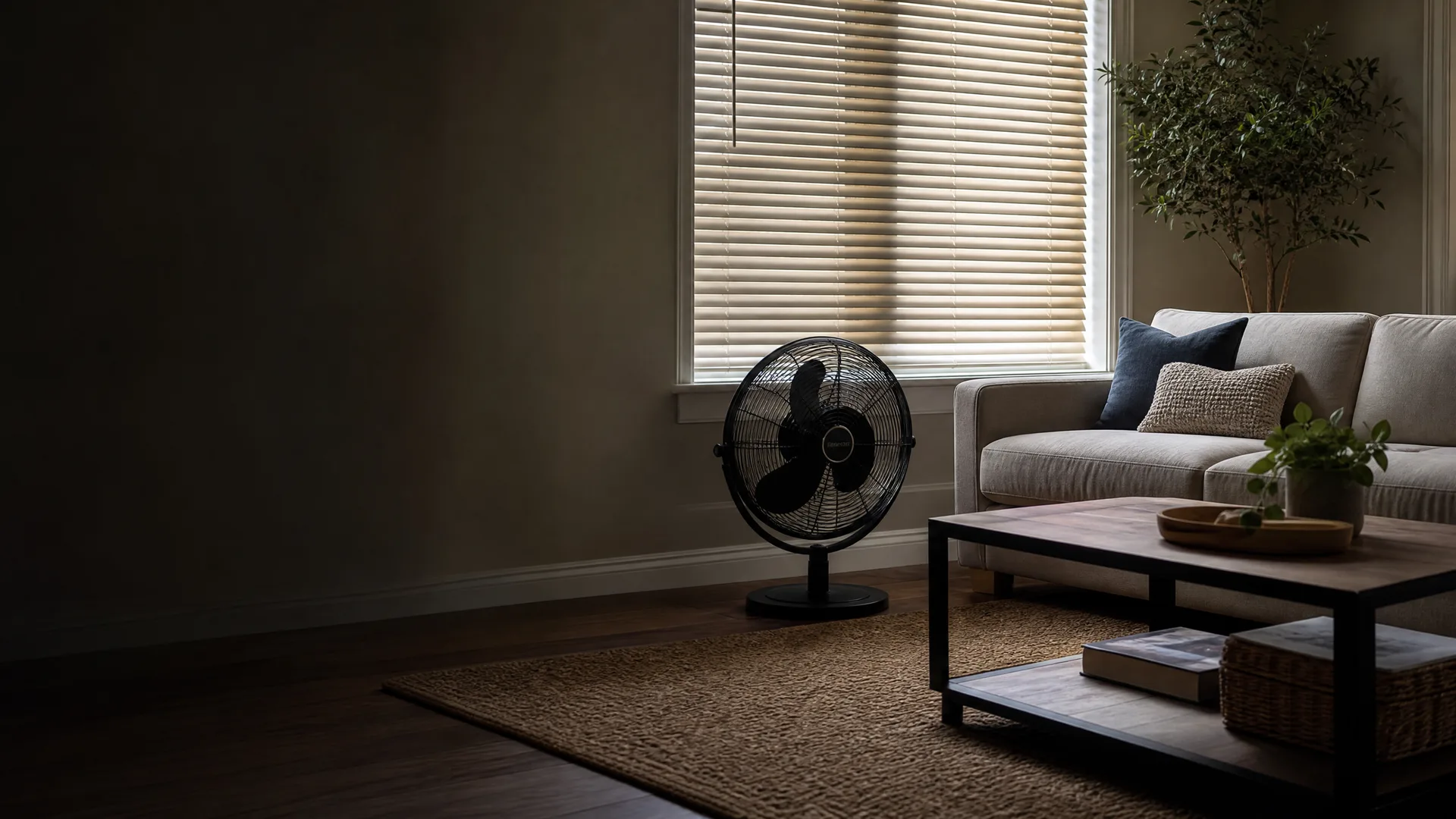
A dimly lit living room with a black table fan on the wood floor near a window with closed blinds, beside a light-colored sofa with cushions, a wooden coffee table, a woven rug, and a potted tree.

By two in the afternoon the blinds are down against the sun and the floor fan is going beside the couch, turned up to its highest setting. The AC has been running since late morning. You hear it from the living room before you place it: a hard metallic knock, then another, in time with the compressor outside. You mute the TV to listen for it again. It comes back on the next cycle, a little louder this time, and the fan next to you does nothing to cover it. You think about the rest of the afternoon ahead, the humidity sitting outside the window, and whether the unit will still be running by dinner.

What Kind of Noise Are You Hearing

Noise Stops When You Turn It Off

  • If the sound only happens while the unit is running and quiets down the second you shut it off, that points to something moving inside, like a loose blade or a worn bearing.
  • A rattle that comes and goes with the fan speed often traces back to a bent fan blade hitting the housing on each rotation.
  • A screeching or squealing sound usually means a motor bearing is wearing out, and it tends to get worse the longer the unit runs.
  • If the noise is new and the unit is cooling the house the same as always, the problem is likely mechanical rather than electrical.
  • A loose panel or screw on the outdoor cabinet can buzz or rattle in a way that sounds worse than it is, especially on windy days.
  • Catching this kind of noise early, before a bearing seizes or a blade cracks, usually means a smaller repair.

Noise Comes With Warm Air or a Dead Unit

  • If the house stops cooling at the same time the noise starts, the problem has likely moved from one loose part to something failing outright.
  • A loud bang followed by the unit shutting off points to a compressor issue, which is a more serious repair than a fan or motor problem.
  • Warm air coming through the vents while the outdoor unit makes noise suggests refrigerant flow or compressor trouble, not just a rattle.
  • If the noise is constant and mechanical grinding rather than occasional rattling, the part making it may already be failing rather than just loose.
  • A unit that cycles off on its own after a loud noise is often protecting itself from a bigger problem, like high pressure in the system.
  • Waiting through a few more muggy Muncie days with this kind of noise risks turning a repair into a full system replacement.
A smiling woman with long brown hair in a dark sweater sits at a light stone kitchen counter with a glass of red wine, with a dimly lit living room in the background.
A smiling woman with dark hair pinned up, wearing a beige sweater, sits looking off to the side in a kitchen with a glass of red wine in front of her, a stainless steel refrigerator, marble counter and a potted plant behind her.
A smiling woman with dark shoulder-length hair in a navy sweater sits at a kitchen counter with a glass of red wine, with a lit living room and pendant lights behind her.
A woman in a dark gray sweater laughs while seated at a white marble counter with a glass of red wine, with a blurred living and dining room behind her.

No calling every shop in Delaware County

A loud noise from the outdoor unit doesn't get quieter on its own, and running the system while it knocks or squeals usually turns a cheap fix into an expensive one. Finding someone to look at it means calling around Muncie, explaining the sound over the phone to whoever picks up, then doing it again for the next quote and trying to judge who actually knows what they're hearing. This gets you one contractor, local to Delaware County, who works on these systems all summer and has heard this particular noise plenty of times before. No sorting through five bids from five different companies, no repeating yourself. Just someone who can tell you, from what you describe and what they find, whether it's a loose blade, a failing motor bearing, or something else entirely. The sooner that happens, the less chance the noise is a smaller problem turning into a bigger one while the AC keeps running through the heat.

Why the Noise Gets Worse by the Day

A compressor that grinds or a fan motor with a worn bearing does not fix itself with time. Metal parts rubbing against each other wear a little more every hour the unit runs. A rattle from a loose panel might wait a week without harm, but a hard knock from inside the compressor can turn into a seized unit in a single afternoon, especially with the system running long hours to keep up with a muggy Muncie stretch. The sound you hear today is usually quieter than the one you will hear in a few days if nothing changes.


What a Local Contractor Listens For

A contractor who services AC units around Delaware County all summer has heard most of these sounds before arriving at your house. A squeal often points to a belt or motor bearing, a clanking noise to a loose or broken part on the fan, a buzzing to an electrical connection working itself loose. Knowing the likely cause before opening the unit means less time spent guessing and more time spent checking the actual part. That kind of familiarity comes from working on this equipment season after season, not from a single visit.

Cooling runs June through August

Three months of real work a year doesn't give a noisy compressor or a loose blade much chance to quiet down on its own. Whatever's making that sound in June will still be making it in August, likely louder, since those are the months your AC has to run hardest.

NOAA nClimDiv 1991-2020

A loud noise from your AC has a cause, and that cause is a part, not bad luck. A knock or a grind usually means something is wearing down inside the unit. A squeal points to a motor or belt losing its fight with friction. A rattle means something came loose and is moving against metal that doesn't want it there. None of these get quieter with another week of Muncie heat, and none of them fix themselves before your AC has to run hard again in July and August. A local contractor who works on these systems all summer can listen to what you're hearing, tell you what it is, and get it handled before it turns into a bigger repair. You don't have to figure out which part it is before you call. You just have to get someone out to listen to it.

A man in a dark gray sweater sits smiling at a dining table with a glass of red wine, plates of salad, a candle in a holder, and a glass of water, with a window, lamp and houseplant behind him.
A woman with dark hair in a bun reclines on a light gray armchair with eyes closed and a slight smile, wrapped in a knitted beige blanket, with a lit table lamp, plant and dark green book nearby.

Describe it once

A noisy AC needs someone who can tell a loose panel from a failing compressor by the sound of it, not a string of calls to companies who have to come look before they'll even guess. Submit this page's request and it goes to one licensed contractor working in Muncie and Delaware County, someone who hears this same knock or squeal on other units every summer and knows what it usually turns out to be. No comparing quotes from strangers, no repeating the problem on the phone five times. Just one call back, from someone who already knows what you're dealing with.

Describe it once

A licensed pro who works in Delaware County gets your request.

There's no charge for the request.