

Running quiet
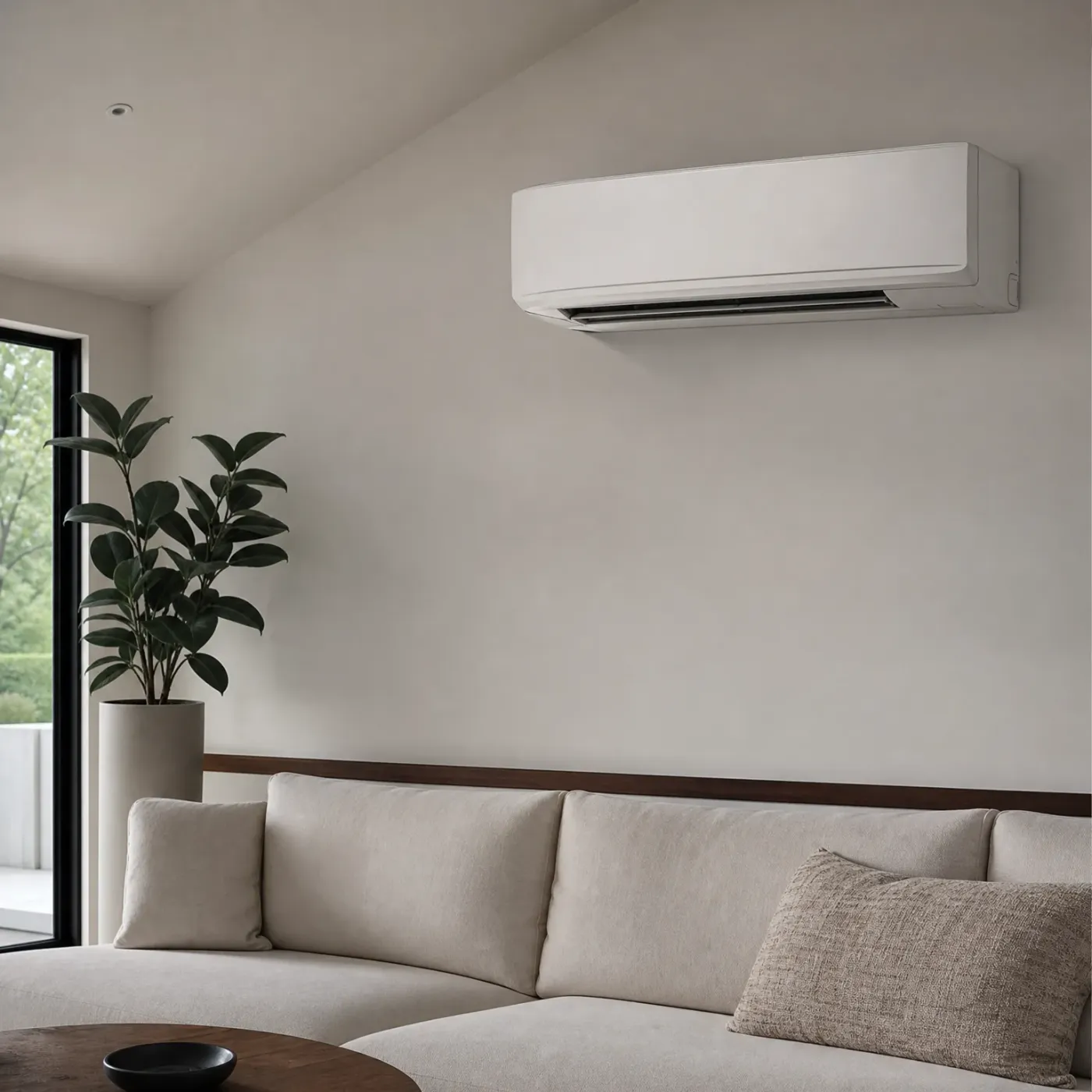
This is what a mini split should sound like on the wall. Steady hum, even airflow, nothing that makes you stop and listen. The case stays clean because nothing is leaking or building up grime inside the housing.
Send it once and finding someone is no longer on you.
Let a pro reach outA mini split that suddenly clicks, buzzes, hisses, or rattles gets noticed fast, especially by someone who likes to catch problems early. Most mini splits run quiet enough that any new sound stands out right away, whether it's running the AC through a muggy Hendricks County summer or helping heat the house on a cold winter night. The sound itself usually points to where the trouble is.
A clicking sound when the unit starts or shuts off is usually normal, the plastic housing expanding and contracting. A buzzing or rattling noise points to something looser, a fan blade out of balance, a panel that's vibrated free, or debris caught in the indoor or outdoor unit. Hissing can mean refrigerant moving through the lines as it should, or it can mean a leak if it's steady and loud. A gurgling sound often means the condensate line is clogged or the indoor coil has ice on it. What it means for you is that the sound is worth paying attention to rather than ignoring, since a loose part or a refrigerant leak gets worse the longer a mini split keeps running with it.

You're at your desk in the home office, working through the sticky part of a Hendricks County summer afternoon, when the clicking from the mini split on the wall stops being the thing on your mind. You notice the wall under the unit looks dark. You get up and find a wet streak running down the drywall, pooling at the baseboard. You grab a towel from the hall bathroom and lay it down before it reaches the carpet. The unit is still running, still making the noise that got your attention in the first place, and now you're standing there with a wet towel at your feet wondering if the two are connected.


Cooling runs June through August
Cooling runs June through August, three months of steady use when a new noise means the unit is working hard and something inside is reacting to it.
Heat runs October through May
Heat runs October through May, eight months out of the year, so a noisy mini split has far more months to wear on than to rest.
Power here costs 14.68 cents per kilowatt-hour
Power here runs 14.68 cents per kilowatt-hour, average for Hendricks County in 2025, so a strained unit working through a noise costs more to run than a quiet one.
NOAA nClimDiv 1991-2020 · EIA-861 2025




A clicking that keeps time with the compressor cycling on and off usually means the compressor is struggling to start. A hiss near the lines can mean refrigerant escaping from a loose fitting. A rattle from the indoor unit is often a fan blade hitting something loose inside the housing, or a panel that's worked itself free. Buzzing from the outdoor unit can point to a failing fan motor or a part vibrating against the cabinet. Left alone, a refrigerant leak means the system cools less each week while the compressor works harder to make up for it, and a compressor that keeps straining to start can burn out. A loose part that keeps rattling can wear a hole in the housing or damage the fan itself.
This is what a mini split should sound like on the wall. Steady hum, even airflow, nothing that makes you stop and listen. The case stays clean because nothing is leaking or building up grime inside the housing.

Dust and dark grime have worked into the fan and filter here, and that buildup is often where new noise starts. Once the case looks like this, a rattle or a hiss is the unit telling you something has gone wrong inside it.


Explain the mini split problem once instead of to every shop in Hendricks County.
Send the request today and let a mini split pro reach out to you.
No fee to send it, and nothing to sign.

Before anyone opens the case, a tech listens for when the sound happens. A click at startup points to the start capacitor or the compressor itself trying to kick on. A buzz that holds steady while the unit runs points to a fan blade hitting something or a loose screw inside the housing. A hiss that doesn't change with the cycle points to the line set, not the compressor at all. The order matters because each of those lives in a different part of the unit, and opening the wrong panel first just adds time to the visit.
Finding that tech is the part you don't have to do. No calling three companies to ask if they work on mini splits, no describing the clicking sound over the phone three separate times, no sorting through quotes that all sound the same. Send the form once and someone who already knows what a compressor click sounds like takes it from there.


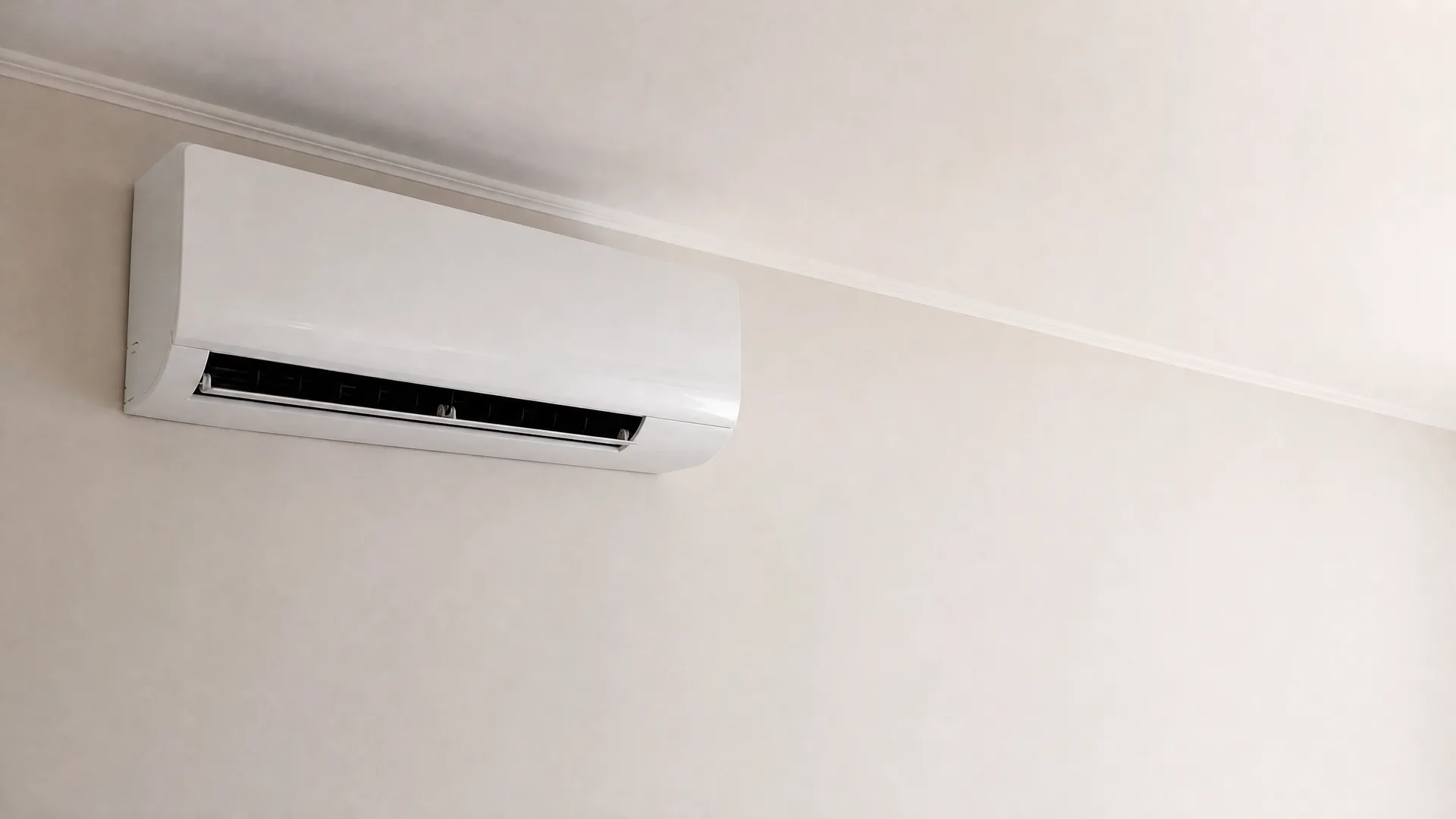
This is a mini split doing its job. The case stays white and clean, the vane opens and closes without catching, and the only sound is steady airflow. Nothing here needs a second look.

Dust has built up across the housing and the vane sits stuck half open. That kind of buildup gets into the fan and the coil behind it, and it's usually around when the new noise started.


Three months of steady cooling means your mini split is doing most of its work in a short stretch. A new noise that shows up in June or July isn't a fluke, it's the unit under real load, and whatever's straining tends to get worse before August ends.
NOAA nClimDiv 1991-2020
You can shut the unit off and wait to see if the sound comes back. Some homeowners pull the filter and wipe down what they can reach, hoping that's the whole problem. It might quiet things down for a while. But you're still guessing at what's loose, worn, or leaking inside the housing, and a wrong guess means the noise comes back in a month, maybe louder, maybe with a bigger repair behind it.
A tech who hears the sound in person can tell you in minutes whether it's the fan, the compressor, or a fitting working loose, instead of you cycling through guesses on your own. You skip the part where you call around Hendricks County asking who even works on mini splits, then wait on hold, then explain the clicking noise again to the next person. Send the form once and that search becomes someone else's job instead of yours.
A new noise from a mini split is information, not background. A click at startup, a hiss near the lines, a rattle from the housing, each one points at something specific, and the sound usually gets worse before it gets better on its own. Catching it now, the way you're doing, is what keeps a loose fitting from becoming a failed compressor. What's left is finding someone qualified to look at it, which usually means searching around, calling a few places, explaining the clicking and the hiss over again to each one, then sitting with quotes trying to compare apples to apples. Send the form instead and that part of it is off your plate. You still have a mini split that needs a tech's attention, but you're not the one tracking down who that tech is.
Hand off the mini split problem