
Running clean
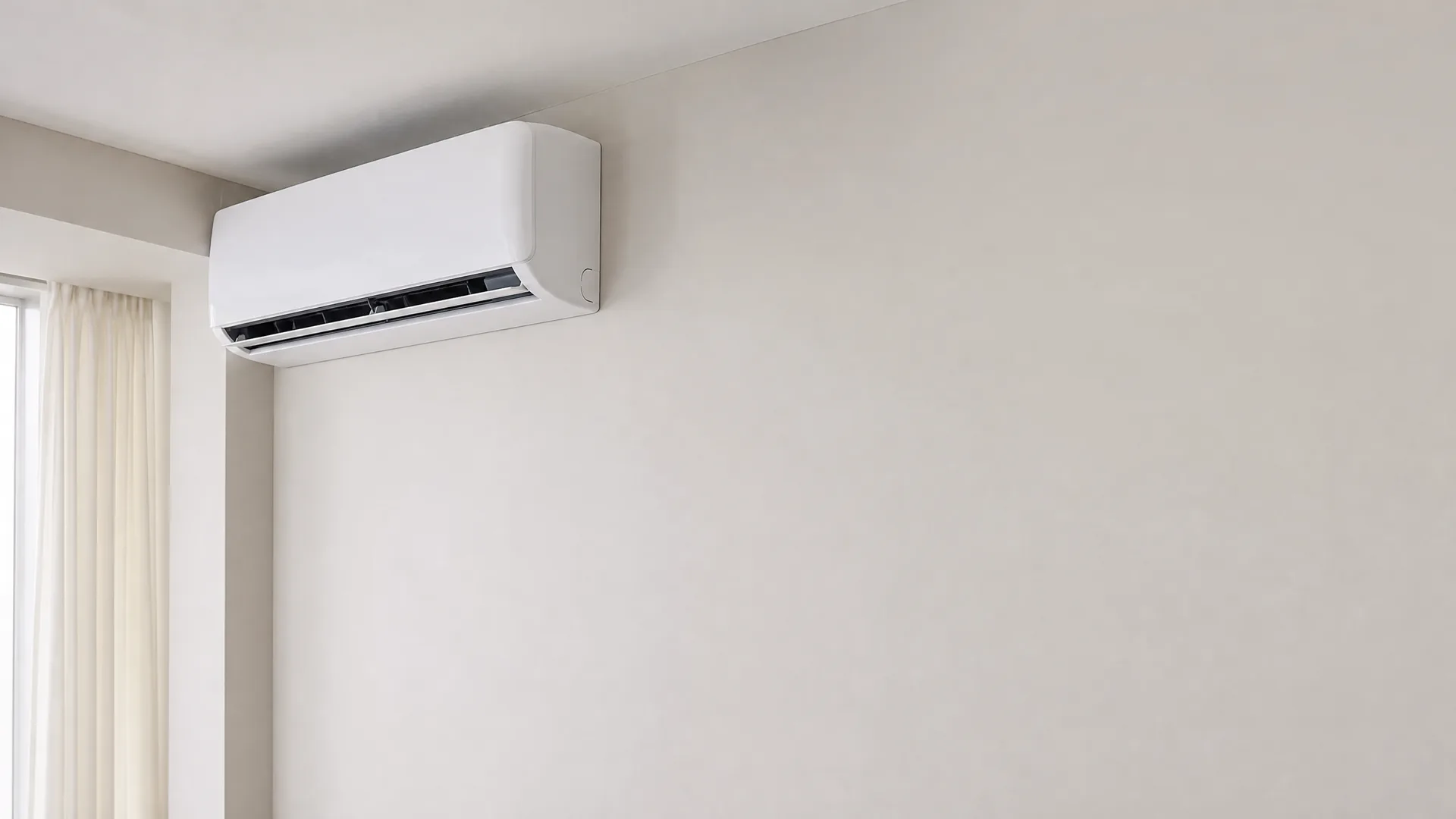
This is what a mini split looks like when airflow is doing its job. The vane opens wide, the coil underneath stays dry, and the air coming off it is cold all the way through a sticky Indiana afternoon.
You go out to check the unit and find ice built up on the coil or even the lines running outside. It's not something you expect in the middle of a muggy Indiana summer when the thing should be blowing cold air, not freezing solid. Once you turn it off the ice melts and it seems to run fine for a while, then it happens again. You want to know what's causing it before it happens a third time.
A mini split freezes when the coil gets colder than it should, and that happens one of two ways. Either refrigerant has leaked out and the remaining charge drops too cold as it moves through the coil, or something is blocking airflow across it, a dirty filter, a blower wheel caked with dust, or a coil crusted with its own buildup. With Indiana summers running long and humid, the indoor unit works harder and more hours than it would somewhere drier, so a filter that's overdue or a slow leak that would take years to matter in a mild climate shows up here as ice on the lines within a season.

You're at your desk around two in the afternoon, trying to get through email before the heat outside builds any more. Something drips. You look up and there's a dark streak running down the wall under the indoor unit, already reaching the baseboard. A towel from the bathroom is down on the floor by the time you've gotten up to look closer. The unit is still running, air still coming out, but not cold the way it was an hour ago. Outside, the afternoon is thick and still, the kind of Indiana summer day that makes the office the one room in the house you actually need working.

This is what a mini split looks like when airflow is doing its job. The vane opens wide, the coil underneath stays dry, and the air coming off it is cold all the way through a sticky Indiana afternoon.

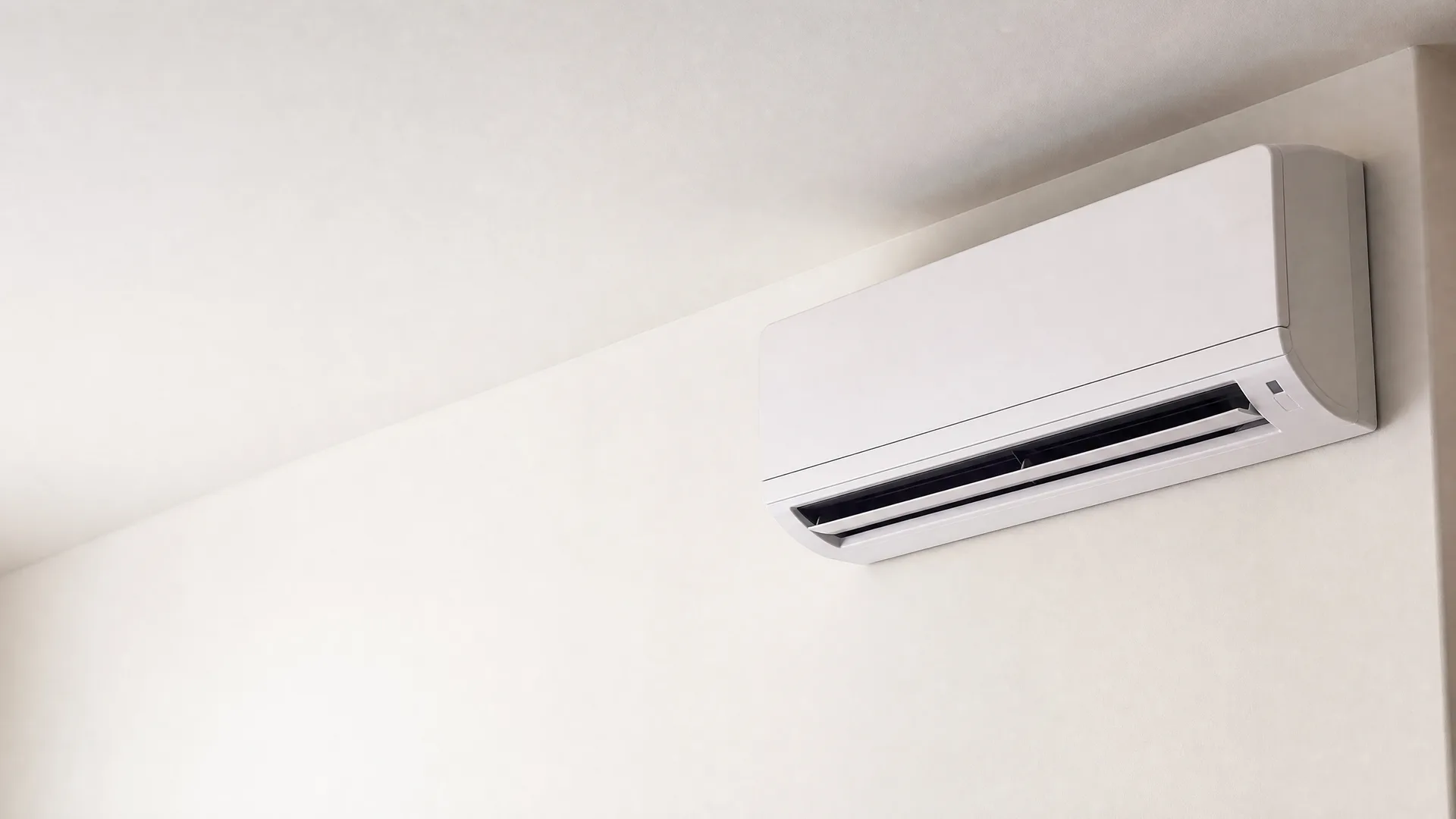
Dust has built up across the housing and the vane barely opens. That grime is also sitting on the filter and coil behind it, cutting off the airflow the unit needs to keep its coil from icing over.

A mini split cools by running cold refrigerant through the indoor coil while the blower pulls room air across it. That coil has to stay above freezing to do its job. Once something cuts the airflow or drops the refrigerant charge, the coil temperature falls below 32 degrees and moisture in the air starts icing on the fins instead of draining off as condensate. Once ice starts, it narrows the gaps between the fins even more, so less air gets through and more of the coil freezes. It doesn't reverse on its own with the unit running.
A dirty filter or a blower losing strength will do it. So will a refrigerant leak, since a low charge drops the pressure in the coil lower than the system was built to run. Both need a licensed tech to find, since one is a cleaning problem and the other means tracing the line set for a leak and weighing it in. Get matched with a contractor who works on your specific unit, and they'll look at the system itself rather than guess over the phone.

A mini split is charged for a specific amount of refrigerant, set for the line length and the indoor and outdoor units it came with. If the system loses some to a slow leak, the coil can't hold the pressure it needs. Pressure drops, and the coil's surface temperature drops with it, down past freezing. Ice forms even though the air filter is clean and the blower is working fine. A low charge is not something you top off once and forget. The leak is still there.
Refrigerant is supposed to arrive at the compressor as gas. When ice blocks the coil, liquid refrigerant can make it back through the line instead of boiling off first. The compressor is built to squeeze gas, not liquid, and it has no give for the difference. A compressor that takes this kind of damage is usually the most expensive part in the whole system to replace, and in a lot of cases it means replacing the outdoor unit rather than repairing it.
At 15.96 cents per kilowatt-hour, a mini split that's frozen and struggling is burning power without doing its job. It runs longer to chase a temperature it can't reach, and that time on the clock shows up on your bill before anyone looks at the coil.
EIA-861 2025 statewide residential average




A frozen mini split doesn't thaw itself out and go back to normal. Even if the ice melts overnight and the water stops dripping, whatever cut the airflow or dropped the charge is still there, and it will ice up again the next hot afternoon. Figuring out which one it is means checking the filter, the coil, the line set, and the pressures, and that's not something to guess at from the couch. What you're probably picturing right now is the rest of it: searching around for someone who works on mini splits, calling a few, describing the ice and the drip on the wall to each one, then sitting with quotes trying to tell them apart. None of that gets your unit running again. Handing the problem off gets you a contractor who already knows what frozen coils and wet drywall mean and can tell you what's actually going on with your system, so you're not carrying this into another sticky afternoon wondering if it'll hold.
Most people check the indoor unit first, since that's where the ice and the drip show up. But a mini split is one system split into two halves, and the outdoor unit can cause an indoor freeze just as easily as a dirty filter can. The outdoor fan is supposed to pull air across the outdoor coil fast enough to move heat out of the system. When it slows down, whether the motor is wearing out or the blades are dragging on debris, the system can't reject heat the way it's built to, and that imbalance works its way back to the indoor coil as ice. Grass clippings and cottonwood fluff do the same thing from a different angle, packing into the outdoor coil until it can't breathe. Then there's the control side. A thermistor near the indoor coil reads the coil's temperature and tells the board when to back off. If that sensor reads warm when the coil is actually near freezing, the board keeps calling for cooling instead of protecting itself. Worn insulation on the refrigerant lines running between the two units can feed bad information into that same system, letting line temperatures swing wider than the controls expect. None of this is something you can see by looking at the indoor vane or pulling the filter. It takes someone checking the outdoor fan, the coil behind it, and the sensors that are supposed to catch this before ice ever forms.


The room the indoor unit serves is probably warmer than you set it, and the unit is louder than usual, straining to push air that keeps losing the fight against the ice. Check the wall below it and the floor nearby for water, even a little. That water came from somewhere, and it's sitting against your drywall or your flooring the whole time the system keeps running. Left alone through a few more sticky afternoons, that's a wall that stays damp and a floor that takes on water it was never built to handle, on top of a unit that still isn't cooling the room you're sitting in right now.

Indiana summers carry more than heat. Averaged across the places people live here, the dew point runs 64°F through June, July and August, according to NOAA climate data, and that's the number that tells you how much moisture your mini split is pulling out of the air along with the heat. A coil already struggling with weak airflow or a low charge has that much more water vapor passing over it, and more moisture means more ice once the coil drops below freezing. That's why the problem tends to show up worst on the muggiest afternoons, not the hottest ones.
NASA POWER T2MDEW county cells weighted by homes


A frozen mini split comes down to one of a short list of causes: something blocking airflow on the indoor side, or something off with the charge or the outdoor unit. Either way, the ice is a symptom, not the problem, and it will keep coming back on the next humid Indiana afternoon until whatever caused it gets fixed. Finding that out yourself means calling around to contractors, explaining the dripping wall and the iced-up coil to each one, then sitting with a stack of quotes trying to tell them apart. Getting matched with a contractor who works on mini splits in your area means you explain it once, and someone who already knows what to check reaches out to you. The coil, the airflow, the charge, the outdoor fan: one of them is behind this, and it gets found the same way whether you spend a week sorting through contractors first or not.

Describe what your mini split is doing once, in one form.
No fee to send it, and nothing to sign.