 Find a pro near me
Why AC units freeze up in sticky Indiana summers
Tell a local repair pro what your air conditioner is doing.
You walk out to the unit on a humid afternoon and the coil is covered in ice. Maybe the air coming through the vents has gone warm first. In Indiana, with the air this heavy from June through September, that ice is a common sign something in the system is not working the way it should.
A frozen coil usually means airflow is restricted or the refrigerant charge is off. A dirty filter, a failing blower, a duct that is closed off somewhere, low refrigerant from a slow leak. The humidity does not cause any of that on its own, but it means the moment something is wrong, ice forms faster and the system struggles harder to keep up.
Running the unit while it is frozen can damage the compressor, and that is a far more expensive problem than whatever started the ice in the first place. It needs a licensed contractor to find the actual cause and fix it, not just switch the thing off and wait for it to thaw.
You could spend the afternoon searching for AC repair companies near you, calling a few, explaining the same thing about the ice and the warm air each time, then waiting on callbacks and trying to line up quotes against each other. That is the part this page shortens. Tell it what is going on with your unit and your home, and it matches you with a contractor who handles this kind of repair and has them reach out to you directly.
No more calling around or repeating yourself to five different companies. Just a straight path to someone who can look at what is actually happening with your system.
Why does my AC unit freeze up in the summer?
You went out to check the unit and found ice on the coil, maybe warm air coming from the vents too. It's the middle of summer and the system should be working harder than ever. You want to know what's actually going wrong before you decide what to do about it.
Warm air isn't reaching the coil the way it should
The coil needs a steady flow of warm air moving across it to stay above freezing. When that airflow drops, usually from a clogged filter, a blocked vent, or a blower motor not pulling its weight, the coil gets too cold and the moisture in the air freezes onto it instead of draining away. A low refrigerant charge does the same thing from the other direction, dropping the coil's temperature low enough to ice over even with normal airflow. Either way, once ice forms it keeps building, and the system can't move heat out of the house until it's gone. In Indiana's humid summers, there's more moisture in the air to freeze, so a system already running low on airflow or charge will ice up faster than it would somewhere drier.


Your indoor coil runs cold by design. What keeps it from icing over is warm air moving across it, enough to hold its surface above freezing even with cold refrigerant inside. Cut that airflow down, a clogged filter, shut vents, a blower not pulling its weight, and the coil stops getting warmed the way it needs. Its surface drops below 32 degrees. The moisture riding in Indiana's humid air hits that cold metal and freezes instead of running off into the drain pan. Once that first layer of frost forms, it blocks more of the air coming through, so the coil runs colder still and the ice keeps building instead of melting back off. A system low on refrigerant makes it worse, since it's still trying to pull the same heat out of your house with less refrigerant to do the job, which drives the coil even colder. All of this happens inside the indoor unit, out of sight, so you usually feel the warm air at your vents well before you ever see the ice causing it.
How the coil actually freezes
- Warm, humid air moving across the indoor coil normally keeps the coil above freezing even though refrigerant inside it runs cold.
- When airflow drops, a dirty filter, closed vents, or a weak blower, the coil loses that warming effect and its surface temperature falls below 32 degrees.
- Moisture in the thick Indiana air condenses on the coil the same way it would on any cold surface, and with the coil below freezing that moisture turns to frost instead of draining away.
- Once a thin layer of ice forms, it blocks even more airflow, so the coil gets colder and the ice builds in layers rather than melting off.
- Low refrigerant charge drops the coil temperature further still, because a system running low still tries to absorb the same amount of heat with less refrigerant to do it.
- The ice usually forms on the coil first, hidden inside the indoor unit, so warm air at the vents is often the first thing you notice before you ever see it.


An air conditioner pro near you

Describe what your air conditioner is doing once, in one form.
Sending the form costs nothing.
Why humidity speeds up the ice
Humid air carries more moisture than dry air, and that moisture has to go somewhere once it hits the indoor coil. Normally the coil pulls the moisture out as condensate and it drains away. When the coil runs too cold because airflow is restricted, that moisture freezes onto the coil instead of draining off. Each pass of humid air adds another layer of frost. In Indiana's thick summer air, a coil that starts icing can go from a thin layer to a solid block in a few hours, which is why the unit often looks fine in the morning and frozen solid by afternoon.
What the ice does to the system
Once ice builds up, it blocks airflow across the coil even further, so the problem feeds itself. The compressor keeps running and pulling in refrigerant that never picks up enough heat, which puts strain on a part that is expensive to replace. Meanwhile the house stops cooling, since little or no air is making it past the ice to the vents. Turning the system off and letting the ice melt can bring airflow back for a while, but it does not fix whatever restricted that airflow in the first place, and the coil will likely freeze again the next humid afternoon.





Average dew point across Indiana homes in June, July and August runs 64°F, figures from NOAA climate records. That's heavy, sticky air, the kind that sits on your skin instead of drying off. Your air conditioner has to pull a lot more water out of that air than it would in a drier climate, and all that extra moisture load on the indoor coil raises the odds it runs too cold and starts icing over. The higher the dew point, the harder the coil works just to keep up, and a system already struggling with airflow has less room for error. That's often when you'll notice ice forming instead of just cold air blowing.
NASA POWER T2MDEW county cells weighted by homes
What are you noticing at your house right now?
The vents are blowing weak, maybe barely cool at all, and the sound coming from the unit outside has changed or stopped. If you've looked, there's ice on the lines or across the coil itself, sometimes with water pooling near the indoor unit as it melts. The thermostat might say 74 while the house feels closer to 80. Left alone, a frozen coil makes the compressor work against ice instead of refrigerant, and that's how a stuck AC on a humid August day turns into a bigger repair, and a house that stays hot while everyone in it waits.
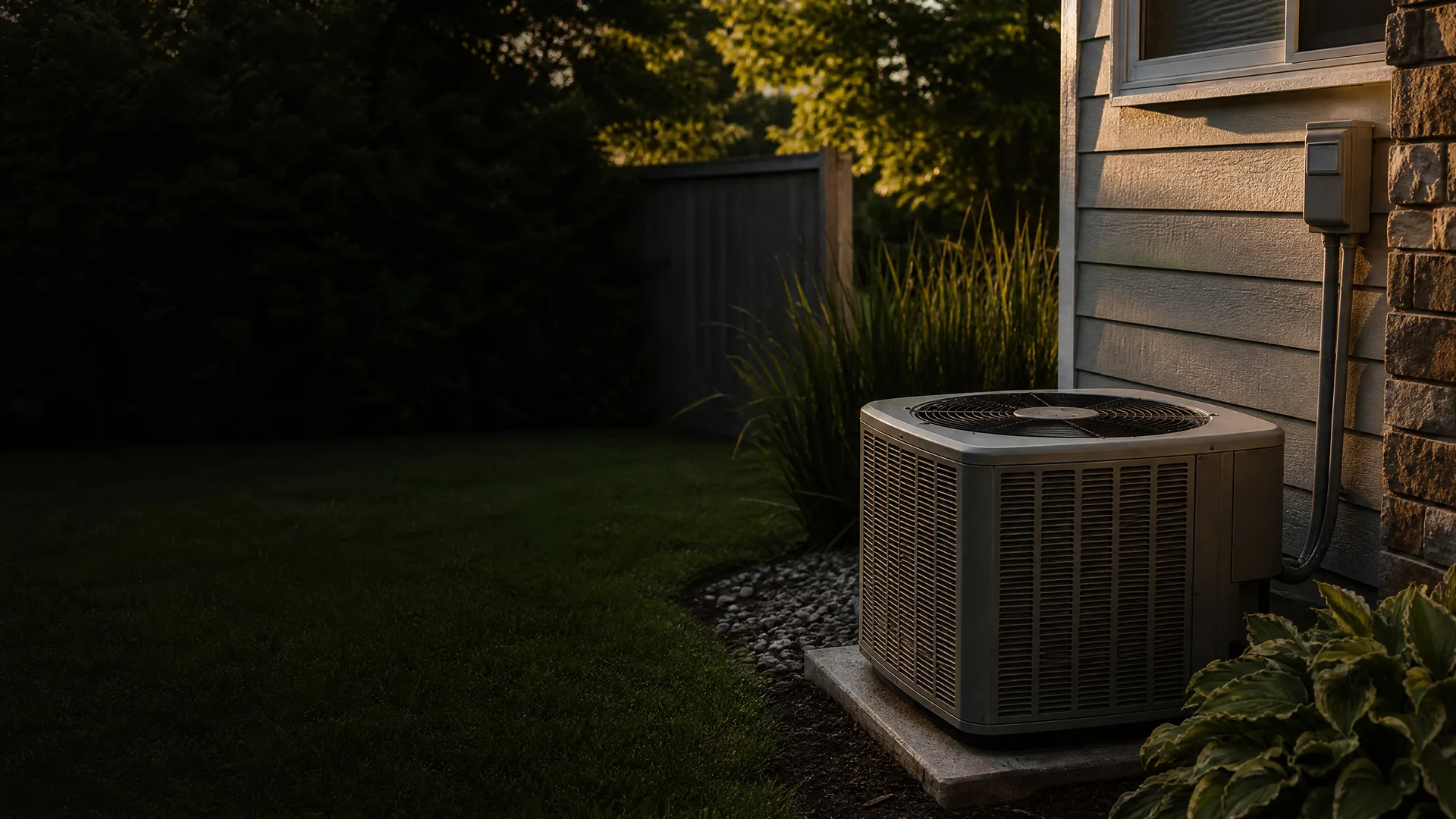
You're out back around seven, grilling or just getting some air before the mosquitoes find you. The light's gone gold over the fence line. You notice it's quiet, quieter than it should be with the AC supposedly running. The condenser fan isn't turning. You crouch down and the top grille is still, no hum, no draft of warm air pushing up off it like it usually does on a night this heavy. Inside, someone's going to ask why the house feels thick again. You stand there a second longer, hand on the warm casing, before you head back in to check the thermostat.
Power costs 15.96 cents per kilowatt-hour statewide
At 15.96 cents a kilowatt-hour, a frozen coil costs you more than lost comfort. Once ice builds up, the compressor keeps running while it tries to cool air that isn't moving, and that strain shows up on your bill before it shows up as a bigger repair.
EIA-861 2025 statewide residential average

Ice on the coil means airflow or refrigerant is off, and summer here won't let up long enough to fix itself
A frozen coil in Indiana almost always traces back to the same two things: something is blocking airflow across the coil, or the refrigerant charge is wrong. The humidity just speeds up what happens once that starts. You don't need to know which one it is before you ask for help. You just need to know the ice won't melt on its own and stay melted while the air stays this thick outside.
Finding someone to look at it is the part that eats your evening, calling around, explaining the same thing three times, trying to tell who actually knows what they're doing. Match with a contractor through this page and that work is done. They'll have what you told them about your system and your house, and they'll reach out to you directly, so you're not starting the conversation over from nothing.


Air Conditioner Repair
A local pro for your air conditioner repair

- Say what's going on with your air conditioner, and a pro who works on them reaches out.

- Send the request today and stop worrying about who to call.
- Send the request today and let an air conditioner pro reach out to you.

- Answer a few questions instead of calling shop after shop.
- Describe your air conditioner job once, to one pro.

- Only one pro gets your request, so you hear from one company.
- Your request stays with one local pro.