Why is my mini split dripping water inside during summer?
You keep an eye on small problems before they turn into bigger ones, so water showing up where it shouldn't has your attention. Indiana summers run sticky for months, and your mini split is working the whole stretch to pull that moisture out of the air along with the heat. A drip inside means something in that process isn't landing where it should.
The condensate drain line is clogged or the drain pan is cracked
A mini split pulls moisture out of the air and that water has to go somewhere. It collects in a drain pan under the indoor coil, then runs out through a condensate line, usually to the outside. In a humid summer that line is handling water for months straight, and algae or dust can build up inside it until the water backs up and spills over the pan instead of draining out. A cracked or rusted pan does the same thing from a different cause. Either way, the water you're seeing inside is water that never made it outside, and the volume shows up faster during the stretches when the air is heaviest with moisture.




Clogged Line or Frozen Coil
Clogged drain line
- Algae and dust build up inside the condensate drain line over a humid summer and slow the water leaving the unit.
- Water backs up inside the indoor unit and finds the nearest gap, usually around the casing or the line set hole in the wall.
- A contractor can flush the line or clear it with a wet vac, and the dripping stops once the water has somewhere to go again.
- If the line was never sloped right when the system went in, it can clog again even after a clean flush.
- Standing water in a blocked line can also start to smell, which is often how homeowners notice the clog before they notice the drip.
Frozen coil
- Low refrigerant or a dirty filter can bring the indoor coil below freezing, and ice builds up on it as the unit runs.
- When the system cycles off or the ice melts, that water runs off the coil faster than the drain pan can catch it.
- A contractor checks the refrigerant charge and the filter to find out which one let the coil get that cold.
- Ice on the coil often comes with weaker airflow from the vents, so the room cools slower even while water shows up on the floor.
- Running the unit with a frozen coil for days at a time can push more water past the pan than a single drip, so it is worth having looked at sooner.
How the indoor unit makes water
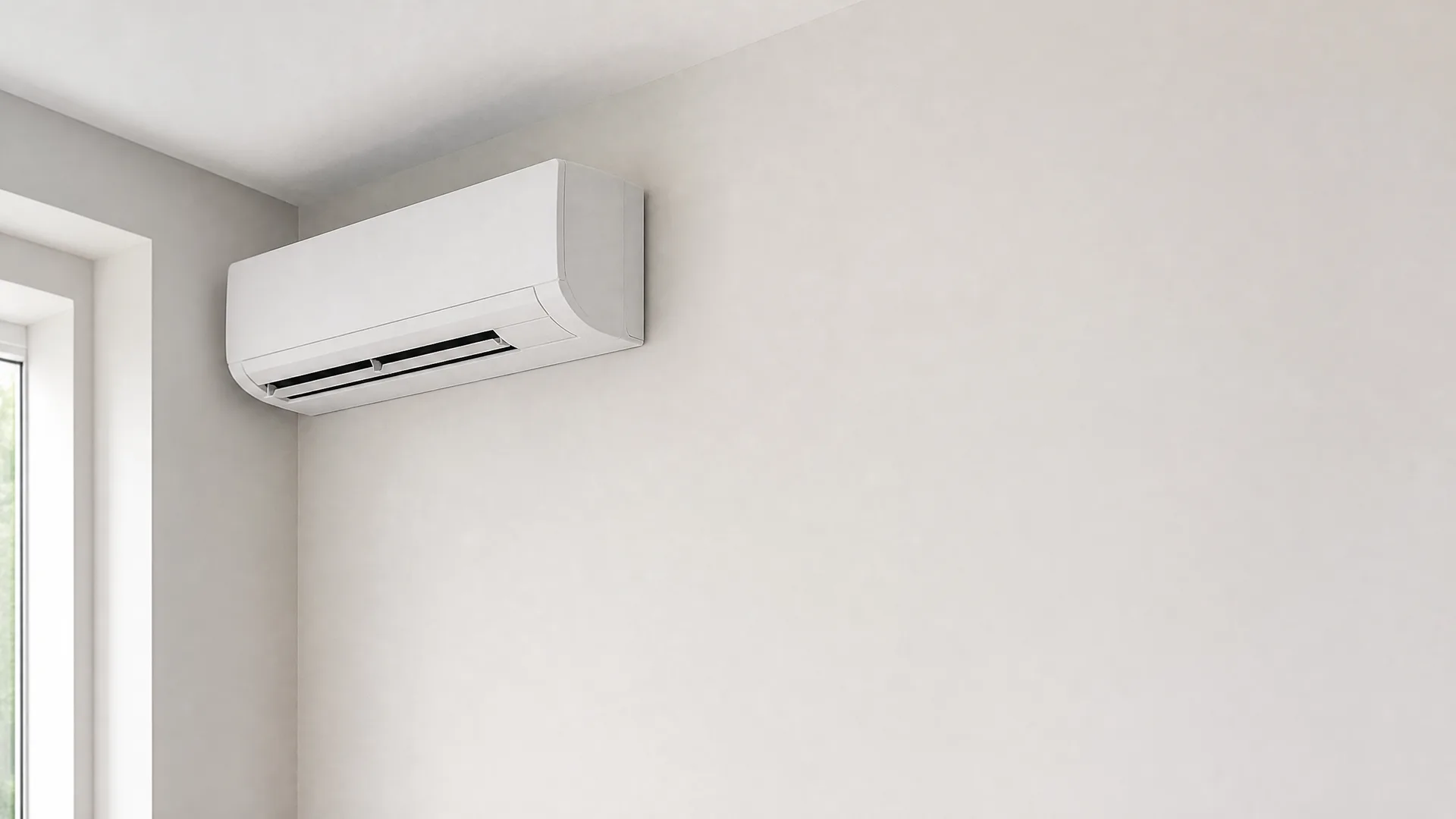
A mini split pulls warm, wet air across a cold coil inside the indoor unit. The moisture in that air turns to water on the coil, the same way a cold glass sweats on a humid day. That water drips into a pan underneath the coil, then runs out through the condensate drain line. In a sticky Indiana summer, the coil stays wet for hours at a stretch, so the pan and the line are handling water the whole time the unit runs.

Why a tilt or crack matters
The drain pan and line only work if they pitch the right way and hold together. If the indoor unit was mounted slightly off level, or the pan has a hairline crack, water finds the low point instead of the drain opening. That low point is often the front edge of the unit or a gap around the wall sleeve. A line that runs uphill anywhere along its path will also back water up, even if the pan itself is sound.
What is this dripping doing to my house
You might notice a dark stain spreading on the ceiling or wall below the indoor unit, or a drip that keeps time on the floor underneath it. Sometimes it is just a musty smell in the room, which means water has been sitting somewhere you can't see. Check the wall behind the unit too, especially around the line set hole, since that is a common place for water to track into the drywall. Left alone, that moisture can soften drywall, warp trim or flooring, and give mold a place to start, especially with how humid Indiana summers run. None of that fixes itself once the drain line or the unit's slope is the problem.


Hand off the search today

Describe what your mini split is doing once, in one form.
No charge to send it. You decide if you hire them.
Fix it yourself or call it in
A clean filter and a drain line flushed with warm water once a season is something you can do on a weekend. If the pan is clear and the line is open and water still shows up inside, the problem has moved past what a filter rinse can reach. A cracked drain pan, a line set hole that was never sealed right, or a coil that is icing over and then melting onto the floor all look like the same drip but need different fixes. Taking the cover off a unit you don't work on every day risks a bent fin or a loose wire more than it risks saving a service call.
What a repair call settles
A licensed contractor pulls the indoor unit apart far enough to see the coil, the pan, and the full run of the drain line, not just the end of it you can reach. That tells you whether the water is a clog, a slope problem, a bad seal, or a refrigerant issue making the coil freeze. Once you send in the form, you are done hunting for who does this kind of work in your area, done calling a few places to see who answers, and done explaining the stain on your ceiling more than once. Someone who works on these units for a living takes it from there.
Power costs 15.96 cents per kilowatt-hour statewide
A clogged drain line doesn't just mean a repair call, it means your mini split keeps running at 15.96 cents a kilowatt-hour while it struggles to move water it can't get rid of. A unit draining the way it should is the cheaper one to run.
EIA-861 2025 statewide residential average
Water inside around a mini split almost always comes down to a drain line that can't keep up or a pan that's cracked or sitting wrong, and both show themselves the same way: water where it shouldn't be. Indiana's humidity through the summer months makes this more likely, not less, so catching it now instead of letting it sit is the right instinct. Finding someone who works on mini splits specifically, checking they're licensed, calling around for availability, explaining the drip and the stain and when you first noticed it, then doing that again with a second contractor to compare what they quote, is the part that eats an afternoon. Send the form and that search is off your plate. You'll still need someone to open the unit, clear the line, and check the pan, but you won't be the one tracking down who can do it.

Mini Split Repair
Stop chasing a mini split pro

- Tell a local repair pro what your mini split is doing.
- Say what's going on with your mini split, and a pro who works on them reaches out.

- Send the request today and stop worrying about who to call.
- Send the request and finding a pro stops being your problem.

- Fill out one short form instead of calling around.
- Explain the job once and skip repeating it on every call.

- Your request goes to one pro, not a list of companies.
- The pro who reaches out is licensed in Indiana.