AC unit frozen up in Anderson, IN

A Madison County pro who repairs air conditioners gets your request.

Find my pro

A frozen AC unit means warm, moist air is hitting a coil that's too cold, and ice builds up instead of condensation draining off. The most common cause is low airflow, usually a dirty filter or a duct that's blocked, but it can also mean low refrigerant from a leak. Either way, running the system harder won't fix it. Shut the unit off at the thermostat and let it thaw fully before anyone touches it again, which can take several hours. Running a frozen coil keeps forcing refrigerant through a system that can't handle it, and that can damage the compressor, which is the most expensive part to replace. Once it's thawed, a contractor can check the airflow, the refrigerant charge and the coil itself to find out which one caused the ice in the first place. In the muggy Anderson summer, a coil that stays blocked tends to ice right back up once the unit runs again.

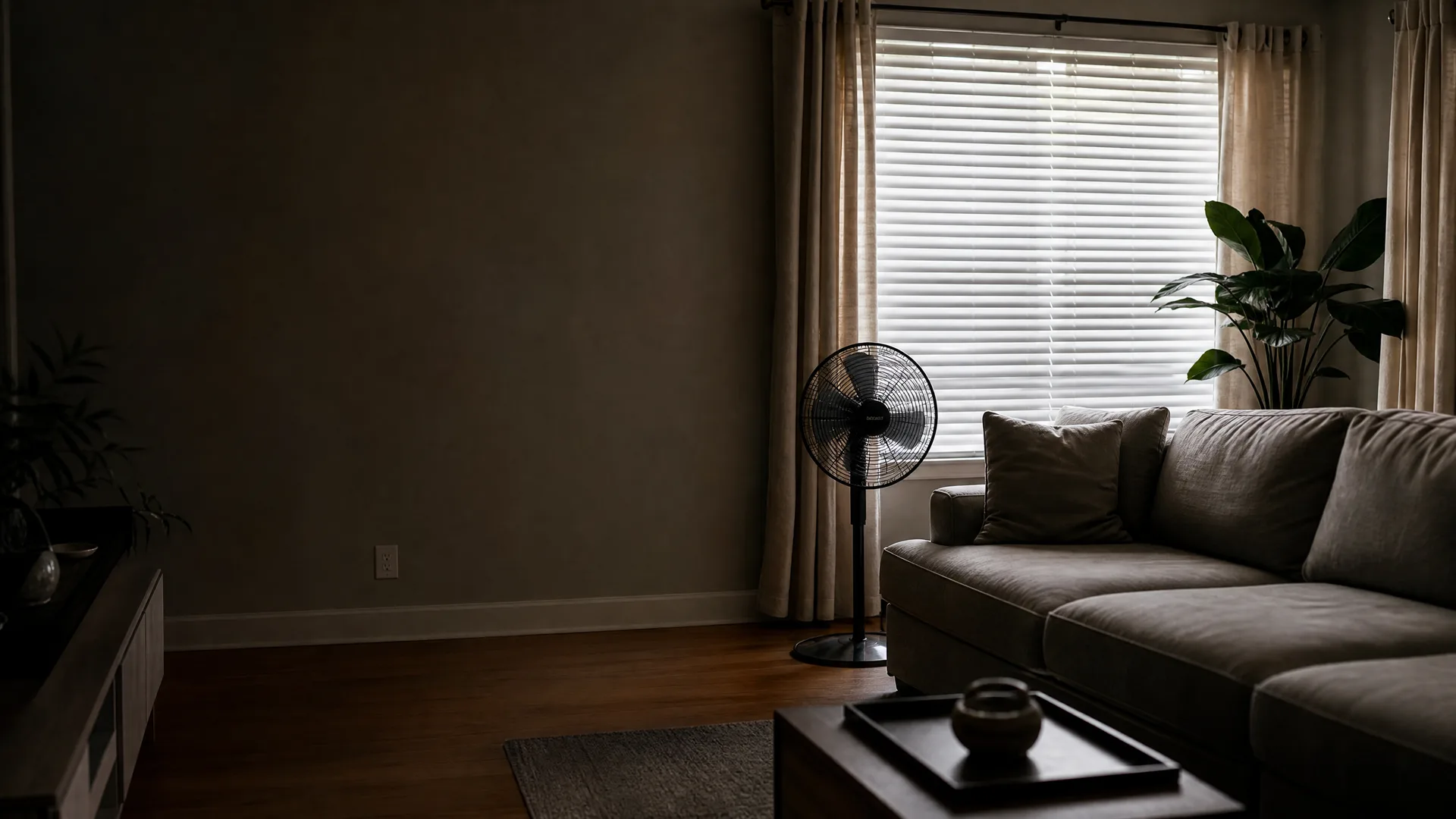
A dimly lit living room with a gray sectional sofa, a standing pedestal fan, a curtained window with blinds, a potted broad-leaved plant, a wooden coffee table with a tray and lidded jar, and a rug on dark wood flooring.

By two in the afternoon the blinds are shut tight against the sun and the living room still feels close. You've got the floor fan angled at the couch, moving warm air around instead of cooling it. The vents have stopped putting out any real cold, just a faint push of air that doesn't do much. You already checked the thermostat twice. Outside, Madison County is sitting in the kind of July heat that doesn't let up till evening, and the unit humming away in the side yard is working for nothing. Somewhere behind the wall, ice is doing what ice does when it's not supposed to be there at all.


Wait It Out or Get It Checked

Turn it off and wait

  • Shut the thermostat to off and switch the fan to on so warm air moves across the coil and melts the ice.
  • A thin coat of ice can clear in a few hours; a thick block can take most of a day.
  • Check the filter while you wait, and if it's gray or clogged, swap it, since that's the most common cause of the freeze.
  • Running the system again before the coil is fully clear just refreezes it and gets you nowhere.
  • This only works if the cause is something simple like a dirty filter or a closed vent, not a refrigerant leak.
  • Water will run off the coil as it thaws, so put towels down if the drain pan can't keep up.

Call a contractor now

  • If the ice keeps coming back after you've thawed it and changed the filter, something deeper is wrong.
  • Low refrigerant and a failing blower motor both cause freezing, and neither one gets fixed by waiting.
  • A contractor can check refrigerant charge and airflow with gauges and a meter, which tells you the actual cause instead of a guess.
  • Running a low refrigerant system for weeks can damage the compressor, which costs far more to replace than to catch early.
  • If ice has built up around the lines outside the house too, that usually points to a refrigerant problem rather than just airflow.
  • A visit now gets the system back to cooling instead of losing another afternoon to thawing and hoping it holds.
A smiling bearded man in a navy long-sleeve shirt sits on a gray sofa in a living room, with a bowl of popcorn in the foreground and shelves and a window behind him.
A smiling bearded man in a dark sweatshirt sits on a sofa in a living room with a bowl of popcorn and a mug in the foreground, a potted plant and large window behind him.
A bearded man in a dark green shirt over a white tee sits smiling on a gray sofa in a living room, with a patterned cushion and a bowl of popcorn nearby and a kitchen with pendant lights blurred in the background.
A smiling man in a dark long-sleeved henley shirt reclines on an olive-green sofa in a living room, with a wooden bowl of popcorn in the foreground and shelving and a large potted plant behind him.

Why does your AC have ice on it in the middle of summer?

You open the cabinet or look at the outdoor line and there it is, ice wrapped around the copper line or built up on the indoor coil. Sometimes it's just a thin frost. Sometimes it's a solid block that's dripping water onto the floor as it melts. The air coming from your vents feels weak, maybe not cold at all, and you might hear the outdoor unit still running like nothing's wrong. Left alone, that ice keeps the system from cooling your house and can push water onto the furnace or the floor around it. The compressor can also take on damage if it keeps running while the coil stays frozen.

An outdoor air conditioning condenser unit on a concrete pad beside a house with white horizontal lap siding, with an electrical disconnect box and insulated refrigerant line on the wall and a shrub over mulch to the right.

Running the way it should

This is what a healthy system looks like. Air moves freely through the coil, the lines stay cool but clear, and the unit cycles on and off without strain. Nothing on the outside tells you anything is wrong, because nothing is.

An outdoor air conditioner condenser unit on a concrete pad beside a house with light horizontal lap siding, with an electrical disconnect box and conduit on the wall behind it.

Iced up and struggling

An older unit like this one has had more chances to develop a slow leak or a worn part that drags airflow down. Weathering alone doesn't freeze a coil, but years of wear make low refrigerant or a failing component more likely. Once ice forms, the unit can't cool the house until it's gone.

An outdoor air conditioning condenser unit on a concrete pad beside a house with white horizontal vinyl siding, with a gray electrical disconnect box and refrigerant lines on the wall behind it.
Before you get your air conditioner repair
A gray outdoor air conditioner condenser unit on a concrete pad beside a house with white horizontal siding and a brick foundation, with a wall-mounted disconnect box and conduit, and a green shrub with mulch at left.
After you get your air conditioner repair

Get matched with an air conditioner pro in Madison County

Send the request today and let an air conditioner pro reach out to you.

No charge to send it. You decide if you hire them.

Why the Coil Freezes Over

  • Refrigerant runs through the coil at close to 40 degrees, so any moisture on the coil freezes on contact once airflow drops.
  • A dirty filter or closed vents cut the air moving across the coil, so the coil keeps getting colder instead of absorbing heat.
  • Once ice forms it insulates the coil, so the system pulls in even less heat and the freeze builds on itself.
  • Low refrigerant lets the line that should run cool run cold enough to frost, even with the filter clean and the vents open.
  • The blower keeps pushing air past the frozen coil, so the vents blow warm or barely-there air instead of cold.
  • A compressor that keeps running against a frozen coil is working against a block of ice instead of moving heat out of the house.

The indoor coil runs cold on purpose. Refrigerant moves through it at close to 40 degrees so it can pull heat out of the air passing by. That only works if enough air keeps moving across it. Cut that airflow, with a filter packed full of dust or vents shut in rooms you don't use, and the coil has nothing to absorb. It just keeps getting colder until the moisture in the air freezes to the metal instead of draining off as condensation.

Once a layer of ice forms, it works against the system from there on. Ice is a poor conductor, so it blocks what little heat exchange is still happening, and the coil drops colder still. More ice builds on top of that. It doesn't reverse itself once it starts.

Low refrigerant causes the same freeze a different way. The line that should run cool runs cold enough to frost even when the filter is clean and every vent in the house is open. Either way, the blower doesn't know to stop. It keeps pushing air past a coil wrapped in ice, which is why the vents end up blowing warm air, or barely any air at all.

The compressor keeps running through all of this. Instead of moving heat out of the house, it's working against a block of ice, and that's hard use for a part that isn't built to run against a blockage.

Cooling runs June through August

Three months of real heat is what your AC has to get through here, and June through August is when a frozen coil is most likely to show up. That's also when the unit runs longest each day, so a dirty filter or a closed vent has more hours to choke off airflow before you notice ice.

NOAA nClimDiv 1991-2020

The coil runs near 40 degrees. Once airflow drops, any moisture sitting on it freezes instead of draining, and ice builds in layers with every cycle that follows.

That's why a unit can run all afternoon and still leave the house warm. The coil is wrapped in ice instead of pulling heat out of the air moving past it.

A woman with wavy brown hair sits on a beige couch with her eyes closed and a slight smile, a knit blanket over her lap and a closed dark-covered book resting on it, with a lit lamp and plant in the dim background.
A smiling man with dark wavy hair and a short beard, wearing a navy crewneck sweater, sits at a candlelit dinner table with a bowl of food, wine glass and a lamp and framed art behind him.
A man seen from behind raises his hand to wave at a woman standing in the open front doorway of a single-story house with gray shingle siding, white columns and a gabled porch entry.

A frozen AC unit comes down to airflow

Ice on the coil or the line means something is keeping warm air from moving across it the way it should. Most of the time that's a filter clogged with dust or a vent someone closed to save a few dollars. Sometimes it's low refrigerant, and that's not a job to guess at. Shut the system off, let the fan run, and let the ice melt before anyone touches the coil or the lines. Running it iced up just pushes the compressor harder for no cooling at all.

If the filter's clean and the vents are open and it still freezes, the house needs someone who can check the charge and the coil itself. A contractor matched to your system in Anderson can look at what's actually going on in your unit instead of guessing from a filter change. Once you send the request, that part is off your plate. Someone who works on these units around Madison County will reach out and take it from there.

Interior corner with sheer white curtains at a window, a brown upholstered sofa in the foreground, and a wooden multi-drawer cabinet holding a round ceramic vase with leafy branches.
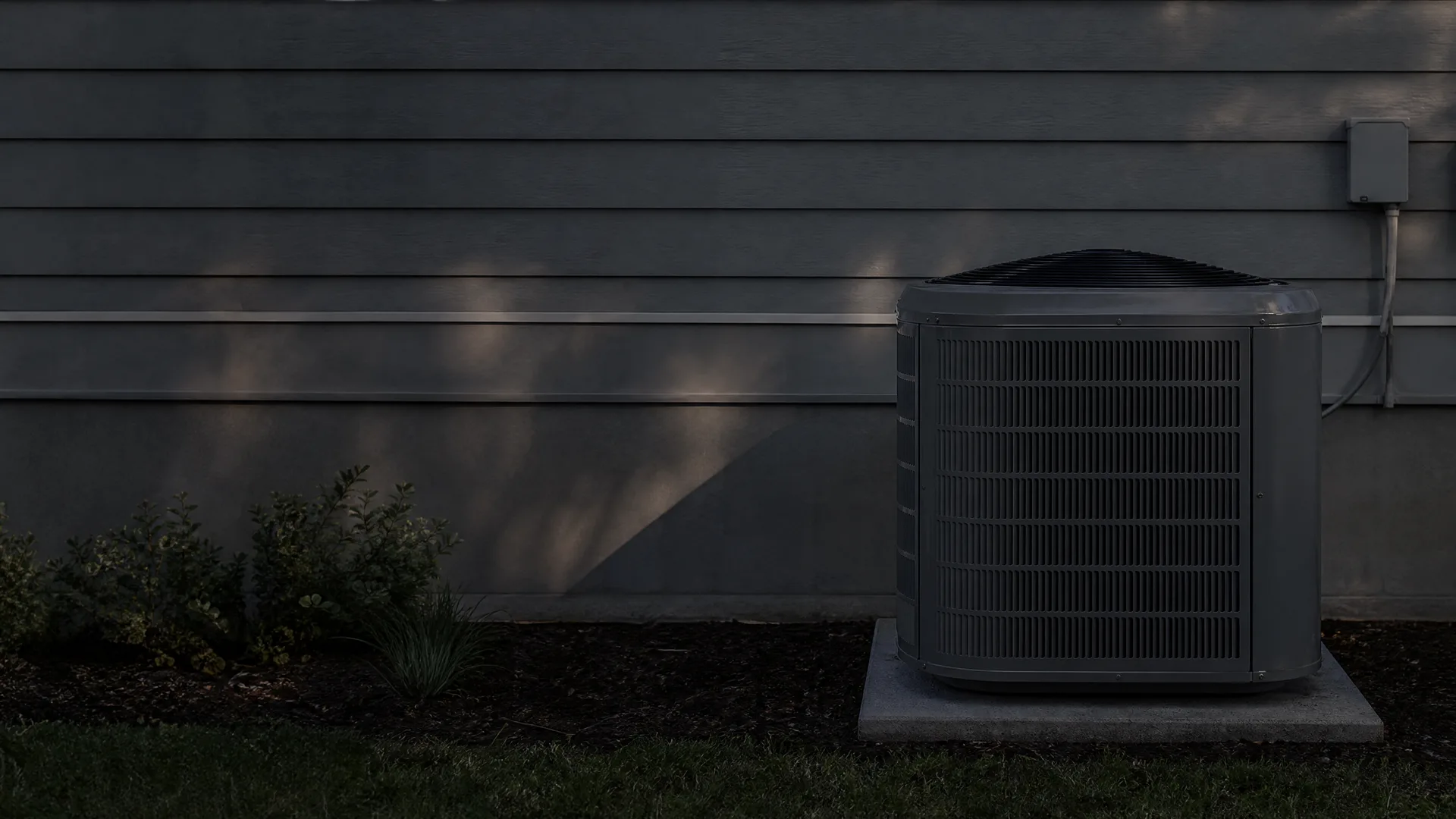
An outdoor air conditioning condenser unit sits on a concrete pad beside a gray horizontal lap-sided house wall, with a small electrical box and conduit above and shrubs in a mulch bed to the left.

Find an air conditioner repair pro in Madison County

Get the air conditioner repair search off your mind today.

RepairCentral ACMadison County, IN
Step 1 of 2

What ZIP code is the job in?