Running at a normal setting
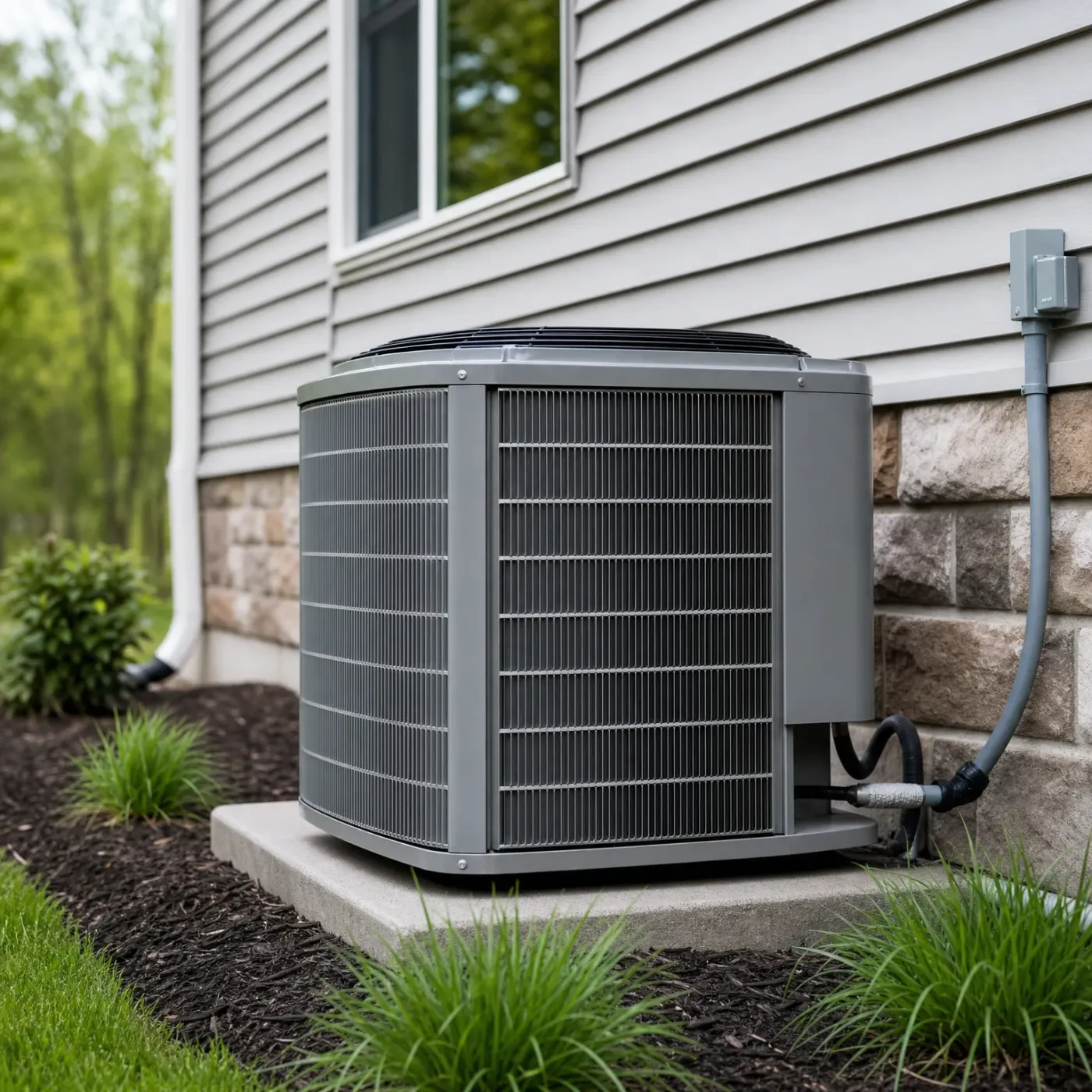
A unit like this, sitting clean on its pad with good airflow around it, holds whatever number you give the thermostat without straining. You set it and it keeps up, even when the air outside is thick enough to feel.
You want a number that keeps the house comfortable without running the AC into the ground during an Indiana summer. With the humidity here, it's not always obvious what setting actually works, and you'd rather get it right than guess and end up adjusting the thermostat every few hours.
78 degrees is the standard setting for most homes while someone's there to feel it. Indiana summers run humid, and that moisture is what makes a room feel warmer than the number on the thermostat suggests, so 78 often feels fine once the air has had a chance to dry out some. Push it up to 85 or so when the house is empty for the day. The gap between those two settings matters less than keeping the system from fighting against outdoor heat and humidity all day for a house with nobody in it. A unit that runs steady at a sensible setting holds up better over a long summer than one that gets pushed to 68 every evening and shut off every morning.

A unit like this, sitting clean on its pad with good airflow around it, holds whatever number you give the thermostat without straining. You set it and it keeps up, even when the air outside is thick enough to feel.

Coil guards caked in dust choke off the airflow this unit needs to shed heat. It starts chasing the thermostat instead of reaching it, running longer at any setting, and that strain comes from the coils, not the number you picked.

Pick a number and your AC will hold it on a normal day, but Indiana humidity makes the air feel different at the same setting. A house at 74 can feel sticky if the system isn't pulling enough moisture out as it cools, and you'll notice it on the furniture, the windows, even the bedsheets. That's usually not the thermostat's fault. It points to airflow or a coil that isn't doing its job.
If you're the type who checks on things before they turn into a bigger repair, a setting that suddenly feels wrong, even by a degree or two, is worth paying attention to. A local contractor who services AC units all summer can tell you fairly quickly whether the system itself is the problem or whether it's something else in the house. Getting matched with one means you're talking to somebody who already knows what tends to go wrong in Indiana summers, not explaining your situation from scratch to whoever picks up.


This one sits clean on its pad with the fins clear and the lines running straight into the wall. Nothing blocks the airflow around it. It can hold 75 through a muggy afternoon without strain, because the coil can still shed the heat it's pulling out of your house.

Dirt and weathering have built up on the fins over the years, and that unit works harder to move the same heat. Set it to 75 and the house might sit at 78 instead. A coil caked with grime can't dump heat the way a clean one can, no matter what the thermostat says.




A thermostat set at 75 only matches the air coming out of the vents if the coil inside is clean and the airflow across it is right. That's what turns the number into the temperature you actually feel.
A dirty coil or a weak return can leave the house two or three degrees warmer than the setting, no matter what number you pick. Maintenance is what keeps the thermostat telling the truth.


Your request goes to one pro, not a list of companies.
Say what's going on with your air conditioner, and a pro who works on them reaches out.
There's no charge for the request.


A thermostat you set in June and don't touch again works fine as long as nothing about the system changes underneath it. Most people pick a number that felt right last summer and stay there. That's reasonable if the coil is clean and the airflow hasn't dropped off. The risk is you won't notice when it has. The number on the thermostat stays the same, but what the house actually feels like can drift, and by the time it's obvious, the system has been working harder than it needs to for weeks.
Some people treat the thermostat setting as something to test, not just set. If 74 felt right last July and the house feels sticky at 74 now, that's worth noticing instead of just pushing the number lower. A lower setting can mask a system that isn't pulling moisture out the way it used to, and it costs more to run that way all summer. Catching the difference early is usually what separates a quick fix from a bigger repair once the heat really sets in.
At just under 16 cents a kilowatt-hour, that's a typical rate, not a steep one. The setting you choose matters more than the price does. Holding 75 instead of pushing to 70 saves you real money over an Indiana summer, but a dirty coil or weak airflow will cost you more than a couple degrees on the thermostat ever will.
EIA-861 2025 statewide residential average

Late May, and the cottonwoods along the side yard have let go. You step out to check the condenser after noticing the house felt a little warmer than the thermostat said it should. The fins are matted white, a thin felt of fluff pressed flat against the coil, caught in the mesh the same way lint catches in a screen. The unit is still running, the fan still turning, but the sound is different, a little harder working than it was in April. You crouch down and see the fluff has pulled dust in with it, packed tight enough that you can't see metal through it in some spots. Nothing has failed yet. It's just working harder than the number on the thermostat would suggest it should.


Warm air returns through the vents and crosses the filter first.
Refrigerant inside the indoor coil pulls heat and moisture from that air.
A blower pushes the cooled, drier air back through the ducts.
Outside, the condenser coil releases that heat into the yard air.

A summer dew point averaging 64°F across June, July and August, based on weather data for where homes sit in Indiana, is the kind of air that feels heavy even when the thermometer isn't that high. At that dew point, your AC has to pull real moisture out of the air, not just cool it, to make 75 feel like 75. That's more work on the coil than a dry climate ever asks for. If the coil is clean and the charge is right, it keeps up. If not, you'll feel it as clamminess long before the thermostat number changes.
NASA POWER T2MDEW county cells weighted by homes
Pick a number that keeps you comfortable without asking more of the system than it can give, usually somewhere in the mid-70s, and let a clean coil and good airflow do the rest. The setting only holds if the equipment behind it is working the way it should. That's what maintenance checks, and a technician who works on these systems every summer in Indiana knows which parts give out first in this humidity, the coil, the charge, the airflow across the return, before the house ever feels it. You'd be matched with one contractor, local to you and licensed for this work, not a handful of companies competing for the callback. They see what's actually going on with your unit and tell you straight whether 75 is realistic for your house or whether something needs attention first. That's a better answer than any number on this page, because it's specific to the system sitting outside your house right now.





The pro who reaches out is licensed in Indiana.
You only hire the pro if you want to.