An outdoor air conditioner condenser unit on a concrete pad beside a gray horizontal-siding house at dusk, with a wall-mounted disconnect box, shrubs, and a gravel path with stepping stones nearby.

Skip the calls to every shop

Why your house is humid with the AC on in Indiana

A sticky house with the AC running usually means the system is cooling the air but not pulling enough moisture out of it, often tied to a unit that's oversized, low on refrigerant, or running short cycles. This page covers why that happens in Indiana's summers and what it takes to fix. Instead of searching around and calling multiple AC companies to explain the same problem over and over, you can get matched with one local contractor who already knows what to check.

Skip the calls

A humid house with the AC running usually means the air is getting cold but not dry. An air conditioner pulls moisture out by running long enough for warm, wet air to pass over a cold coil again and again. If the system shuts off too soon, the house feels cool but still damp, and in Indiana's thick summer air that happens a lot. A unit that's too big for the house cools the air fast, hits the thermostat setting, and clicks off before it has run long enough to do the drying part of the job. Low refrigerant causes something similar: the coil doesn't get cold enough, so the air moves through without giving up its moisture. A dirty filter or blocked vent can choke airflow the same way. Whatever the cause, the fix is mechanical, not a thermostat setting, and it usually means someone checking the charge, the airflow, and how long the system actually runs before it shuts off.

A gray outdoor air conditioning condenser unit on a concrete pad beside a house with horizontal siding and a stone veneer base, with refrigerant line and electrical disconnect box on the wall and flowering shrubs to the left.
A properly sized system cools steadily and runs long enough to pull the moisture out along with the heat.
An outdoor air conditioner condenser unit on a concrete pad beside a house with light gray horizontal siding, with mulch and green shrubs on either side and a concrete walkway in the foreground.
A dirty, neglected unit struggles to shed heat and often short cycles, leaving the air cold but still damp.

The coil inside your air handler only pulls water out of the air after it has stayed cold and wet for a while. Set the thermostat low and the compressor can hit that temperature fast, shut off, and leave the coil barely damp. The blower keeps pushing air across it the whole time, so the vents still blow cool even though the coil never got the chance to do its real work. A system that's low on refrigerant by even a few ounces runs a coil just cold enough to chill the air without wringing much moisture from it. The same thing happens with a unit sized too big for the house. It satisfies the thermostat in a few minutes and shuts down before a full cycle finishes. What matters for the humidity in your house isn't how cold the air feels at the vent. It's how long the blower ran while that coil was cold enough to actually condense water and send it down the drain.

Why Cold Air Stays Damp

  • A cold coil has to stay wet with condensation for several minutes before water actually drips into the drain pan and leaves the house.
  • A thermostat set to a low temperature can satisfy the room quickly on a mild day, shutting the compressor off before the coil ever gets that wet.
  • The blower moves the same volume of air whether the coil is cold or not, so air still feels cool even when little moisture has left it.
  • A refrigerant charge that's a few ounces low raises the coil temperature just enough that it chills air without pulling much water out of it.
  • An oversized system matched to a smaller space finishes cooling the room in a few minutes, long before the coil has worked through a full cycle.
  • The humidity reading in the house depends on how long the blower ran, not on how cold the air coming out of the vents feels.
A woman with dark shoulder-length hair in a beige knit sweater stands in a living room looking off to the side, with a sofa, lamp, houseplant and window behind her.
A woman with dark hair in a bun and a green button-up shirt looks off to the side in a living room with a gray sectional sofa, cushions, a woven pendant lamp, and a wall shelf with plants and a picture frame.
A woman with dark hair in a loose updo, wearing a white top and cream cardigan, sits on a light sofa with cushions and looks off to the side in a bright living room with white shelving, a mirror, a lamp and a large potted plant.
A woman with dark hair in a loose bun and a light grey sweatshirt sits near a curtained window, looking to the side and smiling slightly, with a blurred living room and sofa behind her.
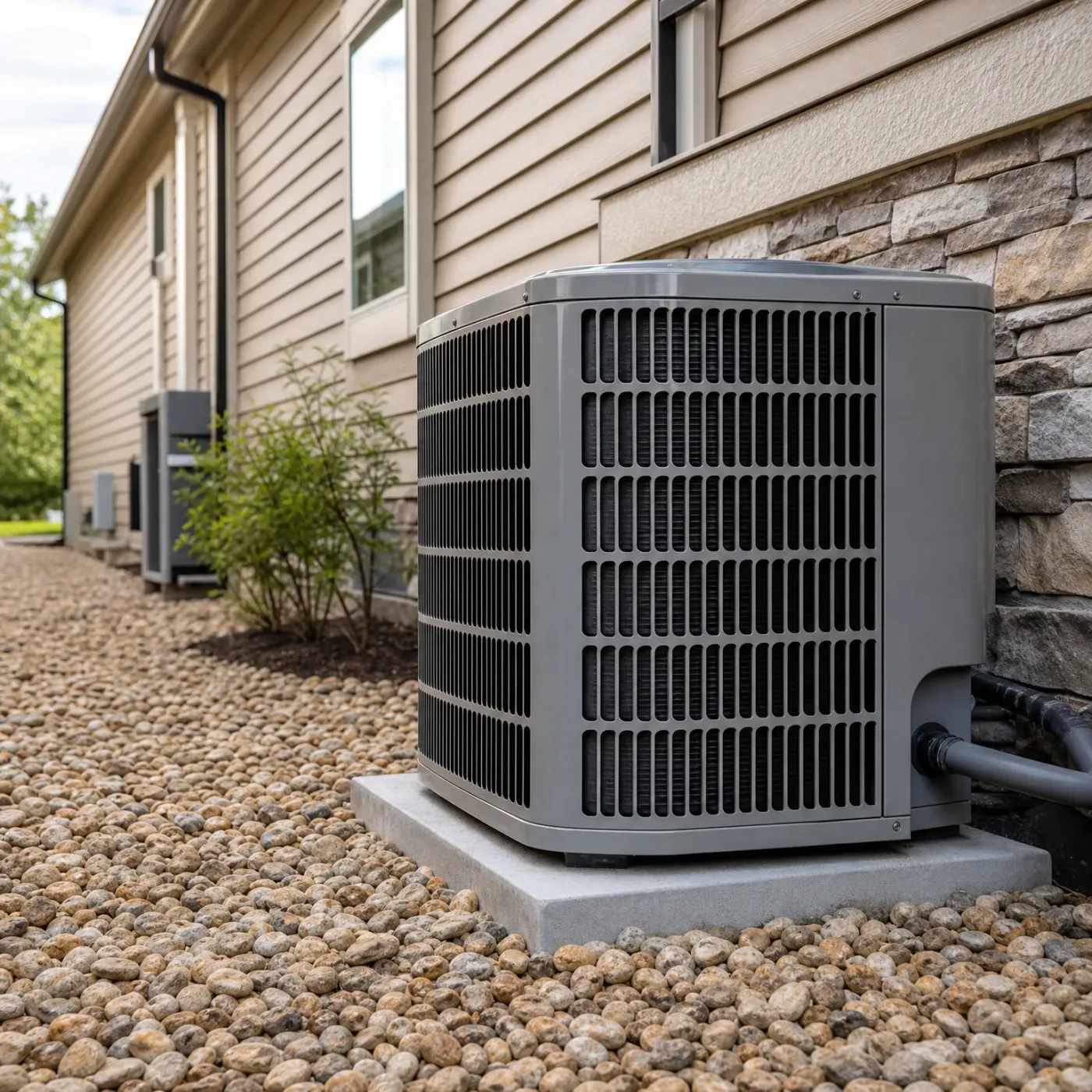
A gray outdoor air conditioner condenser unit on a concrete pad beside a house with vinyl siding and stone veneer, surrounded by gravel, with a second smaller unit and a shrub farther along the wall.

Skip calling around

Your request stays with one local pro.

Explain the job once and skip repeating it on every call.

Answer a few questions

You're not committing to anything by asking.

A closed laptop and a speckled ceramic mug sit on a wooden table beside a stoneware vase with a leafy branch, with a wooden chair, kitchen counter with cutting board and bowl, and dark upper cabinets in the dim background.

What a damp house costs you this summer

You keep the house comfortable for the people in it, and humid air undoes that even when the thermostat says 72. Sheets feel damp, wood floors swell a little in July, and a room that reads cold still feels clammy the moment someone sits still. Indiana summers already carry enough moisture in the outside air that a system which isn't pulling its share back out puts the work on everything else in the house, including the people trying to sleep in it.

Finding out why takes someone standing in front of your unit with a gauge, not another guess from a search result. Instead of calling around to a handful of companies, repeating the same description of a cold but sticky house to each one, and sorting through quotes that don't agree with each other, you get matched to one licensed contractor working in your area, the kind who checks refrigerant charge and run times on this equipment every summer and knows what's usually behind it in a house like yours.

A living room corner with a light beige sofa holding a textured taupe cushion, a large ceramic vase of olive branches by a window, a framed neutral artwork on the wall, and a dark bowl with stacked books in the foreground.
  1. Warm, humid air from the house passes over the indoor coil.

  2. The cold coil chills the air below its dew point.

  3. Moisture in the air condenses into water on the coil's surface.

  4. Water drips off the coil into the condensate drain pan.

Power costs 15.96 cents per kilowatt-hour statewide

At 15.96 cents per kilowatt-hour, a struggling AC costs you twice over. It runs longer trying to cool a house that still feels damp, and every one of those extra hours shows up on the bill without giving you the dry air you're paying for.

EIA-861 2025 statewide residential average

A gray outdoor air conditioner condenser unit on a concrete pad beside a house with horizontal vinyl siding, surrounded by mulch, flowering shrubs, and lawn.

A unit that can breathe

The coil behind that cage is clean, so heat moves off it the way it should. The compressor runs a full, steady cycle instead of kicking off early, and that's what gives the air time to actually lose its moisture, not just its heat.

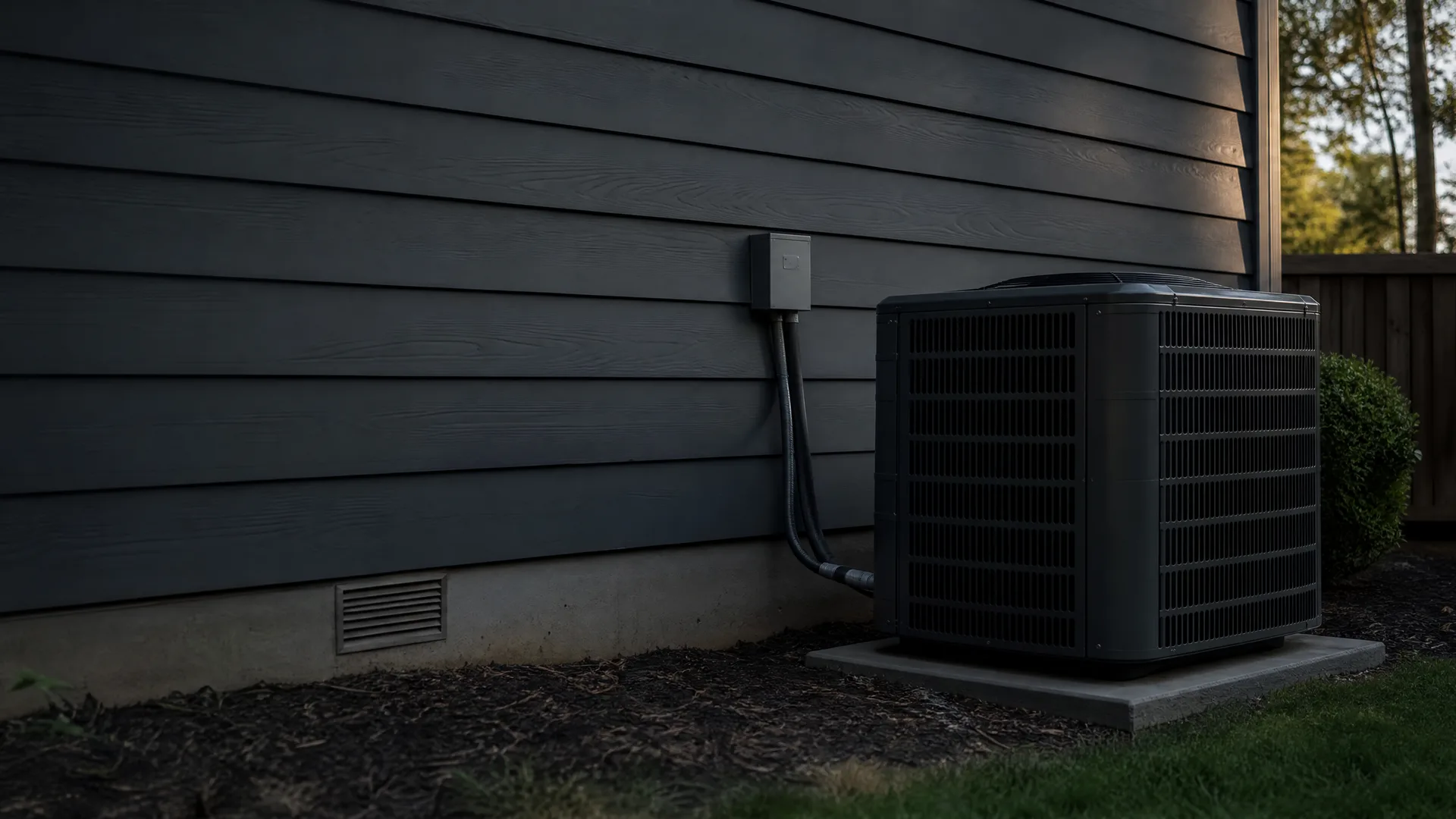
A weathered outdoor air conditioning condenser unit on a concrete pad beside a house with light horizontal siding, an electrical disconnect box and conduit on the wall, and mulched soil on either side.

A unit fighting its own coil

Dirt and grime packed into those fins block airflow before the coil even gets a chance to do its job. The system has to run longer and harder to move the same heat, and a coil working that hard to just keep up won't stay cold enough, long enough, to wring the water out of the air.

A woman with her hair in a bun holds a sleeping child against her chest on a couch, both wrapped in a knit blanket, with a lit lamp, potted plant and framed picture in the background.
A smiling older woman with short light hair in a beige knit sweater sits in a dimly lit kitchen beside a window at night, with a round loaf of bread on a wooden board in the foreground.

Cold air, still damp

  • A humid house with the AC running means the system is cooling the air but running too short to dry it out.
  • The fix usually involves a technician checking refrigerant charge, system sizing, and whether short cycling is cutting runtime too soon.
  • A local contractor who services Indiana air conditioners through the summer sees this same complaint every July and August.
  • One licensed contractor takes the call, looks at your system, and gives you a straight diagnosis instead of a guess over the phone.
  • You avoid calling around to different companies and explaining the same damp-house, cold-air problem more than once.
  • Getting the right contractor out once beats sorting through several quotes for a problem that has one likely cause.

Cold air and dry air are not the same thing, and that's the whole answer. Your AC can hold the house at 72 and still leave it feeling sticky if it never runs long enough to pull the water out of the air. Short cycles, a low charge, a unit sized too big for the house, any of these can be behind it, and telling them apart from a thermostat on the wall isn't really possible. That's a job for someone who can check the charge, look at how the system was sized, and watch how long it actually runs before it shuts off.

That's also where having one contractor out, instead of three or four, works in your favor. Someone who services Indiana air conditioners all summer has already heard this exact complaint this year, probably more than once. Cold air, damp house, thermostat looks fine. They know the handful of things that usually cause it and what order to check them in. You explain the problem once, to one licensed contractor, and get a real diagnosis instead of piecing together guesses from a few different voices on the phone.

A sticky house with the AC running isn't something to just live with until fall. It's a sign the system is doing half its job. The other half, pulling the moisture out, is fixable once someone who knows these units gets eyes on yours.
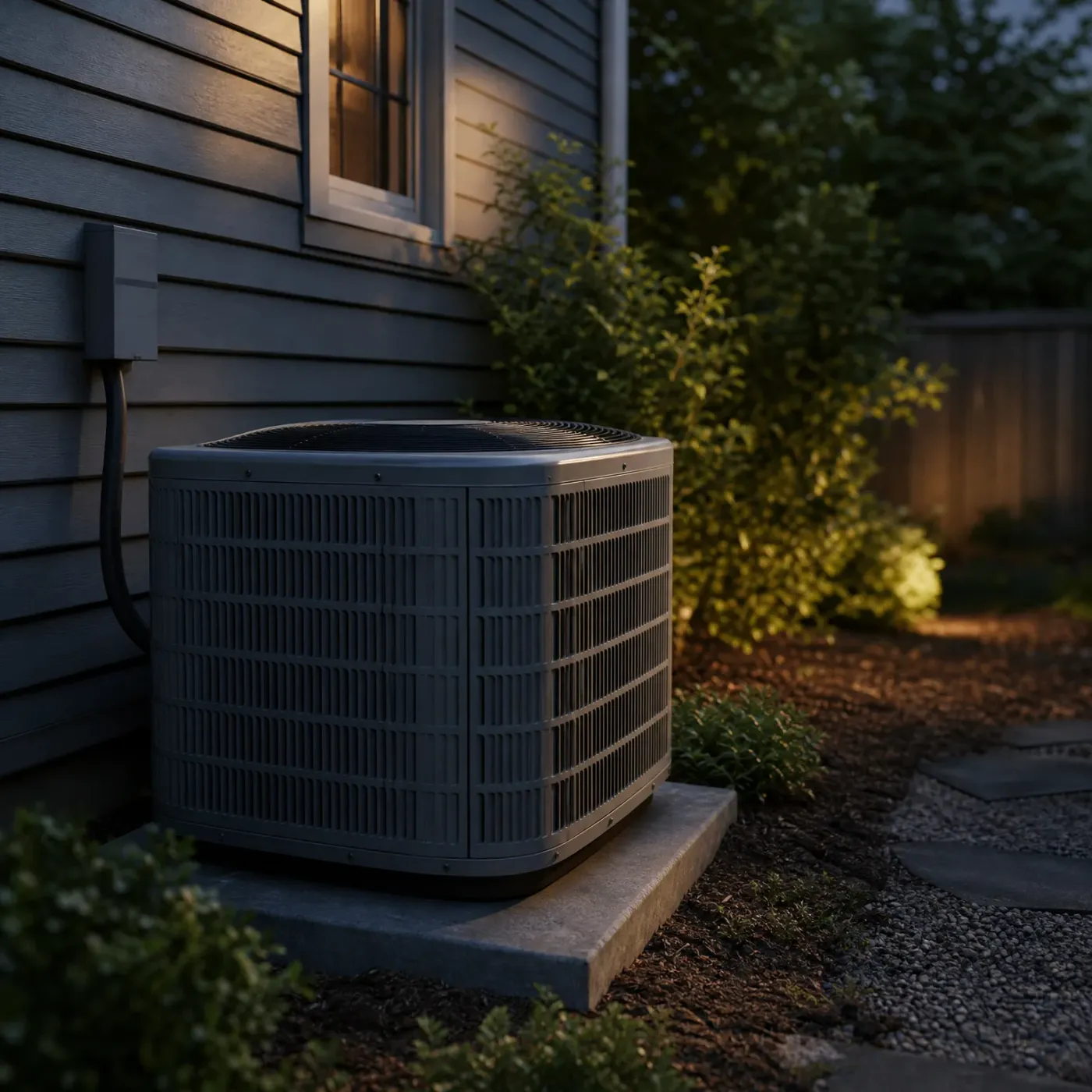

An outdoor air conditioning condenser unit on a concrete pad beside a dark gray horizontal lap-sided house wall, with a disconnect box and refrigerant lines on the wall, mulch bed and shrubs nearby.

Describe it once

Your request goes to one pro, not a list of companies.

RepairCentral ACIndiana
Step 1 of 2

What ZIP code is the job in?