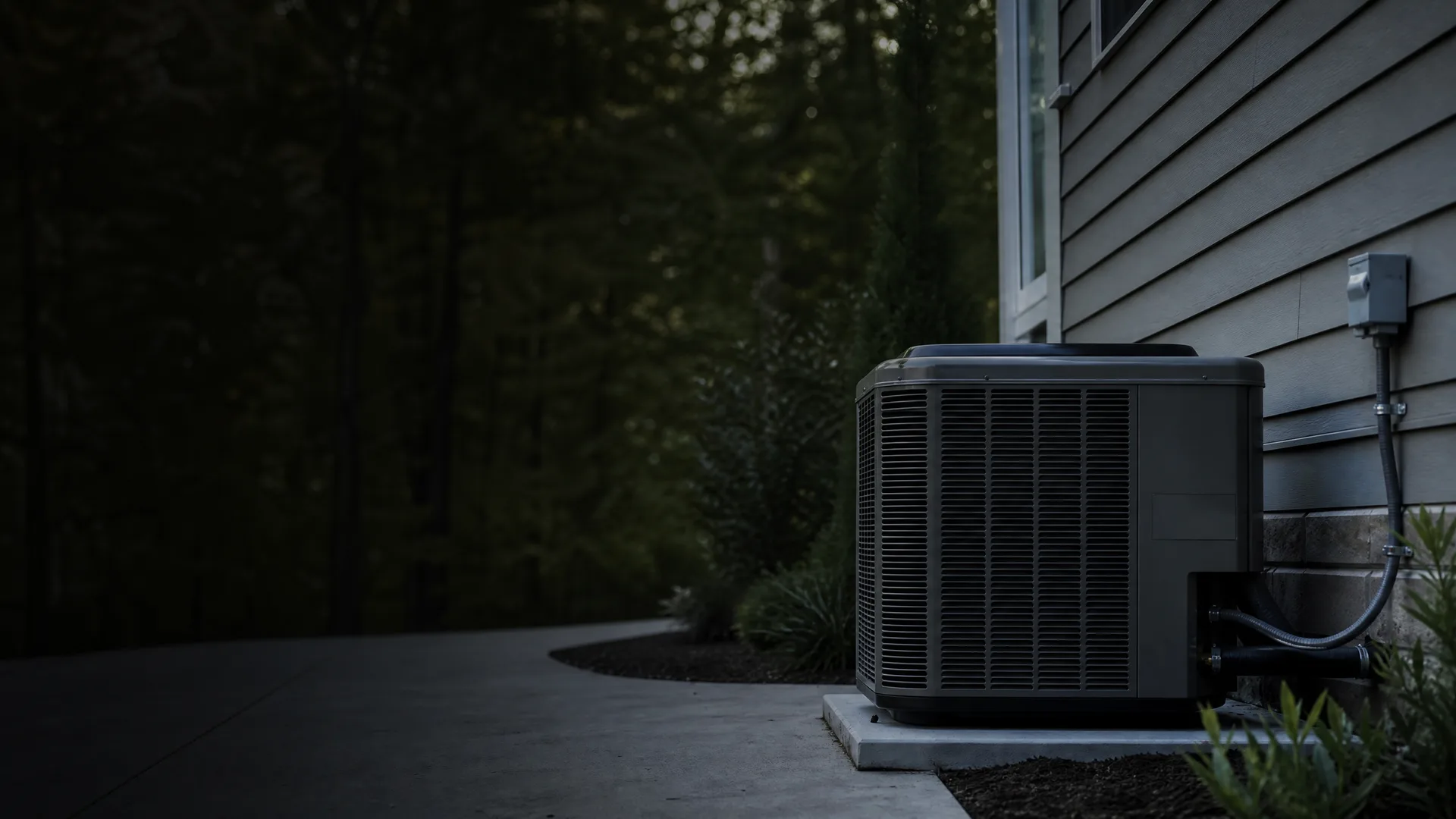




What SEER rating makes sense for an Indiana home

Skip collecting and comparing quotes for the new air conditioner.

Skip calling around

What SEER rating should I get for my AC in Indiana?

You want a number before you start calling anyone. Indiana summers get sticky enough that the AC runs hard for months, and you'd rather not pay for more cooling power than the house needs, or end up with a unit that struggles on the worst July days. A straight answer on what rating actually fits here helps you know what a contractor quotes you makes sense.

14.3 SEER2 is the minimum, and many Indiana homes do fine there

Federal rules set 14.3 SEER2 as the lowest efficiency a new central air conditioner sold in Indiana can carry. That floor applies everywhere in the region Indiana sits in, so it's not a local quirk, it's what every manufacturer has to meet now. For a lot of houses here, a unit right at that number keeps up fine once summer settles in and the humidity sits heavy for weeks at a stretch. Going higher, into the 16 or 18 SEER2 range, means the compressor works less to produce the same cooling, which matters more the longer your system runs each year. With gas heat handling winter, your electric bill is mostly a summer story, and the SEER2 rating is the main thing that shapes it.

An outdoor air conditioner condenser unit on a concrete pad beside a house with light horizontal siding, with a small electrical disconnect box on the wall, mulch and shrubs at left, and a plain white wall and concrete slab at right.

Why the rating matters here

SEER2 measures how much cooling a unit produces for the electricity it uses over a season, not how strong it is. A higher number means lower operating cost at the same cooling output, which matters in Indiana because the unit will run for months straight once summer sets in. A low SEER2 unit and a high one can cool your house the same, but the high one does it on less power.

A dark gray outdoor air conditioner condenser unit on a concrete pad beside a house with horizontal siding and a plain light wall, with mulch and grass in the foreground and a conduit and electrical box on the wall.

How the gas furnace changes the math

Most Indiana homes heat with gas, so the air conditioner is sized and chosen on its own, not as part of a heat pump that also handles winter. That means the SEER2 rating only has to make sense against your summer electric bill, not a year-round one. A contractor who installs in your area knows what size and rating pair well with the ductwork already in gas-heated homes nearby.

14.3 SEER2 or Go Higher

14.3 SEER2

  • Covers the summer load fine in most Indiana homes, since the system still runs on the same gas furnace for winter heat.
  • Costs less upfront, which matters if the rest of the house, the ductwork and the insulation, is working against the AC anyway.
  • If your ductwork has leaks or the attic runs hot, a higher-rated unit won't make up the difference on its own.
  • Indiana's power prices are typical, not high, so the monthly savings from a higher rating take longer to add up than they would somewhere with expensive electricity.
  • Matches what most installers stock and install routinely, so parts and service aren't a special order.

16+ SEER2

  • Pays back faster the more months the AC runs, and a sticky Indiana summer means the compressor is working through June, July, and August at least.
  • Lower operating cost at the same cooling output, so the difference shows up on the electric bill during the months the unit runs most.
  • Often pairs with a variable-speed or two-stage compressor, which holds the house at a steadier temperature instead of cycling hard on and off.
  • Worth it if you plan to stay in the house long enough for the lower summer bills to offset the higher installed cost.
  • A unit sized wrong for the house won't deliver the rated efficiency no matter how high the number is, so sizing still has to be right first.
A gray outdoor air conditioner condenser unit on a concrete pad beside a house with light vinyl siding, with an electrical disconnect box and conduit on the wall and a leafy shrub with dark mulch to the right.

Running the way it should

A condenser like this cycles on and off all summer without asking for attention. The grille stays clean, the pad stays clear, and the disconnect box next to it does its job quietly. This is what lets a SEER rating actually hold up over the years instead of just on paper.


An outdoor air conditioner condenser unit on a concrete pad beside a house with horizontal lap siding, with a gray electrical disconnect box and conduit on the wall and a green shrub over pine-needle mulch at left.

Losing ground to dirt and age

A grille caked with grime and pine needles has to work harder to pull air through, no matter what SEER rating is stamped on the unit. Mulch pressed right against the housing and years of weather take a toll on output long before the compressor itself gives out.

A woman with long light-brown hair in a gray knit sweater sits in a living room looking off to the side, with a sectional sofa, houseplant, lamp, wooden table and large windows behind her.
A woman in a chunky gray turtleneck sweater sits indoors looking off to the side, with a blurred dining table, chairs, pendant lamp and window behind her.
A woman in a cream knit sweater with her hair in a bun stands near a window, looking off to the side, with a gray sofa, houseplant and open kitchen with pendant lights blurred behind her.
A woman with long brown hair in a cream knit sweater stands near a window, looking to the side, with a white sofa, shelving, and a hallway visible behind her.

No quotes to chase

Picking the number is the easy part. Getting a contractor who sizes the unit right for your house, pulls the permit, and installs it so it actually hits that SEER2 rating all summer is the part that takes work, and most of that work is just finding someone to trust with it. You could spend an evening calling around Indiana install companies, explaining your furnace setup and your attic ductwork to each one, then waiting on quotes that are hard to compare because nobody priced the same equipment. Or you can send the request once and have it go to a licensed local contractor who installs this equipment every summer and knows what tends to go wrong with Indiana installs, undersized line sets, ducts that can't move the air a bigger unit needs. One contractor calls you back, not five. You already know the rating you want. The next step is getting it installed by someone who does this work here, not spending your week finding them.

What Makes the Rating Real

  • A two-stage or variable-speed compressor holds a higher SEER2 number through a mild September, not just a hot July.
  • The outdoor unit's size has to match the indoor coil and the duct airflow, or the rated SEER2 never shows up on the bill.
  • A unit sized too large for the house cycles on and off fast, so it never runs long enough to dehumidify the air.
  • The refrigerant line set gets reused or replaced depending on what's already running from the house to the condenser.
  • A permit pull means an inspector checks the refrigerant charge and airflow before the system counts as installed right.
  • The same gas furnace keeps the blower motor moving air across the new coil, so that motor's condition affects summer performance too.

A SEER2 number on a spec sheet only holds up if everything downstream of the compressor is sized and set up to match it. The compressor itself matters first. A single-stage unit runs at full output every time it cycles on, so it earns its rating mostly on the hottest days and gives less back during a mild stretch in June or September. A two-stage or variable-speed compressor adjusts to the load, which is where a higher SEER2 number actually pays off over a full summer instead of just a few weeks of it. From there, the outdoor condenser has to match the indoor coil and the ductwork has to move enough air across that coil. Mismatch any of those and the system can carry a high SEER2 label while running nowhere close to it. Sizing cuts the other way too. A unit too big for the house satisfies the thermostat fast and shuts off before it pulls much humidity out of the air, which in Indiana means a house that reads cool but still feels sticky. The refrigerant line running between the condenser and the coil sometimes gets reused from the old system and sometimes needs replacing, depending on its condition and size. A permit pull puts an inspector on site to check the charge and the airflow before the job counts as finished. And since the same furnace blower pushes air across the new coil in summer, a blower motor that's worn down holds back the new system's performance along with the old one's.

A woman with her hair in a bun sits wrapped in a beige knitted blanket on a couch, holding a sleeping child against her chest in a warmly lit room with a lamp and houseplant in the background.
An older woman with short gray hair in a cream cable-knit turtleneck sweater smiles while looking to the side in a wooden kitchen, with a round loaf of bread on a board in the foreground and a lit candle by a dark window.

14.3 SEER2

Keeps the electric bill close to what you're used to paying. If the house already holds up through August fine, there's no bill problem to solve here.

Skip the search

16 to 18 SEER2

Lower bill through July and August when the AC runs most hours of the day, and less strain on it during a stretch of 90-degree weeks.

Skip the search

Power costs 15.96 cents per kilowatt-hour statewide

At just under 16 cents a kilowatt-hour, every bit of cooling efficiency you buy shows up on the bill, especially in July and August when the AC is running most of the day. A higher SEER2 unit costs less to run at that rate than a lower one working just as hard.

EIA-861 2025 statewide residential average

A closed silver laptop and a glazed ceramic mug on a wooden table, with a blurred kitchen counter, potted plant, cutting board and window in the background.

So what SEER rating is right for your house

14.3 SEER2 covers an Indiana summer without trouble. Go higher if the unit is going to run most of the day for months and you want that reflected in the bill, or if the rest of the house can actually make use of it. Either way, the number only means what it's supposed to mean if the installer sizes the unit to your house and your ductwork, not just to the number on the box.

That's the part that's hard to shop for on your own. You'd otherwise be calling around, explaining the same house and the same AC trouble to three or four companies, then sitting with quotes that don't match up because nobody sized things the same way. Here you talk to one licensed contractor working in your area, someone who installs these systems every summer and knows what a gas-furnace home in Indiana needs from the coil and the ductwork to hit the rating you paid for. No extra calls, no repeating yourself.

A wooden table holding a stone vase with a bare branch, two stacked books and a small dark bowl, beside a window with green foliage outside and a sofa in the dim background.
An outdoor air conditioner condenser unit sits on a concrete pad beside a house with horizontal lap siding, with a refrigerant line, electrical disconnect box, a concrete driveway and dark trees in the background.

Describe it once

Only one pro gets your request, so you hear from one company.

New system or replacementCentral ACIndiana
Step 1 of 2

What ZIP code is the job in?