Side profile of a bearded man wearing a dark faded baseball cap and a dark gray t-shirt against a plain light background.

What emergency heat means on an Indiana heat pump

RepairHeat PumpIndiana
Step 1 of 2

What ZIP code is the job in?

Emergency heat is a setting on your thermostat that shuts off the outdoor unit and runs backup heat instead, usually electric strip heat inside the air handler. A heat pump pulls warmth from outside air, and once temperatures drop into the 30s and 20s there is less heat out there to move, so the outdoor unit works harder and ices over faster than it can defrost. Switching to emergency heat lets the backup system carry the house without that outdoor unit running at all. You would use it if the outdoor unit is frozen, making noise, or not running, or if a contractor tells you to while a repair is pending. It is not meant to run for weeks at a time. Left on through a stretch of Indiana winter, it will heat the house, but strip heat pulls a lot more power than the heat pump does to do the same job.

A smiling middle-aged man in a dark green sweater sits at a candlelit table with wine glasses and a plate of greens in a dimly lit interior.
A woman in a dark knit turtleneck sweater reclines on a couch under a cream knit blanket, looking down at an open book, with a lit table lamp and framed pictures behind her.

Your thermostat gives you two different heat settings for a reason. "Heat" runs the heat pump as usual, pulling warmth from outside air and moving it indoors. "Emergency heat" is a switch you flip yourself, and it tells the system to stop using the outdoor unit entirely and rely on strip heat instead. That strip heat comes from metal coils inside the air handler, heating the same way a toaster does, with electricity instead of the outside air doing the work. Because of that, it pulls a lot more power than the heat pump normally does. The upside is that nothing happening outside, a frozen coil, a dead compressor, a tripped breaker, can stop the house from heating while you're on emergency heat. You may notice the air from the vents feels hotter than what you're used to, since it isn't limited by how cold it is outside. None of this is meant to run for weeks. Emergency heat is there to get you through until the outdoor unit is repaired, not a setting to leave on to spare it the work.

How Emergency Heat Actually Works

  • The thermostat has two separate heat settings, and switching from "heat" to "emergency heat" is a manual override you control, not something the system does on its own.
  • Strip heat works by passing electricity through metal coils in the air handler, the same way a toaster or a space heater makes heat, with no outdoor unit involved at all.
  • Because strip heat makes warmth directly from electricity instead of moving it from outside air, it draws far more power than the heat pump does in normal operation.
  • The outdoor unit sits idle the entire time emergency heat is running, so a frozen coil, a failed compressor, or a tripped breaker outside won't stop the house from heating.
  • Air coming out of the vents on emergency heat often feels hotter than normal heat pump air, since strip heat doesn't rely on the slower process of pulling heat from cold outdoor air.
  • Emergency heat is meant to run until the outdoor unit gets fixed, not as a setting to leave on through a cold stretch to save the compressor effort.
An outdoor air conditioning condenser unit on a concrete pad beside a house with horizontal siding and a concrete foundation, with refrigerant lines running to a wall-mounted disconnect box and shrubs at left.
Before you get your heat pump repair
A gray outdoor air conditioner or heat pump unit on a concrete pad beside a house with horizontal lap siding, with conduit and refrigerant lines running up the wall and green shrubs and mulch at left.
After you get your heat pump repair

What Emergency Heat Costs You

  • A thermostat stuck on emergency heat all week will show up on your electric bill before it shows up anywhere else.
  • Strip heat warms the air fast, so if your vents feel hotter than usual, check what setting the thermostat is actually on.
  • A heat pump left on emergency heat through a whole Indiana cold snap can run up real electric cost for days at a time.
  • If the outdoor unit sits quiet and coated in frost while the house stays warm, someone likely switched it to emergency heat and never switched it back.
  • A heat pump that won't leave emergency heat on its own usually points to a problem outside, not a setting you need to manage by hand.
  • Gas furnace households rarely deal with this at all, which is part of why it catches heat pump owners off guard.

Emergency heat runs on electric strip heat alone, and strip heat is the most expensive way to warm your house. Indiana power rates are fairly typical, so the issue isn't your rate, it's how much the strips run once they're the only source of heat. Left on for a day or two during a cold snap, you'll likely notice it on the bill. Left on for a week because someone switched it over and forgot, you'll notice it a lot more. The clearest sign something's wrong is usually visual, not financial. Walk outside and look at the unit. If it's sitting there quiet, maybe with frost on it, while the house is holding its temperature fine, emergency heat is probably on. That's worth checking against the thermostat setting itself, since the two don't always match what you'd expect. The setting is meant to be temporary, something you use while a repair gets sorted out, not a mode that runs for days unattended. If you didn't put it there on purpose and it won't switch back when you try, that's not a thermostat problem. Something in the outdoor unit is keeping it from running, and the thermostat is just doing what it's told. A gas furnace household never runs into this particular issue, which is exactly why it tends to surprise heat pump owners the first time it happens to them.

A gray outdoor condenser unit on a concrete pad beside a light-colored lap-sided house, with a wall-mounted disconnect box and conduit, dark mulch, and a green shrub to the right.
The outdoor unit runs on its own, pulling in outside air to heat the house without you touching the thermostat setting.
An outdoor air conditioner condenser unit on a concrete pad beside a house with horizontal lap siding, with a gray electrical disconnect box and conduit on the wall and bare dirt and mulch in the foreground.
A unit caked in dust and grime like this struggles to pull in air, which is when emergency heat becomes the fallback worth knowing about.
An outdoor condenser unit encased in thick ice stands on snow beside a house with horizontal siding and exterior pipes, with bare trees and a sunset glow in the background.

You go out for the paper a little after seven and see it before you feel the cold. The outdoor unit is sealed under a shell of ice, thick over the coils, down into the base. No hum, no fan turning. Inside, the air handler is running steady, but the air coming through the vents feels sharper, the kind of heat that comes off a toaster. Your thermostat reads 68, same as you set it, but underneath that number it says emergency heat, not heat. You don't remember switching it. Somewhere past midnight, the system did that on its own, and it's been running on strip heat since, waiting for a call to a contractor who knows why the coils iced over in the first place.


A local pro for your heat pump repair

Explain the job once and skip repeating it on every call.

Sending the form costs nothing.

A dark gray outdoor condenser unit on a concrete pad beside a house with beige horizontal siding, with a gray electrical disconnect box and conduit on the wall, mulch beds, a hosta plant, a shrub, and mowed lawn in front.

The outdoor unit running clean

When the coils are clear and the fan turns freely, the heat pump handles the work on its own. No ice, no grime, no need to touch the thermostat. Emergency heat stays off because nothing is stopping the outdoor unit from doing its job.

A weathered outdoor condenser unit on a concrete pad beside a house with light horizontal siding, surrounded by bare dirt and a shrub.

The outdoor unit coated and struggling

Grime like this across the grilles blocks airflow across the coil. The unit works harder for less heat, and in Indiana's cold it can ice over outright. That's when switching to emergency heat keeps the house warm while a contractor sorts out the unit.

Why does my heat pump even need an emergency heat setting?

Why does my heat pump even need an emergency heat setting?

Because a heat pump runs out of heat to pull from the air once it's cold enough outside

A heat pump moves heat, it doesn't make it, so it needs outside air that still has some warmth in it to work with. Once Indiana temperatures drop into the 30s and 20s, there's less heat out there to pull, and the unit has to work harder for less result. Below a certain point, it can't keep the house warm on its own, and that's what emergency heat is for. It bypasses the outdoor unit completely and runs the strip heat inside the air handler instead, which makes its own heat from electricity rather than pulling it from outside air. It's a backup built into the system for the days the outdoor unit can't keep up.

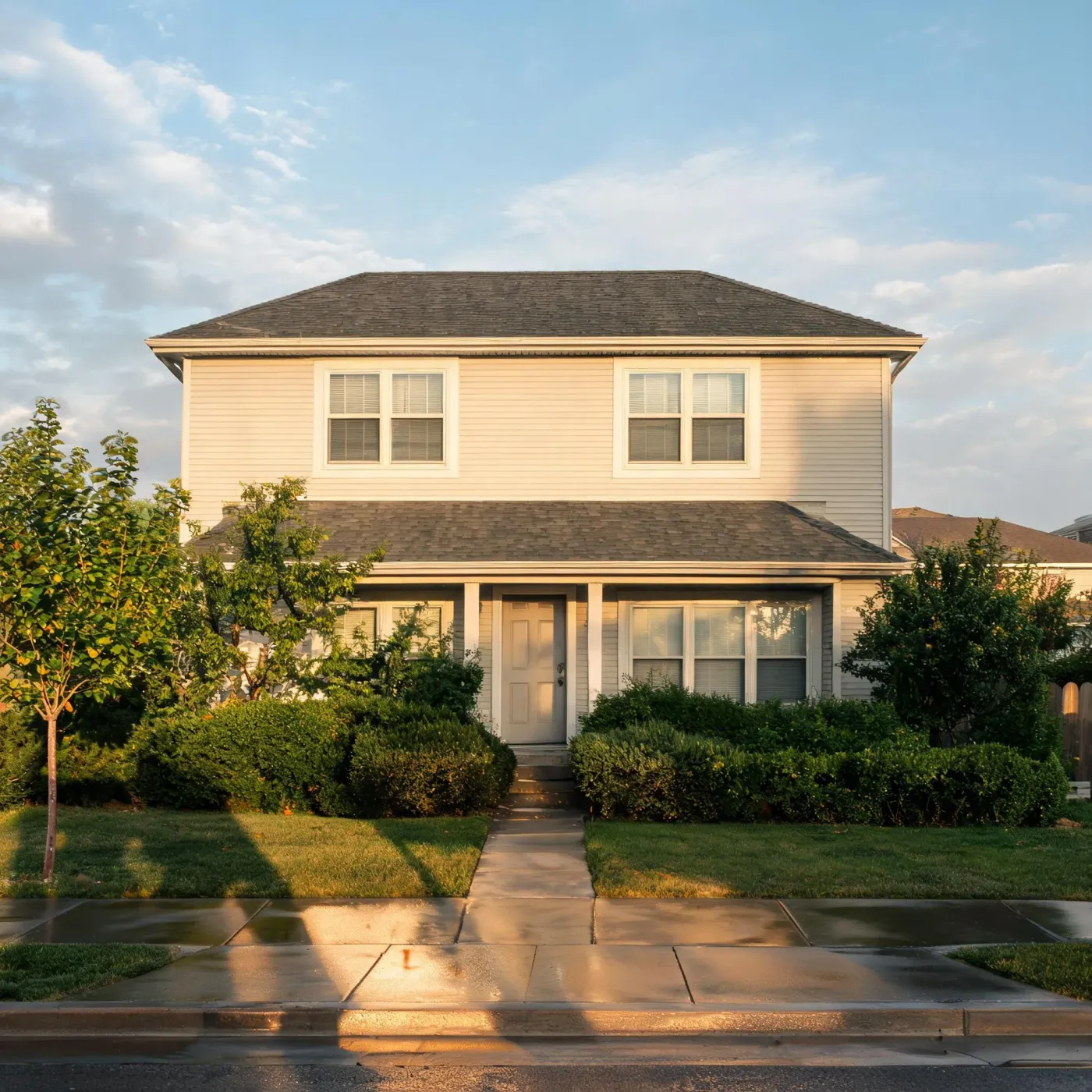
Two-story house with pale horizontal siding and a gray shingled roof, fronted by trimmed hedges, a small tree, a lawn, and a concrete walkway leading to the front door, photographed in low warm sunlight.

Indiana summers run humid, with a dew point averaging 64°F across June, July and August, according to NOAA climate data. That moisture matters now because it works the same coil your heat pump depends on in January. A coil caked with summer grime or mineral residue from months of heavy humidity doesn't shed heat as well come winter, which means the outdoor unit has to work harder to pull warmth from the air before it ever gets cold enough to trip emergency heat. If your heat pump has been through a few sticky Indiana summers without a coil cleaning, that's worth checking before the cold sets in.

NASA POWER T2MDEW county cells weighted by homes

A smiling woman with long dark hair in a gray sweater sits at a white stone counter with a glass of white wine, with a kitchen, fireplace and sofa visible behind her.
A smiling woman with dark hair in a cream sweater sits at a marble table with a glass of red wine, with a lit lamp, sofa, fireplace and kitchen counter behind her.
A woman in a cream sweater laughs while seated at a marble countertop with a glass of red wine, with a dimly lit living room and sofa behind her.
A woman in a beige turtleneck sweater with her hair up sits laughing and looking to the side at a white marble table with a glass of red wine, in a dimly lit interior with a lamp and seating area behind her.

32 degrees

Below this, a heat pump starts losing ground to the cold outside air. Backup heat has to pick up the slack, and emergency heat forces it on full time.

Find my pro

Stuck on backup heat

Calling around, explaining the ice or the cold air again to each contractor, then comparing quotes takes evenings you don't have. One match handles it.

Find my pro

Power costs 15.96 cents per kilowatt-hour statewide

Emergency heat leans on those electric strip coils instead of the heat pump, and at 15.96 cents a kilowatt-hour that backup runs up your bill fast. Leaving it on by mistake for even a few days costs more than the same stretch of normal heat pump operation would.

EIA-861 2025 statewide residential average

A gray outdoor condenser unit on a raised pad beside a house with horizontal lap siding, with refrigerant lines, conduit and an electrical disconnect box on the wall, and shrubs on a mulch bed to the left.

Unit running clear

No ice on the coils, no grime built up, fan spinning free. Air pulls through the outdoor unit the way it's built to, and the heat pump covers the house on its own down into the 30s and 20s without the thermostat switching over.

An outdoor air conditioner condenser unit on a gray composite pad beside a house with horizontal lap siding, with refrigerant lines and a conduit running to a wall-mounted disconnect box, and a shrub at left.

Unit caked and struggling

Dirt coats the coils and the fan can't pull in the air it needs. The heat pump falls behind, the house doesn't warm up, and you're left bumping the thermostat to emergency heat just to get warm air moving again.

A man in a dark jacket and khaki pants walks through an open gate in a stone wall toward a woman standing in the open front doorway of a single-story white house with a dark shingled roof and river-rock accents.

Emergency heat is a setting, not a verdict

Emergency heat means the outdoor unit has stopped and the air handler is covering the house on electric strip heat alone. Sometimes that's the right call, like a hard freeze on the coils. Sometimes it means the outdoor unit needs a repair and someone switched the thermostat to get heat back while they figure out what's wrong. Either way, the setting itself just tells you which part of the system is doing the work right now.

If your thermostat has been on emergency heat for more than a day or two with no ice on the coils to explain it, that's worth sorting out rather than living with. A contractor who works on heat pumps in Indiana can look at the outdoor unit, tell you what stopped it, and get it running on its own again. Getting matched with one means you skip the part where you call around and describe the same problem to three different shops before anyone shows up.

A living room with a cream sofa and knit throw beside a window, with a wooden coffee table in the foreground holding a round woven tray, a small bowl, and a speckled vase of green leafy branches.
A shingled gable roof with a stone chimney in the foreground overlooks a wooded valley with a winding river and flat farmland under a hazy orange sky at dusk.

A pro who works on heat pumps

Get a heat pump pro

It costs nothing to send, and you don't have to hire anyone.

If your heat pump has been stuck on emergency heat for more than a day, the problem probably isn't going away on its own. Getting it looked at now costs less than a week of strip heat on your electric bill, and it settles whether the outdoor unit needs attention before the next hard freeze.