What auxiliary heat means on an Indiana heat pump

RepairHeat PumpIndiana
Step 1 of 2

What ZIP code is the job in?

Why does my heat pump say "aux heat" in cold weather?

Indiana winters push outdoor temperatures low enough that your heat pump can't pull enough heat from the air by itself. When that happens, the thermostat switches on a second heat source to make up the difference, and the display shows "aux heat" to let you know it's running. It's not a fault code. It's the system telling you exactly what it's doing.

Aux heat means backup heat has kicked in to help your heat pump keep up

Every heat pump pulls heat from outside air, and the colder that air gets, the less heat it can grab. Below about 35 to 40 degrees, most heat pumps start to fall behind what the house needs, so the thermostat brings on auxiliary heat to cover the gap. In most Indiana homes that backup is electric resistance heat built into the air handler, though homes with gas furnaces paired to the heat pump use the furnace instead. Seeing "aux heat" on a cold morning here is normal. It becomes worth a call if it's running when temperatures aren't that low, staying on for long stretches, or showing up alongside higher bills than you'd expect.

A gray outdoor condenser unit on a concrete pad beside a house with horizontal lap siding, with an electrical disconnect box and insulated refrigerant lines on the wall, gravel in the foreground and a planting bed at left.

Aux heat doing its job

When you see the aux heat light on a cold morning, the outdoor unit is still running, just like this one, with the fan turning and the coil clear. The system is drawing extra heat the way it's supposed to when the air outside is too cold to carry the load alone.

An outdoor air conditioner condenser unit on a concrete pad beside a house with horizontal lap siding, with refrigerant lines and a gray electrical disconnect box on the wall, surrounded by bare dirt.

Aux heat running when it shouldn't

A coil packed with dirt like this one can't pull heat from the air the way it needs to, so the system leans on aux heat even on milder days. If aux heat is running more than the weather explains, a dirty coil or a low refrigerant charge is worth having checked.

A woman with wavy blonde hair wearing a grey knit cardigan over a green top sits on a sofa in a living room, looking off to the side.
A woman with long brown hair in a cream knit sweater sits on a light sofa in a living room, looking toward a window with sunlight on her face.
A woman in a gray sweater sits in a chair in a living room with a dark sofa, wooden coffee table with a potted plant, and a staircase behind her, looking toward a window.
A smiling woman with dark hair in an updo, wearing a gray ribbed turtleneck sweater, sits on a light sofa in a living room and looks off to the side.

Below 30 to 35 degrees

That's where most heat pumps start leaning on aux heat to keep up. Once the outdoor air drops into that range, your system needs the extra help to hold the thermostat setting.

Get one local pro

When aux heat won't shut off

If the light stays on once temperatures climb back above freezing, something is keeping the heat pump from carrying the load on its own. That's worth having a local contractor look at.

Get one local pro

Normal Aux Heat or a Sign of Trouble

Normal aux heat

  • The light comes on during or just after a cold snap, when outdoor temperatures are in the 20s or lower.
  • It clicks off once the house reaches the thermostat setting and doesn't come right back on.
  • You notice it most on the coldest mornings, not through the whole day.
  • The outdoor unit is still running fan and coil together, aux heat is working alongside it, not instead of it.
  • Your gas furnace or electric strips carry the extra load for a short stretch, then step back.

Aux heat that signals a problem

  • The light stays on for hours or doesn't shut off even when the house is warm enough.
  • It runs on mild days in the 40s and 50s, when the heat pump alone should be able to keep up.
  • Your energy bill jumps because the backup heat source is carrying more of the load than it should.
  • The outdoor unit is iced over, not running, or making noise while aux heat stays lit.
  • Rooms stay cold or the temperature swings even with aux heat on most of the time.
A gray outdoor air conditioner condenser unit on a concrete pad beside a house with horizontal lap siding and a stone veneer base, with a conduit running to a wall-mounted disconnect box and shrubs and evergreen trees to the left.
A heat pump working through a cold snap the way it should, fan turning, coil clean, pulling what heat it can from the air outside.
An outdoor air conditioner condenser unit with rust spots on its top grille sits on a concrete pad beside a house with light horizontal siding, with conduit lines and an electrical box on the wall and a mulch bed to the right.
A unit like this, with a rusted fan grille and dirt packed around the base, often leans on aux heat far more than it needs to.

What's Actually Heating Your House

  • Most heat pumps use electric resistance coils in the air handler as the aux heat source, not a separate furnace.
  • A gas furnace paired with a heat pump works as a dual fuel system, and aux heat there usually means the furnace firing instead of coils.
  • The thermostat calls for aux heat based on outdoor temperature and how far the indoor temperature has drifted from the setpoint.
  • Electric aux heat coils draw a lot more power than the compressor alone, which is why the bill climbs during a long cold stretch.
  • A defrost cycle also triggers aux heat briefly to warm the air while the outdoor coil clears itself of frost.
  • Aux heat is a backup, not a malfunction, so seeing it during an Indiana cold snap means the system is working as designed.

Most homes in Indiana heat with gas, but if you've got a heat pump, aux heat doesn't mean a second furnace kicked in. In most setups it's electric resistance coils sitting right in the air handler, and the thermostat switches them on when it decides the heat pump alone can't keep up. If your home runs a dual fuel system instead, pairing a heat pump with a gas furnace, aux heat means the furnace is firing in place of those coils. Either way, the thermostat is making the call based on two things: how cold it is outside and how far the inside temperature has drifted from where you set it. The bigger that gap, the more likely aux heat steps in to close it fast.

There's also a shorter, routine reason you'll see the aux light come on. Every so often the outdoor unit has to run a defrost cycle to clear frost off the coil, and during that brief stretch aux heat warms the air so you're not blasted with cold air from the vents. That's normal and it passes quickly.

The tradeoff with electric coils is the power they pull. They draw far more than the compressor does on its own, so a long cold snap that leans on aux heat for hours at a time shows up on the power bill. None of this means something's wrong. It means the backup is doing exactly what it's there for.

An older woman with gray hair in a patterned knit sweater smiles while looking to the side in a dimly lit kitchen, with a round loaf of bread on a wooden counter in the foreground and a lit oil lamp and potted plant on a windowsill behind her.
A woman and a child with closed eyes sit wrapped together in a cream knitted blanket on a couch, with a lit lamp and shelves blurred in the background.
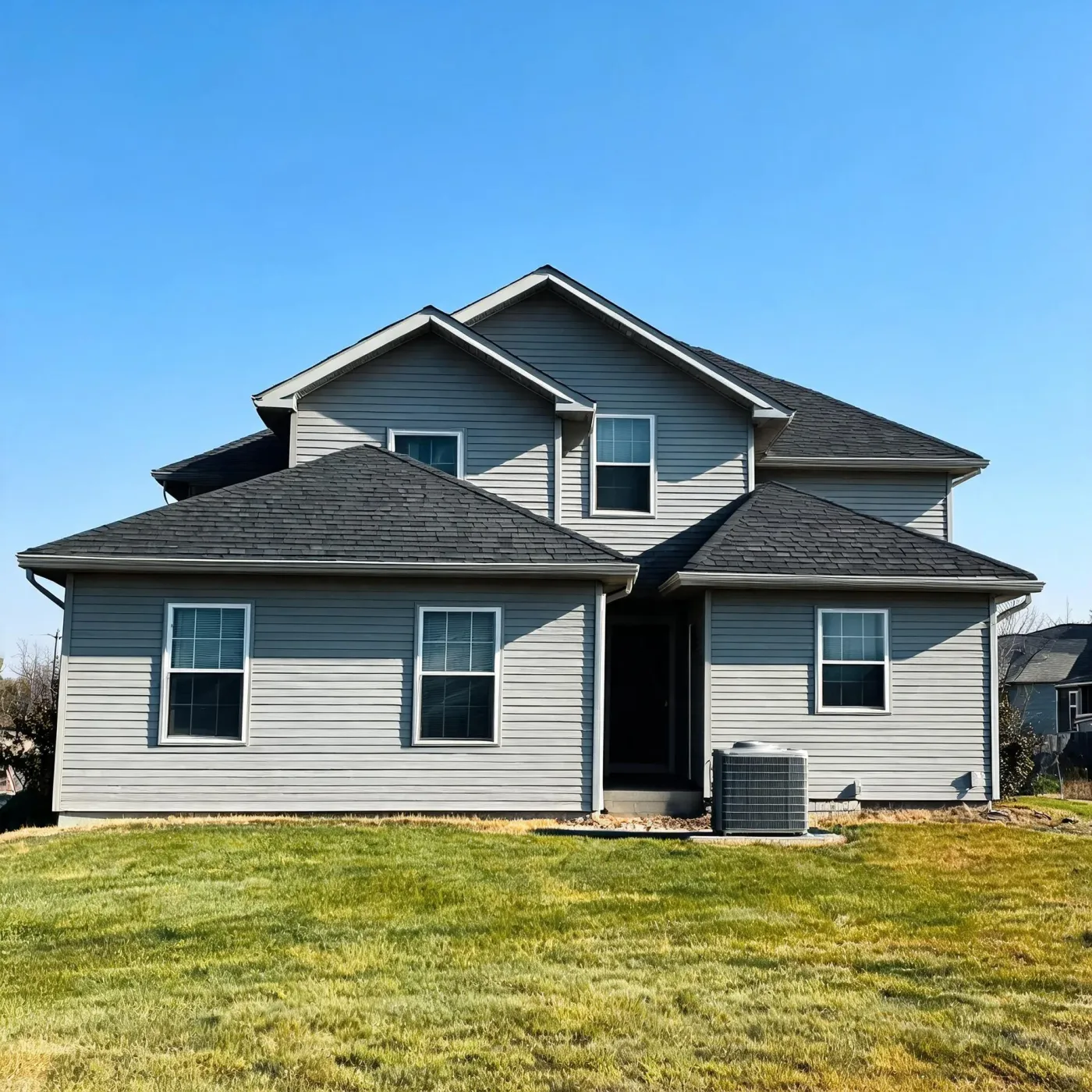
Rear view of a two-story gray vinyl-sided house with dark shingled gables, white-trimmed windows, an open doorway, an outdoor air conditioning unit, and a grassy lawn under a clear blue sky.

Summer air in Indiana carries a dew point around 64°F, averaged across June, July and August, according to NOAA climate data. That's humid enough that your heat pump's indoor coil has to pull a fair amount of moisture out of the air, not just cool it. If that coil is dirty or low on refrigerant, it struggles to keep up, and you'll notice the house feels damp even when the thermostat says it hit the set temperature. The same reversing valve and coil that handle that summer workload are what switch over to carry heat in winter, so a problem that starts in July can show up as more aux heat use come January. A local contractor who works on heat pumps through both seasons can look at how yours is handling the humidity now and flag anything likely to cost you heat later.

NASA POWER T2MDEW county cells weighted by homes

Get your heat pump to the right pro

Your request stays with one local pro.

Asking costs nothing, and the choice to hire stays yours.

Most homes in Indiana heat with gas, so your heat pump's aux heat may mean a furnace firing up, not coils. Watch your gas use in January, not just the electric bill, when the aux light has been on a lot.

If you've got coils instead, that heat comes straight off your electric meter at full price. A stretch of single-digit mornings running aux heat for hours will show up clearly on the bill that follows.

An outdoor air conditioner condenser unit on a concrete pad beside a house with horizontal siding, with conduit, cables and an electrical box on the wall and mulch beds at either side.
Before you get your heat pump repair
A gray outdoor condenser unit on a concrete pad beside a house with horizontal lap siding, with a metal disconnect box and refrigerant lines on the wall, river rock and mulch to the sides, and a green shrub at right.
After you get your heat pump repair
A gray outdoor condenser unit on a concrete pad beside a house with gray lap siding, connected by conduit and refrigerant lines to a wall-mounted disconnect box, with a green shrub and mulch bed at left.

Running clean

This is what a heat pump looks like when aux heat is doing exactly what it should. The fan turns freely, the coil stays clear, and the unit pulls what heat it can from the outside air before the coils or furnace pick up the rest. Nothing here is working harder than it has to.

A weathered gray outdoor condenser unit sits on a concrete pad beside a house with horizontal siding, with refrigerant lines entering the wall at left and a mulched shrub bed at right.

Working against itself

Dirt packed into the fins and base cuts down how much heat the unit can pull from the air, so aux heat ends up carrying more of the load than it should. On an older unit like this, that usually means more coil or furnace run time, and a higher bill, for the same cold morning.

Is your electric bill jumping more than it should this winter?

If the aux heat light has been on most mornings and your electric bill shows it, that's worth a second look. A few hours of aux heat during a cold snap is normal. Aux heat running most of the day, every day, for weeks is not, and it usually means the heat pump itself isn't pulling its share of the load anymore. You might also notice the house takes longer to reach the thermostat setting than it used to, or the air coming out of the vents feels cooler than it should for how hard the system is working. Left alone, the coils or the furnace end up carrying heat the heat pump was built to handle, and your bill carries the difference.

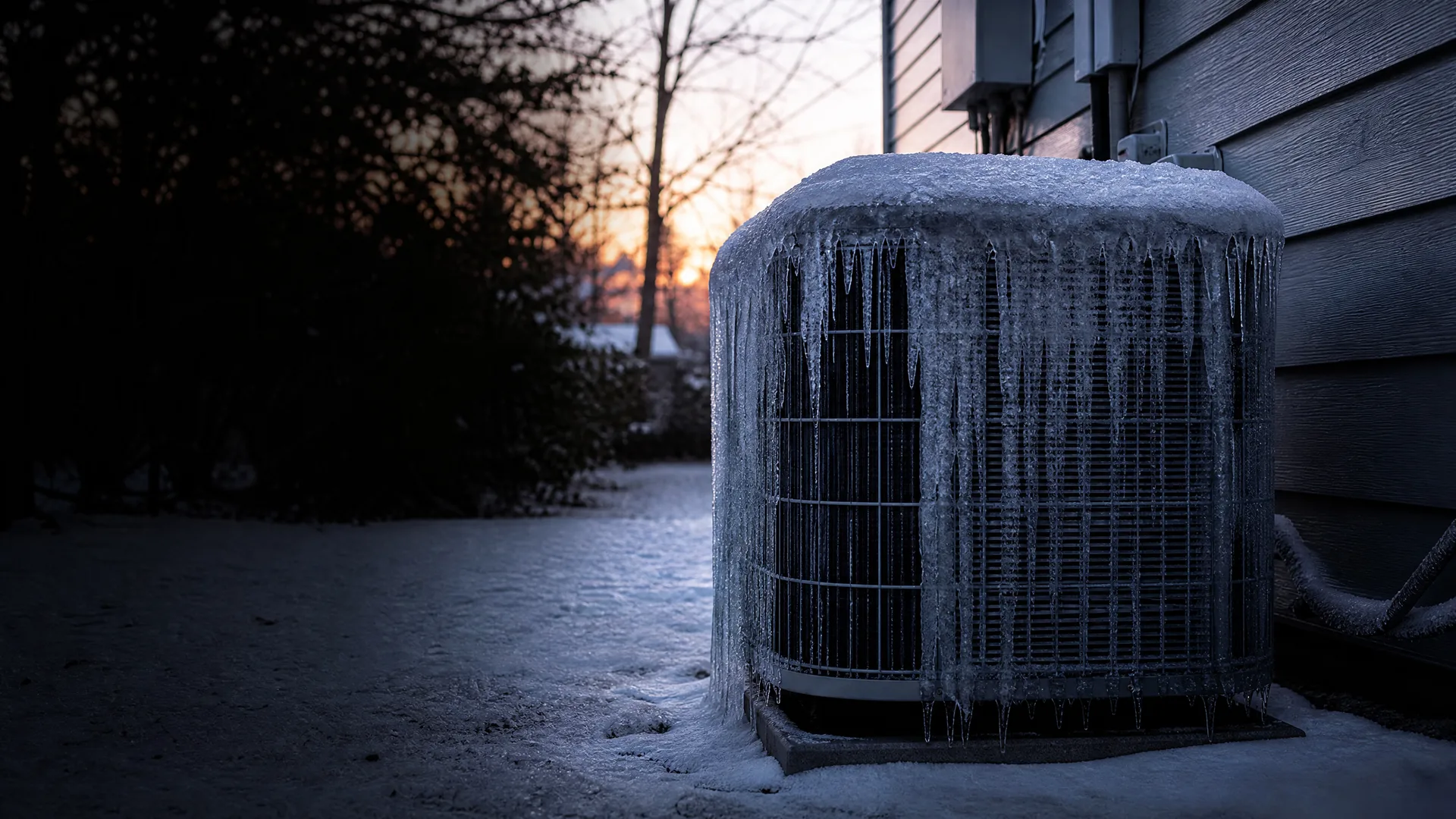
An outdoor condenser unit beside a horizontally sided house, encased in thick ice with hanging icicles, on snow-covered ground at dusk with bare trees and a sunset behind.

You go out for the paper a little after six and the yard is still dark. The outdoor unit sits against a skin of ice, thick over the top grille and down the sides, the kind that doesn't melt off on its own once the sun comes up. The fan isn't turning. Somewhere behind you the house is holding at 68, aux heat carrying the load since sometime in the night, and it'll keep carrying it as long as that coil stays sealed over like this. Your breath shows in the air. The thermometer by the back door reads 19. You go back inside without touching it, already thinking about who to call once it's a decent hour.
Power costs 15.96 cents per kilowatt-hour statewide

At 15.96 cents per kilowatt-hour, those electric coils cost more to run than the compressor outside. A morning or two of aux heat during a cold snap won't move your bill much. Days of it in a row will show up on the statement.

EIA-861 2025 statewide residential average

  1. Outdoor temperature drops low enough that the compressor alone can't keep up.

  2. The thermostat senses it's falling short of your set temperature.

  3. The thermostat signals the air handler to bring on backup heat.

  4. Electric coils or a furnace fire to cover the difference.

Aux heat on your thermostat just means the system reached for backup because the air outside couldn't give the compressor enough to work with. A few hours of that during a cold snap is the system doing its job. The light staying on for days, or a unit that won't shut off, is a sign something needs a look, and that's not a job to guess at over the phone. A local contractor who works on heat pumps all winter has seen what usually causes it in a system like yours, whether that's a stuck valve, an iced coil, or coils running more than they should. You'll be matched with one contractor, not a handful calling you back at once, so you can explain what you're seeing once and let them tell you what it means for your system.

A dark shingled roof with a single dormer window in the foreground, overlooking wooded hills, a winding river, and flat farm fields under a cloudy sky.

The right pro for this job

Find a local pro

No fee to send it, and nothing to sign.

A heat pump that leans on aux heat more than it should is usually trying to tell you something, whether that's a low charge, a dirty coil, or a unit that's iced over and can't pull heat from the air at all. A local contractor who works on these year-round can look at yours and tell you which.