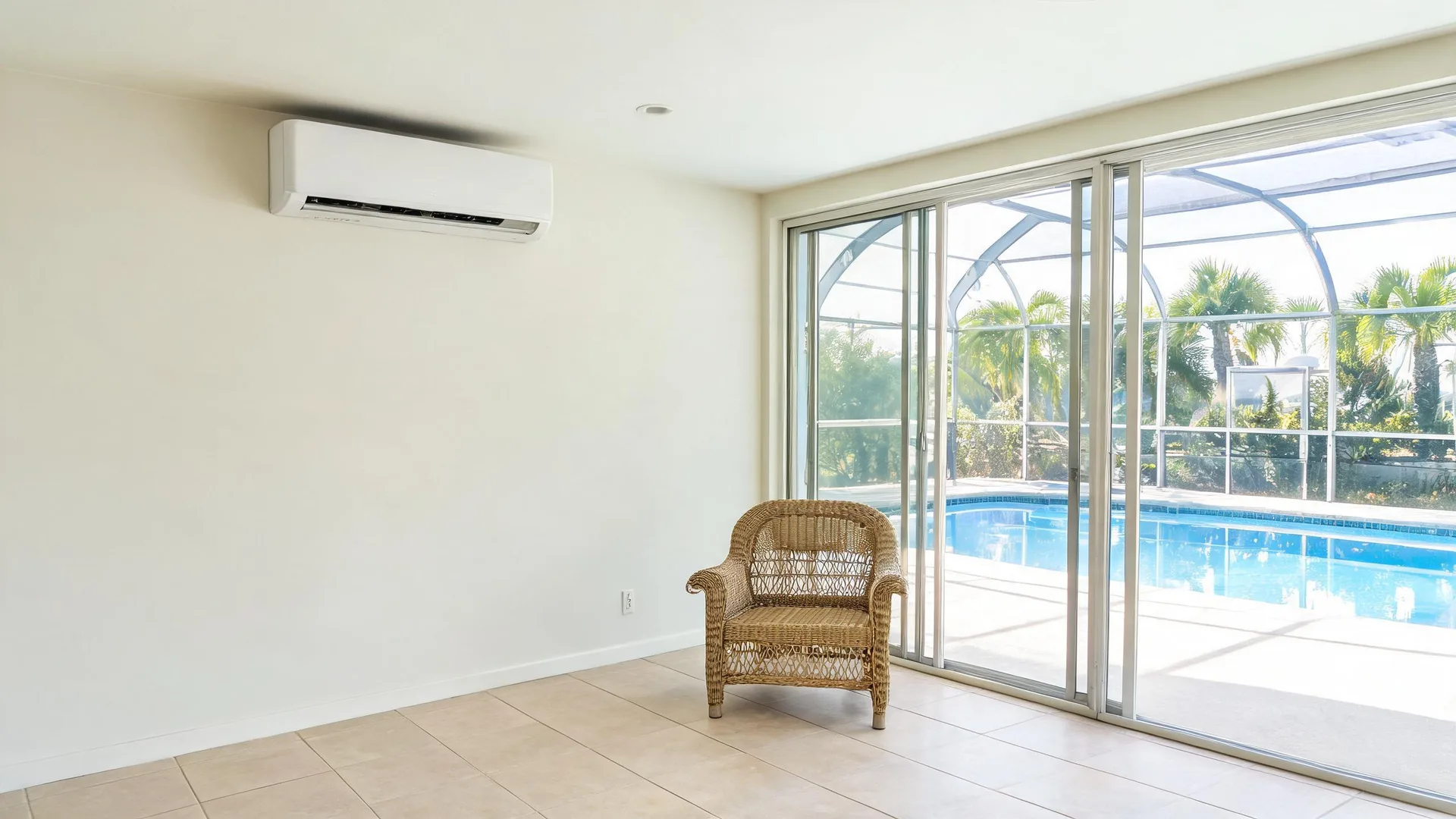
Most homes here run on gas
Utility gas heats 57.5% of occupied homes in Boone County, with electricity a distant second at 31.9%. A central furnace is still what most houses in the area have for heat.
Takes about a minute. No obligation.
Utility gas heats 57.5% of occupied homes in Boone County, with electricity a distant second at 31.9%. A central furnace is still what most houses in the area have for heat.
A mini split doesn't need to replace your furnace to be worth installing. It can handle a room or a zone your ductwork never cooled or heated well, while the furnace keeps doing the rest.
NOAA nClimDiv, 1991–2020 normals
Cooling runs June through August here.
Install before May and the mini split is ready the first warm week, not partway through it.




Boone County falls in climate zone 5A, a cool zone where heating counts for more of the year than cooling. Under the current federal standard, any ductless mini-split sold new has to hit at least 14.3 SEER2 for cooling and 7.5 HSPF2 for heating, the same floor set for split-system heat pumps generally. There's no separate, lower bar for ductless. So whatever model goes in on a zone or room here will already be built to handle a heating-heavy climate, not just to cool. On top of meeting that standard, a qualifying system may make the household eligible for a federal tax credit. That's worth asking a contractor about before deciding on a unit.
Three months of moderate afternoons a year is a light load for a mini split to carry. A mid-range unit handles that without strain, so the top efficiency tier on the shelf isn't a requirement here. Put the money into getting the installation right instead.
Find a contractor
A mini split is sized to the room it serves, not picked off a lineup. A contractor works out the heat gain and heat loss for that space. They look at the square footage. They look at how many windows face the sun, how much insulation is in the walls, what's on the other side of each wall. That calculation has a name, Manual J, and skipping it is how systems end up wrong in either direction. Oversized, the unit short cycles. It blasts the room fast and shuts off before it pulls moisture out of the air or spreads the temperature evenly. Undersized, it runs constantly, straining to hold the room on the hardest days and never quite getting there. Both wear the compressor faster than it should wear. Sized right, the unit cycles on, runs long enough to actually condition the room, then shuts off. That pattern is what lets it last as long as it's built to.
Adding a mini split to handle a room or zone doesn't mean anything about the furnace changes. It keeps running the rest of the house the same way it always has. There's no swap, no disconnection, nothing for a contractor to haul away unless the plan is to replace that system too.
If the mini split is going in because an old furnace or central AC is failing or worn out, that equipment does get disconnected and removed as part of the install. Refrigerant lines get recovered properly, gas lines get capped, electrical gets disconnected. That teardown work is its own piece of the job, separate from running new line sets and mounting the new units.
The number on the label is a ratio, not a fixed output. SEER2 compares the cooling a unit produces over a season against the electricity it uses to do it. A higher number means more cooling per unit of power, not a stronger or bigger unit. A mini split can carry a high rating and still cool a room no better than a lower-rated one, because the difference shows up on the power bill, not in the room. That rating comes from a lab test under set conditions, so it describes how the equipment performs on average, not what it does on the hottest afternoon or the mildest evening. HSPF2 works the same way for heating mode, where the unit has one. Neither number says whether the unit is sized right for the room it's going into. A high-efficiency unit that's oversized or undersized still short cycles or still runs without stopping. The rating is worth comparing between models, but it doesn't stand in for the load calculation.
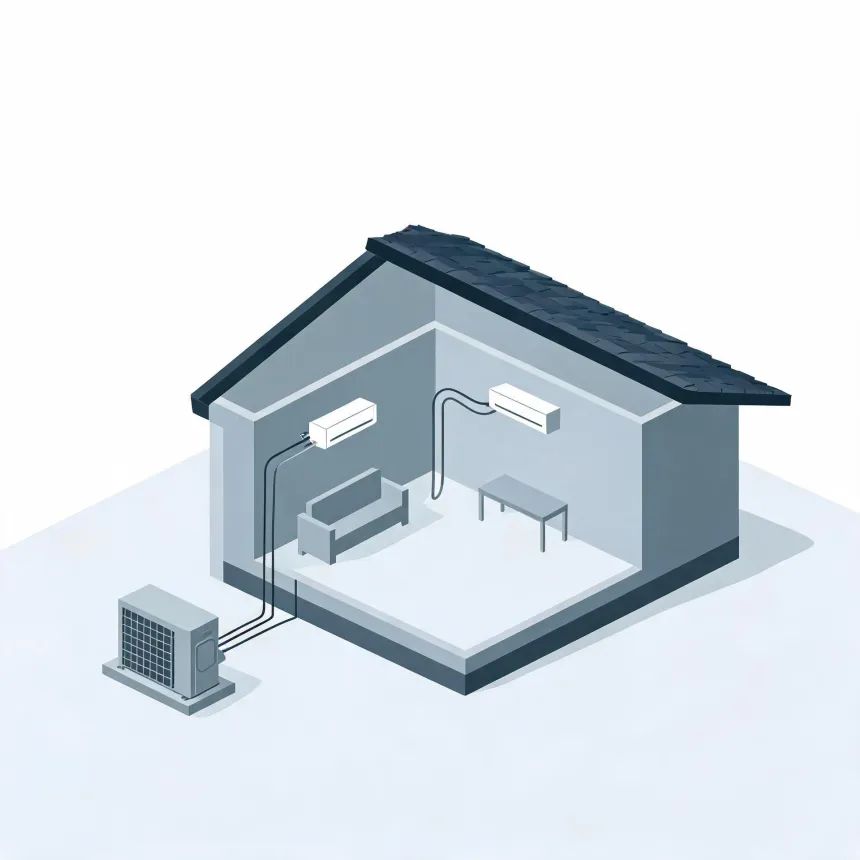
Install day starts with the outdoor unit and the indoor head going in at the same time, connected by a line set that carries refrigerant between them. The indoor head gets mounted high on a wall or ceiling, over a spot chosen for even airflow across the room, not just wherever's convenient. A small hole goes through the wall for the line set, the condensate drain, and the electrical whip, all bundled together and usually run through a cover on the outside wall. Once the lines are connected, the system gets evacuated with a vacuum pump to pull out air and moisture before refrigerant ever enters it. Skip that step and moisture left in the lines can freeze or corrode fittings down the road. After the vacuum holds, the system gets charged, tested, and run through both heating and cooling to check that it responds and shuts off the way it should.