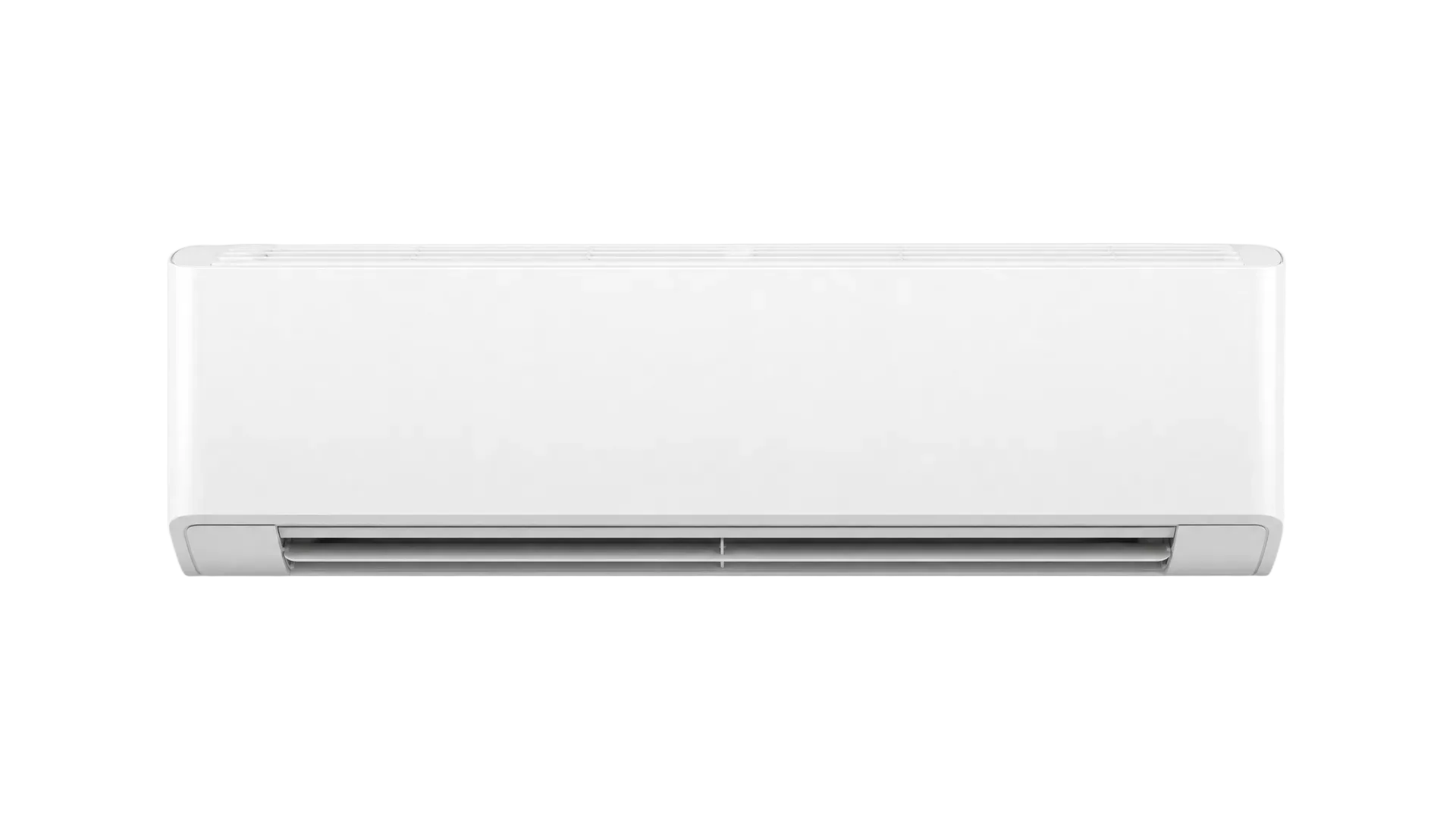
Running clean
A mini split that's earning its keep looks like this. Air moves freely across the coil, the room holds its temperature, and the unit isn't working harder than it should to get there.
A mini split is worth it in Anderson if it's doing the right job in your house. They heat and cool well in summer and in the shoulder months, and a cold-climate model will hold up through an Indiana winter down to single digits. Where they struggle is a January cold snap, when the outdoor unit has to work harder to pull heat from the air and output drops off. Most homes in Madison County heat with gas, so a mini split here usually works alongside that furnace rather than replacing it, covering a room or addition the ductwork doesn't reach, or carrying the house most of the year while the furnace handles the coldest stretches. If that's the setup you're picturing, a mini split earns its keep. If you're expecting it to be your only heat source through a hard winter, it needs sizing and a cold-climate rating that match what Anderson actually throws at it.
Cooling runs June through August
Cooling runs June through August in Madison County. A mini split only earns its keep here if it still performs well once fall and spring load up its hours.
Heat runs October through May
Heat runs October through May, about eight months. That's most of the year riding on the mini split or on whatever backs it up when it's below freezing.
Power here costs 14.30 cents per kilowatt-hour
Power here runs 14.30 cents per kilowatt-hour. A mini split that holds its efficiency through those eight heating months is what makes that rate work in your favor.
NOAA nClimDiv 1991-2020 · EIA-861 2025
A mini split paired with your gas furnace earns its keep fast. It covers the room that never feels right, the bonus room over the garage or the finished attic, while the furnace keeps doing the rest of the house.
A mini split standing in as the only heat for a whole house in Anderson is a harder case. A cold-climate unit will run through single digits, but the duct work and the backup plan matter more once it's carrying every room on its own.





A mini split that's earning its keep looks like this. Air moves freely across the coil, the room holds its temperature, and the unit isn't working harder than it should to get there.

Dust built up on the vents and intake grille blocks airflow before it reaches the coil. The unit has to run longer to do the same job, and in a Madison County summer that means longer hours almost every day.
The thermostat calls for cooling or heat.
The indoor unit's blower pulls room air across its coil.
Refrigerant in that coil absorbs or releases the heat.
The line set carries refrigerant out to the outdoor unit.


By now you've got a sense of whether a mini split makes sense for your house, and most of the work left is figuring out who can actually put one in right. Sizing it for the room, running the line set cleanly, setting the outdoor unit where it won't fight ice and drifting snow come winter. That's the kind of job where the install matters as much as the equipment. Finding someone for it usually means calling around Madison County, explaining the room and the setup two or three times, then sitting on quotes trying to compare apples to apples. Send the request through this page instead and that search is over. One contractor gets it, not five, and you're not the one chasing bids anymore. No cost to ask, no obligation to hire. The part that's still yours is deciding if a mini split fits your house. The part you can hand off is finding who installs it right.
Most of what tells you a mini split is wrong for the job shows up in the house, not on a spec sheet. A unit trying to carry more square footage than it was sized for runs long hours in January and still can't close the gap when it's cold outside. That shows on the electric bill before it shows anywhere else, since the compressor is working harder and longer to chase a load it was never meant to carry. The filter and the outdoor coil matter more than people expect. Let either one get blocked in the middle of winter and the unit can ice over, and the first sign is usually the air coming out duller than it was, not a code or a shutdown. Sizing cuts both ways. A unit too big for its room cools the air fast, shuts off, and leaves the room feeling damp because it never ran long enough to pull the moisture out. Get the sizing and the setup right and the opposite happens: the room it's assigned to holds its temperature on its own, whatever the furnace is doing everywhere else in the house. Installation details you'd never think to check, like how the line set was run or whether the outdoor pad is solid and level, tend to surface later as vibration or noise from the outdoor unit, long before the equipment itself gives out.
Three months of real cooling load is light work for a mini split sized to the room it's in. The coil and compressor spend most of the year idle, so summer wear isn't what shortens one of these units. What asks more of it is October through May, carrying heat for your whole house instead of the one room it was built for.
NOAA nClimDiv 1991-2020



For most houses in Anderson, a mini split earns its place as a second system, not a replacement for the furnace. It covers the room that never heated or cooled right, and it does that job well from June through whatever cold-climate model you pick can still manage come January. Asked to carry a whole floor by itself through a Madison County winter, it will struggle, and that's the one case where it isn't worth it.
Once you know which of those two situations describes your house, the rest is finding someone who can size it and install it correctly for that room or that floor. That usually means calling a few contractors, explaining the space and what you want it to do, waiting on quotes, and sorting through what each one actually included. Send the form and that part is off your plate. You'll know where you stand without having to make those calls yourself.

Describe the project once instead of to every installer.