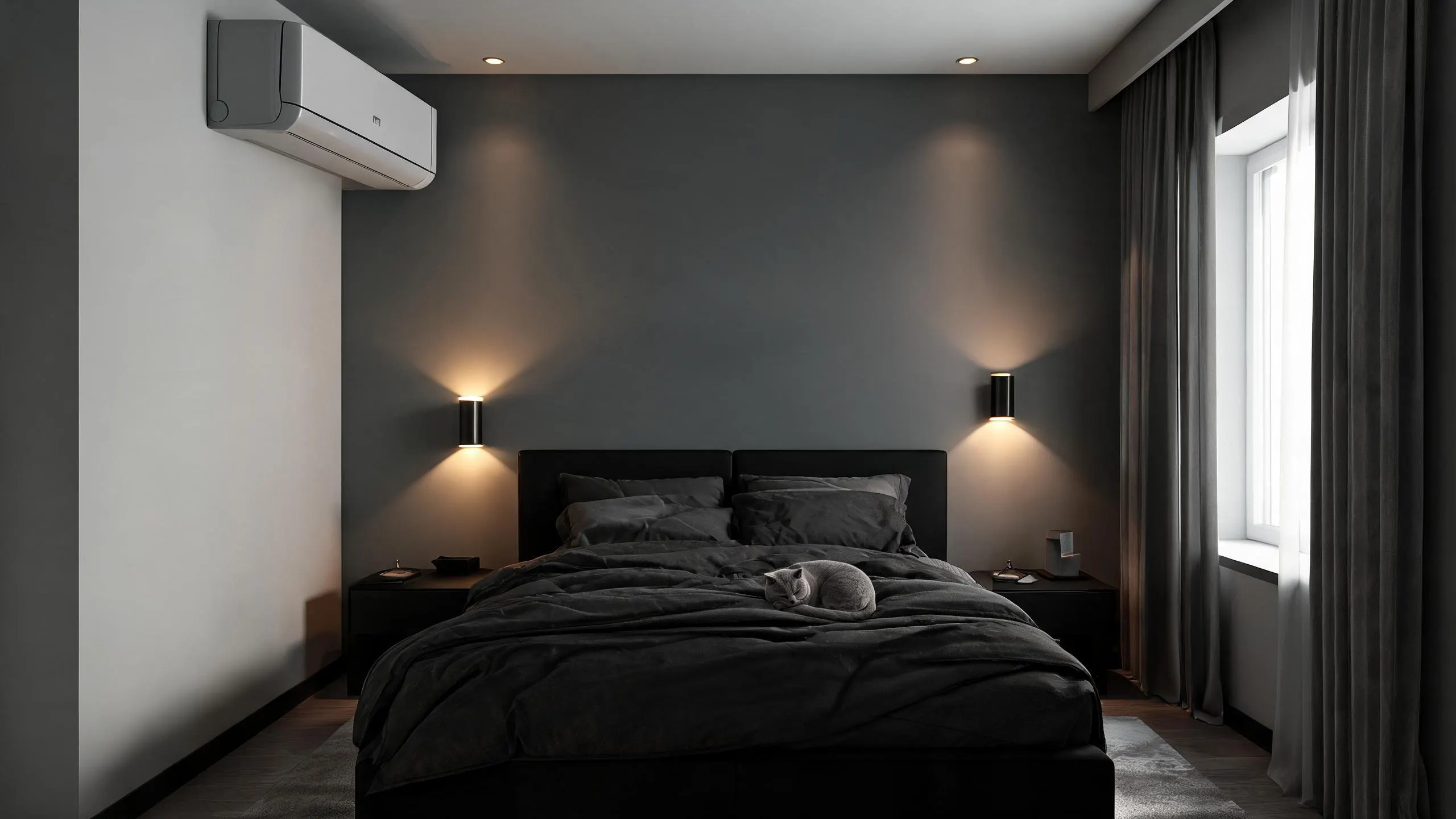




A minimalist bedroom with dark grey walls, a large bed with charcoal bedding, a sleeping cat, two warm-toned wall sconces, and a wall-mounted air conditioning unit.

Mini Split Installation in Warsaw, IN

Tell us about the job

Takes about a minute. No obligation.

New system or replacementMini-splitKosciusko County, IN
Step 1 of 2

What ZIP code is the job in?

Most houses in Kosciusko County heat with gas, 65.6% of them. A mini split works differently than the furnace already in the house. It heats and cools through the same unit, using electricity, with no ductwork involved. That makes it a fit for a room a gas furnace does not reach well, like a garage, a bonus room, or an addition. If you are weighing a mini split against replacing a gas furnace outright, the two solve different problems, and it is worth being clear on which one you have.

8 months
October through May, your system heats
3 months
June through August, it cools
20°F
the average winter night it heats against
82°F
the average summer afternoon it cools against
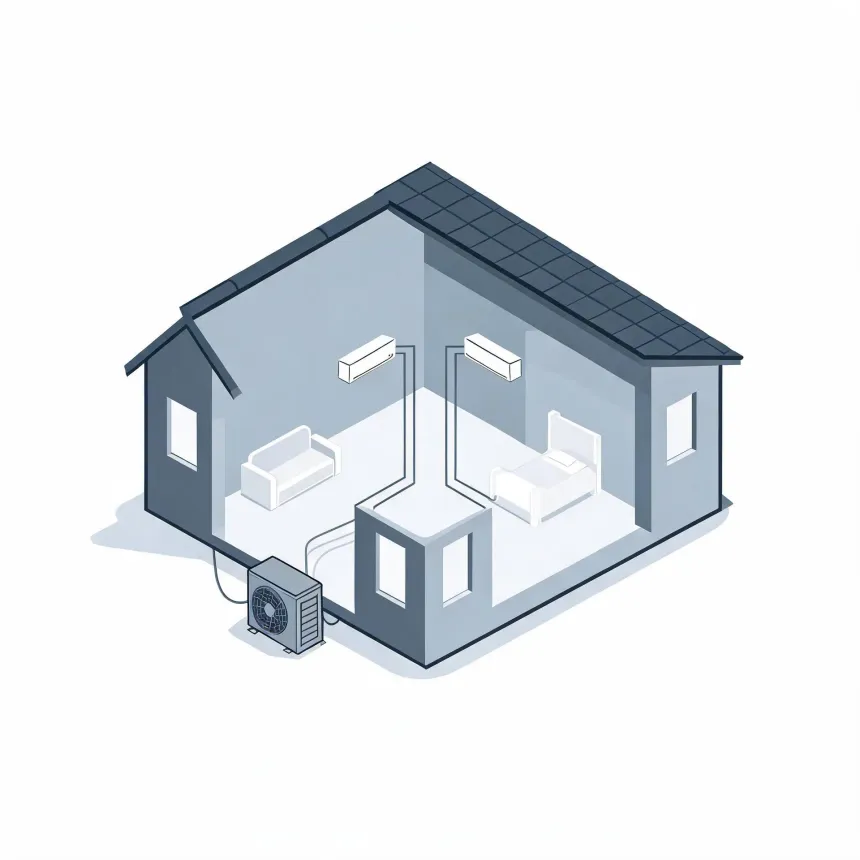
Isometric cutaway illustration of a small house showing two wall-mounted indoor air conditioning units connected by lines to a single outdoor condenser unit beside the building, with a sofa in one room and a bed in another.
Your system heats October through May and cools June through August.

NOAA nClimDiv, 1991–2020 normals

Cooling here runs June through August.

May is the month to get a mini split installed, ahead of that, not after the room's already hot.

Three months of cooling a year is not a hard life for a mini split

Cooling runs June through August
Summer afternoons average 82°F
117 damaging wind events from 2015 to 2024

A mini split doesn't need much from the county to hold up. Kosciusko County sees damaging wind more than any other weather event, well over a hundred times in the last decade, along with some hail and a handful of tornadoes. None of that calls for a bigger unit or a special setup. The outdoor unit mounts to the wall, not the ground, so it sits above where blowing debris usually collects. A standard size matched to the room is the right call here. There's nothing about this place that pushes you toward oversizing it or paying for capacity you won't use.

Any new system here has to hit zone 5A's efficiency minimum

Kosciusko County falls under zone 5A, a cool climate where heating is the bigger load. A mini split installed here has to meet the federal minimum for a split-system heat pump, 14.3 SEER2 for cooling and 7.5 HSPF2 for heating, which narrows the field to units built to that standard. A federal tax credit is available toward the cost of a qualifying system.

Find a contractor
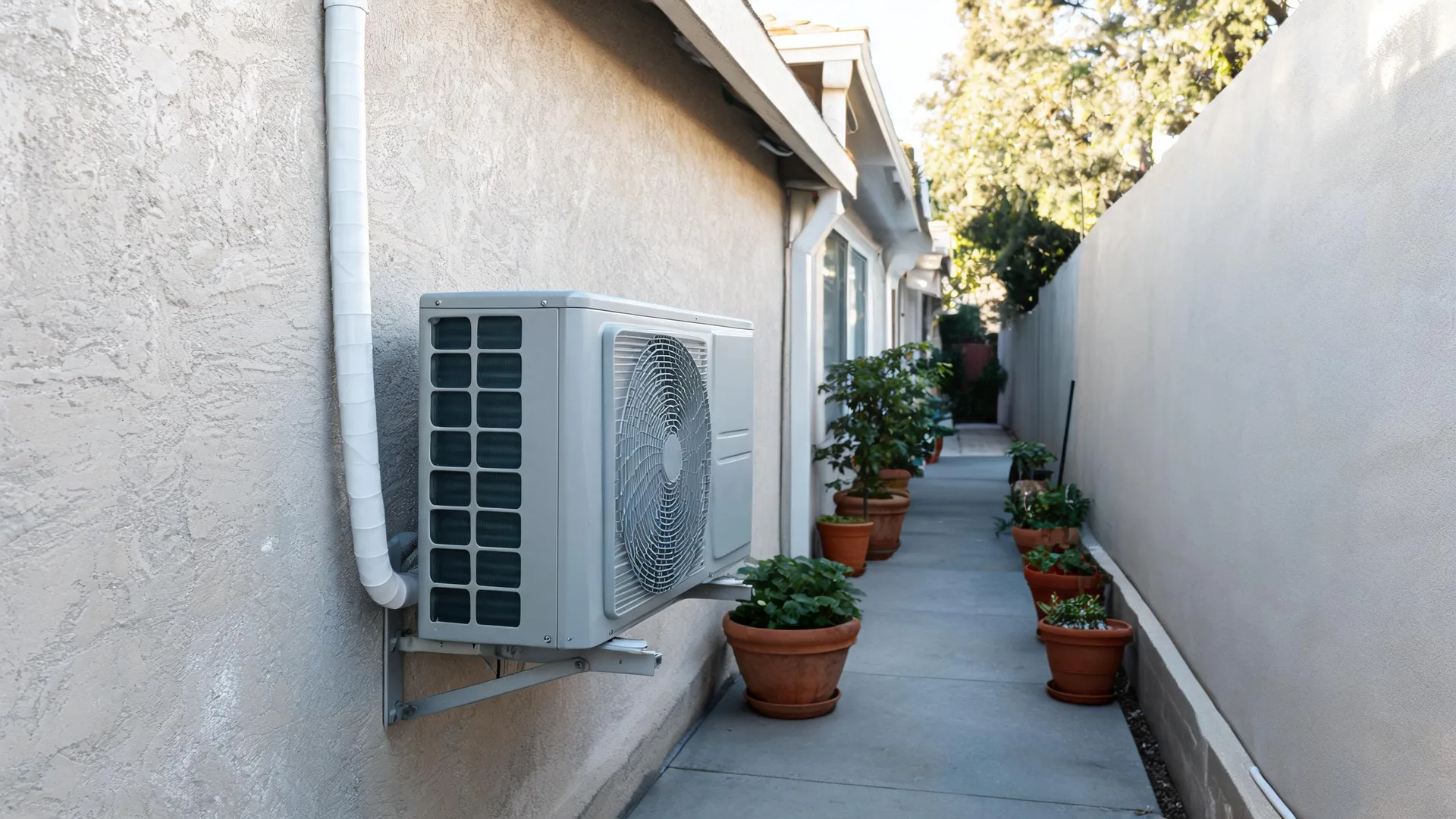
A white outdoor air conditioner condenser unit mounted on metal wall brackets against gray horizontal siding, with a blue sky and white clouds behind it.

What actually sets the price on a mini split

Installation cost mostly comes down to what it takes to get the lines from the outdoor unit to the indoor one. A straight shot through an exterior wall, with the outdoor unit placed close by, is the simplest case. Longer line runs, more than one indoor head on the same outdoor unit, or a path that has to go through framing, soffits or a finished ceiling all add labor. The electrical side matters too. A mini split needs its own dedicated circuit, and if the panel doesn't have room for one, that's added work before the unit itself goes in. Where the outdoor unit can sit also plays a part. It needs clearance on all sides for airflow and a solid, level pad or mounting bracket to sit on. The size of the space being conditioned drives which capacity unit gets installed, and going bigger costs more, but more capacity than the room needs doesn't cool or heat it any better. It just costs more to buy and run.

Ask how many indoor heads one outdoor unit can run

A single outdoor unit can often support more than one indoor head, each one with its own thermostat and its own fan speed. That can mean one condenser doing the work for several rooms instead of a separate outdoor unit for each. The tradeoff is capacity. Add too many heads to one outdoor unit and none of them get full performance on the coldest or hottest days.
Ask what happens if one part fails

Indoor heads and the outdoor unit are matched to each other when the system is installed, so if one indoor head fails, it usually can't just be swapped for whatever's on the shelf. Ask whether replacement parts for the specific system are easy to get, and whether the installer services the brand they're selling. A system nobody local can work on later is worth knowing about before it's on the wall.

A mini split is sized room by room, not by the house as a whole. The installer figures the heat gain and heat loss for that specific space, looking at its square footage, how many windows it has, which way it faces, and what's on the other side of its walls. That number points to a capacity, and the indoor head gets matched to it. Undersized, and the unit runs constantly without ever quite catching up on the hottest or coldest days. Oversized, and it cools or heats the room fast, shuts off, then starts again soon after, cycling more than it should and leaving the air more humid than it ought to be. Getting the size right the first time is what makes the rest of the system, the thermostat, the fan speeds, work the way they're supposed to.

Installation starts outside, with where the outdoor unit will mount and how the line set gets from there to the indoor head. The installer drills a hole through the exterior wall, usually a few inches across, and runs the refrigerant lines, a drain line, and electrical wiring through it. Those lines connect the indoor head to the outdoor unit, then get charged with refrigerant and tested for leaks before anything is powered on. The indoor head mounts to a bracket on the wall, close to the top, and has to be level for the condensate drain to work right. Once everything is connected, the system gets charged, checked for proper airflow across the indoor coil, and run through both heating and cooling to confirm it responds to the thermostat. The wall penetration gets sealed up afterward so nothing gets in from outside.