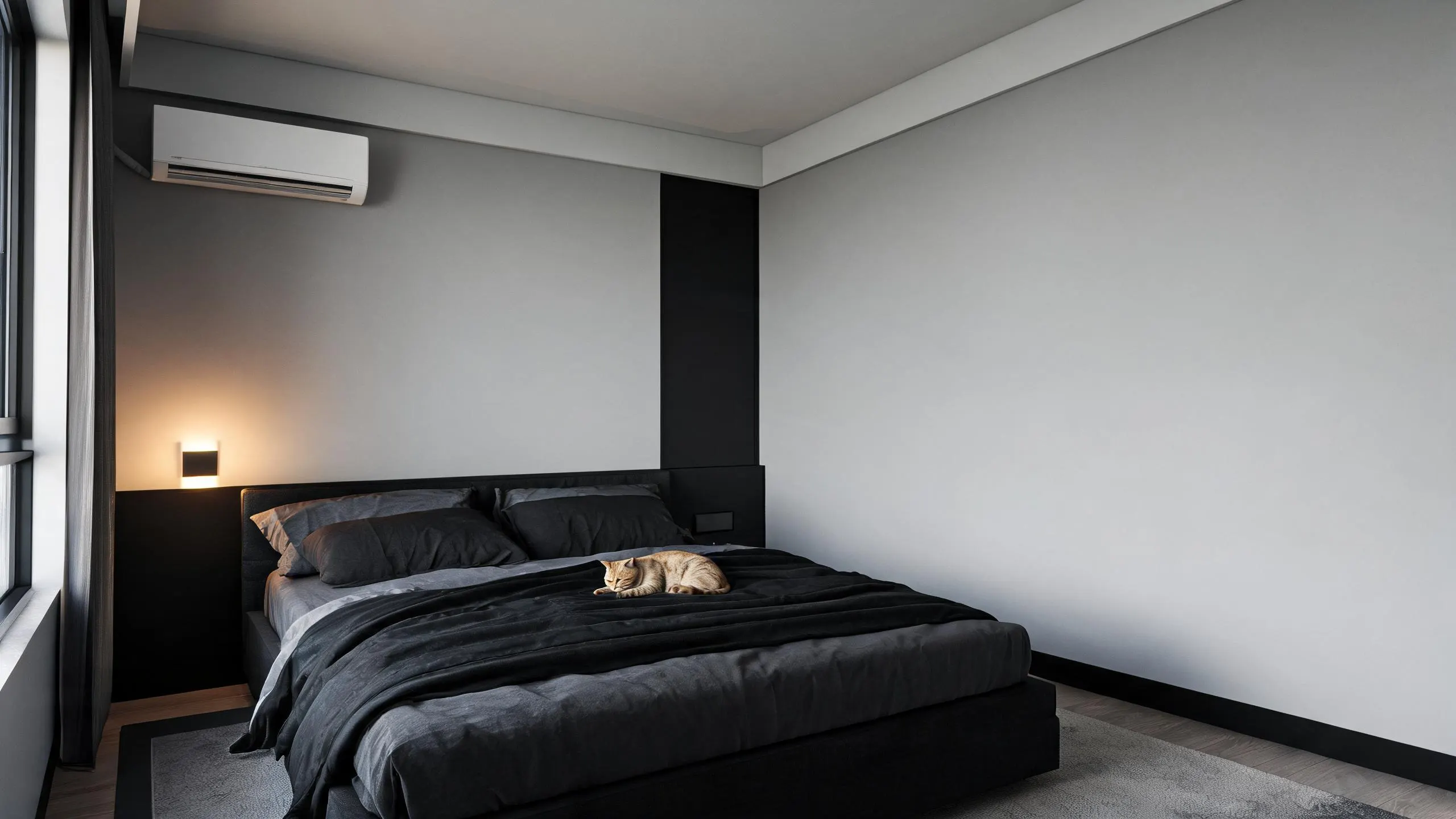





An orange cat rests on a dark grey bed in a minimalist monochrome bedroom.

Mini Split Installation in Vincennes, IN

Tell us about the job

Takes about a minute. No obligation.

New system or replacementMini-splitKnox County, IN
Step 1 of 2

What ZIP code is the job in?

Gas heats most homes in Knox County, 55.1 percent of them. Electric heat comes next at 34.0 percent, and a smaller share of homes run on bottled or LP gas. A mini-split doesn't take over the furnace's job here. It's a separate system, handling cooling and the mild stretches of spring and fall in the rooms it serves, while the gas furnace keeps the house warm through the hard part of winter. That matters whether you've got ductwork already or you're adding a room the ducts never reached, since the mini-split goes in without touching the heating system you've already got.

7 months
October through April, your system heats
5 months
May through September, it cools
25°F
the average winter night it heats against
86°F
the average summer afternoon it cools against
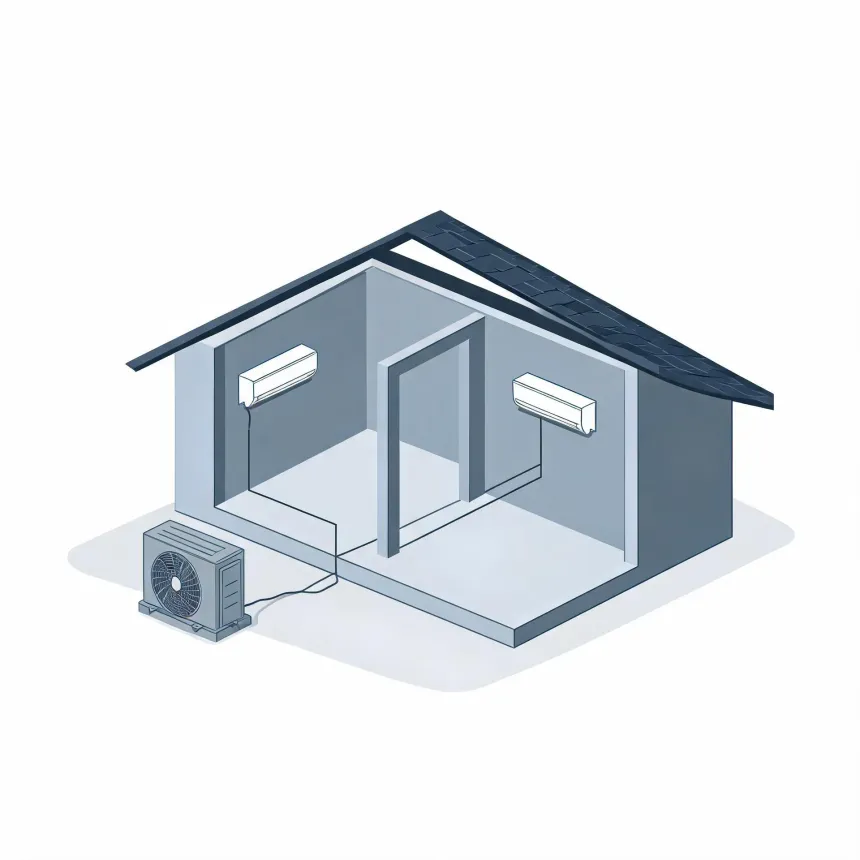
Isometric illustration of a cutaway house showing two wall-mounted indoor air conditioning units connected by lines to a single outdoor condenser unit on the ground outside.
Your system heats October through April and cools May through September.

NOAA nClimDiv, 1991–2020 normals

Knox County sees its share of wind, hail and the odd tornado, with winter storms a few times a decade.

None of that calls for anything beyond a standard mini-split sized to the room it's cooling and heating.

A normal size and a normal setup handle this climate fine

Cooling runs May through September
Summer afternoons average 86°F
92 damaging wind events from 2015 to 2024
Older homes need the sizing done rightHalf the homes in Knox County were built in 1962 or earlier.

Knox County falls under zone 4A, a mixed climate that asks real work of both heating and cooling. A mini-split sold here has to meet the federal minimum for that. Units manufactured on or after January 1, 2023 must remove at least 14.3 Btu of heat for every watt-hour of electricity they use in cooling mode, and deliver at least 7.5 Btu of heat for every watt-hour in heating mode. That standard applies whether the unit is ductless or not, there's no separate rule for mini-splits. It isn't a target to look for, since a contractor can't legally install anything below it. Where the choice comes in is how far above that floor you want to go.

Have it in by April, before May's heat arrives

Cooling season here runs May through September. Put the install in during April, before the heat starts, and it's ready to go from the first warm day instead of getting installed while you're already sweating through one.

Find a contractor
A white mini-split air conditioner outdoor condenser unit mounted on metal brackets against a beige stucco exterior wall, with a blue sky and scattered clouds in the background.

The install has to work with the house you've got

A mini-split built for this climate still has to go into the walls and rooms you've actually got. An older place means checking what's there before the crew shows up. Where the line set can run, whether the spot you want the indoor head needs a new electrical circuit, what the wall behind it is made of. None of that stops the install. It just means the contractor sizing your system should see the house in person, not guess from a floor plan.

The number of zones drives the cost

A single indoor head tied to one outdoor unit is the simplest job there is. Add a second or third zone and the outdoor unit has to be sized for all of them together, plus each indoor head needs its own line set and its own run of refrigerant line and wiring back to the condenser. More zones means more line hidden in walls or chases, more labor, and a bigger outdoor unit to drive them all.
Where the line set has to travel changes the labor

A straight shot through an exterior wall to an outdoor unit sitting right outside is the easy case. A run that has to go up through a chase, across an attic, or down multiple floors takes longer to install and uses more refrigerant line and wiring. The contractor can't quote that accurately without seeing the actual path the line has to take.

Getting the size right matters more with a mini-split than with most equipment, because there's no ductwork to even out a mistake. Too big and the unit cools the room fast, shuts off, and leaves the air clammy since it never ran long enough to pull moisture out. Too small and it runs constantly, struggling to hit the temperature on the thermostat and wearing itself out trying. A contractor works out the right size with a load calculation, not a chart based on square footage alone. That means counting windows and which way they face, checking insulation, noting the ceiling height, and factoring in anything in the room that throws off heat. Two rooms the same size can need different sized units once those details are in.

Electricity in Knox County runs 14.92 cents per kilowatt-hour, close to the national average. That's the number a mini-split's efficiency rating actually works against, since the unit runs on power, not gas. A standard system built to the zone 4A minimum keeps that cost reasonable to run here. There's nothing about power prices in this county that pushes you toward a pricier, higher-efficiency unit to make the math work. The case for going above the minimum comes down to how much cooling and heating you want from the mini-split itself, not what electricity costs here.