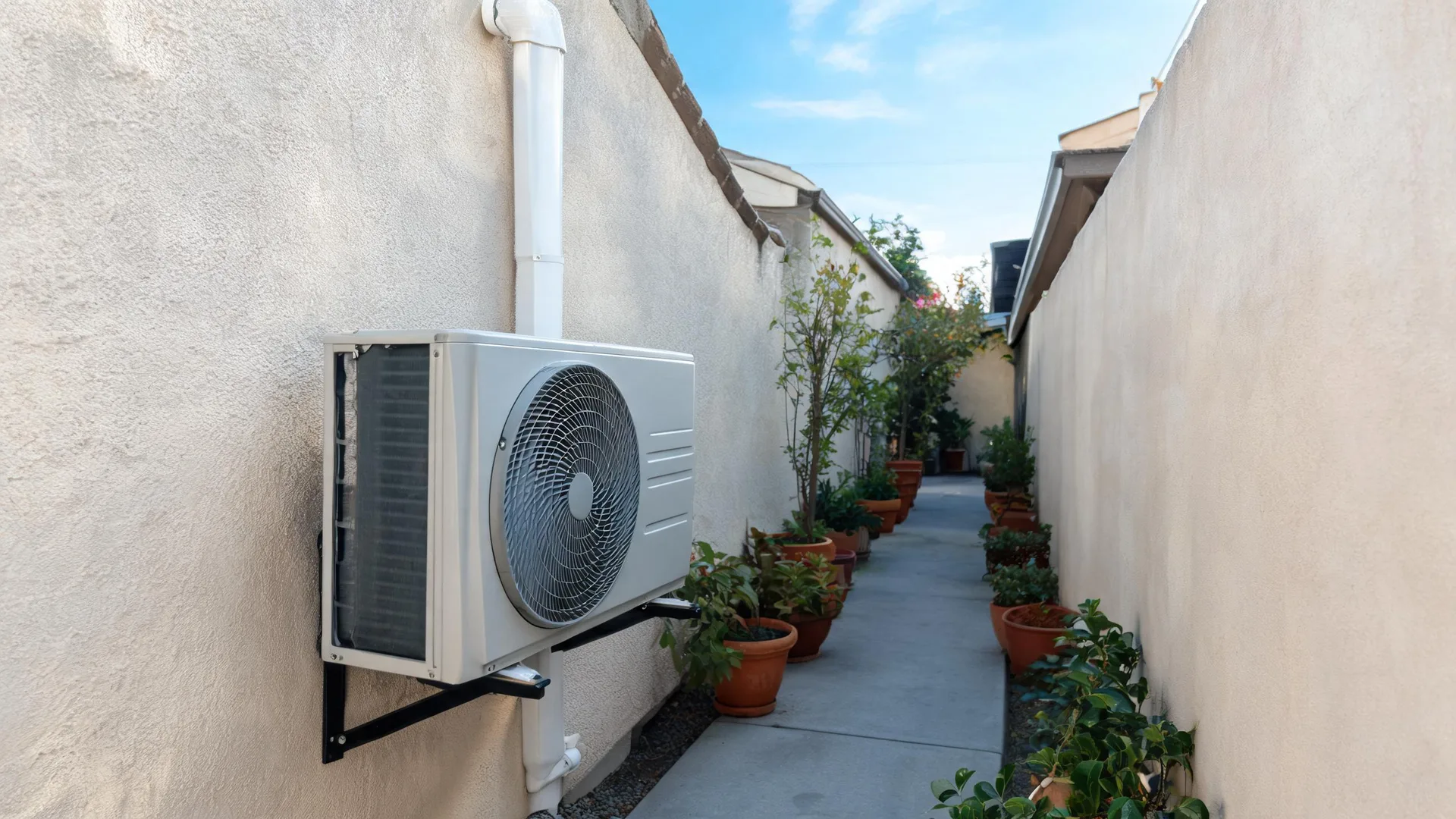
Most homes here run on electric heat
Electricity heats 57.4% of occupied homes in Jackson County, more than any other fuel. A mini split fits right into that setup since it runs on electricity too, with no gas line or vent to tie into.

Takes about a minute. No obligation.
Electricity heats 57.4% of occupied homes in Jackson County, more than any other fuel. A mini split fits right into that setup since it runs on electricity too, with no gas line or vent to tie into.
Utility gas heats 28.9% of homes here and LP gas another 8%. If your house falls into one of those groups, a mini split still works as a system on its own or alongside what you already have.
NOAA nClimDiv, 1991–2020 normals
A mini split runs on electricity, and Indiana homes paid 14.77 cents per kilowatthour for it in 2024.
Standard sizing and efficiency keep that cost in line for a Seymour home, no upgrade needed to manage it.




A standard mini split installation fits most houses in Jackson County without extra planning. Half the homes here were built in 1978 or earlier, and sizing a system right has more to do with the room it's heating and cooling than the age of the house around it. Mobile homes make up 11.9% of the housing stock here, and mini splits work well in them too, since the indoor unit mounts on a wall or ceiling without any ductwork to route. There's no case for oversizing the unit or paying for a higher efficiency tier than the job calls for. A contractor sizing the system will look at the room itself, not the decade the house went up.
Jackson County falls in climate zone 4A, which asks real work of both heating and cooling. Any mini split installed here has to meet the federal minimum for that job, 14.3 SEER2 for cooling and 7.5 HSPF2 for heating. A federal tax credit is available on qualifying systems, on top of meeting that standard.
Find a contractor
The SEER2 number on the label is a ratio, cooling output over the electricity it takes to produce it. A higher number means the same room gets cooled while the compressor draws less power to do it. HSPF2 does the same job for heating mode. Neither number tells you how strong the unit is, only how much it costs in electricity to run at whatever size you bought. A mini split holds that rating best when the filter stays clean and the outdoor unit has clear airflow around it, nothing stacked against the coil or blocking the fan. Let dust pack into the filter or the coil, and the system works harder to move the same air, so the real efficiency you get falls below what's on the label.
A contractor works out the heat load for the space the indoor unit will serve. That means the square footage, the ceiling height, the windows and which way they face, what sits on the other side of the walls. That calculation points to a specific unit size. Guessing based on a room down the hall or what worked in a different house leads to the wrong number.
An oversized mini split cools the room fast, then shuts off before it pulls the moisture out of the air. The room ends up cold and still damp. It also cycles on and off more often, and that start stop pattern wears on the compressor faster than running steady would. The right size runs longer, steadier cycles and handles both jobs, temperature and humidity, the way the room actually needs.
Installation cost on a mini split comes down to what the job actually involves, not the unit itself. A single indoor head serving one room is a different job from a multi zone setup feeding several rooms off one outdoor unit, and the price follows that. Where the outdoor unit can sit and how far the line set has to run between it and the indoor head matters too. A short, straight run through an exterior wall costs less labor than one that has to snake through a chase or run up several floors. Electrical work is its own factor. Some installations tie into existing capacity, others need a new circuit or a panel upgrade to carry the load. None of that shows up on the unit's price tag, but it shows up on the invoice.
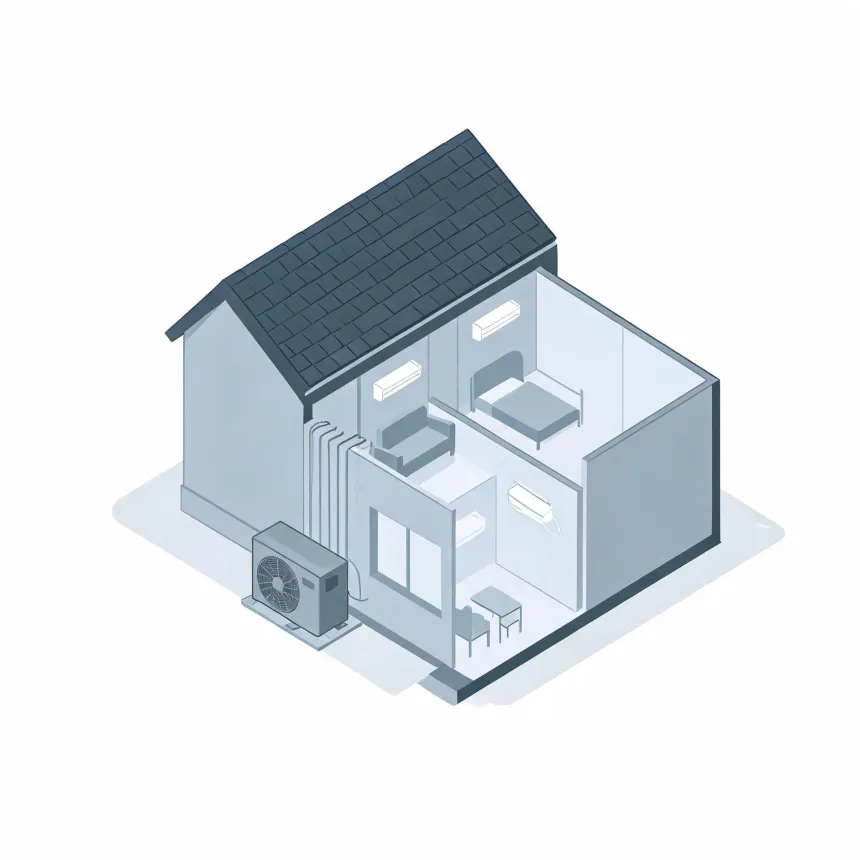
Installation day starts with the spots already marked out, so most of the work is mounting and connecting rather than deciding. The indoor head goes up on a bracket, and the line set, the refrigerant lines, the power wire and the condensate drain all have to pass through one hole drilled in the wall behind it. That hole gets sealed once everything is routed through, so no air or water finds its way in around the lines. Outside, the compressor sits on a pad or bracket, and the line set connects to it in a flare fitting or braze joint, then gets wrapped and insulated along its whole run. Before the system is handed over, it gets pulled down to a vacuum to clear out moisture and air, then checked for leaks and charged to the weight the manufacturer calls for. The whole system gets tested in both modes before anyone calls it done.