






A quiet residential street at dusk lined with illuminated two-story brick houses and mature trees.

Mini Split Installation in Richmond, IN

Tell us about the job

Takes about a minute. No obligation.

New system or replacementMini-splitWayne County, IN
Step 1 of 2

What ZIP code is the job in?

Gas heats a little over half the homes in Wayne County, with electricity a distant second. A mini split works differently from either one. It's an electric system, and instead of burning fuel or running resistance heat, it moves heat from the outside air into the house, and back out in summer. Homeowners on gas furnaces often add a mini split for a room the ductwork doesn't reach well, or for a space addition, while keeping the furnace for the rest of the house. Someone already on electric heat may use one to replace a less efficient setup room by room.

8 months
October through May, your system heats
3 months
June through August, it cools
22°F
the average winter night it heats against
83°F
the average summer afternoon it cools against
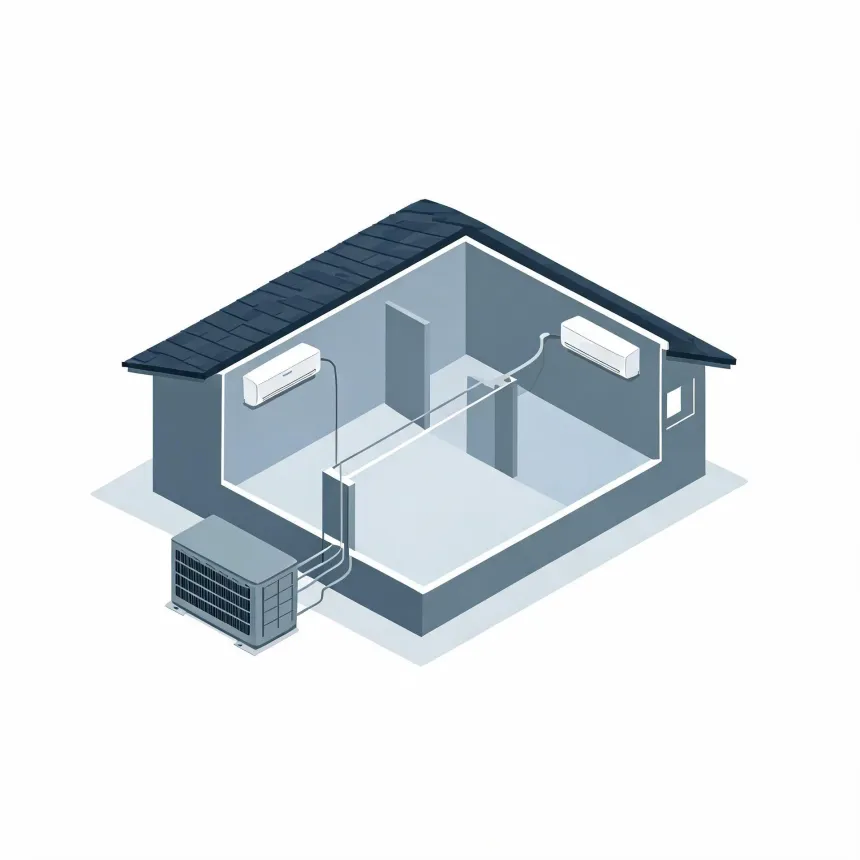
Isometric illustration of a cutaway house showing two wall-mounted mini-split indoor units connected by line sets to a single outdoor condenser beside the exterior wall.
Your system heats October through May and cools June through August.

NOAA nClimDiv, 1991–2020 normals

Cooling only runs three months a year here, June through August.

A mid-range mini split holds up fine on a season that short.

Half the homes in Wayne County were built by 1960, and a mini split has to work with the house it goes into

Half the homes here were built by 1960
Cooling runs June through August
Summer afternoons average 83°F
A standard mini split does the job in RichmondIndiana electricity ran 14.77 cents per kilowatt-hour in 2024, and a standard-size unit fits what this job needs.

May is the month to get a mini split installed here, before cooling starts in June. A contractor scheduling the work in May isn't racing a heat wave or working around a stretch of days when the house can't cool down. Summer here only runs June through August, so there's no slack later to make up for a late start. Once the heat sets in, installers get busy and the wait for a slot gets longer. Getting it done in May means the system is tested and running before the first hot day asks anything of it.

Any mini split installed here has to meet the federal minimum

A mini split installed in Wayne County has to meet 14.3 SEER2 for cooling and 7.5 HSPF2 for heating, the federal minimum for split-system heat pumps. That's the floor, not a special ductless rule. A federal tax credit is available for qualifying heat pump installations, worth checking against the system you're considering before you decide.

Find a contractor
A man seen from behind in a dark jacket, tan work pants and boots climbs wooden porch steps toward an orange front door, carrying a waxed canvas tool bag, with a potted shrub beside the entry.
A white mini-split air conditioner outdoor condenser unit mounted on metal brackets against a beige stucco exterior wall, with a blue sky and scattered clouds in the background.

The install has to work with the wall you have

An old wall doesn't always give a tech a clean, flat surface to mount an indoor unit on, and the crew doing the install should check that before the day of the job. The line set between indoor and outdoor units has to run somewhere, through a wall or up an exterior side, and where that path is matters more in a house built before anyone thought about running a line set through it. Ask the contractor to walk the route during the estimate, not after the unit shows up.

Sizing is a room by room calculation

A contractor works out the right size by looking at the square footage of the room, how many windows it has, which way they face, and what's on the other side of the walls. A sunroom with glass on several sides loses and gains heat differently than an interior bedroom the same size. The calculation accounts for the specific space the indoor unit is going to condition, not a rule of thumb based on the house overall.
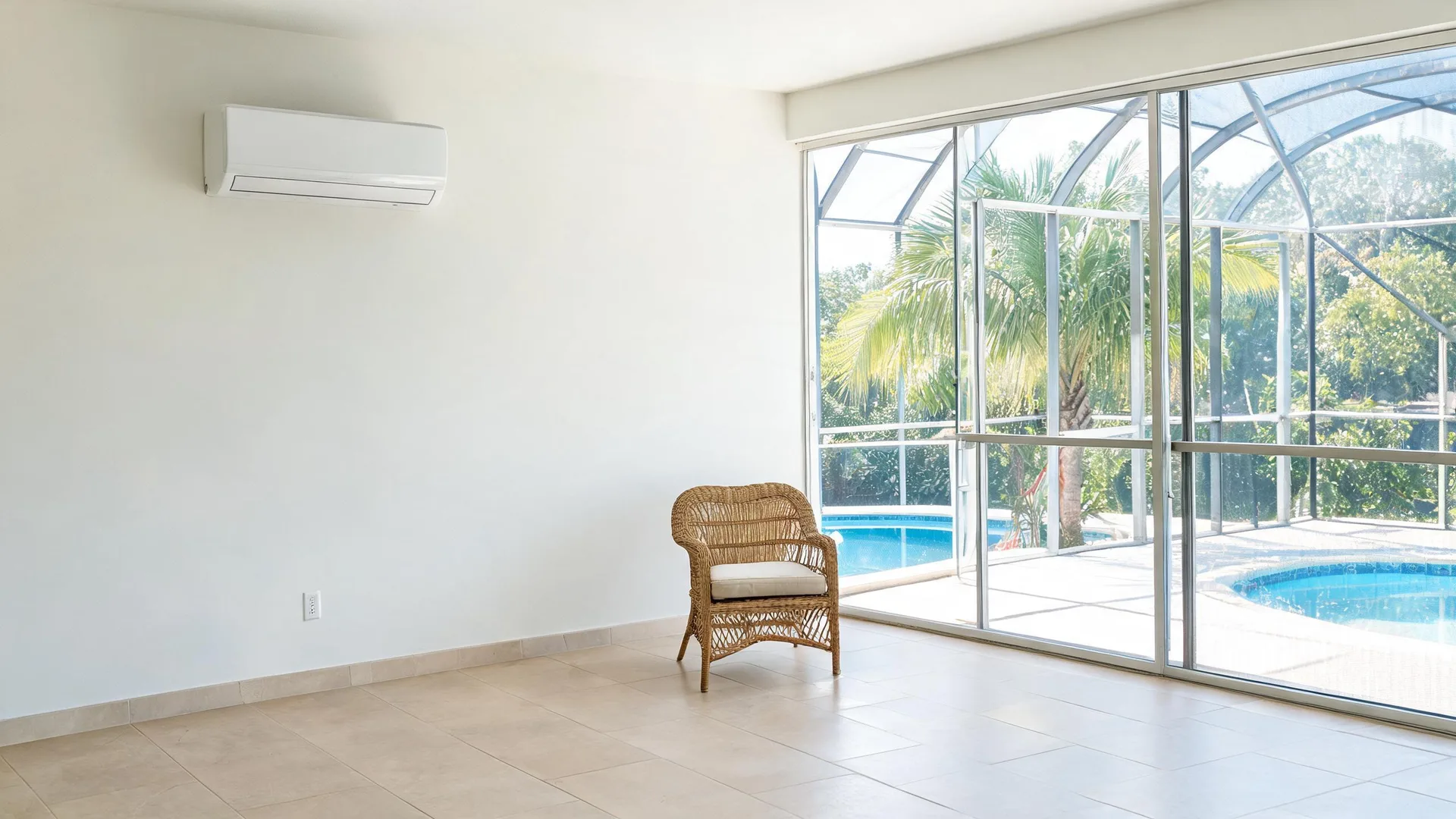
Oversized cools the air without drying it

A unit too big for the room cools it fast and shuts off before it's pulled the moisture out of the air, so the room feels cool but damp. It also cycles on and off more often, and that stop-start pattern puts more wear on the compressor than a system sized to run long, steady stretches. Undersized has its own problem. It runs constantly and still doesn't keep up on the hottest days. The right size runs long enough to dehumidify the room and still keeps up when it matters.

SEER2 tells you how much cooling a mini split delivers for the electricity it uses over a full season, not just at one moment. HSPF2 is the same idea for heating. A higher number means the system is pulling more heat into the house, or more heat out of it, per unit of power it draws. It isn't a measure of how big or how powerful the unit is, so a small unit and a large one can carry the same rating. The number on the label comes from a fixed test, so it won't match what you'd work out from a power bill, but it does tell you how one model stacks up against another. When you're comparing systems, SEER2 and HSPF2 are the fair way to do it, not the price tag or the name on the case.

Installation starts with the outdoor unit. It needs a spot on a pad or bracket where air can move freely around the coil, away from gutters that'll drip on it. Running the line set comes next, the refrigerant lines and the wiring that connect outdoor to indoor, and that path gets sealed where it passes through the wall so moisture and pests stay out. Once the indoor unit is mounted and both ends are connected, the line gets pulled down to a vacuum to clear out air and moisture before any refrigerant moves through it. Skip that step and the system can develop problems months later that are hard to trace back. After that the system gets charged, powered up, and run through both heating and cooling so the tech can check the temperature split at the vent and confirm it's holding steady before they leave.