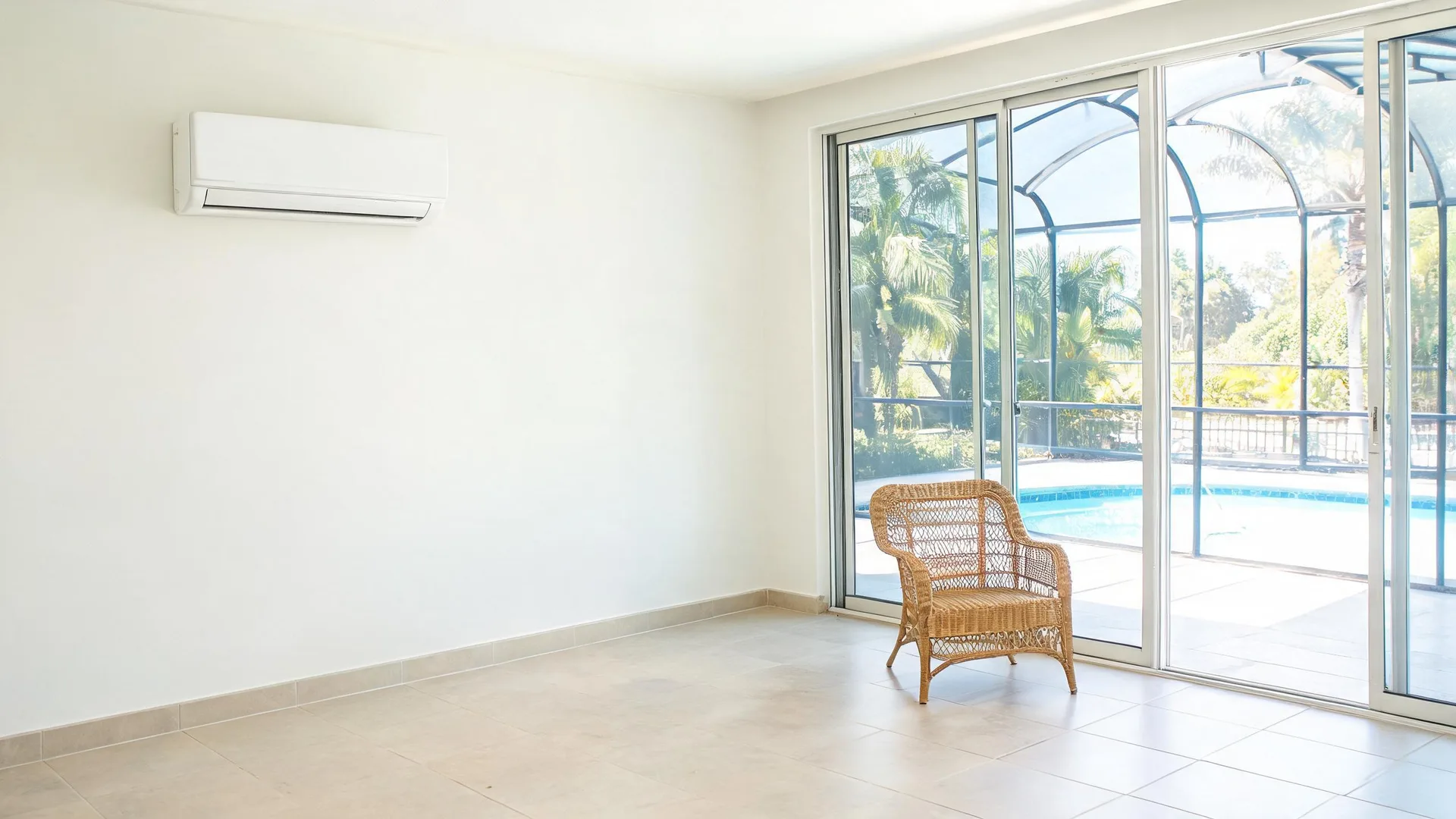
Gas heats most homes here
87.1 percent of homes in Porter County heat with utility gas. A mini split is rarely the only thing running in a home like that.
Takes about a minute. No obligation.
87.1 percent of homes in Porter County heat with utility gas. A mini split is rarely the only thing running in a home like that.
Homeowners here mostly add a mini split for a room a furnace does not reach well, or for cooling without ductwork. It works alongside the gas system rather than replacing it.
NOAA nClimDiv, 1991–2020 normals
Summers in Portage run about three months, June through August.
A mini split here only has to carry three months of cooling, so a standard size gets the job done.



Porter County falls under zone 5A, a cool, humid climate where heating carries more of the load than cooling. A ductless mini-split heat pump counts as a split system under the federal standard, same as a central heat pump with ducts. Any unit installed here, built from 2023 onward, has to hit at least 14.3 SEER2 for cooling and 7.5 HSPF2 for heating. There's no separate, looser rule for ductless. That efficiency floor is also what qualifies a system for the federal tax credit, so meeting the minimum isn't just a box to check.
Cooling in Porter County starts in June. Installing before then means the work happens on your schedule, and the mini split is ready to run from the first warm week instead of the first hot one.
Find a contractorThe old unit being replaced is usually a window air conditioner or a space heater pressed into a room the ductwork never reached. Those don't fail so much as get retired when a better fix shows up. A mini split that takes over that job doesn't carry the same load a furnace or a whole-home system does. It runs when that one room needs it and sits off the rest of the time. The compressor is sized for a single zone, not a house, so it isn't working as hard per hour as the equipment covering everything else. That lighter duty cycle is a big part of why the outdoor unit and the indoor head tend to hold up over a long service life.
A mini split's heating output drops as it gets colder outside, and the headline number on the spec sheet is measured at a mild temperature, not a cold one. Every manufacturer publishes a chart showing how much heat the unit still puts out as the temperature falls. If this unit needs to carry a room on the coldest night of the year, ask what it's rated for at that point, not just what it's rated for at its best.
A unit sized to the room cycles on, satisfies the space, and shuts off. One that's too big for the room cools or heats it fast and shuts off again before it's pulled the moisture out of the air. One that's too small never shuts off and still doesn't keep up on the coldest or hottest days. The square footage, the ceiling height, and how many windows the room has all go into that number, so ask what they measured, not just what size they're quoting.
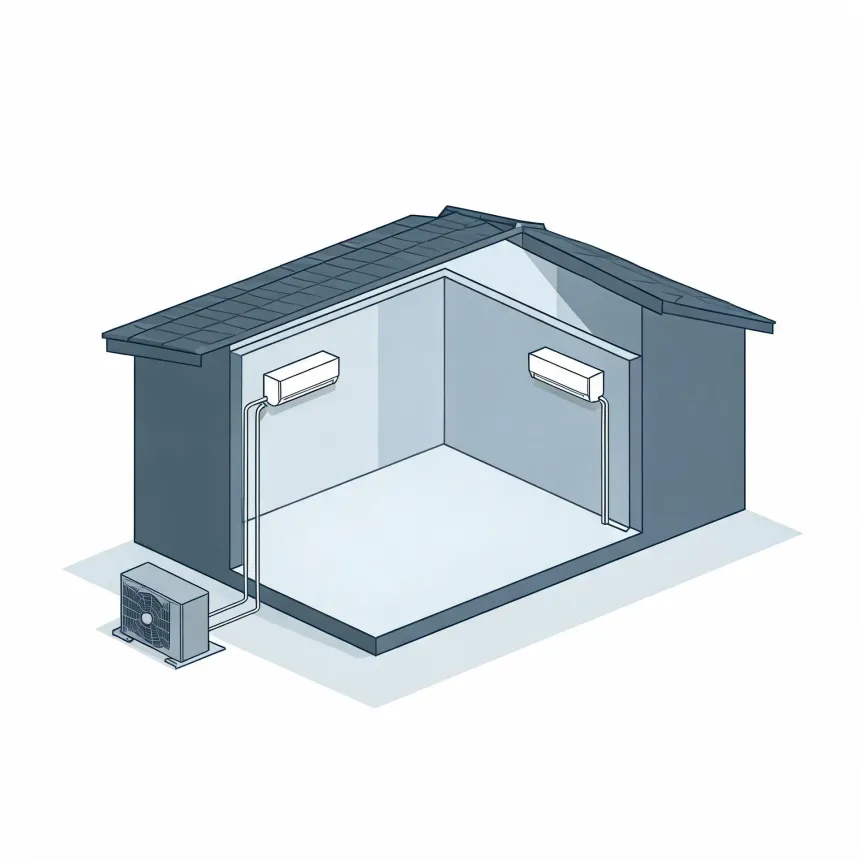
What drives the cost of putting in a mini split is mostly the parts you don't see on the spec sheet. How far the line set has to run between the outdoor unit and the indoor head matters more than most people expect. A short, straight run costs less to install and runs more efficiently than one that has to snake through a wall cavity or climb several floors. Whether the installer needs to open up drywall or siding to route that line set, or can run it through an existing chase, changes the labor involved. The electrical side matters too. If there's already a dedicated circuit nearby, that's one less thing to add. If not, running new wiring back to the panel is its own job. The condition of the spot where the outdoor unit sits, whether it needs a new pad or bracket, adds up the same way.
Installation starts with the outdoor unit and indoor head going up, not the power going on. The crew mounts the indoor head where it was scouted, drills through the wall for the line set, and runs the refrigerant lines, drain line and wiring together through that one opening. Both ends of the line set get connected, then the system is pulled down to a vacuum before any refrigerant moves. Any moisture or air left in the lines will hurt performance and can damage the compressor over time, so a good installer doesn't skip that step. Once the system holds the vacuum, the lines get charged and the unit is powered up. Before the crew leaves, they check airflow at the head and the temperature split at the vents to confirm it's running the way it should.