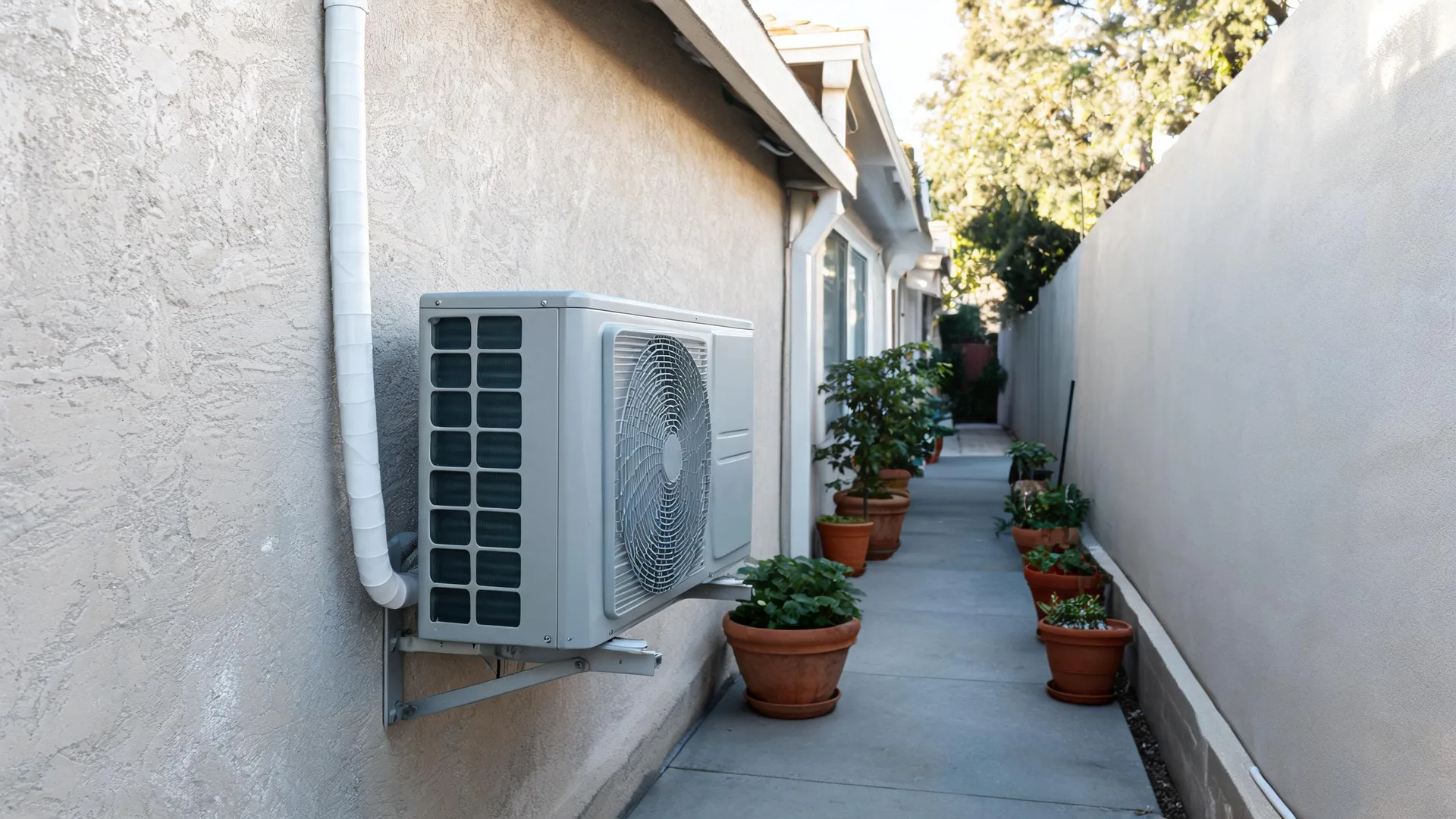
Gas furnaces are the default here
Utility gas heats 55.1% of homes in Hendricks County, and electricity heats most of the rest. If your house has a furnace, a mini split is likely going in alongside it rather than replacing the only heat source.
Takes about a minute. No obligation.
Utility gas heats 55.1% of homes in Hendricks County, and electricity heats most of the rest. If your house has a furnace, a mini split is likely going in alongside it rather than replacing the only heat source.
With a furnace already handling the cold months, a mini split here is usually about cooling a room the ducts don't reach well, or adding heat to a space like a garage or addition. That's a different job than sizing a system to carry a whole house through winter.
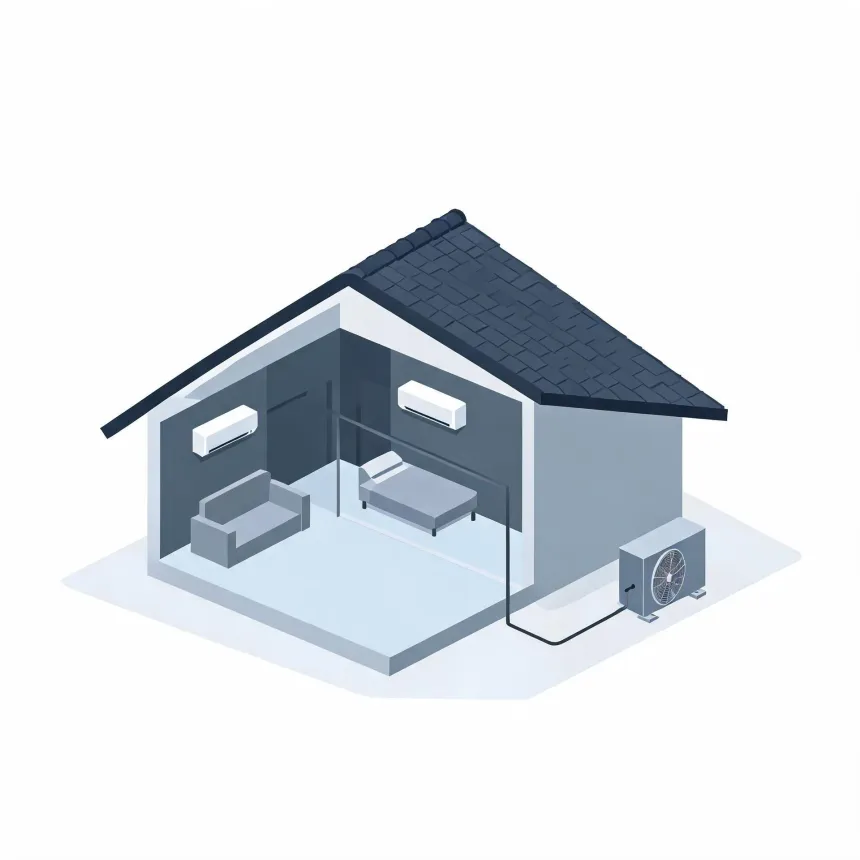
NOAA nClimDiv, 1991–2020 normals
A mini split here does not need to be oversized to earn its keep.
A standard-capacity unit will heat and cool the room or addition it is assigned to, at the electricity rate of 14.77 cents per kilowatthour Indiana homes paid in 2024.



Hendricks County is in climate zone 4A, which asks for real heating and real cooling here, not just one or the other. Any mini split installed in Plainfield falls under the same federal rule as other split-system heat pumps. Units built from 2023 onward have to hit 14.3 SEER2 for cooling and 7.5 HSPF2 for heating. That rule doesn't bend for a smaller unit or a single room. A mini split sized for a garage or addition still has to clear the same minimums as one sized to carry a whole house. Buying new also opens the door to a federal tax credit for qualifying heat pumps, based on meeting those efficiency numbers rather than the size of the job.
Cooling here runs three months a year, June through August, with afternoon highs averaging 82°F. That's a normal load for one room or an addition. A standard-capacity mini split handles it without being oversized for the rest of the year.
Find a contractor
Cooling in Hendricks County starts in June and runs three months, through August. May is the month to get a mini split installed, not the first hot week of June. A mini split that only has to carry one room or an addition isn't a hard install to schedule ahead of, and doing it before June means it's running and tested before you need it, not while you need it.
A contractor works out heat loss and heat gain for the space. That means wall and window area, which direction it faces, what's on the other side of its walls. Square footage alone leaves out too much. Rooms the same size can need different capacity depending on what surrounds them.
A mini split that's too big for the space shuts off before it finishes pulling moisture out of the air. It hits the set temperature fast, cycles off, then starts again soon after. The room feels cool but clammy. A correctly sized unit runs longer, steadier cycles and actually dries the air while it cools it.
If this mini split is going in because an old window unit or electric baseboard is being retired, that equipment doesn't need much from you on its way out. A window unit just gets pulled from the frame. Electric baseboard heaters get capped off at the wiring, which is a job for whoever's running the new line anyway. Neither one has refrigerant in it, so there's no recovery step and no refrigerant handling rules to deal with. If what's coming out is an older ductless system instead, that one does hold refrigerant, and a contractor has to recover it properly before the lines come down. Either way, removal is a small part of the job next to running the new line set and mounting the condenser, not something that adds real time to the install.
On install day, the indoor unit gets mounted first, usually high on a wall bracket, level so condensation drains the way it should. A hole gets drilled through the wall for the line set. That's the bundle of refrigerant lines, power wire and drain tube that connects indoor to outdoor. The line set gets run to wherever the condenser sits outside, then the whole refrigerant circuit gets pulled down to a vacuum before anything turns on. That step matters more than it looks like it should. Any moisture or air left in the lines works against the refrigerant and keeps the system from running the way it's supposed to for as long as it's in service. Once the vacuum holds, the lines get charged, the condensate drain gets tested with actual water, and the contractor runs the unit in both heating and cooling before calling it done.