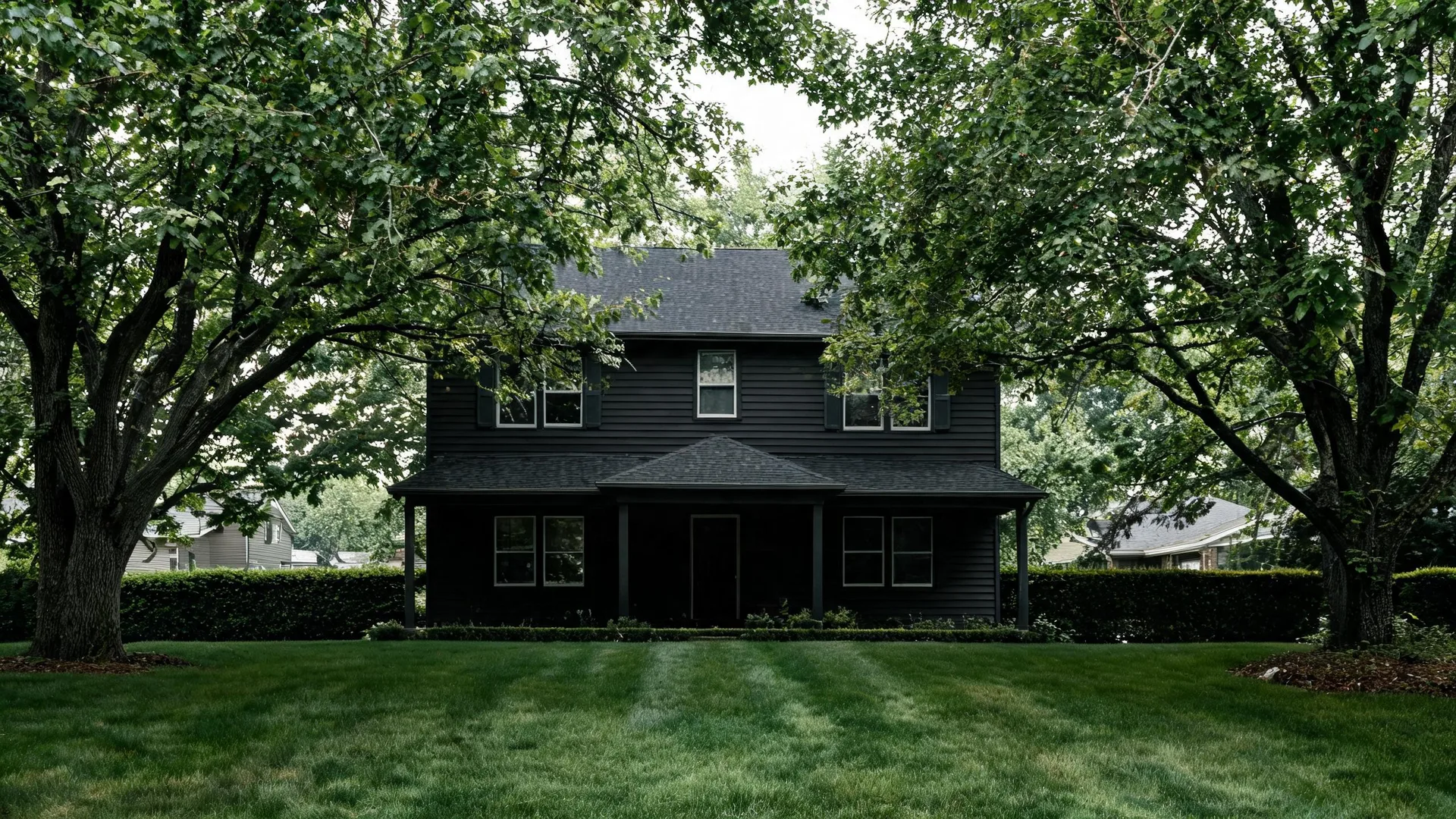





A two-story black-painted house with a covered front porch and gray shingled roof, framed by large deciduous trees and fronted by a mowed lawn and trimmed hedge.

Mini Split Installation in New Castle, IN

Tell us about the job

Takes about a minute. No obligation.

New system or replacementMini-splitHenry County, IN
Step 1 of 2

What ZIP code is the job in?

Just over half the homes in Henry County heat with utility gas. Electricity comes next at 28.9%, then propane at 12.8%. A mini split works differently from the furnace most homes here already have. It heats and cools from the same unit, through a compressor instead of a flame, so it doesn't compete with gas or electric heat the way a straight swap would. For a home already on gas, a mini split often goes in alongside the furnace, covering a room or an addition the ducts don't reach well. For a home heating with electricity, it can take over more of the job, since both run on the same fuel.

8 months
October through May, your system heats
3 months
June through August, it cools
22°F
the average winter night it heats against
82°F
the average summer afternoon it cools against
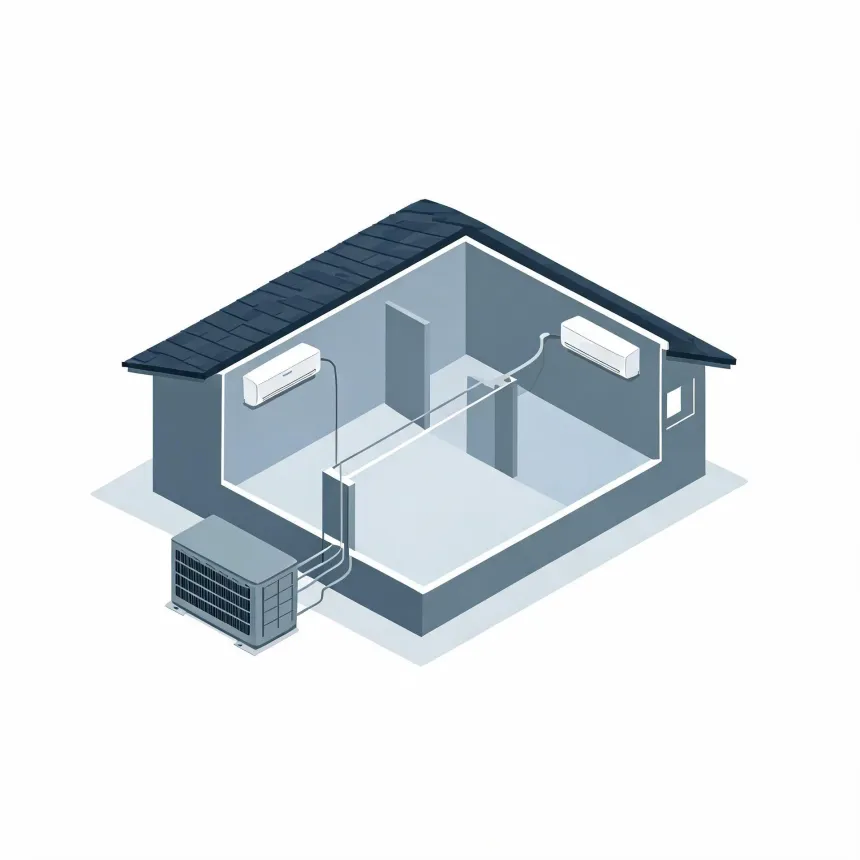
Isometric illustration of a cutaway house showing two wall-mounted mini-split indoor units connected by line sets to a single outdoor condenser beside the exterior wall.
Your system heats October through May and cools June through August.

NOAA nClimDiv, 1991–2020 normals

Half the homes in Henry County were built in 1961 or earlier.

A mini split going into a house that old has to work with the rooms and walls already there, not the open floor plan a new build would give it.

Put it in before June, and it's running before the first hot afternoon

Cooling runs June through August
Summer afternoons average 82°F
Power costs 14.77 cents a kWh statewide
A mild three months to coolHenry County cools from June through August, with afternoon highs averaging 82°F.

A standard mini split, sized to the room or addition it's covering, is the right call here. Nothing about New Castle pushes toward a bigger unit or a pricier one. Electricity in Indiana ran 14.77 cents per kilowatt-hour in 2024, and that rate is what the unit will run on whether it's backing up a gas furnace or carrying the heating and cooling load on its own. A mini split's efficiency comes from not working harder than the space needs, so matching the unit to the room is what keeps that rate from adding up. Oversizing it doesn't buy comfort, it just cycles on and off more and costs more to run.

A mini split for Henry County, built to clear this zone's heating minimum

Henry County falls in climate zone 5A, where winters set the bar. Any mini split installed here, ductless models included, has to clear 7.5 HSPF2 for heating and 14.3 SEER2 for cooling under the federal standard. That floor is already built into what manufacturers sell new, so it shapes the lineup you're choosing from rather than something you have to check for yourself.

Find a contractor
A beige split-system air conditioner outdoor condenser unit mounted on metal wall brackets atop a stucco wall.

Three summer months is a light load

Three summer months of 82 degree afternoons is a light load for a compressor to carry. Most of the wear on a cooling system comes from long stretches of high heat, and Henry County doesn't ask for that. Pick a mini split sized to the room it's covering and let it do that job well. There's no case here for a bigger compressor or a higher-tier unit than the space needs.

How many zones it actually covers

A single outdoor unit can run one indoor head or several, but each head needs its own line set and its own spot on the wall or ceiling. Ask how many zones the quote covers and whether that matches the rooms you want conditioned. A multi-zone system split across too many rooms can leave each one underpowered, even if the total capacity looks right on paper.
What happens if the outdoor unit fails

On a multi-zone system, one outdoor compressor serves every indoor head. If it goes down, every room on that system loses heating and cooling at once, not just one. A single-zone setup only risks the one room it's tied to. Ask which arrangement is being quoted, since that changes what you're exposed to if a repair comes up later.

What drives the price on a mini split job is mostly the line set and the wall it has to pass through. The indoor head and outdoor compressor need a refrigerant line, a drain line and a power line run between them, and every foot of that run adds to the labor whether it travels through open framing or has to be fished through a finished wall. A straight shot through an exterior wall behind the indoor unit is the cheapest path. A run that has to snake up through a soffit or across a roofline costs more, not because the equipment changes but because the labor does. The other driver is the wall itself. Brick, block and masonry take longer to core than wood siding or drywall, and that shows up in the bid. Electrical work matters too. A dedicated circuit already in place keeps the job simple. Running new wire back to the panel adds a step that has nothing to do with the mini split itself and everything to do with what the house already has.

Installation day starts outside, with the outdoor compressor set on a pad or bracket somewhere it can draw air freely, away from gutters and downspouts. Inside, the indoor head goes up on the wall or ceiling at the spot the line set reaches with the least bends. The crew cores a hole through to the outside, runs the refrigerant line, the drain line and the power wire through it, and seals the opening against weather. Once the lines connect, the system gets evacuated to pull out air and moisture before refrigerant goes in, a step that matters more than people expect since trapped moisture is what causes problems later. After that it's a pressure test, a charge check, and running the unit through heating and cooling to confirm the head responds and the drain line clears condensation the way it should.