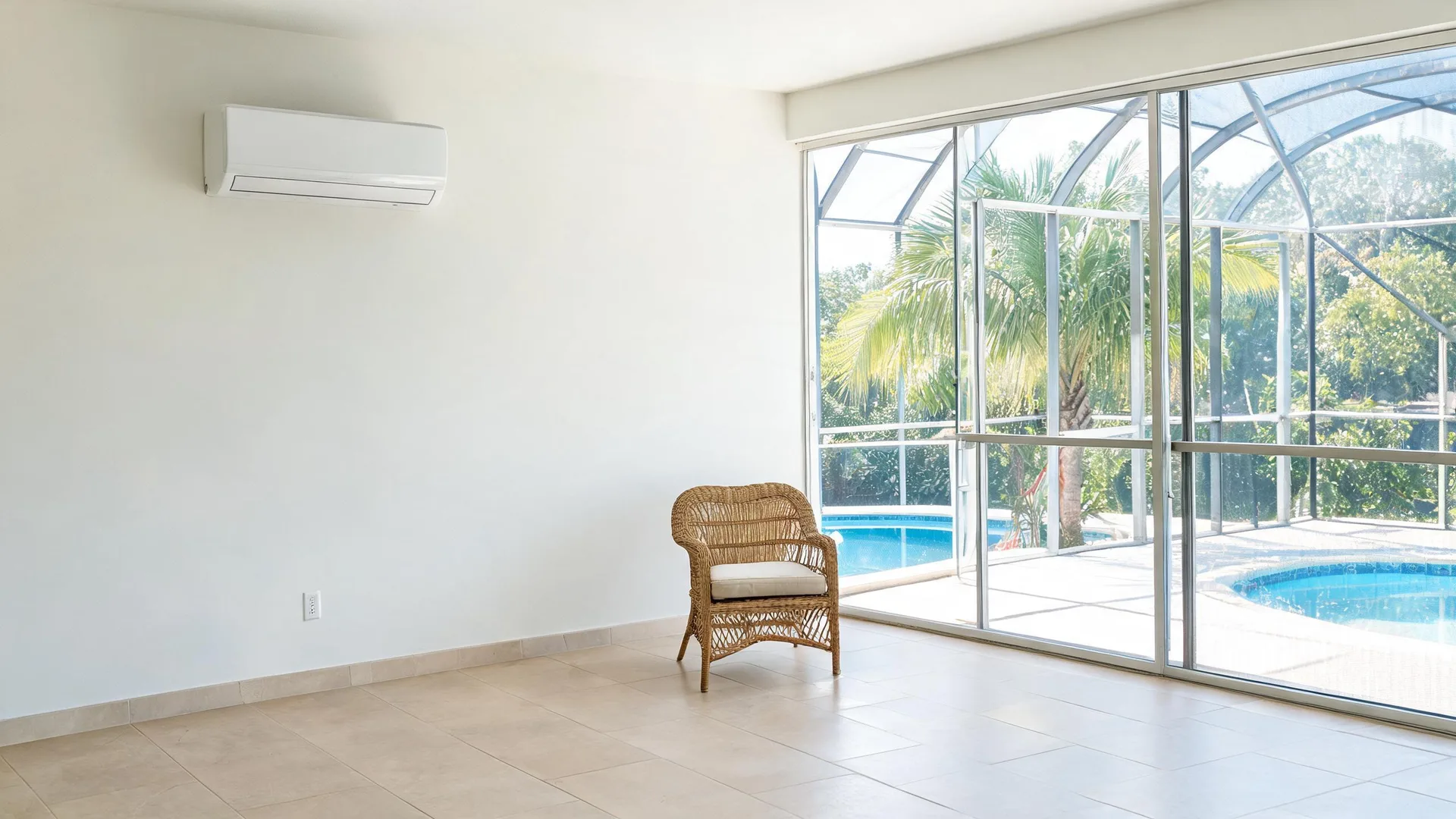
The old system usually stays
A mini split is an add-on in most cases, not a swap. If the house has a gas furnace or baseboard heat, that stays in place and keeps doing what it did before. Nothing gets disconnected unless the homeowner asks for that.
Takes about a minute. No obligation.
Most homes in Delaware County heat with utility gas, 59.6 percent, with electricity next at 31.9 percent. A mini split doesn't compete with a gas furnace on the coldest days here. It works alongside one, or it covers a room the ductwork never reached, like a garage conversion or a bonus room. If the house already has gas heat, a mini split in one zone can carry the shoulder season and let the furnace sit idle until it's actually cold. Where electric baseboard or an electric furnace is doing the work now, a mini split can take over a room or the whole house and run on less power than the resistance heat it replaces.
NOAA nClimDiv, 1991–2020 normals
Electricity in Indiana runs 14.77 cents per kilowatt-hour.
A standard-size mini split sized right for the room keeps that cost down better than an oversized one cycling on and off.




Delaware County is in climate zone 5A, where heating carries more of the year's load than cooling. A mini split here has to meet the federal minimum for a split-system heat pump. That means 14.3 SEER2 for cooling and 7.5 HSPF2 for heating. The rule applies the same whether the unit is the only heat in a room or backup to a gas furnace. A unit rated below those numbers cannot be sold as new for this installation. When comparing units, the SEER2 and HSPF2 numbers on the spec sheet matter more than the brand name.
Cooling here runs June through August, so May is the last quiet month before that starts. Installing before June means the unit is set up and tested on a normal schedule, not worked in around the first warm week. The same timing gives a contractor room to size the unit to the room instead of rushing to match whatever is on hand.
Find a contractorHalf the homes here were built in 1967 or earlier. In a house that age, the wall the installer wants for the line set and the outdoor unit may be plaster, or it may hide knob and tube wiring or a chase nobody mapped. None of that rules out a mini split. It means the installer needs to look at that actual wall before ordering equipment, not plan off a floor plan or a guess.
A mini split is an add-on in most cases, not a swap. If the house has a gas furnace or baseboard heat, that stays in place and keeps doing what it did before. Nothing gets disconnected unless the homeowner asks for that.
Pulling an electric furnace or baseboard units, capping the lines, patching the wall where they ran, that falls outside a mini split install. It has to be scoped on its own if the plan is to retire the old heat instead of keeping it as backup.
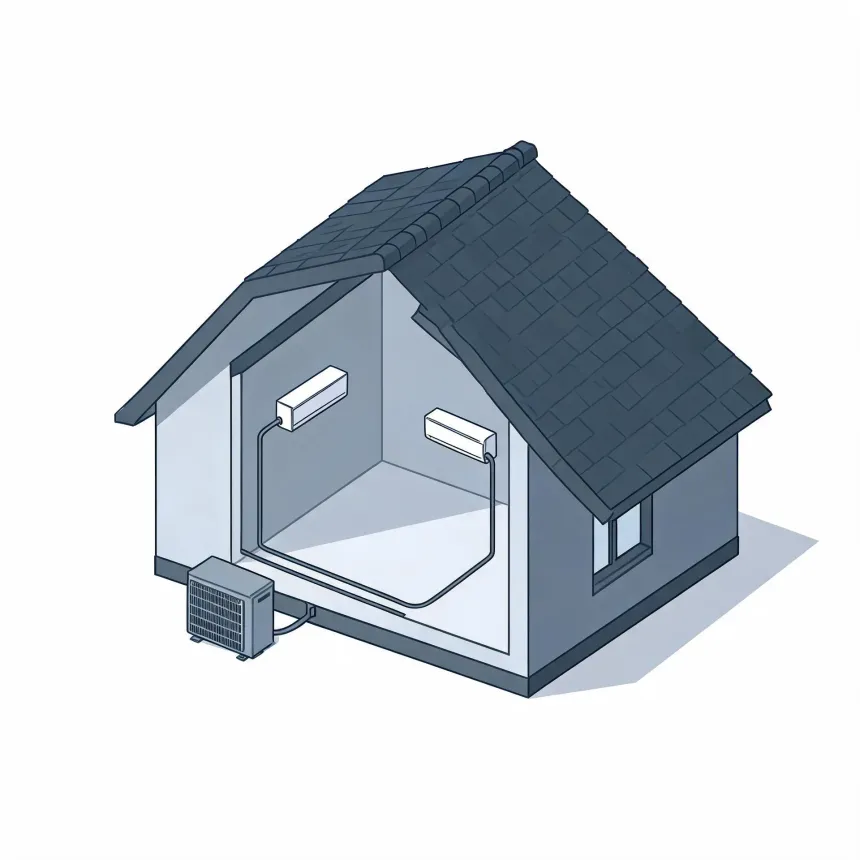
The price moves with how many zones go in and how far the outdoor unit sits from each indoor head. One head cooling one room is a simple job. Several heads tied to one outdoor unit, with line sets running through different walls and up different floors, takes longer, and the labor reflects that more than the equipment does. Where the line set has to travel matters too. A straight shot through an exterior wall costs less to run than a line hidden through finished ceilings or dropped between floors. The condensate line needs somewhere to drain, and if gravity can't take it there, that means a pump, another part and another task. Electrical work is its own factor. A dedicated circuit already at the panel keeps things simple. If the panel is full or sits far from the install point, that's more wire and more time before the unit ever gets mounted.
The crew starts outside, mounting the bracket for the outdoor unit and running the line set in from there. Inside, the indoor head goes on the wall, the line set gets connected, and the whole system is sealed and pressure tested before any refrigerant moves through it. That test matters more than people expect. A line set that leaks slowly will still run, just not at the capacity it was rated for, and the problem won't show up until a stretch of real heat or cold when the unit can't keep up. Once the test holds, the lines get charged, the condensate drain gets checked for a real slope or a working pump, and the electrical connection gets tied in, whether that's a dedicated circuit or a disconnect box outside. The last step is running the system in both heating and cooling, checking the temperature at the head and confirming it shuts off and cycles back on the way it should. A single zone goes through the same steps as a multi-zone system, just fewer times over.