







How often to clean a mini split in Muncie, IN

Get matched

A mini split that runs all summer in Muncie's humidity and all winter in the cold works harder than most people realize, since a lot of homes here lean on it for both. The filters and coils load up with dust and the drain line can clog, and once that happens the unit draws more power to do less, which matters with what electricity costs in Delaware County. Figuring out how often yours needs attention depends on the unit you have, how many heads are running, and how it gets used across the year. Rather than guessing or calling around to find someone who services mini splits in this area, you can get matched here with a contractor who takes on jobs like yours and have them reach out to you directly. That skips the part where you explain your system from scratch to three different companies and sort through quotes on your own. Fill in what you've got and what you're seeing, and let the matching do the legwork.

Clean the filters on your mini split every two to four weeks when it's running steady, which in Muncie is both the muggy summer stretch and the cold months if you're leaning on it for heat too. That's more often than most people expect, but the filters are catching everything the indoor air carries, and a mini split moves a lot of air across a small coil. Once those filters clog, the coil behind them can't pull moisture out of the air right, and in winter a dirty outdoor unit struggles to defrost itself between cycles. Beyond the filters, plan on a fuller cleaning of the coils and the condensate drain once or twice a year, before the system has to carry the worst of the summer humidity or the worst of the cold. Skip it and you'll likely notice the system running longer to do the same job, and the indoor air not feeling as dry as it should.

An older man with gray hair and a beard stands in a doorway of a home, wearing a dark coat dusted with snow, with a lit fireplace and lamp visible in the blurred room behind him.
A bearded older man in a dark snow-dusted coat and scarf stands just inside a home's front door, with a lamp-lit room and snowy window visible behind him.
An older man with gray hair and a beard wearing a dark snow-dusted coat stands in a home entryway, with a lamp-lit living room and a wooden staircase behind him.
An older man with gray hair, a dark coat and scarf dusted with snow stands in a warmly lit entryway with an open wooden door, a table lamp, framed pictures, and a plant in a vase.

What does your mini split actually deal with here?

  • Cooling runs June through August

    Cooling runs June through August. Three months of muggy air pulled through the filter and coil, which is enough for both to load up.

  • Heat runs October through May

    Heat runs October through May. Eight months is most of the year, so this one unit is doing nearly all the work of keeping your house comfortable.

  • Power here costs 16.94 cents per kilowatt-hour

    Power here costs 16.94 cents per kilowatt-hour. A dirty mini split draws more of it to do the same job, every month you run it.

NOAA nClimDiv 1991-2020 · EIA-861 2025

How a mini split actually gets dirty

  • Indoor filters sit behind a front panel you lift up, and most slide out without a single tool.
  • A clogged filter forces the blower to work harder to push the same amount of air through the room.
  • The indoor coil sits behind the filter and takes on dust the filter misses, which is why it needs a separate cleaning.
  • A wet, dirty coil can grow mold, since indoor coils stay damp from condensation most of the day in summer.
  • Condensate drips off the coil into a drain line, and a clog there backs water up into the unit or onto your wall.
  • The outdoor unit's coil and fan need clear airflow too, so leaves and grass clippings packed against it make the whole system work harder.

Lift the front panel on the indoor unit and you'll find the filters right there, no screws, no panel to unscrew. Most owners can pull them, rinse them and have them back in under a minute. That's the easy part. Behind the filter sits the coil, and this is where things get missed. The coil catches whatever the filter doesn't, fine dust that builds up slowly over a season of running. Because the coil stays wet with condensation for hours at a time in summer, that dust gives mold something to grow on, and a dirty coil can't pull heat out of the air as well as a clean one. The water that drips off the coil has to go somewhere. It runs down a drain line, and if that line clogs with algae or debris, the water backs up instead of draining out, which means it ends up inside the unit or running down your wall. None of this is visible unless you go looking for it, which is the problem. Outside, the compressor unit has its own coil and fan, and if leaves, grass clippings or cottonwood fluff pack against it, the whole system loses airflow and has to work harder to move the same amount of heat. A mini split has several places dirt collects, not just one filter, and each one affects the system differently.

A white wall-mounted mini-split air conditioner indoor unit with visible dust and staining along its lower vent, installed on a plain pale wall.
Before you get your mini split maintenance
A white wall-mounted mini-split indoor unit installed high on a gray interior wall, with a window at left and part of a light gray sofa with a dark cushion at lower right.
After you get your mini split maintenance
A white wall-mounted mini-split air conditioner near the ceiling of a living room with a gray sofa, knit cushions, a wooden floating shelf holding a plant in a round vase, a framed print and a woven basket, and a large window showing green trees.

Get matched with a mini split pro in Delaware County

Fill out one form instead of calling around for a mini split tune-up.

Get matched with a pro who does mini split tune-ups in Delaware County.

Fill out one form

Asking costs nothing, and the choice to hire stays yours.

Clean It Yourself or Call In Help

You clean it yourself

  • You can pull the indoor filter every two to four weeks and rinse the dust off in the sink, which keeps the blower from straining.
  • You won't reach the indoor coil behind the filter or the drain line, both of which load up with the same dust and condensation over a Muncie summer.
  • A missed clog in the drain line can back up and leak into the wall or the floor before you notice anything wrong.
  • You're relying on a lift-the-panel, slide-it-out job with no tools, so there's a limit to what it catches.
  • Skipping a cycle during the eight months you're running heat means the dust keeps building with nobody checking the coil.

A contractor checks it

  • A contractor can get into the coil and the drain line, the parts behind the filter that you can't reach on your own.
  • Once matched, that contractor handles the scheduling, so you're not calling around and explaining your system to three different companies.
  • A contractor servicing the unit can catch a slow drain clog before it backs up into the house.
  • You skip comparing quotes from strangers and get matched with someone who already knows what a Muncie mini split running both seasons is up against.
  • A full check covers the coil, the drain line and the filter in one visit instead of just the one part you can reach at home.
A white wall-mounted mini-split air conditioner installed high on a light gray interior wall below a white crown molding and ceiling with a recessed light.

Mini split kept up

This is what a cleaned unit looks like. The casing is clear, the vents sit open, and air moves through without the blower straining. A contractor who services it on a schedule catches the coil and drain line before either one loads up.


A dusty, discolored white wall-mounted mini-split air conditioner unit installed on a plain beige interior wall below a molding strip.

Mini split neglected

Dust has settled into the casing and discolored the plastic. The coil behind that panel is carrying the same buildup, and a drain line left alone this long is close to clogging. Muncie summers and winters both push a unit this dirty harder than it should have to work.

Why does my mini split need cleaning so often anyway?

Why does my mini split need cleaning so often anyway?

Because it never really gets a break here

A furnace fires up for a cycle and shuts off. A mini split that's also doing your cooling runs for hours at a stretch, pulling room air across the filter and coil the whole time. In Muncie that means summer humidity loading the filter with fine dust that sticks to anything damp, then winter months where the same unit runs long stretches for heat instead of resting. Most homes with gas heat only ask this much of a mini split in summer, but if yours covers heating too, it's working nearly year round. The filter is the first thing exposed to that air, and once it's dirty the coil behind it starts catching what the filter can't.

  1. Room air gets pulled in through the front filter first.

  2. The filter screens out dust before air reaches the coil.

  3. The indoor coil cools or heats the air passing over it.

  4. A fan pushes that conditioned air back into the room.

A woman wrapped in a dark knitted blanket sits in an armchair with an open book in her lap, beside a lit table lamp and a frosted window.
A woman in a cream knit sweater sits with eyes closed in an armchair beside an open window showing orange and yellow autumn foliage, with a mug and books on a small side table.

2 to 4 weeks

That's how often the filter needs a rinse when the unit is running steady. A contractor on a schedule checks it along with the parts you can't reach.

Skip the search

1 drain line

It runs the whole time the unit is cooling or heating and nothing stops algae from building up inside it until it backs up.

Skip the search

Cooling runs June through August

Three months isn't long, but it's three months where the filter and coil are working the whole time, not in short bursts. If your mini split also carries part of the winter heating load, that same filter sees dust for most of the year, not just summer.

NOAA nClimDiv 1991-2020

A woman stands smiling in the open front doorway of a single-story brick house while a man in a dark cap and long-sleeved shirt, seen from behind out of focus, faces her from the walkway.

Filters every two to four weeks, the rest on a schedule

That's the answer. Pull the filter, rinse it, put it back, every two to four weeks while the unit is running steady, which in Muncie covers most of the year. The coil behind it and the drain line underneath don't get easier to reach just because you know the schedule. Those still need a contractor's hands and the right tools.

If you'd rather not track down who does this, compare what they charge, and explain your unit's history to three different people before picking one, that part can be handled for you. You'd be matched with a contractor who works on mini splits in Delaware County, and they'll reach out to you directly. You still decide who shows up and when.

A speckled beige ceramic vase holding thin dried branches sits on a round wooden table near a window with sheer curtains, with a dark upholstered chair and draped blanket blurred in the background.
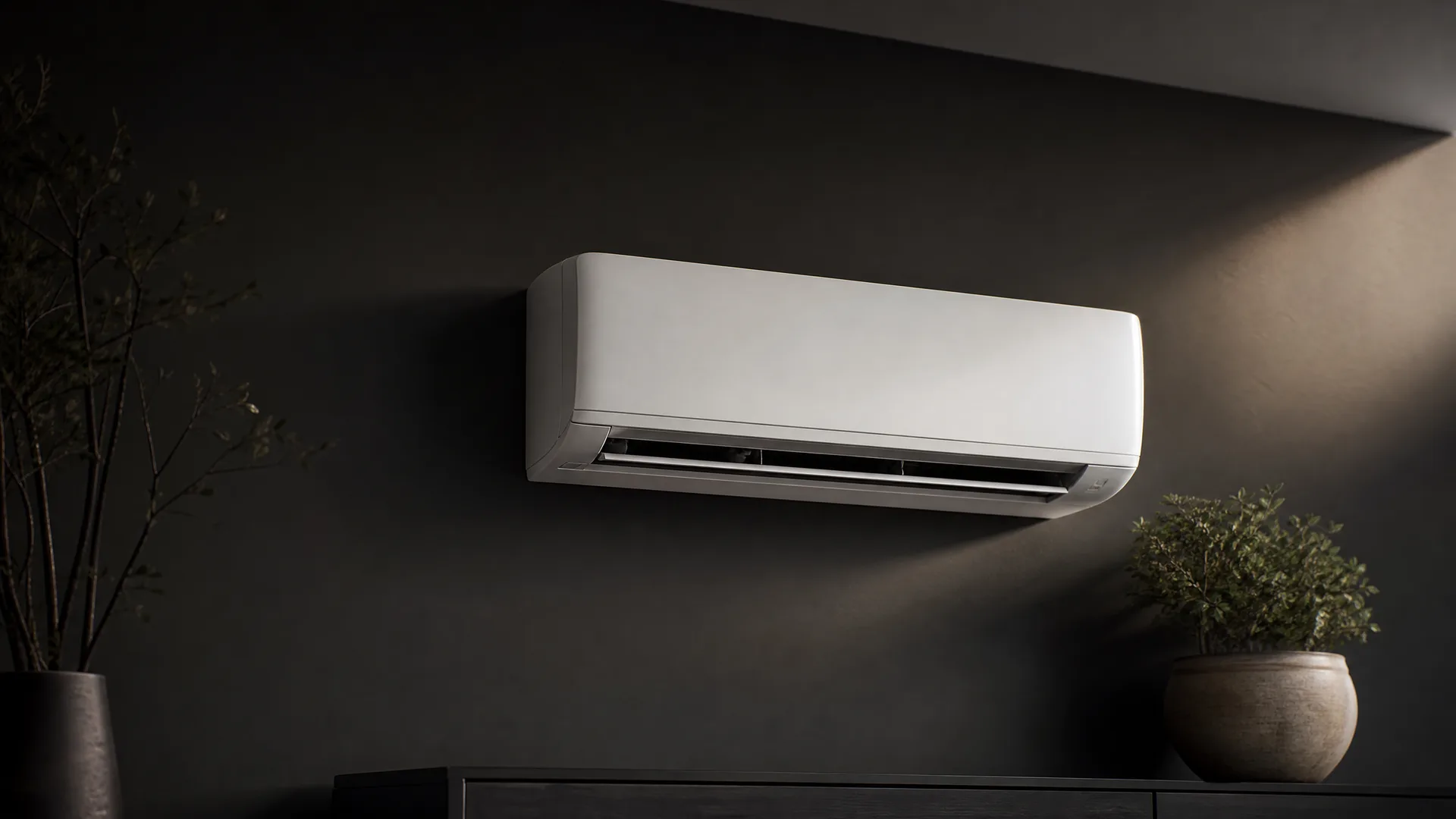
A white wall-mounted mini-split air conditioner on a dark gray interior wall, with potted plants on either side and a dark cabinet below.

Matched to your mini split job

Tune-up, service, or cleaningMini-splitDelaware County, IN
Step 1 of 2

What ZIP code is the job in?