





A two-story dark-painted house with a covered front porch, white-trimmed windows and a trimmed hedge, framed by large deciduous trees, photographed from ground level across a lawn with blurred grass in the foreground.

Mini Split Installation in Michigan City, IN

Tell us about the job

Takes about a minute. No obligation.

New system or replacementMini-splitLaPorte County, IN
Step 1 of 2

What ZIP code is the job in?

Gas heats 83.2 percent of homes in LaPorte County, and most of the rest run on electric heat. A mini split doesn't ask you to give up the furnace. It adds cooling and shoulder season heat to a house that already has gas for the coldest months, running off its own outdoor unit and a wall-mounted head instead of ductwork. For a home that's all electric, a mini split can take over more of the heating load and cut down on what the baseboards or electric furnace have to cover. Either way, the install comes down to running a line between an outdoor unit and the indoor head, not retrofitting a duct system.

8 months
October through May, your system heats
3 months
June through August, it cools
20°F
the average winter night it heats against
81°F
the average summer afternoon it cools against
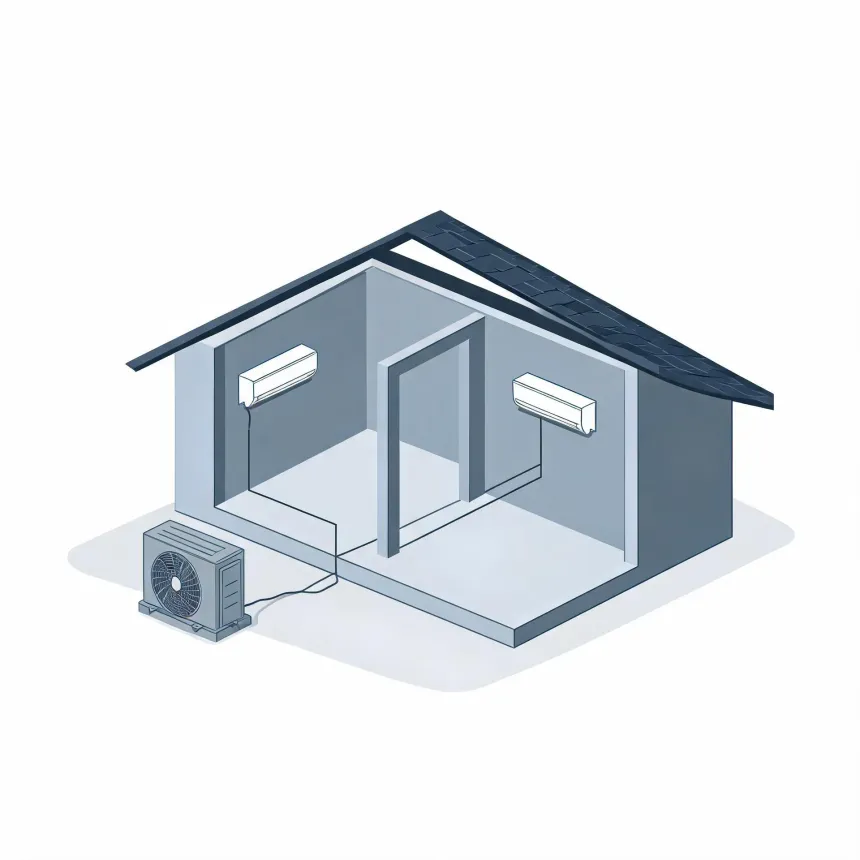
Isometric illustration of a cutaway house showing two wall-mounted indoor air conditioning units connected by lines to a single outdoor condenser unit on the ground outside.
Your system heats October through May and cools June through August.

NOAA nClimDiv, 1991–2020 normals

Cooling runs about three months a year here, June through August, with afternoons around 81°F.

A mini split in Michigan City isn't fighting heat most of the year, so a mid-range system holds up fine.

May puts the install ahead of June, not behind it

Cooling runs June through August
Summer afternoons average 81°F
60 damaging wind events from 2015 to 2024
Built for an older houseHalf the homes in LaPorte County went up by 1969, before anyone ran ductwork for central air.

LaPorte County falls under zone 5A, a cool, humid climate where heating counts for more than cooling. Any mini split installed here has to meet the federal minimum for a split-system heat pump, 14.3 SEER2 for cooling and 7.5 HSPF2 for heating, since the standard treats a ductless system the same as any other split system. That minimum applies no matter which brand or model goes in. A system meeting it qualifies for the federal tax credit available on qualifying heat pumps. Where zone 5A narrows things is heating performance, since a unit only built for mild winters will have a harder time holding up through a LaPorte County winter than one rated well above the minimum.

Standard size and efficiency, done right

A mini split sized to the federal minimum covers what this house needs. Electricity here runs 14.77 cents a kilowatt-hour, and a standard-efficiency unit won't put a dent in that from cooling alone. There's no case for paying more to chase a higher rating.

Find a contractor
A white mini-split air conditioner outdoor condenser unit mounted on metal brackets against a beige stucco exterior wall, with a blue sky and scattered clouds in the background.

Light duty, most of the year

Three months of cooling a year is a light workload for an outdoor compressor. The rest of the year it's either off or carrying some of the heating alongside the furnace, never both jobs at once under summer heat. That's not the kind of use that wears out a compressor early. It does mean the install is worth getting right, since this unit will likely outlast its warranty period either way, and a mid-range system backed by a good installer will hold up the same as a premium one would.

Sized to the room, not the house

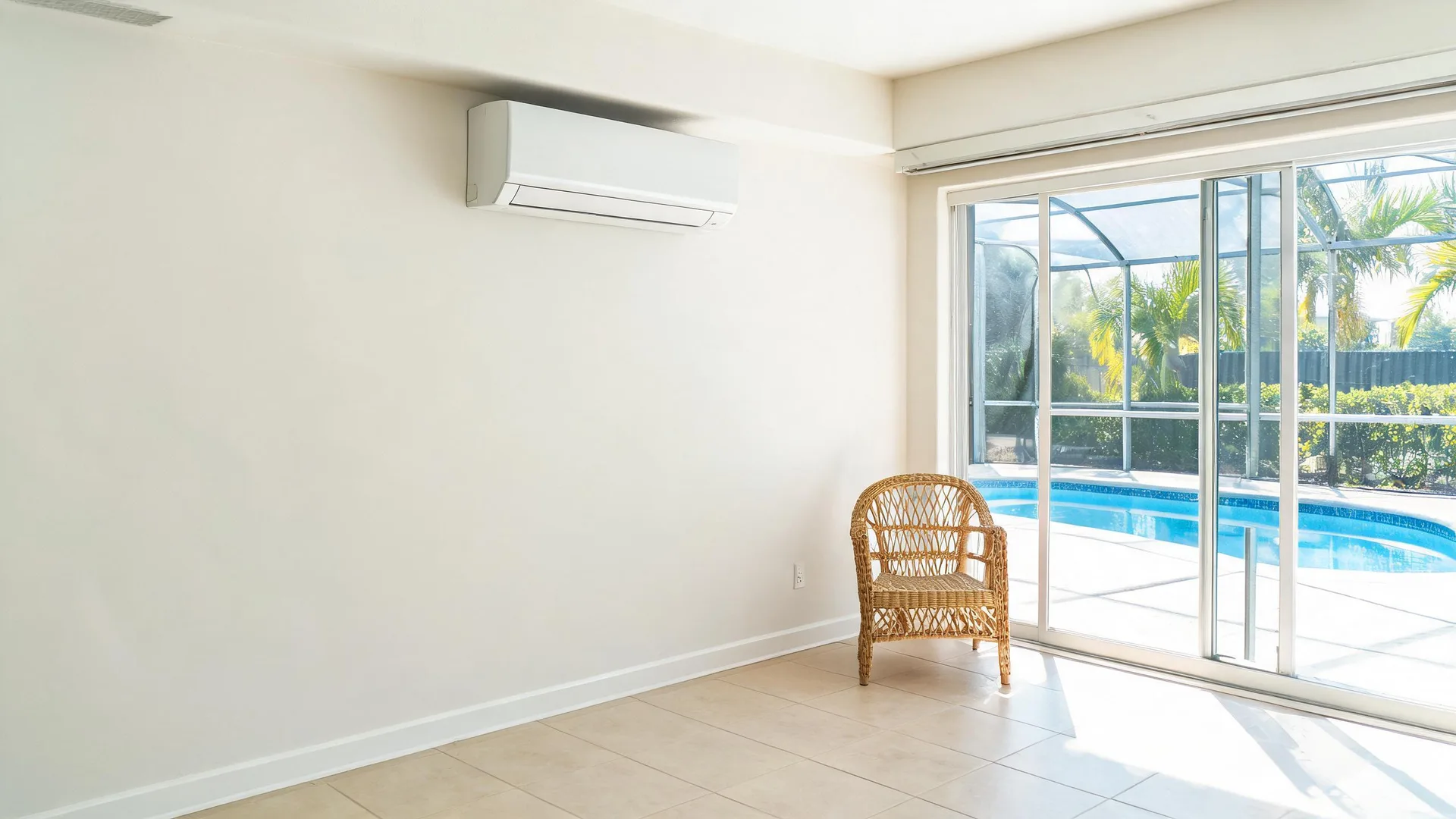
A mini split gets sized to the space its indoor head actually serves, using the room's dimensions, window area, insulation and what's on the other side of the walls. A unit too big cools the room fast and shuts off before it pulls the moisture out of the air, so the room feels cold and damp at once. Too small and it runs constantly trying to reach a setpoint it can't hold on the hottest afternoons.
Why the load calculation drives the install

The sizing work happens before anyone picks a model, and it decides more than comfort. It sets how much line the outdoor unit and indoor head need between them, where the head gets mounted for even airflow across the room, and whether one outdoor unit can serve multiple heads without any of them falling short. Getting it done right the first time means the system matches the job instead of the installer guessing and hoping.

Once sizing is settled, the comparison between systems comes down to a short list of real questions. Ask what the minimum operating temperature is on the heating side, since that number tells you how far below freezing the unit keeps working before it gives up and leaves everything to the furnace. Ask whether the indoor head is a variable-speed system or a single-stage one. Variable-speed holds a steady temperature by running low and constant, while single-stage cycles on and off, and that difference shows up in comfort and in how often the compressor starts up. Ask what the warranty covers on the compressor specifically, not just the parts, and whether it requires a registered install to stay valid. Ask how the installer handles the line set, since a longer run between outdoor unit and indoor head can affect performance and that's a question about the house, not the equipment. A good installer answers all of this without hesitating.

Install day starts outside, deciding where the outdoor unit sits and how the line runs from there to the indoor head. That line carries refrigerant lines, a drain, and electrical in one bundled set, usually through a single hole drilled in the exterior wall. The indoor head gets mounted high on the wall, on a bracket set level so condensate drains the way it's supposed to. Once both ends are in place, the installer connects the lines, then pulls a vacuum on the system to clear out air and moisture before any refrigerant moves through it. Skipping that step is the kind of shortcut that doesn't show up as a problem on day one, only later. After the vacuum holds, the system gets charged, powered up, and run through both heating and cooling to check that the head is pulling the temperature down and the compressor outside is cycling the way it should.