





A row of dark-sided single-story cottages with brown shingled gable roofs behind trimmed hedges, mown lawn and a light-colored path, surrounded by large deciduous trees under an overcast sky.

Mini Split Installation in Logansport, IN

Tell us about the job

Takes about a minute. No obligation.

New system or replacementMini-splitCass County, IN
Step 1 of 2

What ZIP code is the job in?

Most homes in Cass County heat with utility gas, 63.9% of them. Electricity comes next at 20.5%, with propane heating 11.8%. A mini split doesn't replace a gas furnace or its ductwork. It adds heating and cooling to a space that doesn't have either, a garage, an addition, a room the furnace never quite reaches. For a lot of homes here, that means the gas furnace keeps doing what it does, and the mini split handles the rest.

8 months
October through May, your system heats
3 months
June through August, it cools
21°F
the average winter night it heats against
82°F
the average summer afternoon it cools against
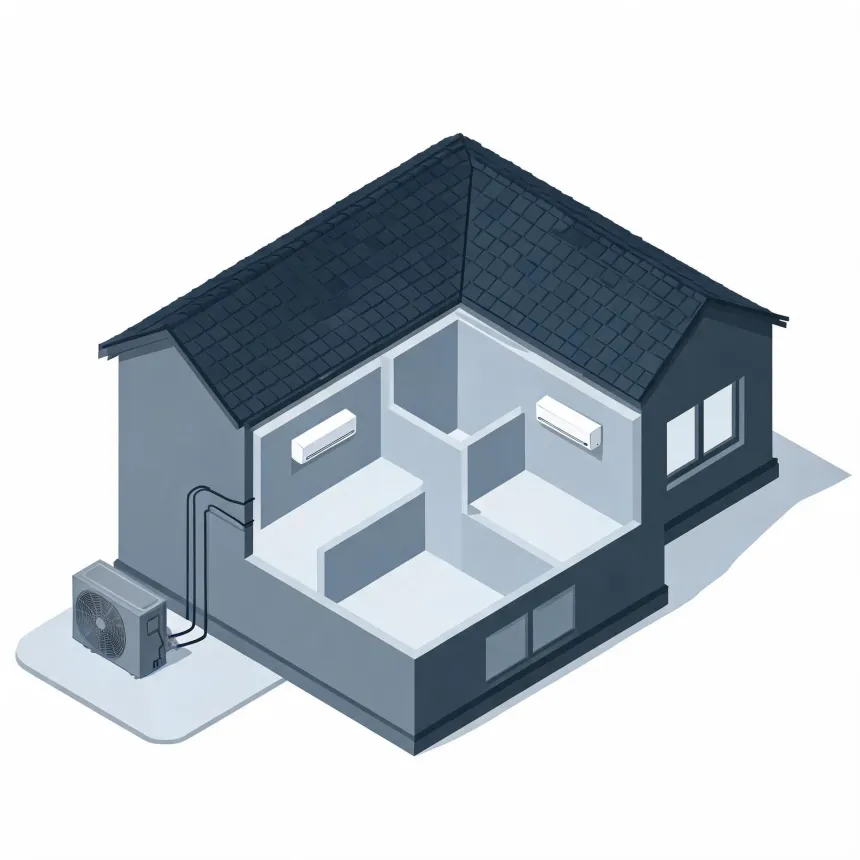
Isometric illustration of a cutaway single-story house with a dark shingled roof, showing two wall-mounted indoor air conditioning units connected by lines to an outdoor condenser unit on a pad beside the building.
Your system heats October through May and cools June through August.

NOAA nClimDiv, 1991–2020 normals

Half the homes in Cass County went up in 1956 or earlier.

An older house wasn't built with a spot for an outdoor condenser or a clean wall for a line set, so the installer has to find one.

Three months of cooling a year is not much to ask of a system

Cooling runs June through August
Summer afternoons average 82°F
58 damaging wind events from 2015 to 2024
A standard mini split handles this just fineIndiana homes paid 14.77 cents per kilowatt-hour in 2024, and this job doesn't need more than a standard unit to run on that.

Cass County sits in zone 5A, a cool, humid zone where heating is the bigger job. Any mini split installed here still has to meet the federal minimum for its type, 14.3 SEER2 for cooling and 7.5 HSPF2 for heating, the same floor as any other split-system heat pump. That rating applies to the unit as built, not to how it ends up used, so one meant to carry a room through the winter has to clear the same bar as one that just takes the edge off a hot afternoon. A unit that meets the standard may also qualify for the federal energy efficiency tax credit, worth checking into before the purchase is final.

Have it installed before June

Cooling here runs June through August. Get the mini split in before June and it's running on day one of the heat, not day three. Wait until the house is already warm and you're choosing a system under pressure instead of looking at what actually fits the room.

Find a contractor
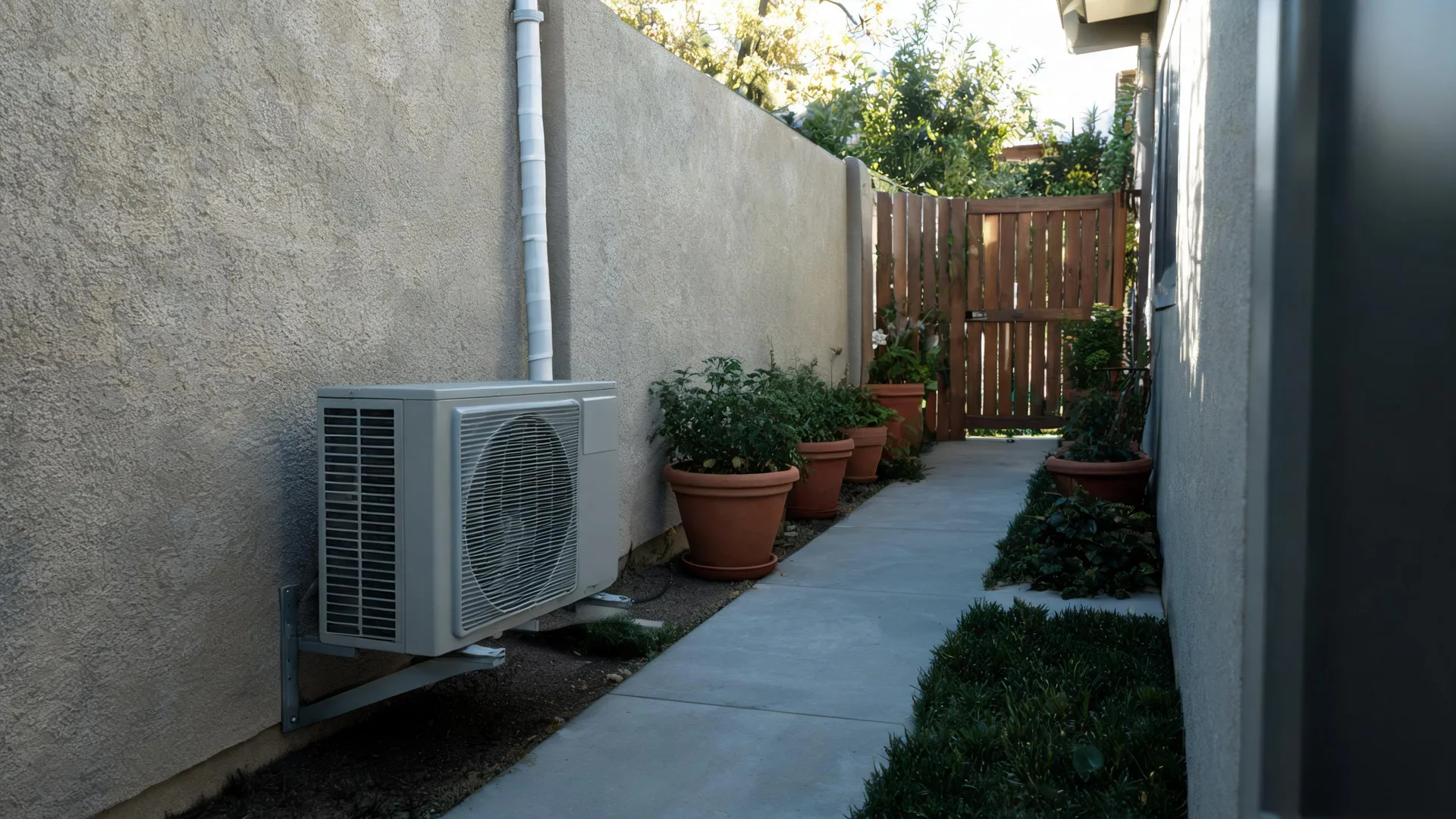
A beige split-system air conditioner outdoor condenser unit mounted on metal wall brackets atop a stucco wall.

Light work for whatever you put in

Three months of afternoons around 82 degrees is a light load for any system. The rest of the year this unit sits idle. A standard mini split can carry that without strain, so there's no reason to pay more for a higher tier of equipment here. Put the budget into the install instead, the right size for the room and a line set run well.

Ask what the zone is actually for

A mini split system is sized to the room it serves, not to the house as a whole. Ask the installer to walk through the heat loss and heat gain for that specific space, the windows, the ceiling height, what's on the other side of the walls. A unit sized off a rule of thumb instead of that room can short cycle if it's too big, or run constantly and still miss the target temperature if it's too small.
Ask who services it after the install

A mini split has a filter to clean, an outdoor coil that collects debris, and refrigerant lines that can develop a slow leak over years. Ask whether the installer services the brand they're selling, and what that visit covers. A unit nobody local wants to touch later is a problem the day something needs attention, not the day it's installed.

The old system usually isn't going anywhere. A mini split gets added to a room that never had its own heating or cooling, not swapped in for a furnace or central air that still works. If there's a window unit or a space heater covering that room now, those are what get retired once the mini split is running. If the room is tied into the ductwork, the vent there stays as it is. Nothing about adding a mini split requires touching the existing system at all.

Installation starts with the outdoor unit, not the indoor one. The installer picks a spot on an exterior wall close to where the indoor head will mount, because the line set between them runs short and straight when it can, and every extra foot or bend adds work for the system later. That line set carries refrigerant, a drain line and electrical wiring through a hole drilled in the wall, and that hole gets sealed well or the wall leaks air around it for as long as the unit is there. Once both units are set, the lines get connected and the whole thing is pressure tested before any refrigerant goes in, so a leak shows up before the system ever runs instead of after. The indoor head gets mounted level, on a bracket, high enough on the wall to move air across the room instead of just at whoever's standing near it. Only then does the installer charge the line set and run the system to check it's actually heating and cooling the way it should.