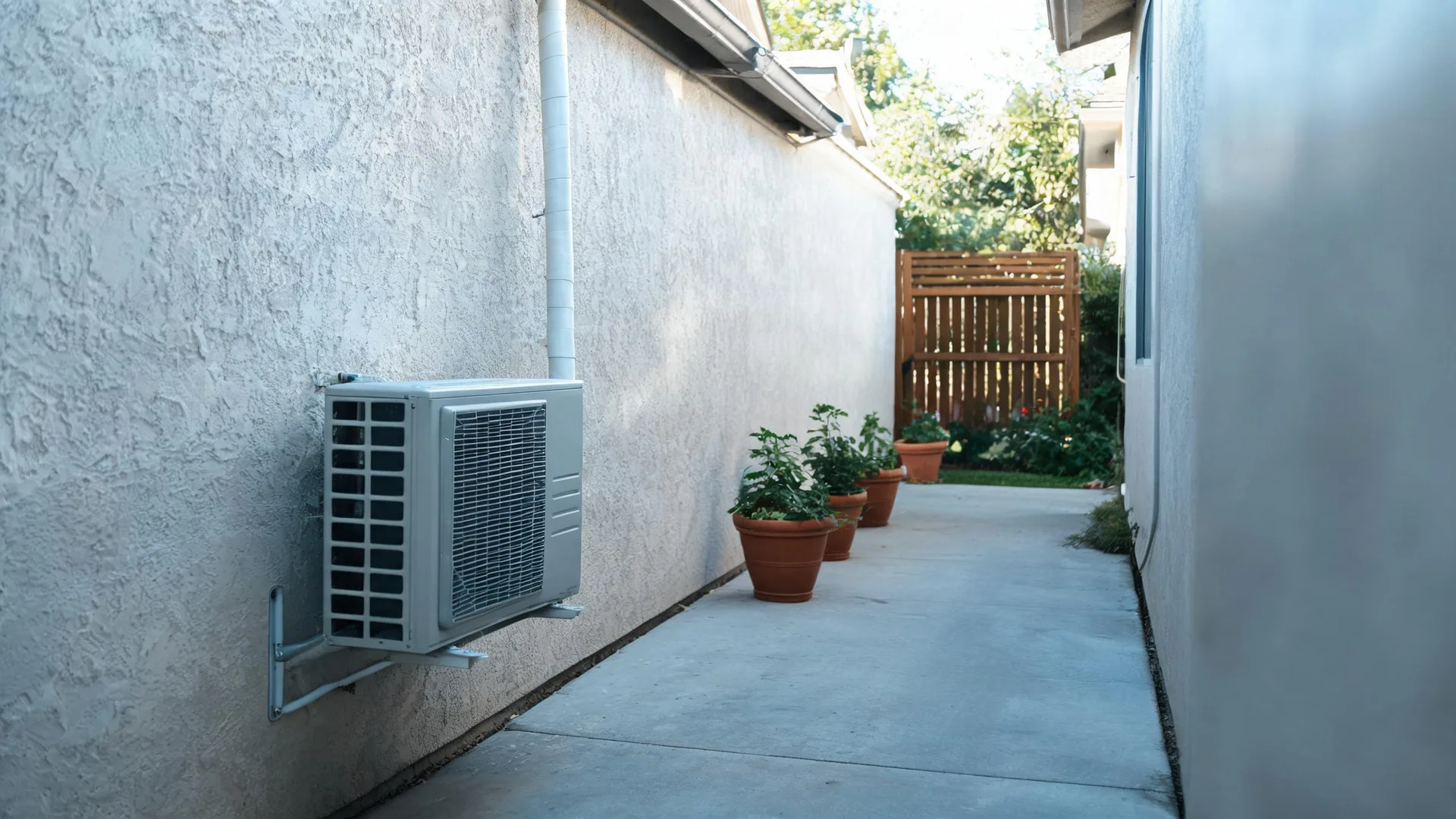
Gas furnaces are the norm here
Utility gas heats 44.7% of homes in Dearborn County, more than any other fuel, with electric heat behind it at 38.6%. Most of what a mini split goes in alongside here is a gas furnace.
Takes about a minute. No obligation.
Utility gas heats 44.7% of homes in Dearborn County, more than any other fuel, with electric heat behind it at 38.6%. Most of what a mini split goes in alongside here is a gas furnace.
If your home heats with gas, a mini split is usually brought in for cooling and for zones the ducted system does not reach well. The furnace keeps doing the heating it already does.
NOAA nClimDiv, 1991–2020 normals
Cooling in Dearborn County runs June through September.
May is the month to get a mini split installed, before the first hot stretch hits.




Dearborn County sits in climate zone 4A. That means real cooling load in summer and real heating load in winter, not just one or the other. A ductless mini split installed here is a split system under the federal standard. Units built from 2023 on have to hit 14.3 SEER2 for cooling and 7.5 HSPF2 for heating. That minimum is the same whether the system is ducted or ductless, and it does not change by brand. A unit that meets those numbers is built to handle both sides of this climate, not just the mild months.
Replace it before the season starts, so it happens on your schedule, not in a hurry.
Find a contractorThe SEER2 number on the label is an average. It measures cooling output against power drawn over a full season of starts and stops, not one moment of peak output. A higher number means the compressor does more with less, in the short cycles it actually runs most of the time. HSPF2 works the same way for the heating side, when the mini split is the one carrying that load. None of that holds if the unit is the wrong size for the room. Too small and it runs constantly, never catching up. Too large and it short cycles, shutting off before it pulls moisture out of the air. The rating describes the equipment. What it actually does in the room depends on correct sizing and a refrigerant charge set the way the manufacturer specifies.
The number that matters is how much heat a room picks up on a hot afternoon, from sun through the windows, people in it, and what's on the other side of the walls. A contractor works that out room by room. Square footage alone leaves out too much to get the number right.
A unit sized too big cools the air fast and shuts off before it pulls the moisture out, so the room feels clammy even at the temperature you set. One sized too small runs without stopping and still can't catch up on the hottest days. Matching the unit to the room is what makes the rest of the install worth doing.
When you're comparing quotes, ask each contractor what they used to size the system, not just what size they landed on. A real load calculation looks at window area, insulation, and how many rooms a single outdoor unit is expected to serve. Ask how many indoor heads are going on one compressor, since piping that too many zones to one outdoor unit can leave some rooms short when several run at once. Ask where the line set will run and how long it needs to be, because longer refrigerant lines change how the system performs and not every installer accounts for that in the quote. Ask what happens to the existing furnace or ductwork, since a mini split can sit alongside either one or replace neither. The answers tell you more about the work than the brand on the unit does.
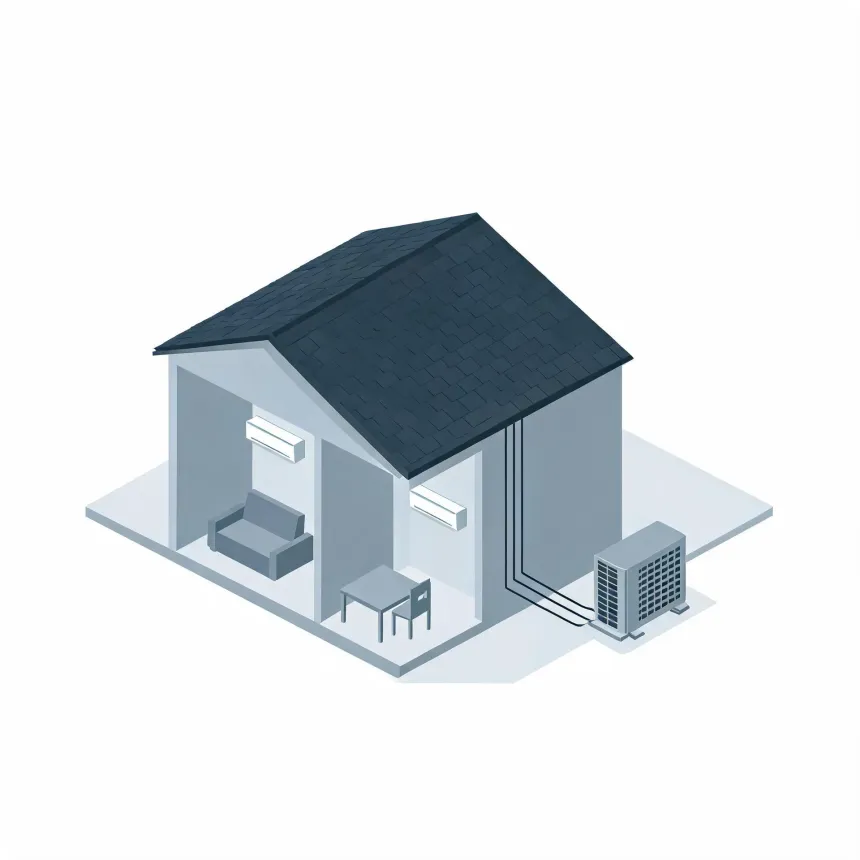
Install day starts outside and inside at the same time. One person sets the outdoor unit on its pad or brackets while another marks the spot for the indoor head, usually high on a wall, away from direct sun and clear of furniture underneath. A hole gets drilled through the wall for the line set, the drain line, and the power wire, all run together between the units. The lines get connected, then the system gets pulled down to a vacuum before any refrigerant moves. That step clears out air and moisture that would otherwise sit in the line and cause problems later. Once the vacuum holds, the charge gets checked against what the manufacturer specifies for that line length. The last steps are the ones you notice. Power goes on, the remote gets synced to the head, airflow gets checked at the vents, and the condensate drain gets tested to make sure water leaves the unit instead of pooling behind the wall.