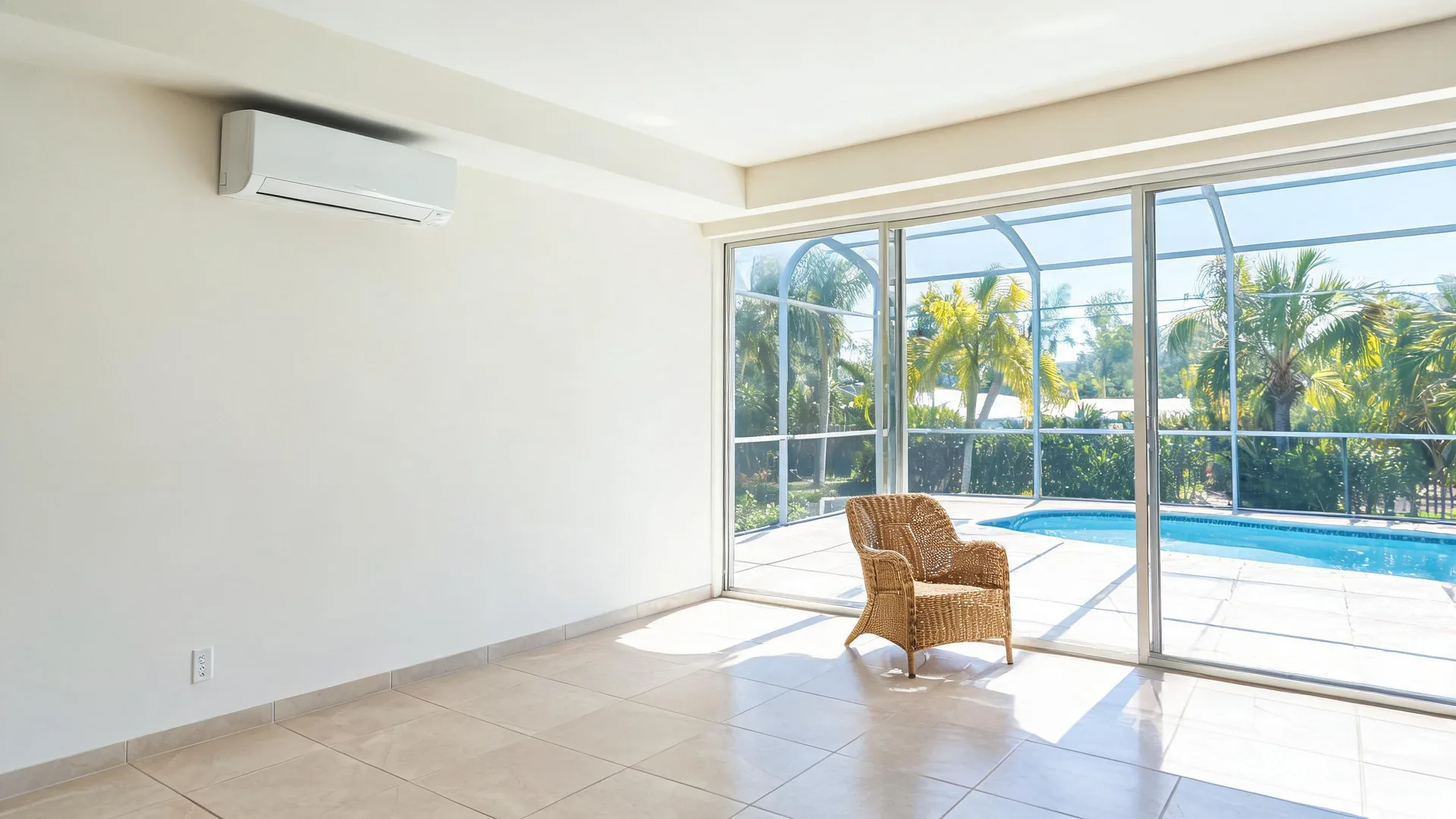
Most of Kokomo heats with gas
Utility gas heats 68.6% of homes in Howard County. Furnaces and ducted systems are what most contractors here install and service.
Takes about a minute. No obligation.
Utility gas heats 68.6% of homes in Howard County. Furnaces and ducted systems are what most contractors here install and service.
If your home heats with gas, a mini split would be the first electric heating and cooling equipment in the house. That changes how the installer sizes it and where the lines run, since there's no existing ductwork to tie into.
NOAA nClimDiv, 1991–2020 normals
A mini split runs on electricity, and Indiana homes paid 14.77 cents per kilowatt-hour in 2024.
The right size for this job keeps that cost in line, not a bigger unit than the space needs.




Summer here only runs three months, June through August, with afternoon highs averaging around 82. That's mild work for a cooling system. A mini split in Howard County won't run anywhere near as hard as one in a place with longer, hotter summers, so there's less wear going into it year after year. You don't need the highest-efficiency unit on the market to cover this load. What matters more is picking equipment that holds up and gets installed right, since problems here tend to come from age or a bad installation, not from the system struggling to keep up.
Howard County is zone 5A, where heating carries the bigger load over the year. A ductless mini split counts as a split-system heat pump under the federal standard, so one installed new has to hit at least 14.3 SEER2 for cooling and 7.5 HSPF2 for heating. There's no separate, lower bar for ductless. A federal tax credit is available toward a qualifying system, on top of meeting that minimum.
Find a contractorThree months of light work a year is not what wears a system out. Pick one built to hold up and get it installed right, and it should run a long time on a load this easy. Ask the installer about warranty coverage on the compressor and the labor both, since that tells you more about a unit's staying power than another point of SEER2 would.
A mini split handles heating and cooling on its own, so whatever furnace or ducted system is already in place doesn't have to come out. Most installs leave it there, either as backup or to cover rooms the mini split doesn't reach. The ductwork stays too, since it isn't feeding the new equipment.
Taking the old equipment out instead is a separate scope from hanging and wiring the new unit. Disconnecting a furnace or air handler means dealing with the gas line, the vent, or the electrical that was built around it. Ask upfront whether that work is included, since some installers quote the mini split alone and leave the rest to you.
Sizing a mini split starts with a room by room heat loss and heat gain calculation, not a guess based on square footage. The installer looks at wall and window area, insulation, ceiling height, and how many walls face outside, then works out how much heat that room loses in winter and gains in summer. Oversizing is the common mistake, and it causes real problems. A unit that's too big cools the room fast, shuts off, and starts again a few minutes later, which is called short cycling. That short cycling keeps the system from running long enough to pull humidity out of the air, so the room feels cold and damp instead of just comfortable. Undersized is its own failure too, since the unit runs constantly and never quite catches up on the hottest or coldest days. The right size runs in long, steady stretches, which is both how these systems remove humidity and how they hold up over the years.
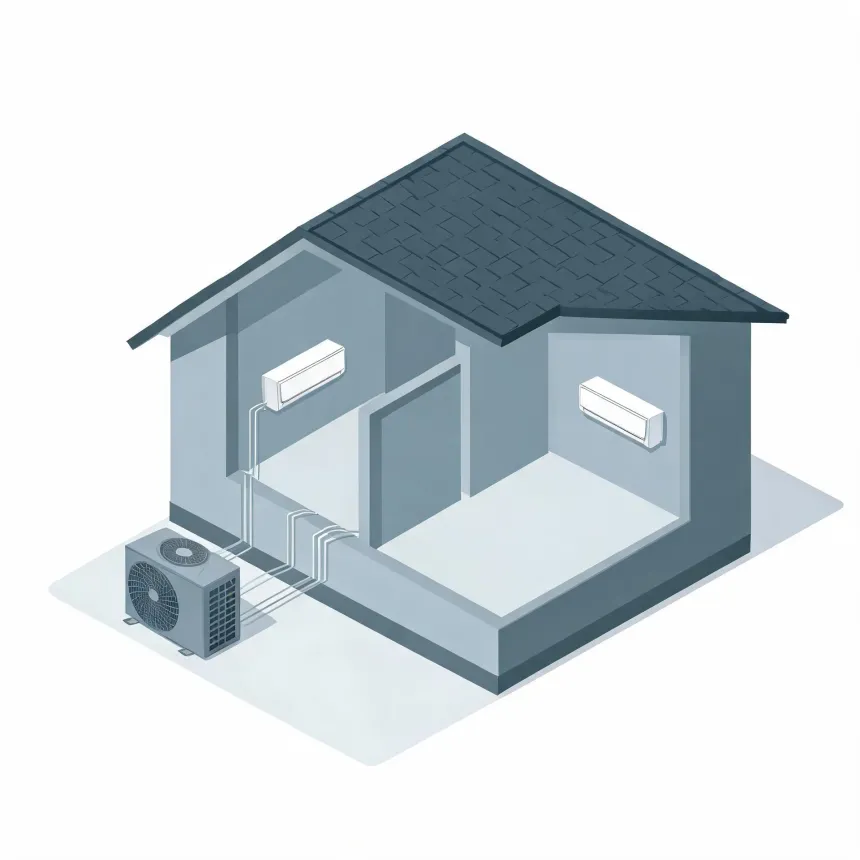
Install day starts with mounting brackets going up, one outdoor unit and one or more indoor heads. The work that takes the real time is the line set between them, the conduit carrying refrigerant line, a condensate drain, and electrical through a hole drilled in the wall. That line set usually runs down the wall to the outdoor unit under a cover. Once the lines are connected, the installer pulls a vacuum on the system to clear out air and moisture before refrigerant ever flows. Either one left behind can damage the compressor down the road. Next comes a pressure test to check every joint for leaks. Only after that passes does the system get charged with refrigerant and run through both heating and cooling to confirm each head is doing its job.