Gas and propane both outrun electric here
Utility gas heats 41.8% of homes in Noble County and propane heats another 26.2%. Electric heat sits well behind both at 25.4%.

Takes about a minute. No obligation.
Utility gas heats 41.8% of homes in Noble County and propane heats another 26.2%. Electric heat sits well behind both at 25.4%.
Most homes in Kendallville are set up to burn gas or propane for heat, not to run on electric resistance. A mini split works as its own system for the room it serves, so it doesn't need to replace the furnace to earn its keep.
NOAA nClimDiv, 1991–2020 normals
Cooling in Noble County runs June through August.
May is the month to get a mini split installed, before the first hot week puts it to work.



Noble County sits in climate zone 5A, a cool zone where winter heating matters more than summer cooling. A mini-split heat pump counts as a split system under the federal rule, the same as any central heat pump. It has to clear 14.3 SEER2 for cooling and 7.5 HSPF2 for heating. There's no separate, lower bar for ductless units. A unit sold anywhere in the country has to meet that line before it can go in a home here.
Half the homes in Noble County were built in 1976 or earlier, half in 1976 or later. A mini split doesn't need to know which kind of house it's going into. A standard size and efficiency rating fits either one, and nothing about the mix here calls for a bigger unit or a pricier model than the rated size needs.
Find a contractorCooling runs June through August here, with afternoon highs averaging 81°F. That's a short stretch for a compressor to carry. Heating carries the bigger load in this zone, and a mini split can split that work with whatever's already heating the house rather than carrying it alone. A unit that only runs hard three months a year doesn't need the top efficiency tier to hold up. Size it right for the room and age or a skipped filter will wear it out long before the cooling load does.
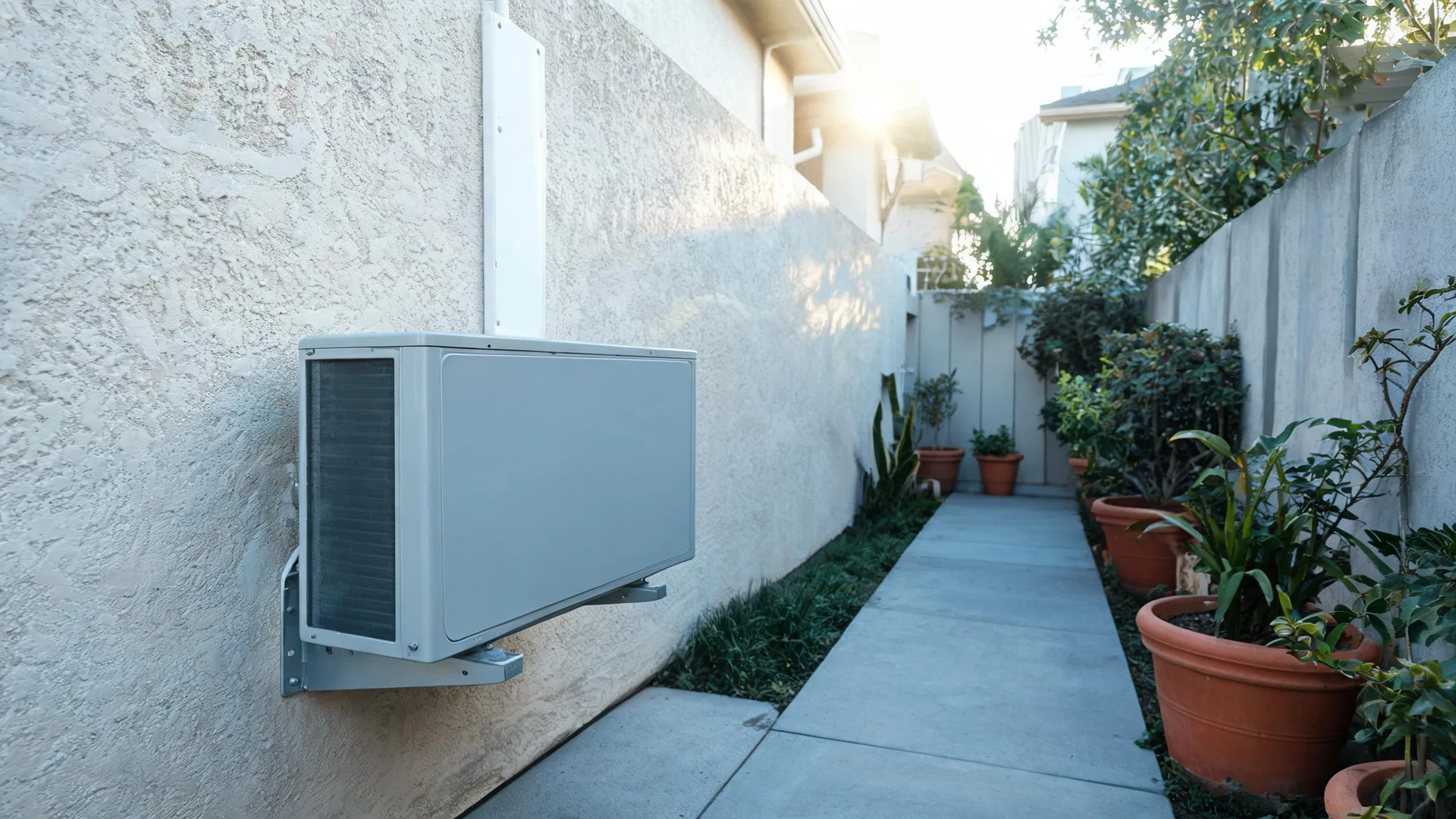
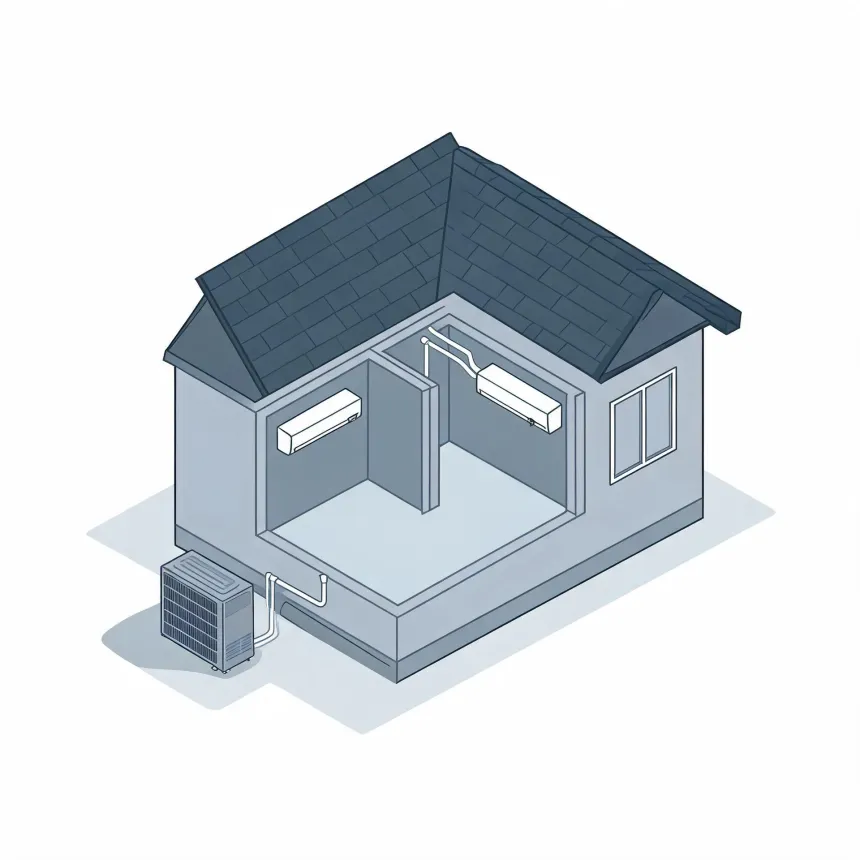
A mini split doesn't ask the old furnace or boiler to leave. The indoor head mounts on a wall, the line set runs through a small hole to the outdoor unit, and the existing system keeps doing what it already does. There's no duct to tie in and no old equipment to disconnect first.
Whatever heated the house before stays the backup and the main source for rooms the mini split doesn't reach. On the coldest nights, that system can carry the load a single mini split head isn't sized for. Keeping it in place also means there's still a way to heat the house if the mini split ever needs service.
What a mini split costs to put in comes down to the line set and the wall it has to cross. The indoor head and outdoor unit connect through refrigerant lines, and the farther apart they sit, the more line set and labor it takes to join them. A straight shot through an exterior wall is the simple case. A run up through a second floor, around corners, or across a room the system wasn't built for costs more in time and material. The electrical matters too. Some units run on the same circuit a room already has. Others need a dedicated circuit run back to the panel, and that's wiring work, not just mounting a head on a wall. Multi-zone systems, where one outdoor unit feeds several indoor heads, cost more than a single zone because the outdoor unit has to be sized for all of them and each head needs its own line set run. Where the outdoor unit can sit matters as well. It needs clearance on every side to pull air through the coil, and a spot that's hard to reach or needs a stand or bracket adds to the job.
Install day starts outside. The outdoor unit sits on a pad or wall bracket, set level, with clear space around it so the coil can pull air through. Inside, the installer picks the spot for the indoor head, usually high on the wall and away from anything that would block the airflow, then drills a hole through to the outside for the line set, the drain line, and the electrical. The refrigerant lines get connected at both ends and the system is pressure tested before anything runs, so a bad joint shows up right away instead of later. Once it holds pressure, the lines get evacuated to pull out moisture and air, then the system takes its refrigerant charge. Only then does the head go up on its mounting plate and the system get powered on and checked for temperature drop at the vent.