




Three lit brick homes on a tree-lined residential street photographed at dusk.

Mini Split Installation in Jasper, IN

Tell us about the job

Takes about a minute. No obligation.

New system or replacementMini-splitDubois County, IN
Step 1 of 2

What ZIP code is the job in?

Gas heats close to half the homes in Dubois County, with electric heat running most of the rest. A mini split adds electric heating and cooling to a house that may never have had central air, which is why so many people here are looking at one. It runs on its own circuit and doesn't touch your gas furnace or ductwork at all. That makes it a straightforward add, not a swap, whether you're cooling a room that never had it or covering a space the main system can't reach.

7 months
October through April, your system heats
5 months
May through September, it cools
25°F
the average winter night it heats against
86°F
the average summer afternoon it cools against
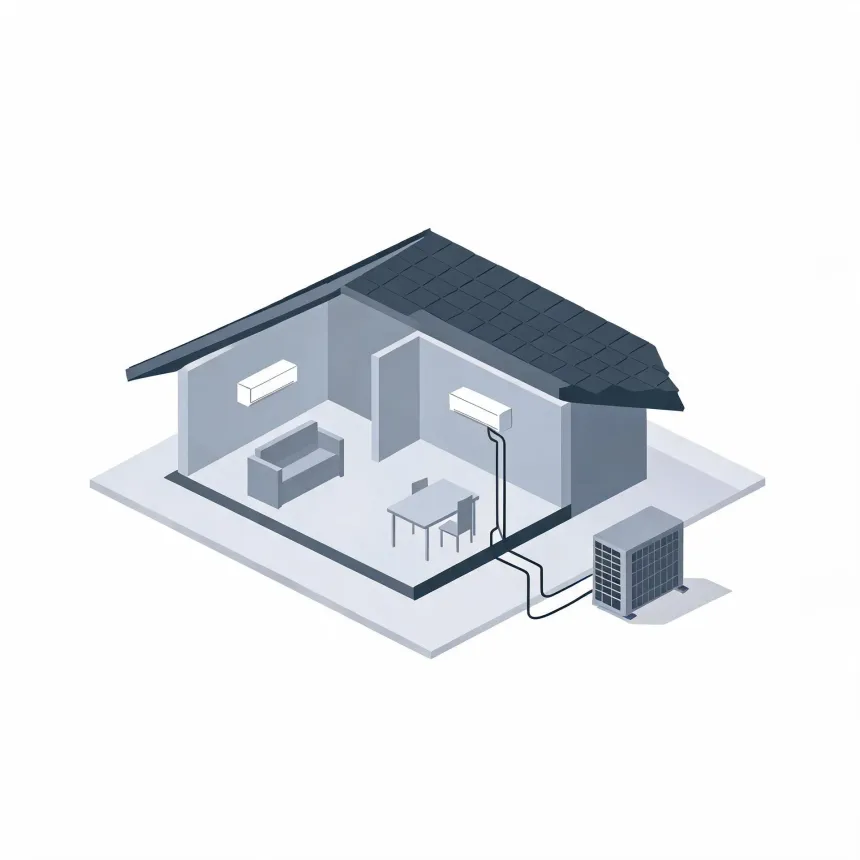
Isometric illustration of a cutaway house interior with sofa, table and chair, two wall-mounted indoor air conditioning units connected by lines to an outdoor condenser unit beside the building.
Your system heats October through April and cools May through September.

NOAA nClimDiv, 1991–2020 normals

Jasper summers run about five months, May through September, with afternoon highs averaging 86°F.

A standard mini split is built for heat like that, so there's no reason to size up or pay for more than you need.

A normal Jasper summer, built for a normal mini split

Power costs 14.77 cents a kWh statewide
Cooling runs May through September
Summer afternoons average 86°F

Dubois County sits in climate zone 4A, which asks real work from both sides of a mini split, the heating and the cooling. Any mini split installed here has to meet that standard. Since January 2023, the federal minimum for a split-system heat pump is 14.3 SEER2 for cooling and 7.5 HSPF2 for heating, and the rule makes no exception for ductless systems. That's the floor, not a special ductless tier, so a unit rated below it can't be sold as new. Pair that with the federal tax credit available on qualifying heat pumps, and a system sized right for this climate is also the one that qualifies.

Cooling starts in May. Get it installed in April.

Dubois County homes start running cooling in May and keep it going through September. Putting the mini split in during April means it's tested and ready before the first hot day, not the first hot week.

Find a contractor
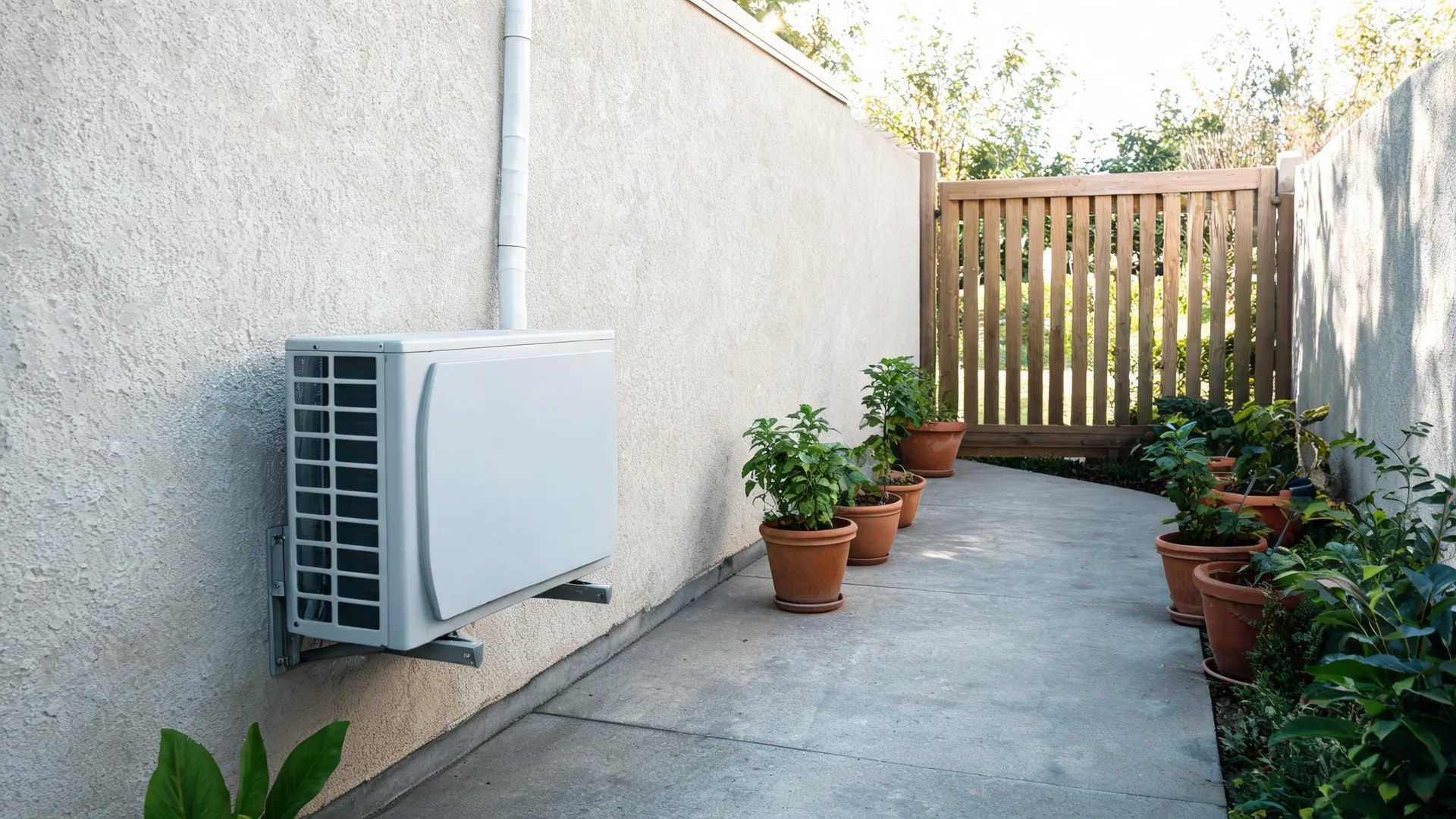
A white outdoor air conditioner condenser unit mounted on metal wall brackets against gray horizontal siding, with a blue sky and white clouds behind it.

The install is the job, not just the equipment

What you pay for an installation comes down to how much work the installer has to do before the unit ever turns on. The indoor and outdoor units themselves are only part of it. Running the line set between them, the refrigerant lines and the wiring, costs more the farther apart they sit, and running it through a brick or block wall takes longer than through wood siding. A condensate drain has to go somewhere, so if there's no easy path to the outside, that's more work too. Multi-zone systems, where one outdoor unit feeds several indoor heads, cost more than a single zone because there's more line set, more mounting, more wiring, and more time spent setting the refrigerant charge correctly for each head. That charge has to be weighed in precisely for the line length run, not just filled to a gauge reading, and getting it wrong costs efficiency and comfort for as long as the system runs. None of this shows up in the sticker price of the equipment. It shows up in the labor.

SEER2 and HSPF2 measure different jobs

SEER2 rates how well a mini split cools over a season, and HSPF2 rates how well it heats. The same outdoor unit and compressor do both jobs, and a system can be strong on one side and only average on the other. Checking only one number tells you how it performs in one season, not the other.
The rating describes the system, not the day

A mini split holds its rated efficiency easiest on mild days, when the compressor barely has to work. On the hottest afternoons or the coldest mornings, the compressor works harder and the real efficiency drops below the number on the label. The rating is a seasonal average, not what the system delivers on its hardest day.

Sizing a mini split comes down to matching the heads and the outdoor unit to the heat gain and heat loss of the space they're covering, not the square footage alone. A room with a lot of west facing glass or a high ceiling behaves differently than one the same size that has neither. An installer works this out room by room, factoring in windows, insulation, and how the space connects to the rest of the house, then picks equipment sized to that load. Oversizing feels like it should help but it doesn't. A unit that's too big cools the room fast and shuts off before it's had time to pull moisture out of the air, so the room feels cold and damp instead of comfortable. Undersized runs flat out and still can't keep up on the hardest days. The right size runs longer, steadier cycles, which is what actually keeps a room even.

Install day starts with the walk-through the installer already planned on paper, now checked against the actual wall and the actual room. The indoor head gets mounted high on the wall or ceiling, with a small hole drilled through to the outside for the line set and the condensate drain. That line set runs the refrigerant lines and the wiring together, usually wrapped and sealed along the way so it isn't just hanging exposed. Outside, the compressor unit sits on a pad or mounting bracket, far enough from the wall to pull air through properly. Once everything is connected, the lines get pressure tested for leaks before any refrigerant goes in, then the system gets evacuated to pull out moisture and air that don't belong in a sealed refrigerant loop. Only after that does the installer weigh in the refrigerant charge for the actual length of line run. The last step is running the system through both a cooling cycle and a heating cycle to check that each head responds the way it should, before anyone calls the job done.