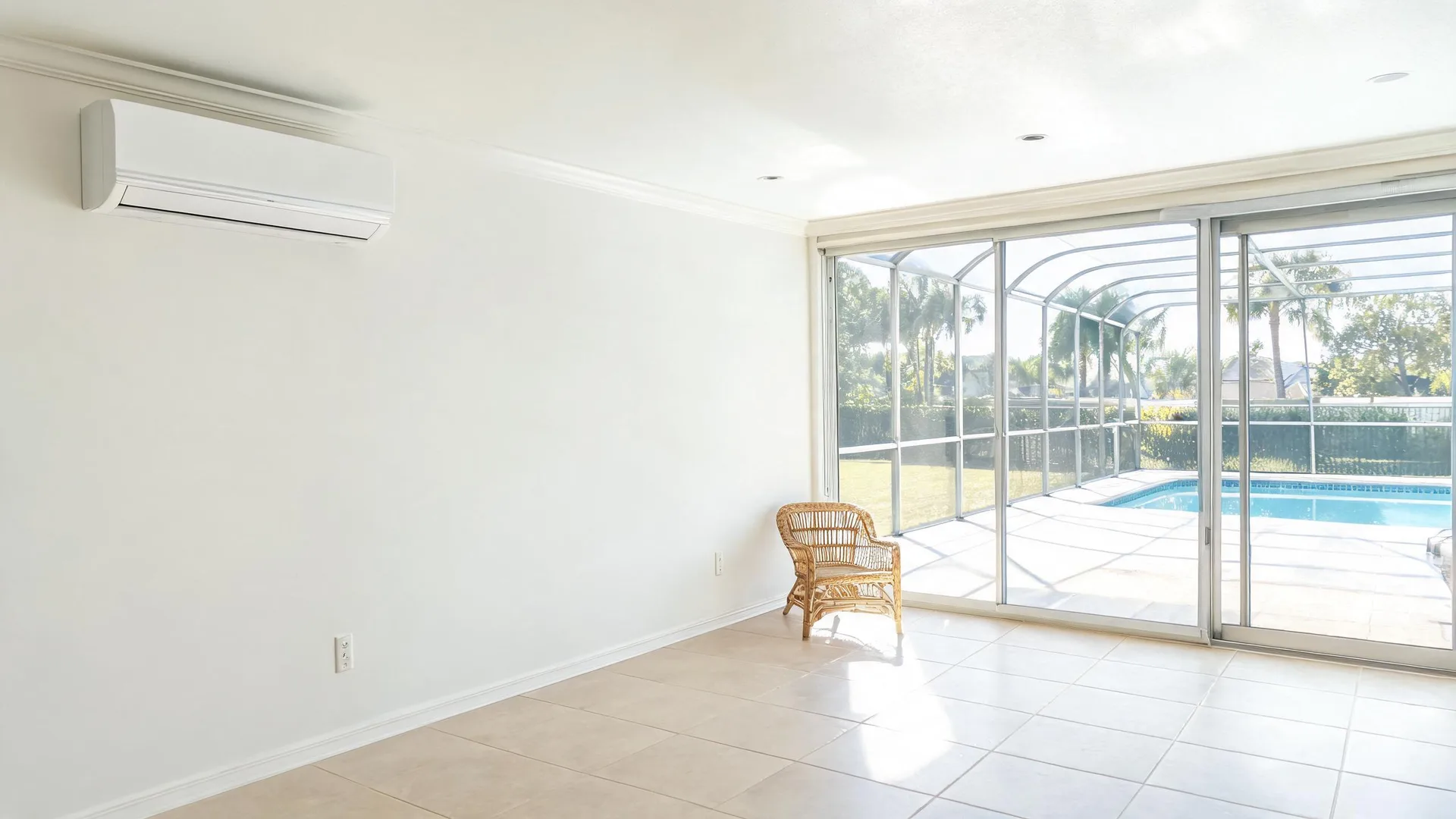
Gas heat is the default here
Utility gas heats 46.5% of homes in Huntington County, more than electricity or propane. A lot of these houses already have a furnace doing the heavy lifting in winter.
Takes about a minute. No obligation.
Utility gas heats 46.5% of homes in Huntington County, more than electricity or propane. A lot of these houses already have a furnace doing the heavy lifting in winter.
Where a furnace is already in place, a mini split is usually brought in for cooling, or to heat and cool a room the ducted system does not reach well. Sizing it right means looking at that specific space, not the whole house.
NOAA nClimDiv, 1991–2020 normals
Half the homes in Huntington County went up by 1966.
A mini split going into a house that old has to work with the walls and room layout already there, not a blank slate.




Huntington County falls in climate zone 5A, a cool zone where heating carries more of the load than cooling. Any ductless mini-split heat pump installed here counts as a split system under the federal standard, so units built from 2023 onward have to meet 14.3 SEER2 for cooling and 7.5 HSPF2 for heating. That floor holds whether the unit is cooling a single room or helping carry the heat load where the furnace does not reach well. A federal tax credit is available for qualifying heat pump installations, separate from the efficiency minimum itself. Meeting the standard narrows which units qualify, but it does not pick the right one for the space.
Huntington County sees its share of damaging wind and the occasional hail or winter storm, same as the rest of the region, and none of that calls for sizing a mini split bigger than the room needs. A standard, efficient unit handles the job here. What matters more is picking the right size for the specific space it's heating or cooling.
Find a contractorCooling runs three months here, June through August, with afternoon highs averaging 82. That's a short, mild stretch for the outdoor unit to work through each year. The rest of the time it sits idle, unless it's also picking up a heating job the furnace doesn't reach well. A mini split sized for the room it serves won't be straining through those summer months, and the time-lapse here is the easy part of its year.
SEER2 and HSPF2 tell you how much electricity the unit uses to do its job, nothing about how big a space it can handle. A high-efficiency unit sized wrong for the room still runs poorly, cycling on and off or never quite catching up. The rating and the sizing are separate decisions, and both have to be right.
SEER2 and HSPF2 come from testing under set conditions, not from the room the unit ends up in. It gets closer to that number when the lines are installed right and the room doesn't fight it with heat gain or loss it wasn't sized to cover.
If this mini split is going into a room the furnace already fights to reach, nothing about the old setup has to go anywhere. The furnace keeps the rest of the house warm the way it always has. If it's replacing an older window unit or a mini split that's worn out, the indoor head and outdoor unit come down together, and the line set and wiring running between them come out too, not just left coiled behind a wall. A refrigerant line that's been cut has to be sealed off properly, since the refrigerant in it can't just be vented into the air. Whatever gets pulled out gets disposed of the right way, since the refrigerant and the compressor oil inside it aren't the kind of thing that belongs in a regular trash pickup.
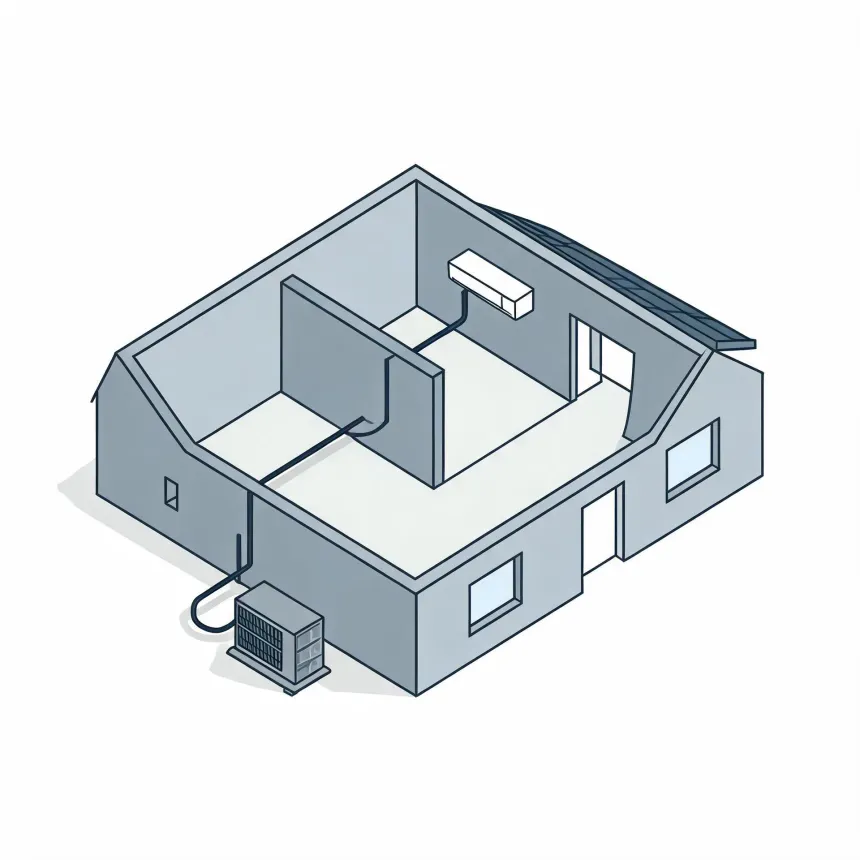
Install day starts with where the lines run, not the unit itself. The indoor head needs a clear shot through the wall to the outdoor unit, and the installer figures that path before anything gets mounted. The indoor head gets hung on a bracket, the line set and a drain line run through a small hole in the wall, and the outdoor unit gets set on a pad or bracket outside. Once the lines are connected, the system gets pulled down to a vacuum to clear out any air and moisture before the refrigerant is released into the lines. That vacuum step matters more than people expect, since trapped air or moisture in the lines can wreck the compressor down the road. After that it's a matter of wiring the unit, running it through a test cycle, and checking that it's actually cooling and heating the way it should before anyone calls it done.