A two-story black house with a covered porch, framed by large deciduous trees and trimmed hedges, photographed from a low angle across a lawn with blurred grass in the foreground.

Mini Split Installation in Greenwood, IN

Tell us about the job

Takes about a minute. No obligation.

New system or replacementMini-splitJohnson County, IN
Step 1 of 2

What ZIP code is the job in?

Gas heats most homes here

Utility gas heats 64% of homes in Johnson County, the rest mostly electric furnaces or heat pumps. A mini split does not replace that system. It takes over heating and cooling in the rooms it serves, while the furnace keeps running for the rest of the house.

That changes what the installer needs to know

If a gas furnace already heats your home, the question is which rooms the mini split covers and whether you want it to carry any of that heating load in mild weather. That's a different setup than a home with no ducted heat at all, so say which one yours is.

8 months
October through May, your system heats
4 months
June through September, it cools
23°F
the average winter night it heats against
83°F
the average summer afternoon it cools against
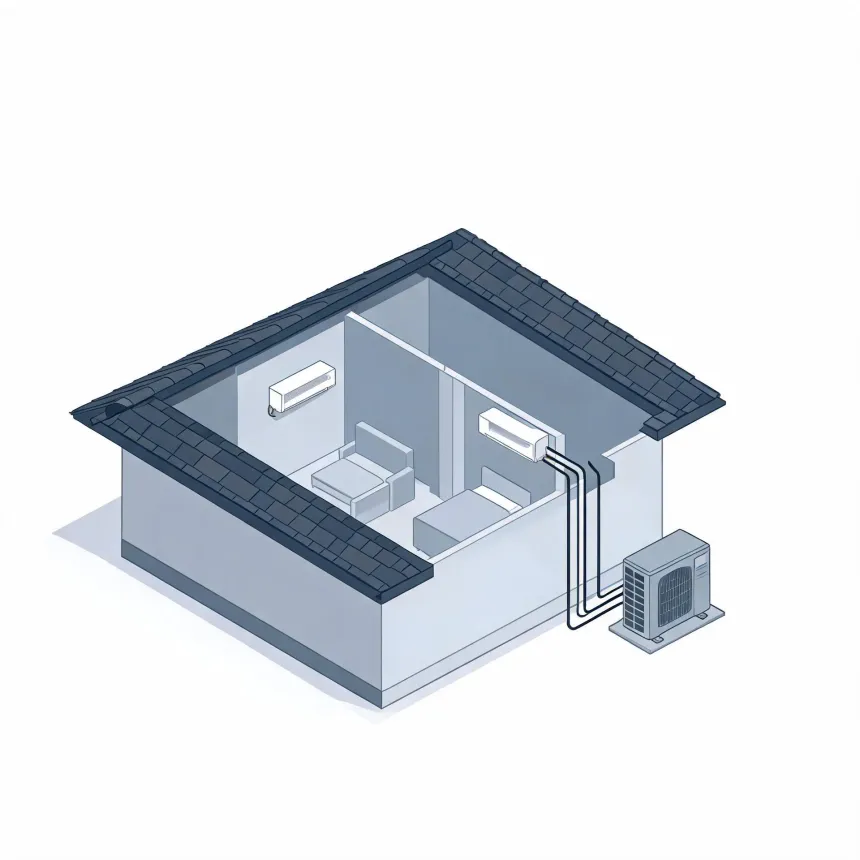
Isometric illustration of a cutaway house with tiled roof showing two wall-mounted indoor mini-split units connected by line sets to an outdoor condenser beside the building.
Your system heats October through May and cools June through September.

NOAA nClimDiv, 1991–2020 normals

Cooling runs June through September here.

Get the mini split in during May, so it's running before the first hot stretch hits.

A mini split sized for an average Johnson County summer does the job

Cooling runs June through September
Summer afternoons average 83°F
26 hail events from 2015 to 2024
Greenwood summers don't need an oversized unitIndiana electricity ran 14.77 cents per kilowatt-hour in 2024, and a standard size mini split is built to run on that.

Johnson County sits in climate zone 4A, which asks real work of both heating and cooling. That's what sets the floor for what a new system here can be. A mini split counts as a split-system heat pump under the federal standard, same as a central heat pump, and any unit built from 2023 on has to hit 14.3 SEER2 for cooling and match it on the heating side. There's no separate ductless category that lets a unit come in lower. That rules out the oldest, cheapest equipment still floating around in catalogs. A mini split installed here now also qualifies for the federal energy efficiency tax credit, worth checking against your own tax situation before you decide on a system.

Replace it before the season

Replace it before the season starts, so it happens on your schedule, not in a hurry.

Find a contractor
A man in a dark long-sleeve shirt and tan work pants walks up concrete steps toward an orange front door, carrying a waxed canvas tool bag in his right hand, with a potted shrub beside the gray-sided house.
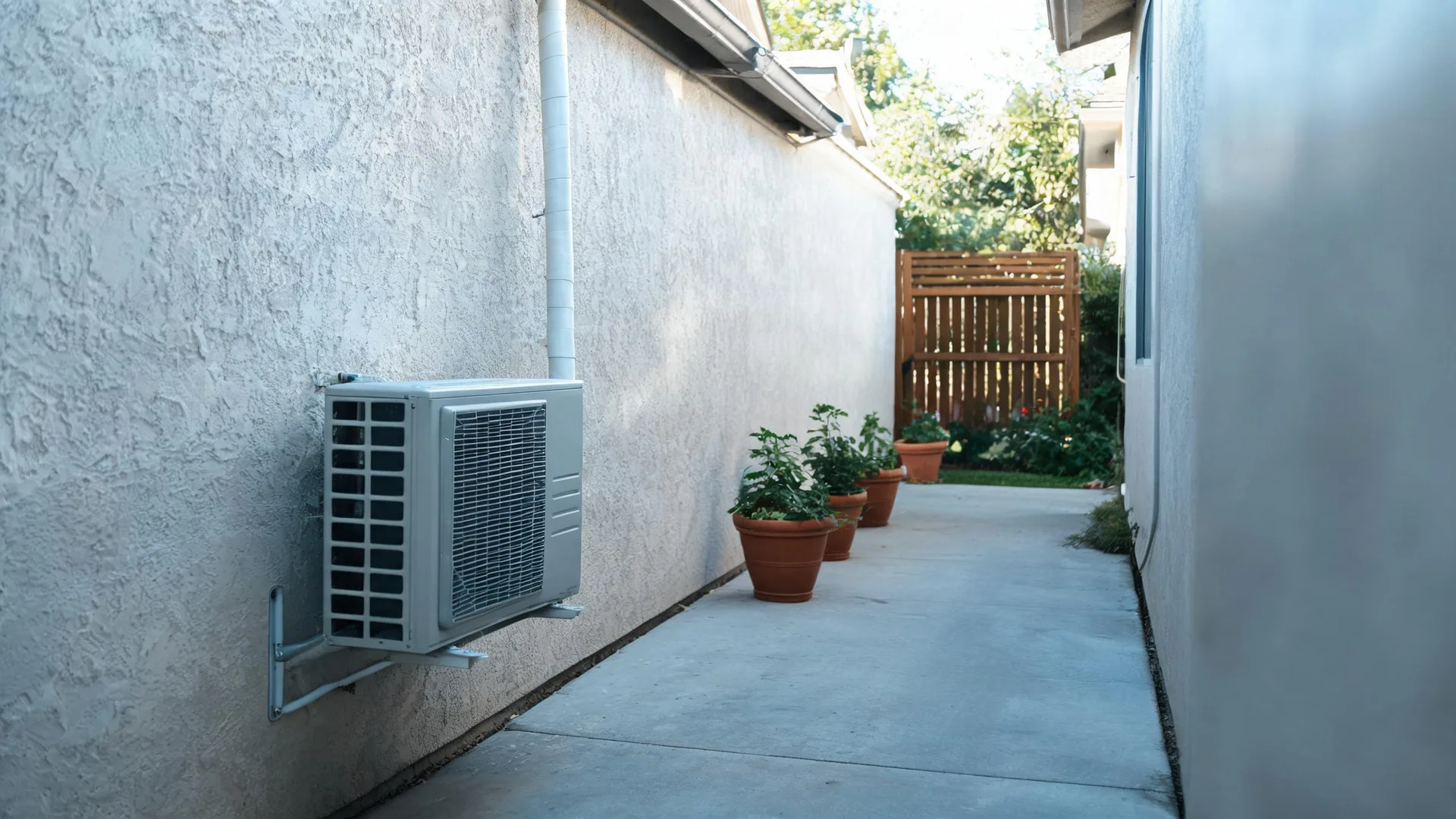
A white mini-split air conditioner outdoor condenser unit mounted on metal brackets against a beige stucco exterior wall, with a blue sky and scattered clouds in the background.

The old unit doesn't have to go anywhere

Whatever is heating and cooling those rooms now doesn't need to stay in service once the mini split is in. A window unit can come out. An electric baseboard or wall heater can get shut off at the breaker and left alone or pulled out. If the mini split is taking over for a system that's getting old anyway, that old equipment can keep serving as backup for a while, but it's no longer doing the daily work, so it wears a lot slower from here on. Nothing about adding a mini split forces a decision on the old unit right away. That decision can wait until the old one actually fails or until you're ready to deal with it.

The number of zones sets the cost

A single indoor head tied to one outdoor unit costs less than a setup running several heads off one condenser. Each added zone needs its own line set, its own mounting job, and its own share of the outdoor unit's capacity. More rooms covered means more equipment, not just a bigger price tag on the same job.

Where the line set has to travel decides the labor

The refrigerant line between the outdoor unit and each indoor head has to pass through a wall or up through a chase, and the shorter and simpler that path, the less time it takes to run. A head going up on an exterior wall near the outdoor unit is a quick job. One going on the far side of the house, through framing or around obstructions, means more line set, more mounting hardware, and more hours on site.

The SEER2 number on the label tells you how much cooling the unit gets out of the power it uses, and the HSPF2 number does the same for heat. A higher number means more comfort for less electricity, but that rating comes from a lab test run at one steady condition. Your actual bill depends on how hard the unit has to work in the rooms it's covering, so the same rated system can cost different amounts to run in different houses. It's worth asking what rating a quoted system carries and how that compares to the federal minimum, since installers can offer equipment well above that floor. A unit with a higher rating usually costs more upfront, and that difference pays back slower in a room that only needs light cooling than in one that runs hard all season.

Installation day starts with the outdoor unit. It gets mounted on a pad or brackets outside, far enough from the wall to pull air through the coil. Inside, the installer runs the line set from each wall-mounted head back to that outdoor unit, through a small hole drilled right through the wall, then connects the refrigerant lines, the condensate drain and the electrical wiring. Once everything's connected, the line gets pressure tested to check for leaks before any refrigerant goes in. Then it's pulled down to a vacuum to clear out moisture and air, because either one left in the line will hurt how the system runs. Only after that does the system get charged and powered on, so the crew can check airflow at each head and confirm the thermostat or remote is talking to the unit correctly.