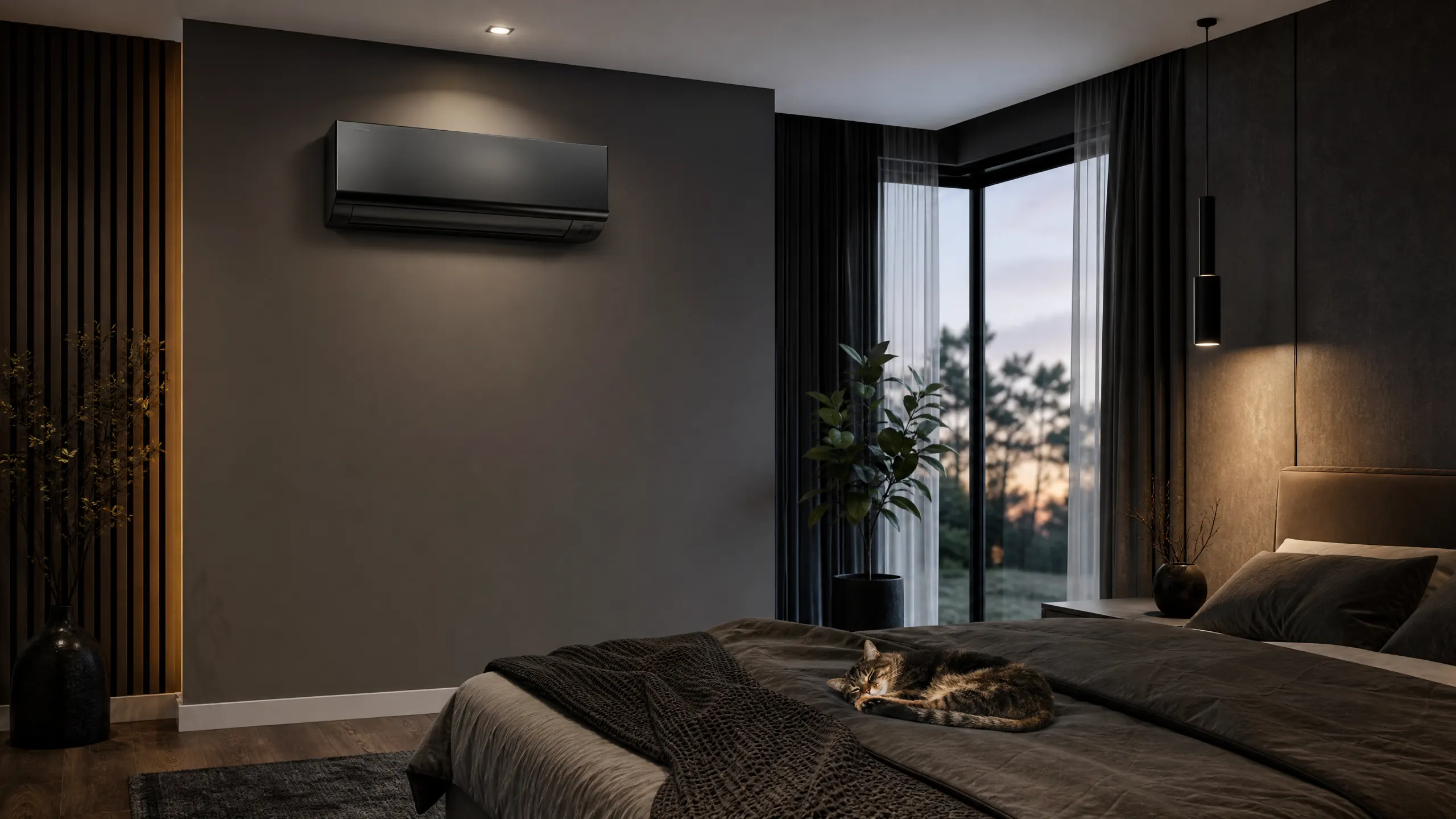





A tabby cat rests on a made bed in a dark modern bedroom equipped with a wall-mounted split air conditioner.

Mini Split Installation in Elkhart, IN

Tell us about the job

Takes about a minute. No obligation.

New system or replacementMini-splitElkhart County, IN
Step 1 of 2

What ZIP code is the job in?

Most homes in Elkhart County heat with utility gas, about 80.6 percent. Electricity accounts for 13.8 percent, and LP gas makes up another 3.4 percent. If gas heats your home now, a mini split would work alongside it rather than replace it, handling cooling or taking the load off the furnace in shoulder months. Homes already set up for electric heat are the ones where a mini split can carry more of the job on its own. Either way, what you have now is the starting point for sizing the new system correctly.

8 months
October through May, your system heats
3 months
June through August, it cools
20°F
the average winter night it heats against
82°F
the average summer afternoon it cools against
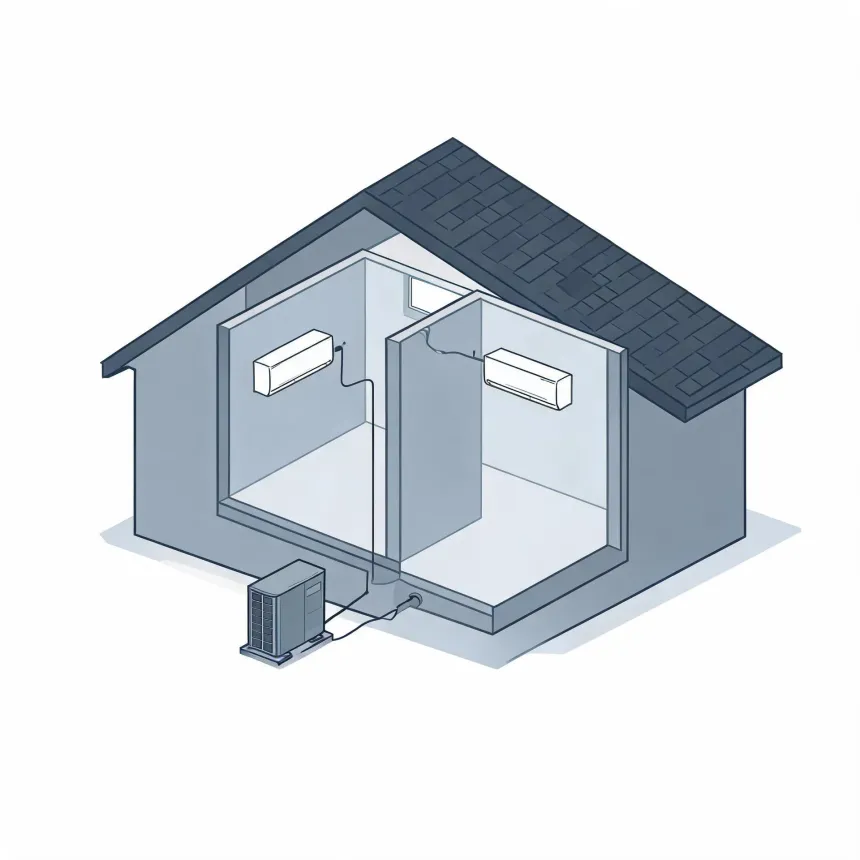
Isometric line illustration of a cutaway house with two rooms, each with a wall-mounted indoor air conditioning unit connected by lines to an outdoor condenser unit on the ground outside.
Your system heats October through May and cools June through August.

NOAA nClimDiv, 1991–2020 normals

Cooling in Elkhart County starts in June.

May is when a mini split should go in, before the first hot day finds a gap in the schedule.

A standard mini split handles this climate without upsizing

Half the homes here were built by 1977
Cooling runs June through August
Summer afternoons average 82°F
Electricity here runs 14.77 cents a kilowatt-hourThat's below the national average, so a mini split earns its keep on comfort and fit more than on the power bill.

Summers here run about three months, June through August, with afternoon highs averaging 82°F. That's a moderate cooling load, nothing a standard-size mini split can't handle without upsizing. Elkhart County is zone 5A, a cool climate where heating does more work over the year than cooling does. A correctly sized unit matched to your square footage will keep up fine in July and August. There's no local reason to pay for extra capacity you won't use most of the year.

Replace it before the season

Replace it before the season starts, so it happens on your schedule, not in a hurry.

Find a contractor
A white outdoor air conditioner condenser unit mounted on metal wall brackets against gray horizontal siding, with a blue sky and white clouds behind it.

The old unit has to go somewhere

Whoever installs the mini split also has to deal with what's already there. If you're replacing a window unit, that unit comes out and the window opening gets sealed up or trimmed to fit. If you're replacing a ducted system or an older mini split, the old refrigerant lines get disconnected first. A system holding refrigerant has to be recovered into a tank, not released into the air, and that recovery is part of the teardown, not an extra step tacked on. Old line sets usually come out rather than get reused, since the new system is sized differently and runs at different pressures. If the old unit shared an electrical disconnect with anything else, that gets sorted before the new line gets run, so the new unit isn't tied into wiring meant for something else. None of this is the hard part of the job. It just has to happen before the new equipment goes up, not after.

The number of rooms sets the price

A single room needs one indoor head and one outdoor compressor. Add a second or third room and each one needs its own head, its own line set, and its own spot on the wall or ceiling. The outdoor unit has to be sized for all of them together, not each one separately. More zones means more parts and more hours running line sets through walls, so cost climbs with each room added, not with the square footage of the house as a whole.
Where the lines have to run changes the labor

The refrigerant lines between the indoor head and the outdoor compressor need a path, and that path matters more than the distance. A line that runs straight out through an exterior wall is a short job. A line that has to go up through a chase, across an attic, or down multiple floors to reach a sensible spot for the outdoor unit takes longer and uses more material. The condition of the wall and what's already inside it decides how much drilling and patching the job needs before any equipment goes up.

The SEER2 number on a mini split's label tells you how much cooling it delivers for the electricity it uses. A higher number means more cooling per kilowatt-hour, not a stronger or bigger unit, and it has nothing to do with how big a space it can handle. Systems built to cool the same room can carry different SEER2 ratings, and the higher one costs less to run over a season. If you're counting on the unit for heat too, check the HSPF2 rating alongside it, since that one speaks to cold-weather performance instead of summer performance. Neither rating changes what size unit your space needs. Sizing comes first. The rating just tells you what it costs to run once it's sized right.

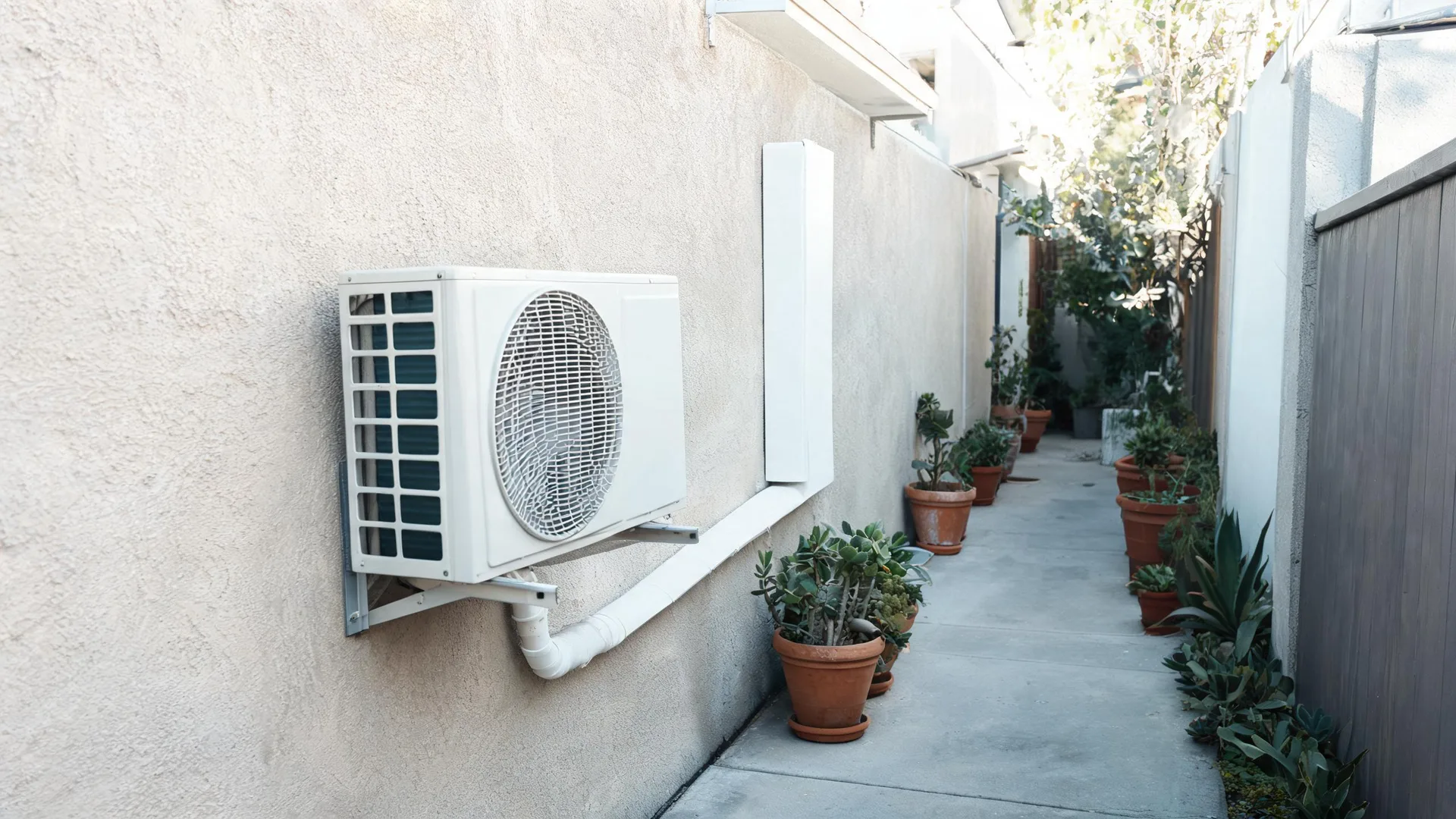
Installation day starts with the outdoor compressor going on its mount, either a pad at ground level or brackets bolted to the exterior wall. Indoor heads go up next, each one mounted to a wall bracket with a small hole drilled through to the outside for the line set. The lines get connected at both ends, then the whole system gets pulled down to a vacuum to clear out any moisture or air before refrigerant goes in. That vacuum test matters more than anything else that day. A system charged without it can run fine for a while and still fail early. Once the lines check out, the unit gets charged, the electrical hookup gets tied in, and the tech runs the system through both cooling and heating to confirm it responds the way it should before calling the job done.