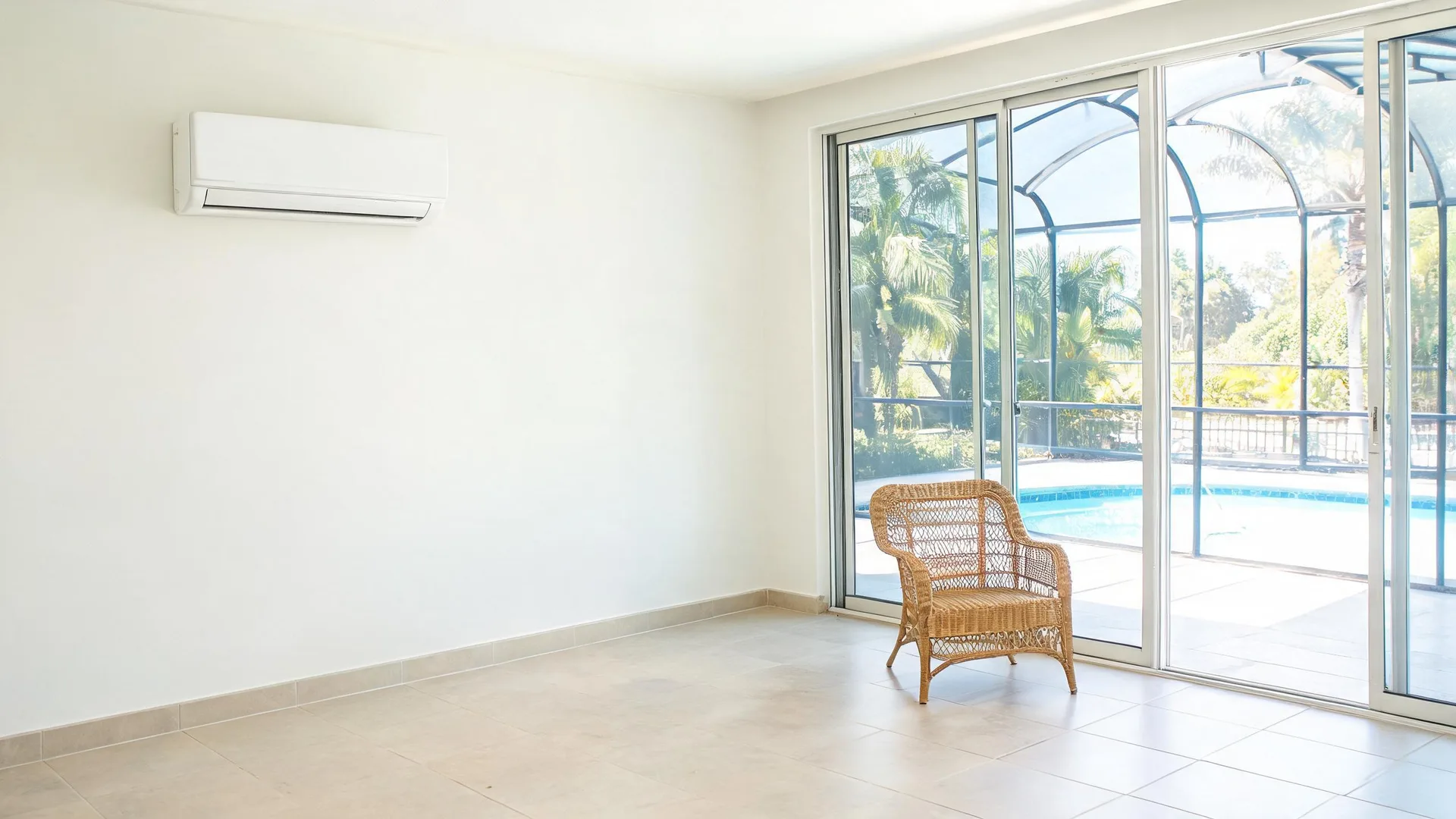
Gas heats most homes here
Utility gas is the main heat source in Montgomery County, close to half of all occupied homes. Another quarter run on bottled or LP gas. A mini split isn't replacing that setup, it's going in alongside it.
Takes about a minute. No obligation.
Utility gas is the main heat source in Montgomery County, close to half of all occupied homes. Another quarter run on bottled or LP gas. A mini split isn't replacing that setup, it's going in alongside it.
In a home with a gas furnace, a mini split usually takes on a room the ductwork doesn't reach well, or handles cooling and shoulder season heat without running the furnace for small loads. It works as an addition, not a swap.
NOAA nClimDiv, 1991–2020 normals
A mini split here doesn't need to be oversized to earn its keep.
Standard sizing covers the room it's meant for, at Indiana's 14.77 cents per kilowatt-hour rate.




Half the homes in Montgomery County were built in 1967 or earlier. A mini split going into a house that old has to work with what's already there, not what a builder would choose today. The walls weren't necessarily built with this kind of system in mind, and the room it's heating or cooling may not match what a newer home would offer. That's not a problem, it just means sizing the unit to the actual room matters more than going by square footage alone. Whoever installs it should size it for the space you have, not the space a newer house down the road might have.
A new system here has to meet this region's minimum efficiency, which limits what can go in.
Find a contractorAn old mini split line set or an old unit tells you the house around it was wired and built before this kind of system was common. A new install starts clean, but the mounting surface it goes on, siding, block, old masonry, still dates to whenever the house went up. Whoever runs the line set and the conduit has to route it through walls built in 1967 or earlier, not around obstacles a newer frame wouldn't have. That's a job for the installer to look at in person, not something to size up from a listing photo.
A contractor sizes and prices the compressor and the head together, not separately. A bigger house doesn't always mean a bigger unit, since a mini split is usually covering one room or one zone. What drives the sizing is how much heat that room gains in summer and loses in winter, the windows it has, and how it's insulated. Guessing high doesn't help. An oversized unit cycles on and off instead of running steady, and it won't pull moisture out of the air as well.
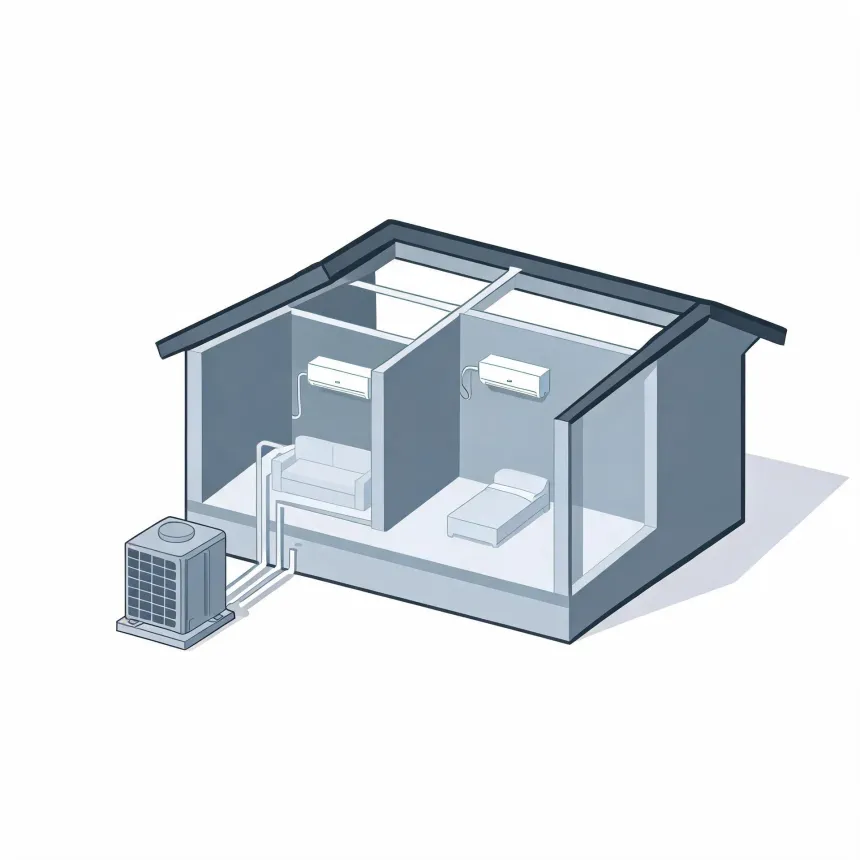
The refrigerant line, the drain line and the electrical whip all have to get from the outdoor unit to the indoor head, through whatever wall, soffit or chase is in the way. A straight shot through one wall is a short job. A run that has to go up through an attic, across a long stretch of siding, or through masonry takes more time and more material, and that labor shows up in the price before the equipment ever does.
Taking out the old system depends on what's there now. A window unit or a through-wall sleeve comes out in pieces, no refrigerant recovery needed beyond what's already in that small unit. A central air system or an old heat pump is different. Whoever removes it has to recover the refrigerant into a tank before any line gets cut, that's a legal requirement, not a courtesy. The old line set usually isn't reused. Mini split line sets are sized and charged for the specific equipment going in, so a contractor runs new copper rather than trying to adapt what's already in the wall. If the old system heated the whole house and the mini split is only taking on part of that load, the rest of the ductwork and the old equipment pad or disconnect box can get left in place or pulled out, depending on whether anything else still depends on it.
Install day starts with the outdoor unit going on its mounting pad or wall bracket, leveled so the compressor drains and cycles the way it's built to. Inside, the mounting plate goes up first, then the indoor head hangs on it once the wall is cored for the line set. That hole gets drilled at a slight slope to the outside so condensation runs out instead of back into the wall. The refrigerant lines, the drain line and the electrical whip all route through that same opening, then get connected at both ends. Once everything's joined, the line gets pressure tested with nitrogen to check for leaks before any refrigerant moves through it. Only after it holds pressure does the system get charged, powered on, and run through both heating and cooling to confirm the head is actually moving air where it's supposed to.