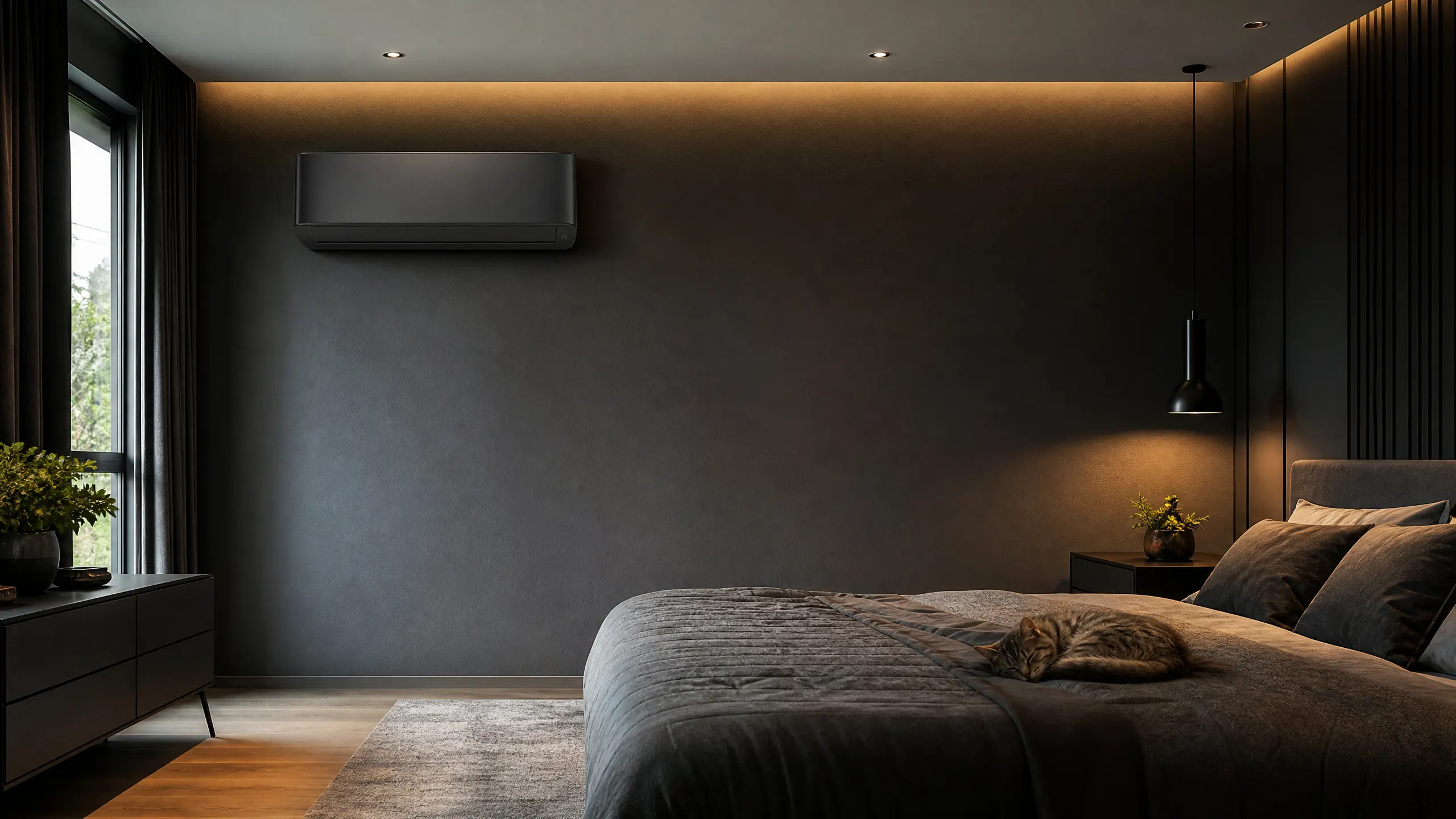





A dark, minimalist bedroom featuring a sleeping cat on a grey-quilted bed, a wall-mounted air-conditioning unit, warm cove ceiling lighting, and a pendant lamp illuminating the bedside table.

Mini Split Installation in Corydon, IN

Tell us about the job

Takes about a minute. No obligation.

New system or replacementMini-splitHarrison County, IN
Step 1 of 2

What ZIP code is the job in?

More than half the homes in Harrison County heat with electricity, and another one in five run on bottled or LP gas. Few have utility gas to work with. That mix is part of why mini splits fit in so well here. A mini split runs on electricity, so it slots into a home already wired for electric heat without any new gas line to plan around. For a house currently heating with electric baseboard or an old electric furnace, swapping to a mini split means the same fuel but far less of it used to get the same heat. It also adds cooling, which a straight electric furnace never gave you.

7 months
October through April, your system heats
5 months
May through September, it cools
26°F
the average winter night it heats against
86°F
the average summer afternoon it cools against
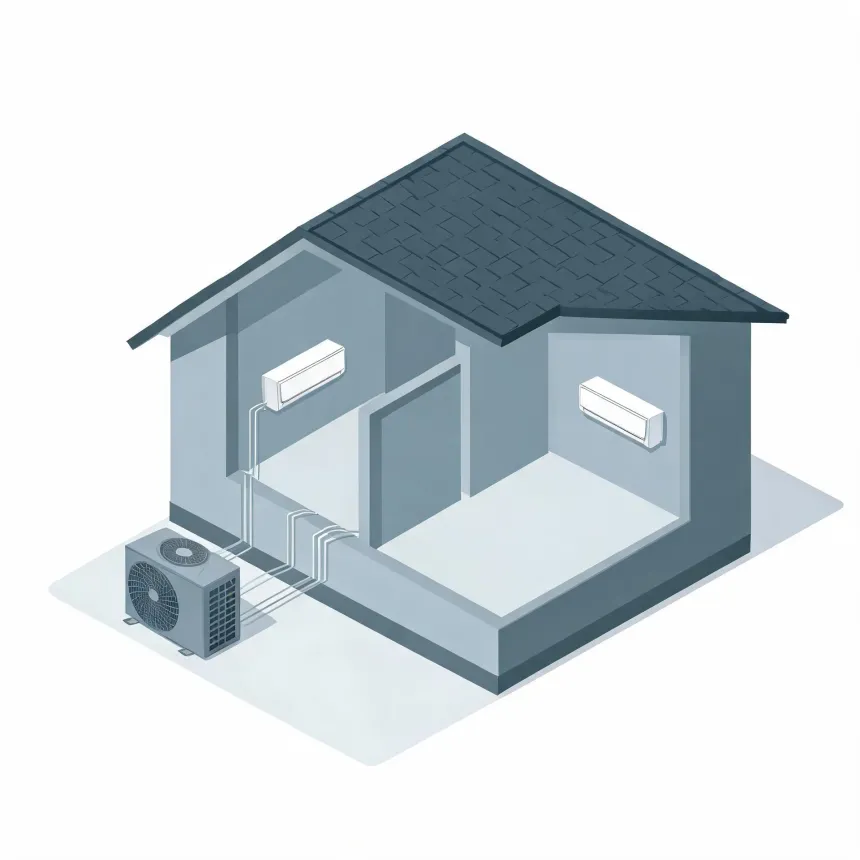
Isometric cutaway illustration of a small house showing two wall-mounted indoor air conditioning units connected by refrigerant lines to an outdoor condenser unit on the ground outside.
Your system heats October through April and cools May through September.

NOAA nClimDiv, 1991–2020 normals

An old wall furnace or baseboard heater doesn't get reused once a mini split goes in.

The electrician or installer can disconnect and haul it off so you're not left to deal with it.

Put it in before May and cooling starts on your terms

Cooling runs May through September
Summer afternoons average 86°F
69 damaging wind events from 2015 to 2024

A mini split sized for this house runs on the same electric service most of these homes already have. There's nothing about Corydon that calls for a bigger unit or a higher-efficiency model than what fits a typical home this size. At 14.77 cents per kilowatthour, Indiana's electric rates aren't pushing anyone toward premium equipment just to keep costs down. A properly sized standard unit does the job. The installer will size it to the room or the house, not to anything particular about this county.

A standard mini split is built for a summer like this

Cooling runs May through September here, with afternoon highs averaging 86°F through the summer. A standard mini split sized to the room handles that without trouble. Get it in before the heat sets in and it's already running when you need it, instead of something to arrange in the middle of a hot week.

Find a contractor
A man in a dark t-shirt and tan work pants walks up concrete steps toward a red front door, carrying a worn canvas tool bag, with a potted shrub beside the entry.
A beige split-system air conditioner outdoor condenser unit mounted on metal wall brackets atop a stucco wall.

What you're paying for isn't the unit, it's the install

What an installer actually does drives most of the cost. Running new electrical to the outdoor unit, finding a wall location with a clear path for the line set, and mounting the indoor head all take time before the system ever turns on. A straightforward swap, same locations, existing electrical, goes faster than a first-time install where conduit and wiring have to go in from scratch. The line set between indoor and outdoor units matters too. Short, direct runs cost less labor than a line that has to snake through an attic or around the outside of a house. Multi-zone systems, where one outdoor unit feeds several indoor heads, cost more than a single zone because there's more line set, more mounting, and more refrigerant to charge. None of that changes by location. It's the same math in every home.

Sizing comes from a room by room load calculation

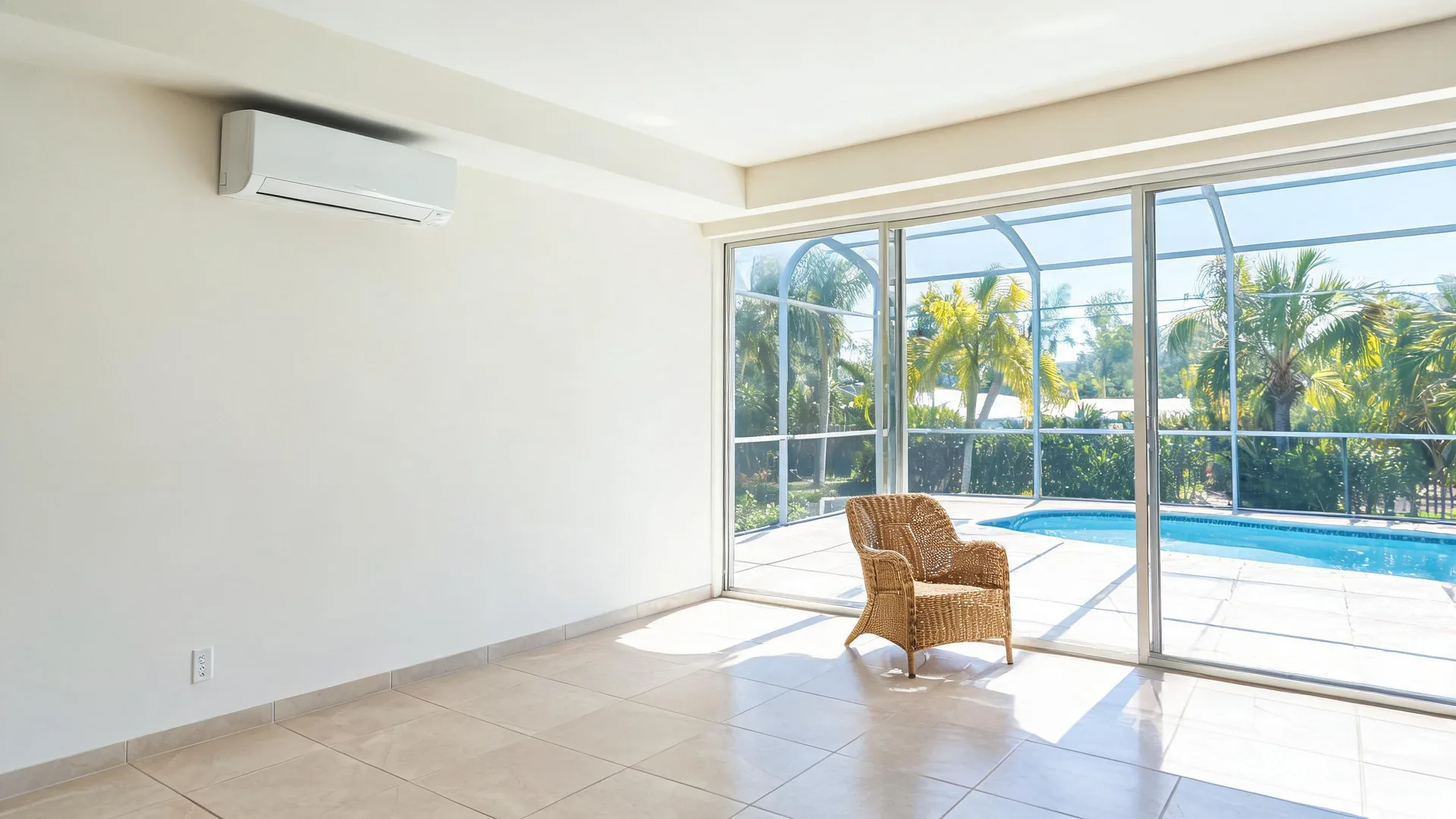
An installer measures each room, checks window area, and looks at what's on the other side of the walls before picking equipment. Square footage alone doesn't tell you enough. A room with a lot of window facing west needs more capacity than a similar room tucked on the north side, even if both rooms measure the same.
Oversized hits harder than undersized

A unit too big for the space cools the air fast, shuts off, then starts again a few minutes later. That short cycling means the system never runs long enough to pull humidity out of the air, so the room feels cold and damp instead of just comfortable. An undersized unit at least runs properly, it just takes longer to catch up on the hottest days.

Comparing quotes, ask what each installer includes in the number, not just the number itself. One bid might cover only the equipment and a basic hookup, while another includes the electrical work, the line set cover, and the wall patch when they're done. Ask who sizes the system and how. A contractor who sizes off square footage alone is guessing, while one who does a load calculation for each room is giving you a number to check. Ask about the warranty on labor, separate from the manufacturer's warranty on parts, since those run on different terms and different lengths. And ask where the outdoor unit goes and why. Its location affects noise at night, how much line set is needed, and how easy it is to service down the road.

Installation day starts with the outdoor unit. It needs a spot on a pad or bracket with clear airflow on all sides, away from where dryer vents or gutters drain right onto it. Running the line set comes next, a small hole drilled through the wall to carry refrigerant lines, a drain line, and electrical between the indoor head and the outdoor unit. That hole gets sealed and insulated so no air leaks around it later. Once the indoor head is mounted and both ends are connected, the installer pulls a vacuum on the line set to clear out air and moisture before refrigerant ever flows through it. Skip that step and moisture sits in the lines, and it causes problems months down the road, not that day. Last comes the test run, checking the temperature split between the air going in and the air coming out, confirming it's cooling or heating the way it should before anyone calls the job done.