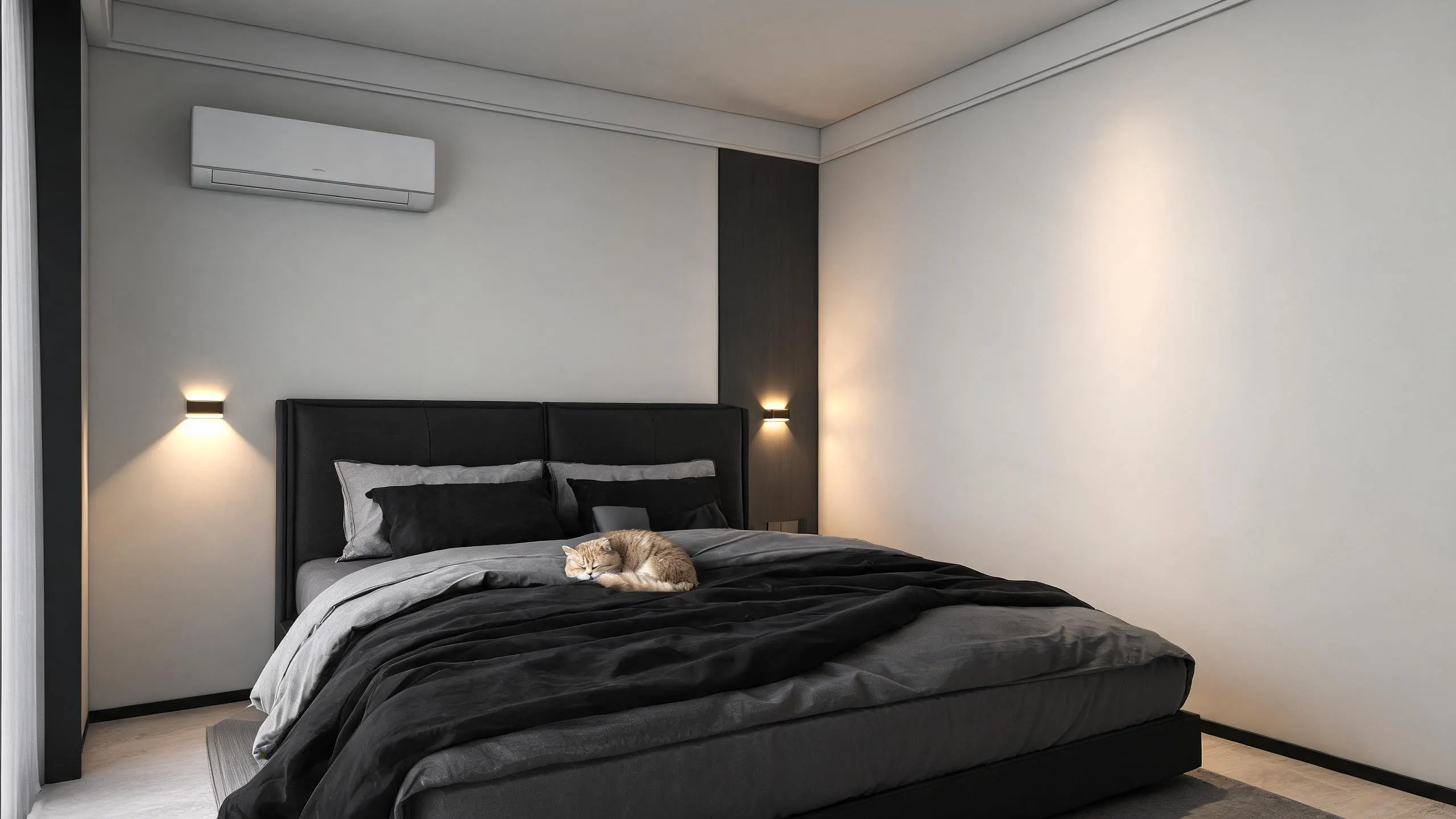






An orange cat sleeps on a neatly made bed with dark grey bedding in a minimalist bedroom with wall sconces and a mounted air conditioner.

Mini Split Installation in Columbia City, IN

Tell us about the job

Takes about a minute. No obligation.

New system or replacementMini-splitWhitley County, IN
Step 1 of 2

What ZIP code is the job in?

Gas heats close to half the homes in Whitley County, with electricity and propane splitting most of the rest. A mini split doesn't compete with a gas furnace so much as take over the jobs it isn't suited for. Run one in a room the furnace doesn't reach well, or use it for cooling a house that otherwise has no central air. Homes that heat with propane sometimes add a mini split for the shoulder months, keeping the propane furnace for the coldest stretch when it has to work hardest. Either way, a mini split installed here is usually filling a gap in what's already there, not replacing the whole system.

8 months
October through May, your system heats
3 months
June through August, it cools
20°F
the average winter night it heats against
82°F
the average summer afternoon it cools against
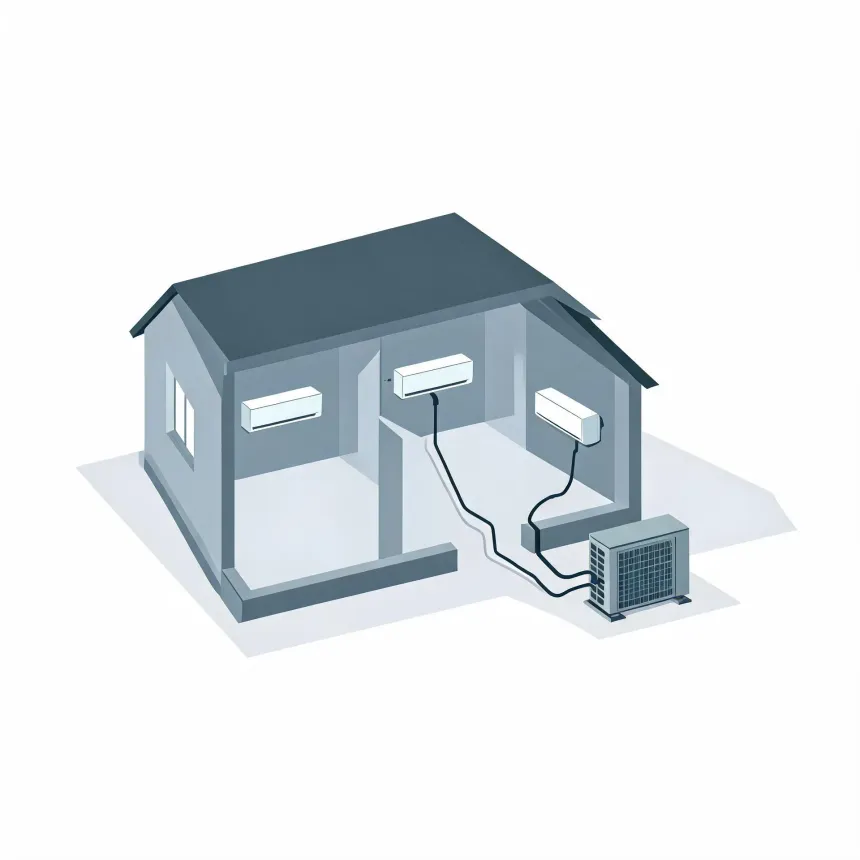
Isometric illustration of a cutaway single-story house with three wall-mounted indoor air conditioning units connected by lines to an outdoor condenser unit on the ground outside.
Your system heats October through May and cools June through August.

NOAA nClimDiv, 1991–2020 normals

Cooling in Whitley County runs June through August.

May is the month to get a mini split installed, before the first warm week puts it to work.

Three mild months, not a hard season

Cooling runs June through August
Summer afternoons average 82°F
64 damaging wind events from 2015 to 2024
A mini split that fitsIndiana homes paid 14.77 cents per kilowatthour in 2024. Standard sizing covers it.

Whitley County falls under zone 5A in the 2021 energy code. That's a cool, humid zone where heating is the bigger job over the year. Any mini split installed here still has to meet the federal minimum for a split-system heat pump, 14.3 SEER2 for cooling and 7.5 HSPF2 for heating. That standard applies to the unit itself, not how it gets used. A single-room ductless add-on has to clear the same bar as a full system. A federal tax credit is available for qualifying heat pump installations, worth checking alongside the efficiency numbers when comparing units.

Not much strain means you can pick on fit, not top efficiency

Three months of cooling a year is not much strain on a unit. If yours is covering shoulder-season heating too, it still isn't running against a Whitley County winter the way the propane furnace is. Pick one sized right for the space it covers, not the highest efficiency number on the shelf. A reliable mid-range unit will hold up fine here.

Find a contractor
A man in a dark cap and jacket and tan work pants, seen from behind, climbs porch steps toward an orange-brown front door while carrying a worn canvas tool bag.
A white outdoor air conditioner condenser unit mounted on metal wall brackets against gray horizontal siding, with a blue sky and white clouds behind it.

Sized for the room, not the square footage

Sizing a mini split comes down to matching the unit's output to the heat gain and heat loss of the specific room, not the square footage alone. A contractor works through window area, insulation, ceiling height, and what's on the other side of each wall before landing on a number. Oversize it and the unit short cycles, reaching the thermostat setting fast, shutting off, then starting again before it's pulled any humidity out of the air. That leaves a room that feels cool but clammy. Undersize it and the compressor runs flat out without ever catching up on the hottest or coldest days, which wears on it faster than steady, moderate cycling would. The right size runs longer stretches at partial output, which is where these systems are most efficient and most comfortable. There's no substitute for the room-by-room calculation. A unit sized for the living room next door won't necessarily fit yours, even if the rooms look the same from the outside.

How many zones it actually needs

A single indoor head handles one room or one open area. If the plan is to cover a few separate rooms, that means multiple indoor heads tied to one outdoor unit, or separate systems entirely. Ask how many zones the quote covers, and whether one outdoor unit can run all of them at once without losing capacity.
Where the line set and condensate line run

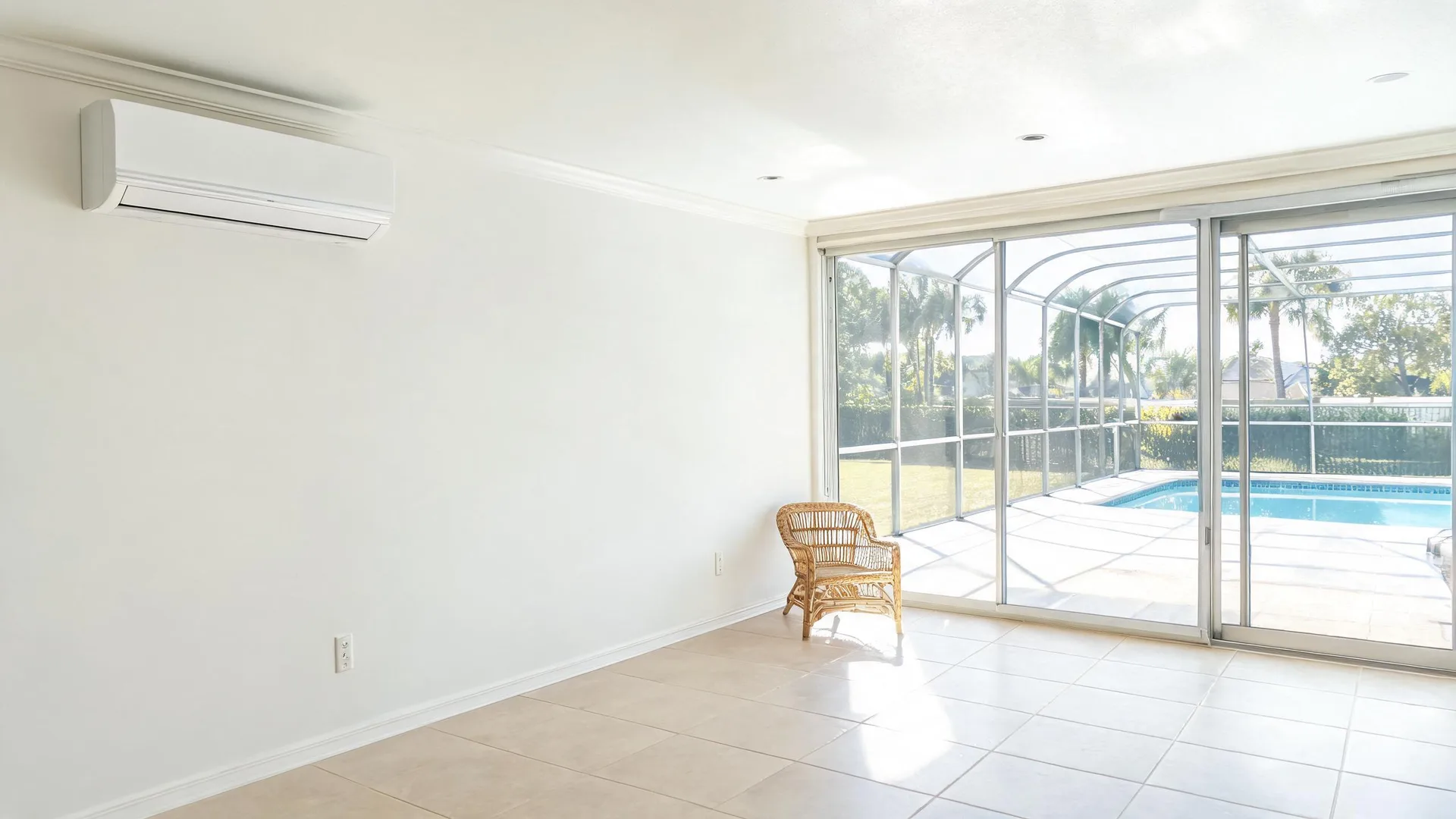
The refrigerant lines and the drain line have to get from the indoor head to the outdoor unit, usually through an exterior wall. Ask where that path runs and how it's finished on both the inside and outside. A clean installation hides the line set in a cover or chase rather than leaving it exposed, and the drain line needs a path that lets condensate actually get away from the house.

If a mini split is going in to take over for a window unit or an old furnace in one room, that old equipment has to actually come out, not just get switched off. A window unit left in place blocks the window and still lets air leak around it all year. A furnace or baseboard heater being fully retired should get disconnected properly, gas line capped, electric baseboard wiring made safe, not just left dead in the wall. If the mini split is only filling a gap and the existing system keeps running for the rest of the house, none of that applies. Ask what happens to the equipment being replaced before the work starts, not after.

Installation starts outside with the outdoor unit, set on a pad or mounted bracket where it has clear airflow on all sides. Inside, the contractor marks where the indoor head goes, usually high on a wall, then drills through for the line set. That line set gets connected on both ends, the system gets evacuated to pull out moisture and air, then charged with refrigerant to the right level. A pressure test happens before anything is called finished, since a leak at a fitting shows up as lost capacity months later, not on day one. The electrical hookup is its own step, usually a dedicated circuit run to the outdoor unit. Once everything's connected, the contractor runs the system through both heating and cooling to check that it responds and holds temperature before calling the job done.