





Three illuminated two-story brick houses on a tree-lined residential street photographed at twilight, with warm window light and landscape uplighting visible against a deep blue evening sky.

Mini Split Installation in Carmel, IN

Tell us about the job

Takes about a minute. No obligation.

New system or replacementMini-splitHamilton County, IN
Step 1 of 2

What ZIP code is the job in?

Most homes in Hamilton County heat with gas, 60.8 percent, and another 36.1 percent use electricity. A mini split doesn't fit neatly into either camp. It runs on electricity, but it isn't a replacement furnace tied to ductwork like a lot of the electric systems counted in that number. If your home already heats with gas, a mini split usually goes in alongside that system, handling a room or a zone the furnace doesn't reach well. If you're on electric heat, it can take over more of the job. Either way, what it needs is a place for the outdoor unit and a wall or ceiling for the indoor head, not a connection to the ducts already in your house.

8 months
October through May, your system heats
3 months
June through August, it cools
22°F
the average winter night it heats against
83°F
the average summer afternoon it cools against
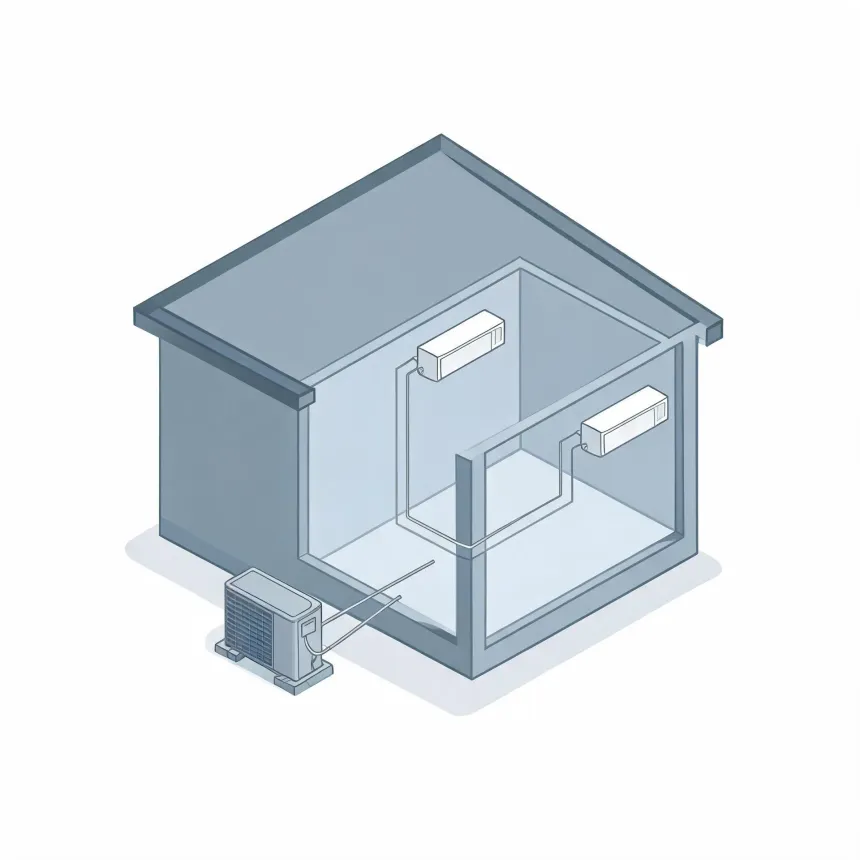
Isometric line illustration of a cutaway building interior with two wall-mounted indoor air conditioning units connected by piping to an outdoor condenser unit on the ground outside.
Your system heats October through May and cools June through August.

NOAA nClimDiv, 1991–2020 normals

Hamilton County sees its share of wind, hail and winter storms, but nothing about them calls for special sizing on a mini split.

A standard size and efficiency rating fits this job, the same as it would in a county with a quieter weather record.

May is the month to get it in, before June asks it to work

Cooling runs June through August
Summer afternoons average 83°F
69 damaging wind events from 2015 to 2024

Hamilton County sits in zone 5A, a cool, humid climate where heating carries more of the year's work than cooling does. Any mini split installed here, as a split-system heat pump, has to meet 14.3 SEER2 for cooling and 7.5 HSPF2 for heating. That's one minimum for the whole unit, not separate rules for a ductless system versus anything else. A federal tax credit is available for qualifying heat pumps, worth looking into alongside whatever the contractor quotes. The efficiency number on the spec sheet is the one that matters here, not the brand or the size of the install.

The right size for the room is the right size, period

At 14.77 cents per kilowatt-hour, what a mini split costs to run comes down to its efficiency rating, not its size. A unit that meets the minimum standard for this zone is built for the job already. There's no case here for paying more for a bigger or higher-rated system than the room needs.

Find a contractor
A man in a dark long-sleeve shirt and tan work pants, seen from behind, carries a canvas tool bag up wooden steps toward an orange front door with a potted plant beside it.
A white mini-split air conditioner outdoor condenser unit mounted on metal brackets against a beige stucco exterior wall, with a blue sky and scattered clouds in the background.

Three months of cooling, the rest is heating

Cooling runs three months here, June through August, with afternoons averaging 83°F. That's a light load compared to the heating side of the year. A mini split sized for the room handles those three months without strain, and the compressor isn't working against extreme heat the way it might further south. The bigger demand on this system is winter, and a heat pump still has to deliver there too. Nothing about the summer stretch here pushes you toward a larger or higher-output unit than the space calls for.

The label carries a cooling number and a heating number

SEER2 covers cooling, HSPF2 covers heating, and a heat pump mini split is rated for both at once. A high cooling number doesn't say anything about how the unit performs pulling heat out of cold air. Whichever season does more of the work in your house, that's the rating to weigh more heavily.
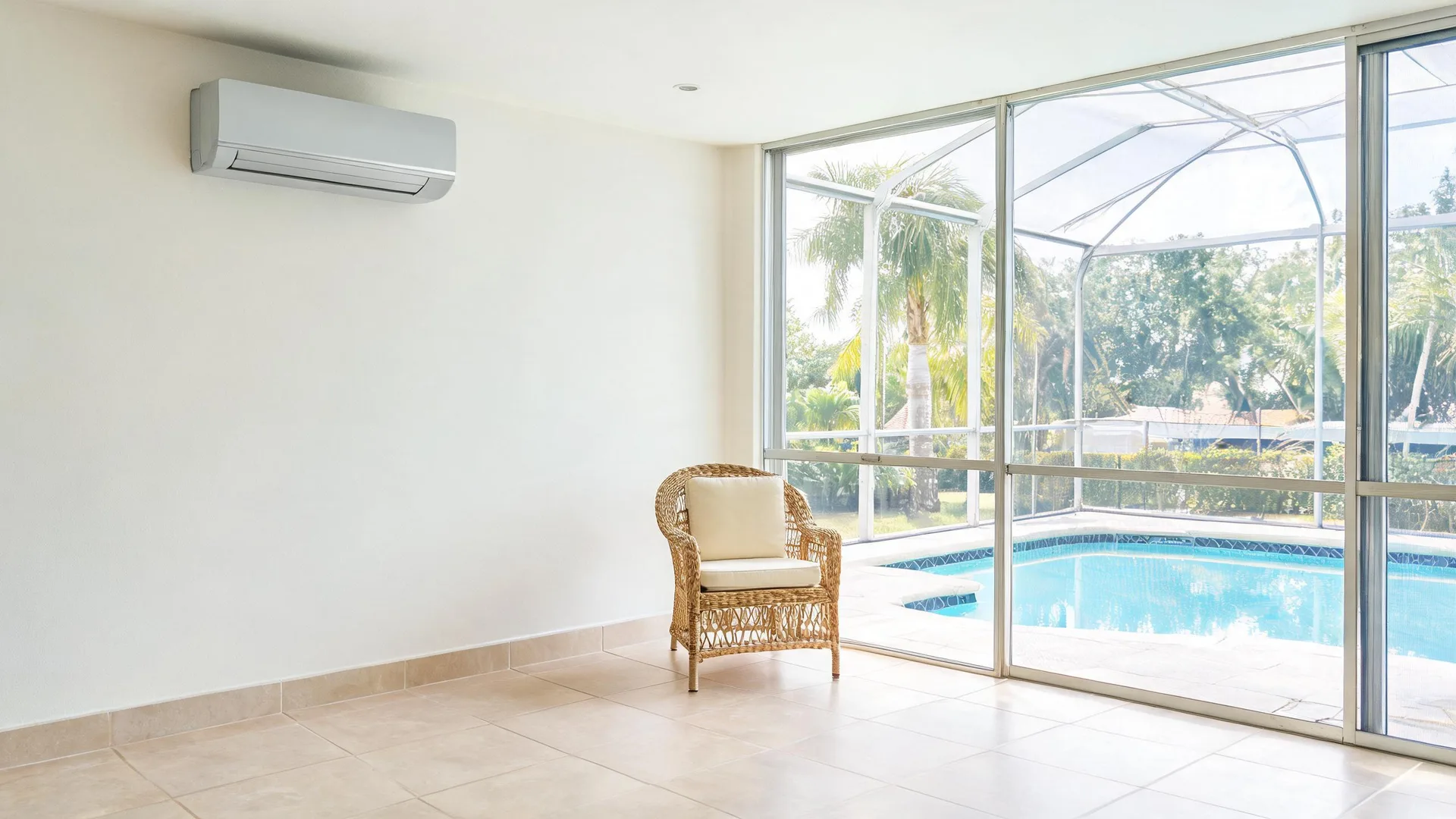
The rating comes from a lab, not your wall

Manufacturers test the unit with a specific line set length and a specific refrigerant charge. A mini split installed with a longer line run than that, or charged slightly off, falls short of the number on the label. Getting what the rating promises depends on the installation matching what the test assumed, not just on the equipment itself.

If you're adding a mini split alongside an existing furnace or boiler, nothing about the old system changes. It keeps heating the house the way it always has, and the mini split just takes over a room or zone it struggles to reach. If the mini split is replacing an old window unit or electric baseboard, that equipment comes out once the new system is in place and proven to work. A contractor disconnects it, caps or removes whatever wiring and lines served it, and hauls it off. Refrigerant in an old unit has to be recovered properly rather than vented, so that part of the removal isn't a quick pull and toss. None of this touches ductwork, because a mini split doesn't use any.

Installation starts outside with the spot for the outdoor unit, a pad or wall bracket with clear airflow on at least a couple sides. Inside, the installer finds a spot on the wall or ceiling for the indoor head, close enough to an exterior wall that the line set doesn't have to travel far. A small hole gets drilled through that wall for the refrigerant lines, a drain line and the electrical whip, all bundled together and run to the outdoor unit. Once everything's connected, the lines get pressure tested for leaks before any refrigerant moves through them. The system gets evacuated to pull moisture and air out of the lines, then charged to the weight the manufacturer specifies. Only after that does the installer power it on, check that it's heating and cooling on command, and walk through the remote or thermostat with you.