Clean coil, clear airflow
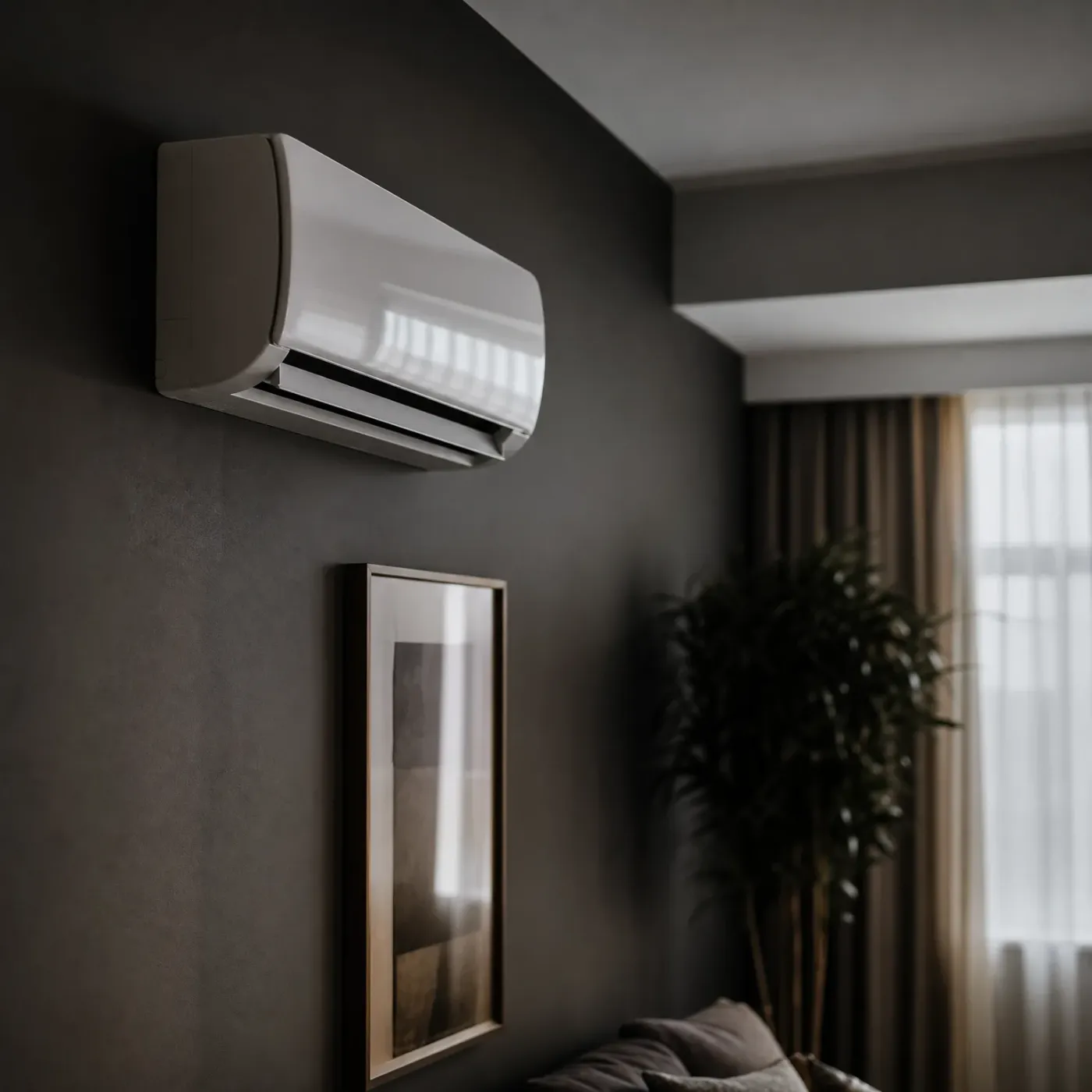
A unit like this one is moving air the way it should. The coil behind the louvers is clean, so heat exchanges the way it was built to, and the fan pushes warm air out across the room instead of fighting through grime.
No calling every shop in Hamilton County
A mini split that blows cold air or won't turn over in a Carmel winter usually comes down to a few things: the outdoor unit iced up, the reversing valve stuck, the refrigerant charge low, or a control board fault. The question is which one yours has. Rather than calling around Hamilton County and explaining the problem to each one, you can get matched with a local contractor who works on these systems all season and knows where to look first.
Describe it onceA mini split that won't heat usually comes down to the outdoor unit. In a Carmel winter, that unit has to pull heat out of cold air, and it does that by running a defrost cycle to clear frost off its coil. If the reversing valve that switches it from defrost back to heating gets stuck, the indoor head keeps blowing cold air no matter what the thermostat says. Low refrigerant does something similar: the system can't move enough heat to warm the room, especially once outdoor temperatures drop into the 20s and below. A control board fault can stop the unit from switching modes at all, so it just sits there or runs backward. Each of these looks the same from inside the house, a unit running but no warm air coming out, so figuring out which one it is means getting eyes on the outdoor unit itself.

A unit like this one is moving air the way it should. The coil behind the louvers is clean, so heat exchanges the way it was built to, and the fan pushes warm air out across the room instead of fighting through grime.

Dust packed into the vents and across the casing blocks airflow before it leaves the unit. The coil underneath can't pull heat the way it needs to, so the mini split runs longer and still falls short of the room.

If your mini split is running but blowing cold or room-temperature air, you're paying for electricity it isn't turning into heat. That shows up on the bill before it shows up anywhere else. Meanwhile whatever room that head serves is getting colder, and if it's the only heat for that space, a Hamilton County night can bring that room down fast. If there's a backup source taking over, that unit is working harder than it should to cover for a system that's supposed to be doing the job.
You could spend an afternoon calling around Carmel, explaining the same thing to three different companies, and waiting to see which one calls back with a time that works. Or you could hand the job to one contractor who already knows mini splits, has likely seen this exact fault on a unit like yours, and can tell you on sight whether it's the defrost board, the valve, or something simpler.

Cooling runs June through August
Summer here is the short season. Three months of cooling is far less strain than the stretch your mini split spends heating.
Heat runs October through May
Eight months of heat means your mini split leans on its compressor and defrost cycle most of the year. A fault there shows up fast.
Power here costs 14.96 cents per kilowatt-hour
At 14.96 cents per kilowatt-hour, a mini split that runs without actually heating the room wastes money every hour it's stuck like that.
NOAA nClimDiv 1991-2020 · EIA-861 2025
When frost builds on the outdoor coil, the mini split reverses itself for a few minutes, sends hot refrigerant gas outside to melt the ice, and pauses the indoor fan or slows it so it doesn't blow cold air into the room. That pause is normal. You'll feel the indoor unit go quiet or cool for a bit, then switch back to heating once the coil is clear. A unit that does this every half hour instead of a few times a day is working harder than it should, which points to a coil that isn't shedding frost the way it was designed to.
The outdoor unit pulls in cold air across its coil to extract heat from it, even when that air is near freezing. If snow piles against the louvers, or ice builds up underneath and lifts the unit off level, airflow across the coil drops and so does the heat it can pull out. Hamilton County winters bring enough snow that this is worth checking before assuming a part has failed. A unit with clear space on all sides and a few inches of clearance underneath is working with the airflow it was built around, not against it.




Call a repair shop that handles every brand and you explain your symptoms once to whoever answers, then again to whoever shows up, and you still don't know if they see mini splits often or just carry a card for them.
A contractor local to Hamilton County who works on these systems through every one of these winters has likely already seen your symptom on someone else's unit, and you explain it once, to the person who's coming.
Three months of cooling a year means your mini split spends most of its working life on heat, not air conditioning. Come June it switches jobs for a short stretch, then goes right back to carrying your house through the cold months, when a stuck reversing valve or low charge shows up fastest.
NOAA nClimDiv 1991-2020
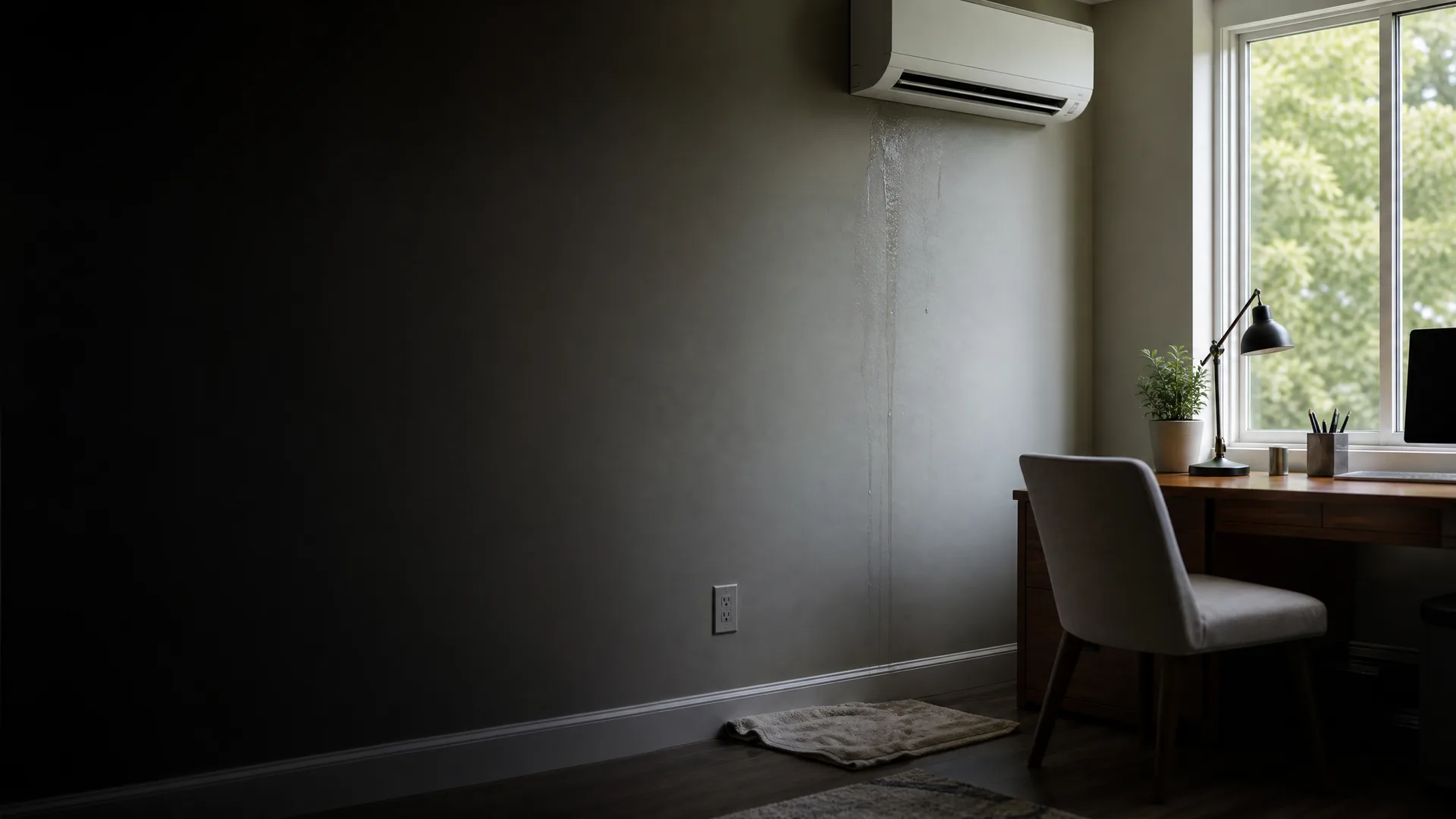
Three in the afternoon, and you're at the desk in the home office, mini split humming on the wall above you. You notice the wall under it looks dark. You get up and find a wet streak running down the drywall, pooling at the baseboard, and you grab a towel off the hall closet shelf and lay it over the spot. Outside it's a sticky July afternoon, the kind Hamilton County gets most of the summer, and the unit is still blowing, still running, water still finding its way down the wall while you stand there with a wet towel underfoot and no idea yet where it's coming from.
A mini split that won't heat doesn't fix itself by waiting it out, and in a Carmel winter that's not a bet worth making. Finding out which part failed means someone who actually opens these units up and sees what fails in them, not a general HVAC call where you describe the symptoms and hope they carry one in the truck. You could spend an afternoon calling around, explaining the iced-up coil or the cold air it's blowing, and still end up with someone guessing. One request here goes to a single contractor working in Hamilton County, someone who sees this same failure every heating season and knows whether it's the reversing valve, the charge, or the board before they take the panel off. No explaining it five times, no sorting through quotes from strangers. Just one call back, from someone who already knows what a Carmel winter does to this equipment.
A mini split handling defrost the way it should will step out of heating for a few minutes, clear the frost off the outdoor coil, and switch right back without you noticing much beyond a short pause in warm air. The reversing valve shifts cleanly both directions. The outdoor fan comes back up to speed once the coil is clear. Indoors, the fan holds off or slows during that stretch so you don't feel a blast of cold air, then ramps back to normal once the unit is heating again. You might catch steam rising off the outdoor unit for a minute. That's the system doing its job in a Carmel winter.
A unit with a failing reversing valve or a control board fault can get caught partway through that switch. The outdoor coil stays iced over because defrost never finishes, or never starts, so the frost keeps building until airflow through it is blocked. Indoors, that shows up as cold air blowing when the thermostat is set to heat, or the system running without putting out any real warmth. Some units will shut themselves down rather than keep running like that. Left alone through a cold stretch, ice can build heavy enough on the outdoor unit that it stops turning over at all.


Indoor thermostat calls for heat and signals the outdoor unit.
Compressor starts, pulling refrigerant through the reversing valve toward the outdoor coil.
Outdoor coil pulls heat from the outside air into the refrigerant.
Reversing valve sends that heated refrigerant to the indoor coil.



Summer air in Hamilton County carries a dew point around 64°F, the measure of how heavy and damp the air actually feels, according to NOAA climate normals. That moisture matters to your mini split even outside of winter, because a coil that's been running sticky, humid air all summer collects more grime than one working dry air. A dirtier coil going into fall has less surface left to pull heat from once the temperature drops and the unit switches over to heating. If your mini split is struggling to keep up this winter, what settled on that coil back in July may be part of why.
NASA POWER T2MDEW


A mini split that won't heat in a Carmel winter almost always points to the outdoor unit. The reversing valve might be stuck in cooling, the refrigerant charge might be low, the outdoor coil might be iced over without clearing itself, or the control board might be misreading what the system needs to do. Those are the four places this starts. Which one it is changes the repair, but it doesn't change where to look first.
Waiting it out doesn't help. A mini split blowing cold air for another day isn't working through the problem on its own, and the compressor keeps running under conditions it wasn't built to run under for long. The sooner someone who knows these units opens it up, the sooner you know which of the four it is and what fixing it actually involves.
That's where a contractor who works on mini splits all winter in Hamilton County earns the call. Someone who sees this system fail in this kind of weather, season after season, checks the common causes first instead of treating your unit like a furnace with a different cover. You describe what's happening once, to one licensed local contractor, and that's the end of repeating yourself to a string of companies while you try to sort out who actually knows this equipment from who just answers the phone for it.
A licensed pro who works in Hamilton County gets your request.