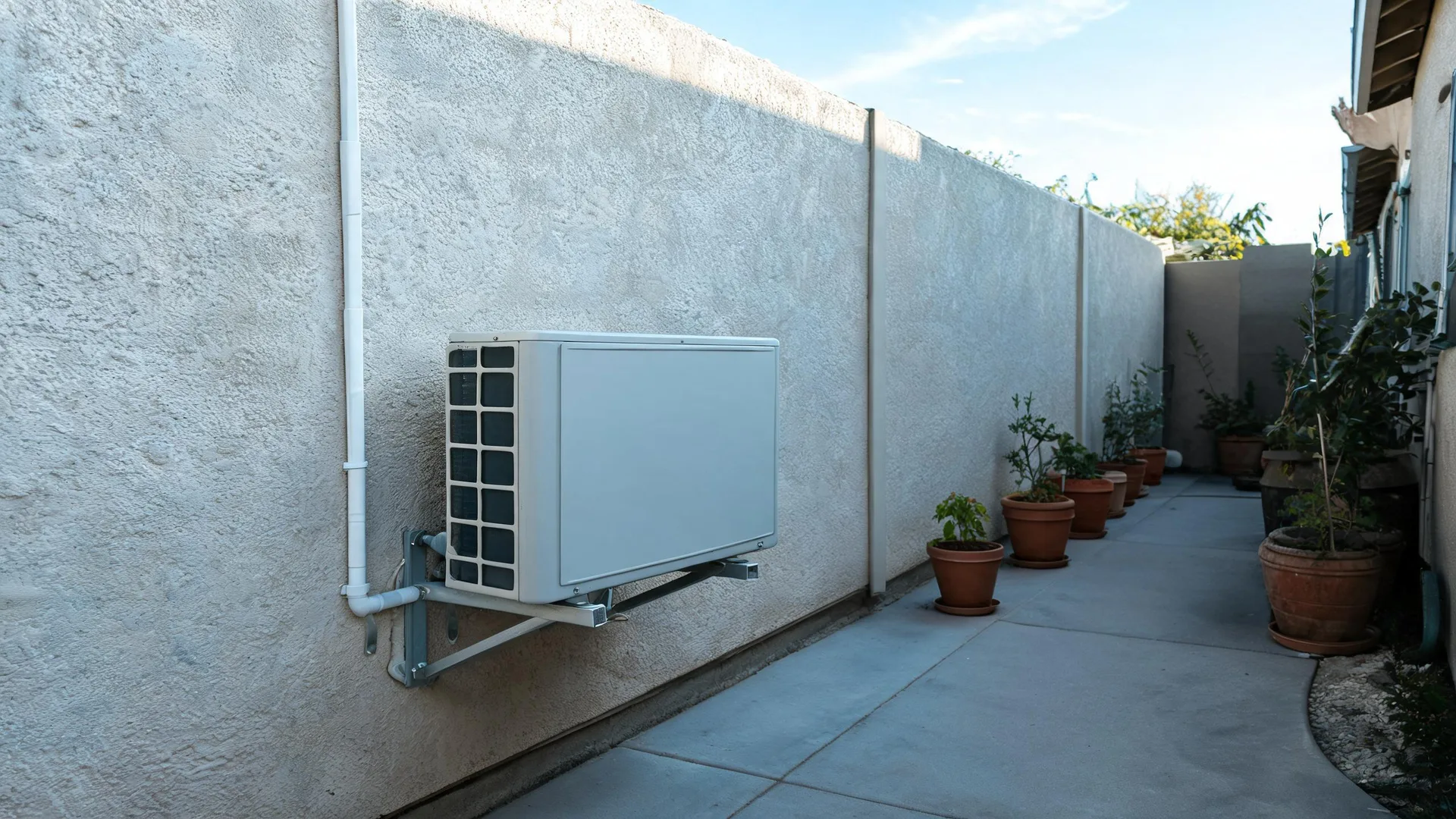
Electricity here runs 19.01 cents a kilowatt-hour
That is higher than what most US counties pay. A mini-split runs on electricity alone, so every hour it works shows up on that rate.
Takes about a minute. No obligation.
That is higher than what most US counties pay. A mini-split runs on electricity alone, so every hour it works shows up on that rate.
A mini-split that moves heat efficiently costs less to run here than one that doesn't, and the gap is bigger than it would be somewhere with cheaper power. The rating on the unit is worth checking before you decide.
NOAA nClimDiv, 1991–2020 normals
Gas heats 57.9 percent of homes in Warrick County, more than electric and propane combined.
A mini-split goes in alongside that furnace rather than replacing it, handling cooling and shoulder-season heat.



Warrick County falls in climate zone 4A, which the energy code treats as mixed: real heat to deal with in summer, real cold in winter. A mini-split installed here counts as a split-system heat pump under federal rules, and any unit built from 2023 onward has to clear 14.3 SEER2 and 7.5 HSPE2 to be sold at all. Those are floors, not targets, so every system on the market already meets them. Some go well past that minimum. The one installed determines what the zone's demands turn into on the electric bill.
Power here costs more than in most places, and a mini-split runs on nothing but electricity. The SEER2 and HSPE2 numbers on the unit being quoted decide what that rate turns into on the bill, month after month. Ask to see those numbers for the specific unit, not just the model line, before signing off.
Find a contractor
What gets pulled out depends on what's there now. A window unit or a through-wall sleeve comes out whole, and the opening gets patched or left for the new line set, depending on where the indoor head goes. If there's an older ducted system being replaced outright, the air handler and outdoor condenser both come out, along with the line set and the drain line that served them. Refrigerant in that old line set has to be recovered properly before any of it gets cut loose, not vented. The electrical whip and disconnect box at the old outdoor unit either get reused or swapped, depending on what the new condenser calls for. None of this is wasted work. Whatever was cooling or heating the space before has to come out clean so the new lines, the new mounting pad, and the new wall penetration have room to go in right.
How far the outdoor condenser sits from the indoor head, and whether that run goes through a wall, up a chimney chase, or across an attic, decides how much copper gets run and how many hours the job takes. A straight shot through one exterior wall is a different job than fishing line set through two floors to reach a bedroom on the far side of the house.
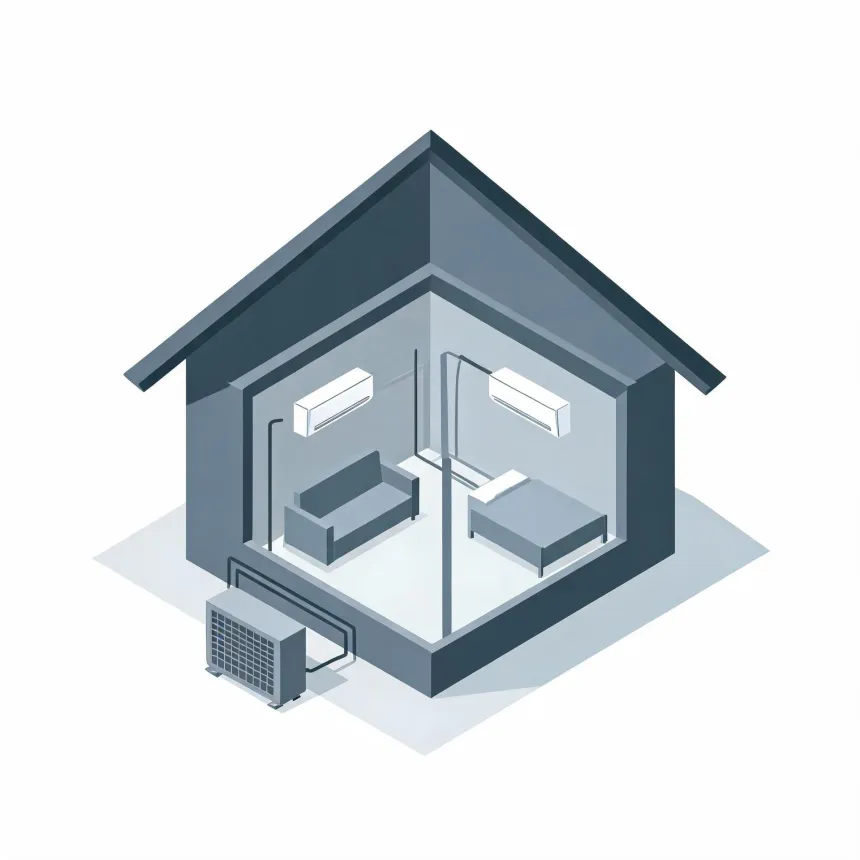
A single-zone system has one outdoor condenser paired with one indoor head, and that's the simplest install there is. A multi-zone system ties several indoor heads to one outdoor unit, and every added head means another mounting location, another line set run, another spot wired for power. The outdoor unit also has to be sized to carry all of them at once.
Comparing quotes gets confusing fast because two installers can quote completely different systems and call them both mini-splits. Start with the compressor. A single-stage compressor runs at one speed, full on or off, while an inverter-driven compressor ramps up and down to match the load. That difference alone changes how steady the temperature stays and how often the system cycles. Ask what the compressor does when the space is nearly at the set temperature. Ask how the system handles the coldest nights, since every heat pump loses capacity as the outdoor temperature drops, and some lose it faster than others. Ask whether the quote includes a backup heat source or relies on the mini-split alone down to the lowest temperatures it will see. Two units with the same outdoor appearance can behave completely differently once the weather turns hard.
Install day starts with the outdoor condenser going on its pad or wall bracket, set level so the compressor inside doesn't wear unevenly over time. From there the installer runs the line set, the refrigerant lines and electrical wiring that connect it to the indoor head, through the wall penetration drilled for that purpose. The indoor head mounts next, usually high on a wall or in the ceiling, with a condensate drain line sloped so water runs out instead of pooling. Once everything's connected, the system gets pressure tested to check for leaks before any refrigerant moves through it. Then the installer pulls a vacuum on the lines to remove moisture and air, because either one left behind will cause problems later. Only after that does the system get charged and run through its paces, checking airflow at the head and making sure it actually heats and cools on command before anyone calls it done.