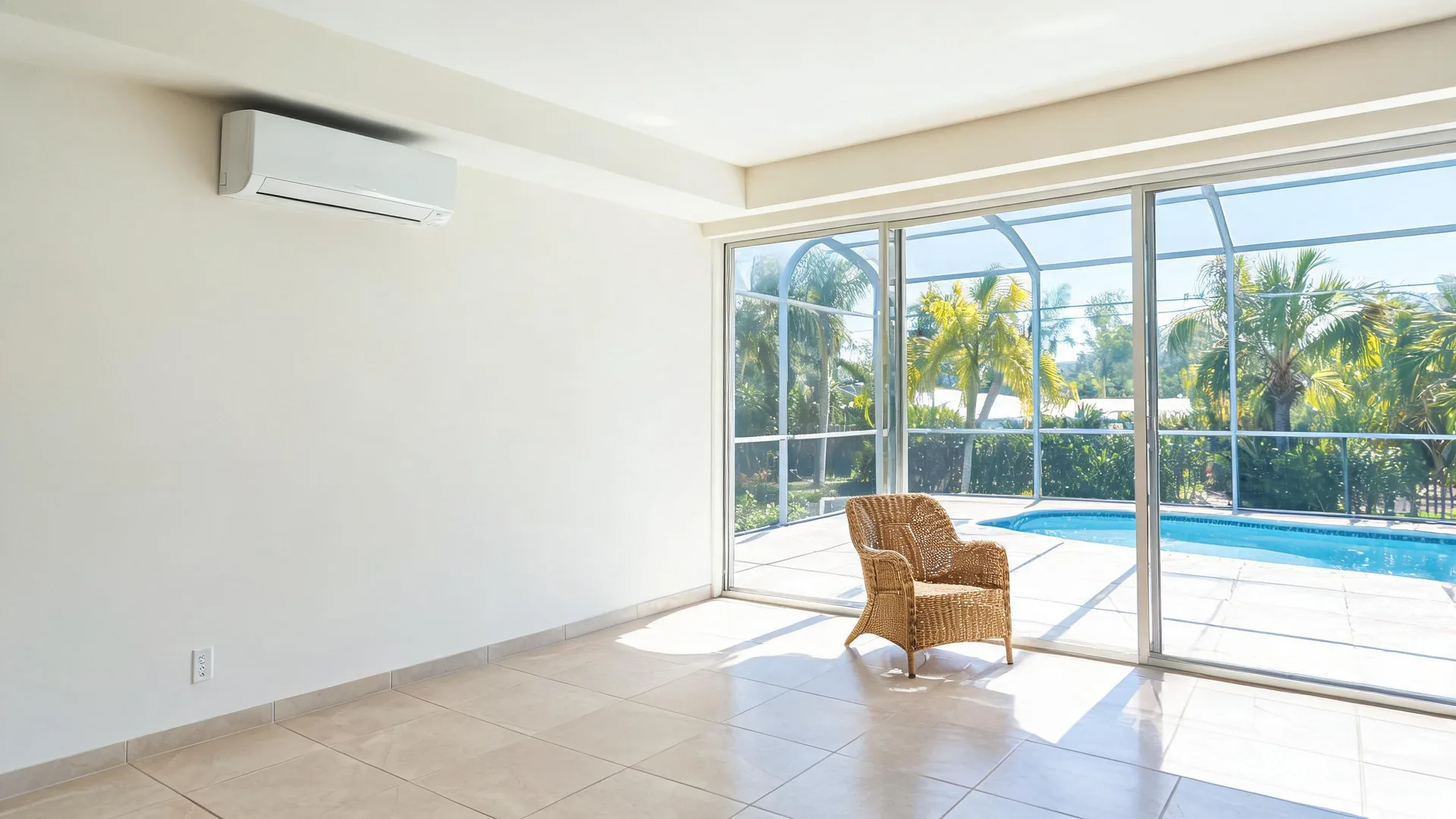
Electric heat leads here
Electricity heats 48.6% of homes in Monroe County, with gas close behind at 43.6%. A mini split fits an electric home without adding a new fuel line or venting.
Takes about a minute. No obligation.
Electricity heats 48.6% of homes in Monroe County, with gas close behind at 43.6%. A mini split fits an electric home without adding a new fuel line or venting.
In a home that already heats with electric resistance or baseboard, a mini split can take over as the main source and cut the load on that older system. In a gas home, it usually works alongside the furnace, covering rooms the ducts don't reach well.
NOAA nClimDiv, 1991–2020 normals
Monroe County runs cooling about four months a year, June through September.
A mini split sized for a normal Indiana summer is all this job calls for.




The efficiency rating on the label tells you how much heat a mini split moves for the electricity it draws. A higher rating means it holds onto that efficiency across a wider range of outdoor temperatures, not just on a mild day. That matters because a mini split spends most of its time running at partial output, holding a room steady rather than blasting air and shutting off. The rating reflects how well it does that quiet, steady work, not just how it performs at full blast. None of that replaces sizing. A unit matched to the room, the windows, and the insulation will run efficiently and hold comfort. One that's too big for the space will short cycle and lose the benefit of a high rating no matter what the label says.
A standard size and efficiency fit fine here. There's no local reason to go bigger or pricier.
Find a contractorSizing a mini split is not about matching tonnage to square footage with a chart. A contractor works out how much heat a room gains in summer and loses in winter, looking at the windows, which way they face, how much wall and ceiling area is losing heat, and what's already insulated. That's called a load calculation, and it's the real starting point. Skip it and guess instead, and the unit ends up wrong. Too big, and it cools the room fast, shuts off, then kicks on again a few minutes later. That's short cycling, and it means the unit never runs long enough to pull moisture out of the air, so the room feels cold and clammy at the same time. It also means more wear on the compressor from all that starting and stopping. Too small, and it runs constantly on the hottest and coldest days, straining to hold the temperature and still falling short. The right size runs long, steady cycles and holds the room at an even temperature instead of swinging around it. That only happens when the sizing gets done before anything goes on the wall.
If a furnace or central air unit is already heating and cooling the house, a mini split addition doesn't replace it. The existing system keeps running, and the mini split covers specific rooms or takes over part of the load. Removal only comes up when the mini split is meant to fully replace what's there, like swapping out electric baseboard heaters.
Electric baseboard units don't get left in place as a backup the way a furnace might. If a mini split is taking over heating for a room that used baseboard, the old heaters and their wiring get disconnected and removed as part of the job, not left on the wall unused.
When you're comparing quotes, ask what each contractor is counting as a zone and what's driving the price of the outdoor unit. A single-zone system runs one indoor head off one compressor. A multi-zone system ties several indoor heads, in different rooms, to one outdoor unit, and that compressor has to modulate across whatever combination of zones is calling for heat or cooling at once. Ask how many indoor heads the outdoor unit supports and whether this job uses all of them or leaves room to add one later. Ask where the outdoor unit goes and how long the line set run is, because a longer run between indoor and outdoor units can affect performance and is worth knowing before the price is final. Ask what happens to any wall or ceiling penetration if a head is ever removed. And ask who handles the electrical whip to the outdoor disconnect, since that's a separate piece of work from mounting the equipment itself.
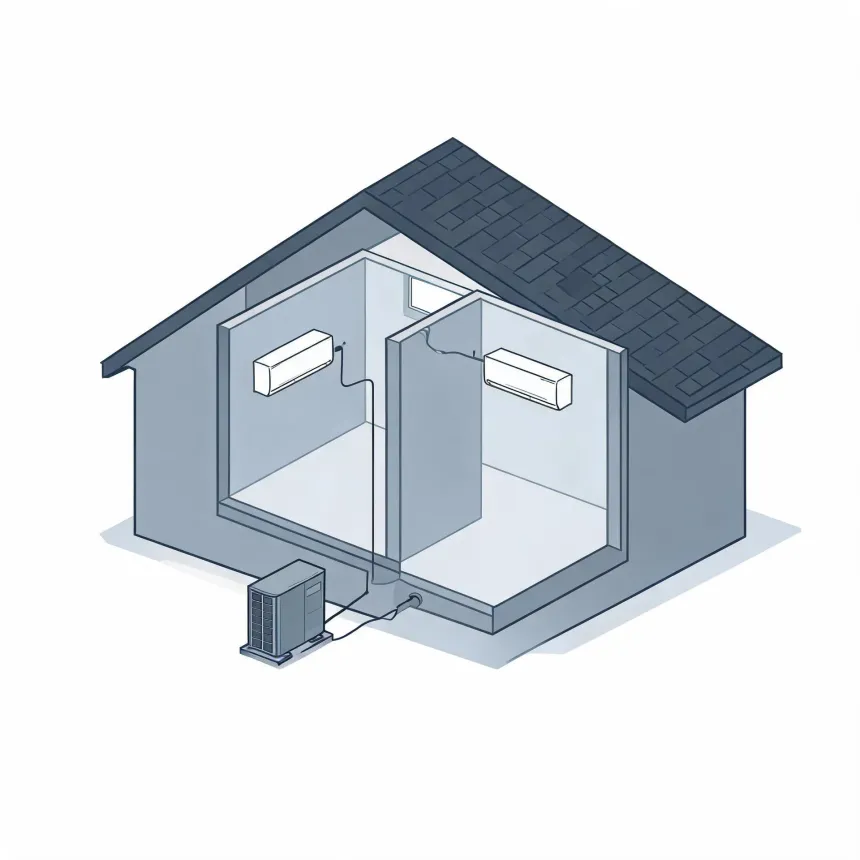
Install day starts outside and inside at the same time. One side of the job is mounting the indoor head on its wall bracket and running the line set, the wiring, and the condensate drain through a small hole in the exterior wall. The other side is setting the outdoor unit on a pad or wall brackets, kept clear of the ground and away from anything that would block airflow around it. Once both ends are run, the line set gets connected and the whole system is pressure tested before any refrigerant moves, so a bad joint shows up while it's still easy to fix. After that, the lines get pulled down with a vacuum pump to remove air and moisture, since either one left behind causes problems later. Only then does refrigerant get released from the outdoor unit into the lines, and the system gets powered up and checked for proper operation.