A row of illuminated two-story brick houses with front porches and mature trees photographed at twilight.

Mini Split Installation in Auburn, IN

Tell us about the job

Takes about a minute. No obligation.

New system or replacementMini-splitDeKalb County, IN
Step 1 of 2

What ZIP code is the job in?

Gas heats most homes here

Utility gas heats 55.2% of occupied homes in DeKalb County, with electricity and LP gas covering most of the rest. A mini split works alongside a gas furnace rather than replacing it, handling rooms the ductwork doesn't reach well or cutting the furnace's workload in shoulder months.

What that means for a mini split job

Since most homes already have a central heat source, the mini split install here is often about zoning. An addition, a garage conversion, or a room that runs hot or cold compared to the rest of the house. The contractor still needs to size the unit to that specific space, not the whole home.

8 months
October through May, your system heats
3 months
June through August, it cools
20°F
the average winter night it heats against
82°F
the average summer afternoon it cools against
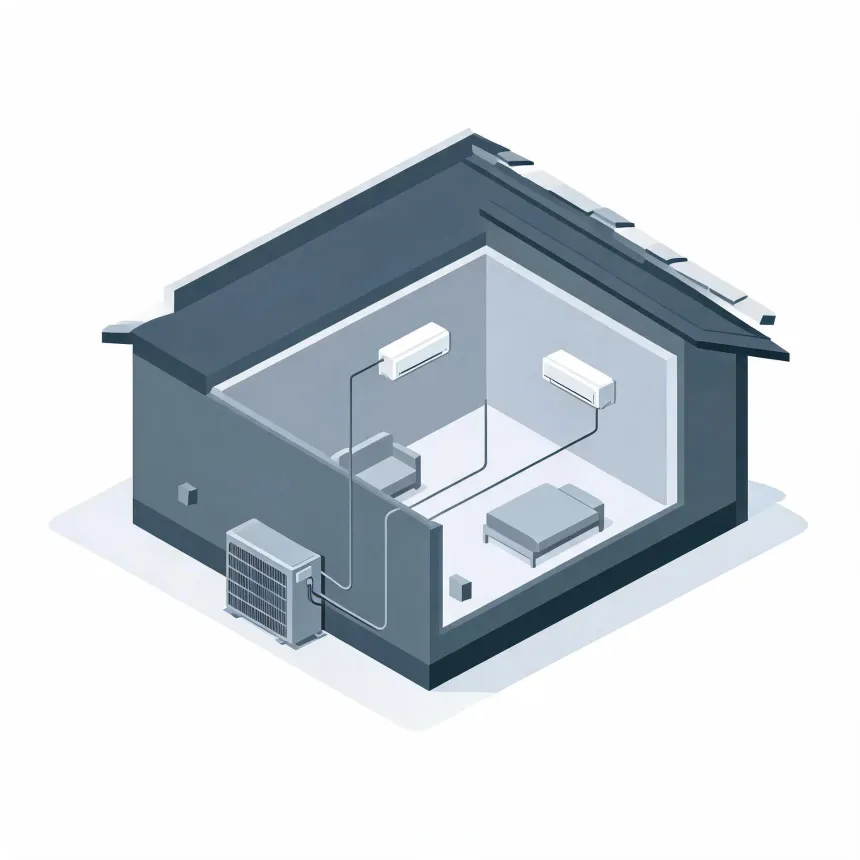
Isometric illustration of a cutaway house interior showing two wall-mounted indoor air conditioning units connected by line sets to an outdoor condenser unit beside the exterior wall.
Your system heats October through May and cools June through August.

NOAA nClimDiv, 1991–2020 normals

Half the homes in DeKalb County were built in 1975 or earlier, half after.

A mini split sized for the room works the same either way, since the unit answers to the space, not the age of the house around it.

Three months of cooling a year is a light enough job for most any mini split to handle

Cooling runs June through August
Summer afternoons average 82°F
38 damaging wind events from 2015 to 2024

DeKalb County sits in climate zone 5A, a cool zone where the furnace carries more of the year's work than the air conditioner. Any mini split heat pump installed here still has to meet the federal minimum for a split system, 14.3 SEER2 for cooling and 7.5 HSPF2 for heating, since the standard doesn't carve out a separate rule for ductless units. That floor applies whether the unit is heating a converted garage or a bedroom over an addition. A federal tax credit is available for a qualifying heat pump, and it's worth checking which models qualify before picking a unit rather than after.

Cheap power here means fit and reliability matter more than the efficiency rating

At 14.77 cents a kilowatt-hour, Indiana power costs less than most of the country pays. A high-efficiency mini split still uses less electricity than a low one, but the savings take longer to add up to much here. Picking the unit that fits the room and holds up matters more than chasing the highest efficiency number on the shelf.

Find a contractor
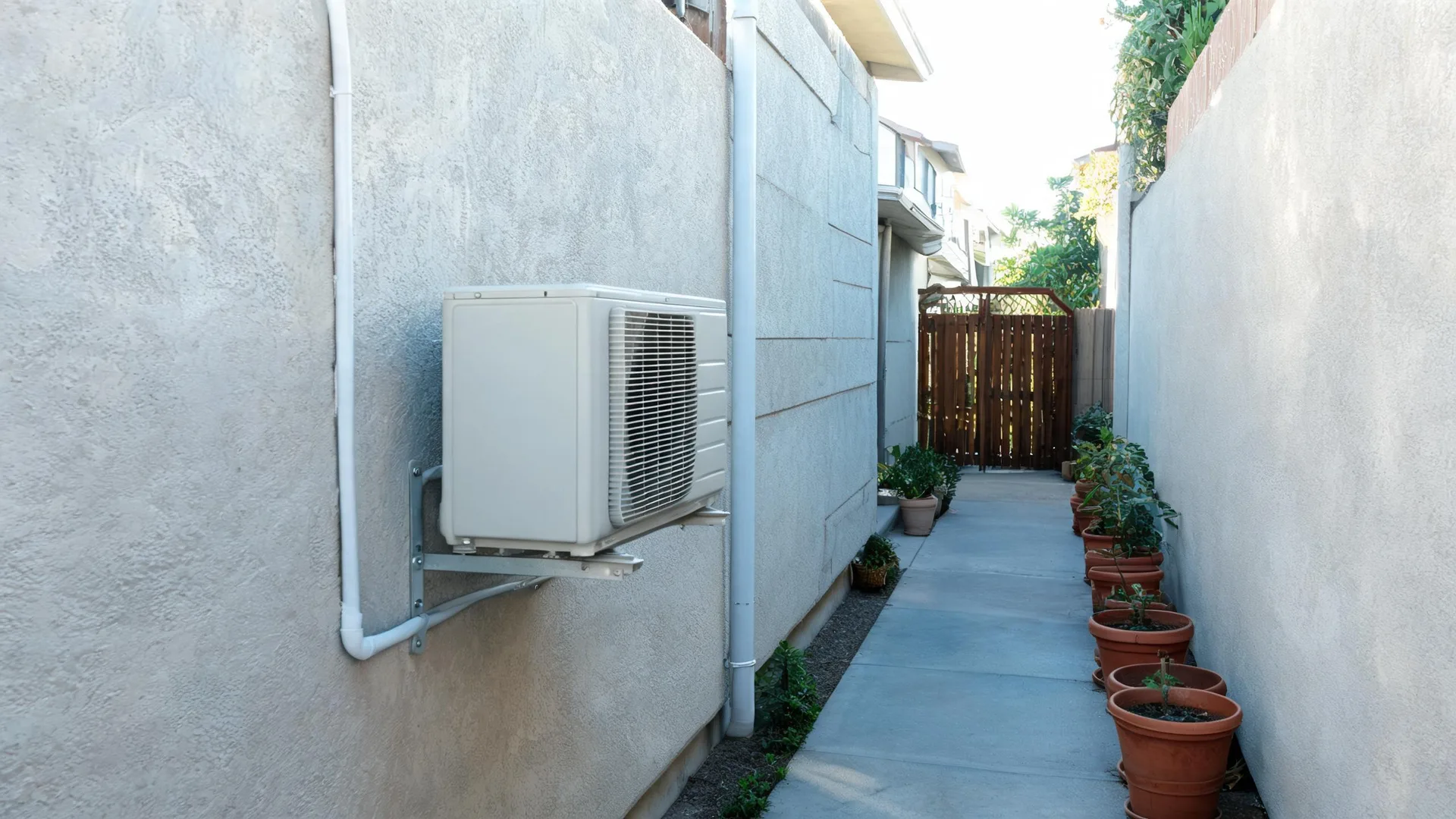
A white mini-split air conditioner outdoor condenser unit mounted on metal brackets against a beige stucco exterior wall, with a blue sky and scattered clouds in the background.

Get it in before June

Cooling here runs June through August, three months. May is worth using. A mini split installed before June means it's running from the first warm week instead of getting squeezed in once a room's already hot. Ductless work also just goes easier without a heat wave pushing the schedule.

The old unit doesn't have to go anywhere

If the room being zoned never had its own equipment, there's nothing to remove. A mini split added to a garage conversion or an addition is new capacity, not a replacement. The furnace keeps doing what it was doing.

A window unit or space heater is a different story

If the room was getting by on a window air conditioner or a space heater, that equipment comes out once the mini split is in. Neither one needs special disposal. A window unit goes out with the rest of the appliances, and a space heater is just unplugged and put away.

Comparing mini split systems comes down to a few questions worth asking whatever contractor is bidding the job. Ask how they're sizing the unit, and expect an answer based on the room's square footage, ceiling height, window area and insulation, not a flat number pulled from a chart. A unit too big for the room cycles on and off fast and never settles into steady, even comfort. One too small runs constantly and still doesn't keep up on the hottest days. Ask where the indoor head will mount and why that wall, since airflow across the room matters more than putting it wherever's convenient. Ask what happens to the line set and whether it's hidden in a wall cavity or run through a cover outside, because that affects how the job looks once it's finished. And ask who services the brand locally, since a mini split is only as good as the support behind it once something needs a look.

Installation starts with the outdoor unit, which needs a clear spot on a pad or wall bracket where air can move through the coil without being blocked by siding or shrubs. From there, the line set runs through a single hole drilled in the wall, carrying refrigerant lines, a condensate drain and electrical wiring together to the indoor head. That hole is small, usually a few inches, but it has to be placed right the first time since the indoor unit mounts around it. Once the lines are connected, the system gets evacuated with a vacuum pump to pull out air and moisture before refrigerant is ever released into the lines. Skipping that step is the most common reason a new mini split underperforms or fails early. After that, it's a matter of running the unit through its paces, checking the temperature split between the air going in and the air coming out, and confirming the drain line is actually carrying condensate away instead of pooling somewhere it shouldn't.